Why Your Medical Practice Is Leaving Money (and Patients) on the Table
Let's be honest: most medical practices are not exactly known for their cutting-edge marketing strategies. Your waiting room has a fish tank, your front desk staff is perpetually overwhelmed, and your lead generation strategy is essentially "hope people get sick near us." Sound familiar?
Here's the hard truth — patients today have options. They Google symptoms, compare providers, read reviews, and often make decisions before they ever pick up a phone. If your practice isn't actively engaging prospective patients at the top of the funnel, someone else's practice is. And that someone else probably has a lead magnet.
Enter the free consultation model — one of the most powerful, underutilized tools in healthcare marketing. Done right, it doesn't just fill your calendar. It builds trust, demonstrates value, and converts curious browsers into loyal, long-term patients. This post breaks down how to build a free consultation offer that actually works, and how to make sure no interested patient ever slips through the cracks once you've hooked them.
Building a Free Consultation Offer That Converts
Not all free consultations are created equal. Slapping "Free Consultation!" on your website and calling it a day is about as effective as putting a "Grand Opening" banner up and hoping for the best. The offer needs structure, specificity, and a clear value proposition for the patient.
Define the Scope — Patients Need to Know What They're Getting
Vague offers produce vague results. "Free consultation" means nothing if the patient doesn't understand what happens during that consultation. Are you reviewing lab work? Discussing treatment options for a specific condition? Evaluating candidacy for a procedure? Be explicit.
For example, a dermatology practice might offer a free 15-minute skin cancer screening consultation for new patients. A functional medicine clinic might offer a free 20-minute discovery call to discuss a patient's chronic fatigue or hormone concerns. These offers are specific, time-bounded, and solve a real, named problem — which is exactly what converts a skeptical prospect into a booked appointment.
According to research by HubSpot, offers with a clear, specific outcome perform significantly better than generic ones. Patients aren't just looking for free time with a doctor — they're looking for answers, and your offer should promise exactly that.
Lower the Barrier to Entry Without Lowering Your Standards
The beauty of a free consultation is that it removes the financial risk that often prevents people from seeking care. Many prospective patients delay calling a specialist because they're unsure whether the visit will be "worth it" — either medically or financially. A no-cost introductory session removes that hesitation entirely.
That said, "free" doesn't mean "casual." Your free consultation should feel as professional and prepared as any paid appointment. Have a structured intake process, review any information the patient submitted beforehand, and come prepared with thoughtful questions. The goal is to demonstrate the quality of your care before they've paid a cent — because that experience is what earns their trust and their long-term business.
Choose the Right Format: In-Person, Phone, or Video
Depending on your specialty, a free consultation might work best in different formats. Surgical or procedure-based practices often benefit from in-person visits, where you can do a quick physical assessment and give the patient a tangible sense of your environment and team. Primary care and mental health practices may find phone or video consultations more accessible for prospective patients who are still on the fence.
The key is to match the format to the patient journey. If the goal is to get a patient through the door — literally — then make the in-person option as frictionless as possible. If the goal is to widen your reach and serve patients who may not be local, a phone or video format expands your funnel significantly.
Never Miss a Lead: Capturing and Following Up on Every Inquiry
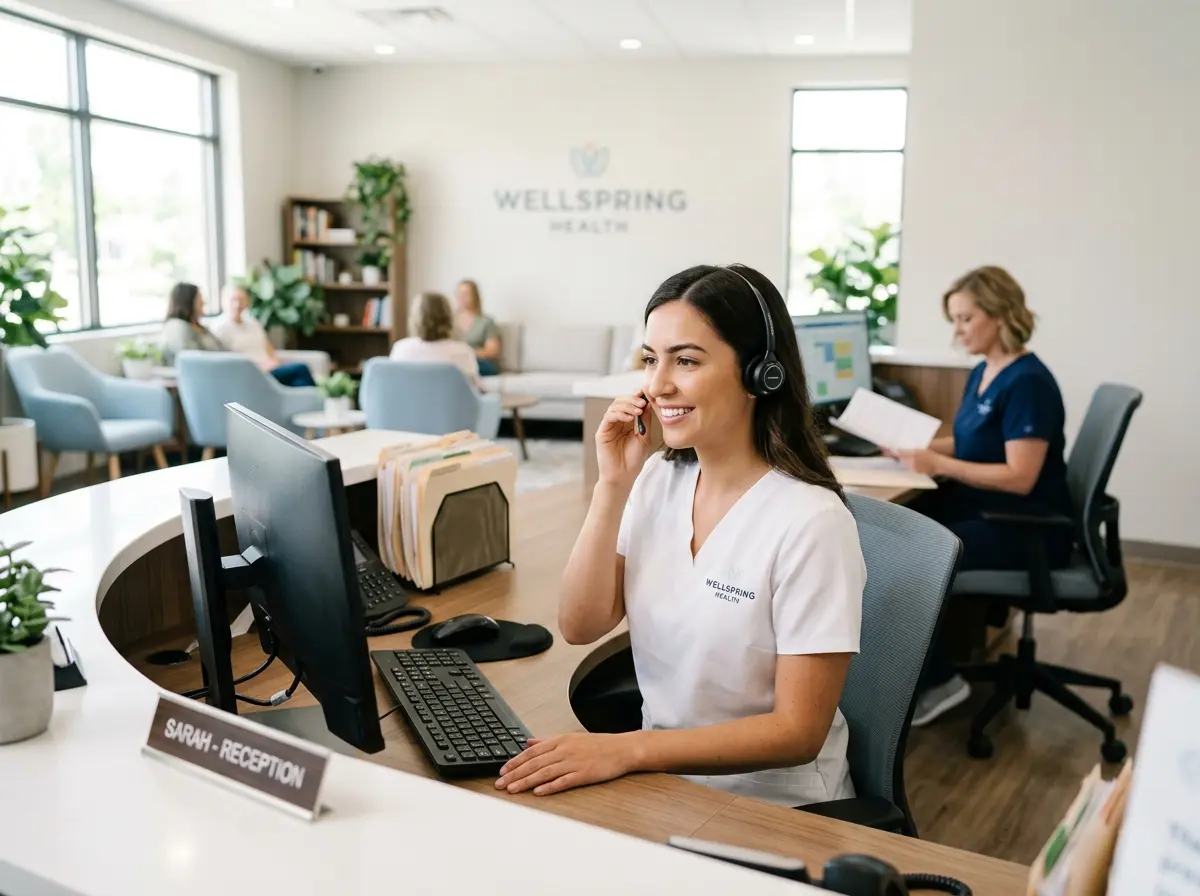
Here's where most practices fumble spectacularly. They invest in a great free consultation offer, maybe even run some ads or social media content to promote it — and then completely drop the ball when a patient actually tries to reach them. The phone rings during lunch. The front desk is slammed with check-ins. The voicemail fills up and nobody listens to it until Thursday.
The Cost of a Missed Call in Healthcare
Studies suggest that up to 67% of callers who reach a voicemail will not leave a message — they'll simply hang up and call the next provider on their list. In a world where your free consultation offer is actively driving inbound interest, every missed call is a missed patient relationship. That's not a front desk problem. That's a revenue problem.
This is where Stella, the AI robot employee and phone receptionist, becomes genuinely useful for medical practices. Stella answers every phone call, 24 hours a day, with the same detailed knowledge of your services, consultation offer, office hours, and intake process that your best front desk staff would have — except she never calls in sick and doesn't take a lunch break. For practices with a physical location, she also operates as an in-person kiosk, engaging walk-in visitors proactively and collecting their information on the spot. Her built-in CRM and conversational intake forms mean that every prospective patient who expresses interest — by phone or in person — is captured, organized, and ready for your team to follow up with.
Converting Free Consultations Into Long-Term Patients
Getting someone to book a free consultation is only half the battle. The real win is converting that initial appointment into an ongoing patient relationship. This requires intentional follow-through — before, during, and after the consultation itself.
The Pre-Consultation Experience Sets the Tone
What happens between the moment someone books a free consultation and the moment they walk in (or dial in) matters enormously. Send a confirmation email or text with clear instructions, a brief welcome message from the provider, and any intake forms they should complete in advance. This signals professionalism and respect for their time — two things patients notice immediately.
Use this pre-consultation window to briefly educate the patient about your practice philosophy, your team, and what makes your approach different. You're not just filling time — you're building anticipation and reducing the anxiety that often accompanies a new medical relationship. A patient who arrives feeling informed and welcomed is a patient who's already predisposed to say yes.
During the Consultation: Listen First, Pitch Never
The biggest mistake providers make during a free consultation is treating it like a sales call. Patients can smell a pitch from three exam rooms away, and it immediately erodes trust. Instead, use the consultation to genuinely understand the patient's concerns, ask thoughtful questions, and demonstrate clinical expertise through the quality of your listening — not the length of your service menu.
That said, it is entirely appropriate to explain what a comprehensive care plan would look like, outline your recommended next steps, and discuss the value of ongoing treatment. The difference between a consultation and a sales pitch is simple: one starts with the patient's needs, the other starts with your offerings. Lead with the former, and the latter tends to take care of itself.
The Follow-Up: Where Most Practices Give Up Too Early
Not every free consultation converts on the spot, and that's completely normal. Some patients need time. Some need to discuss it with a spouse. Some are comparison shopping. The practices that win long-term are the ones that have a thoughtful, non-pushy follow-up sequence in place.
A simple three-touch follow-up — a personalized email the day after the consultation, a brief check-in call or text three days later, and a final helpful resource or newsletter inclusion two weeks out — keeps your practice top of mind without being overbearing. Track these touchpoints in your CRM, note specific concerns the patient mentioned during the consultation, and reference them in your follow-ups. That level of personalized attention is rare in healthcare, and it's exactly what turns a "I'll think about it" into a "when can I come in?"
A Quick Reminder About Stella
Stella is an AI robot employee and phone receptionist built for businesses just like yours — available as a physical in-store kiosk and as a 24/7 phone answering solution, all for $99/month with no upfront hardware costs. She's easy to set up, never needs a day off, and is always ready to represent your practice professionally. If you're investing in a lead magnet like a free consultation offer, Stella makes sure every single person who responds to it actually gets captured and connected.
Your Next Steps: Turn a Free Consultation Into Your Best Growth Strategy
The free consultation model isn't new, but most medical practices implement it poorly — or not at all. The ones that get it right share a few things in common: they define the offer clearly, they make it easy to book, they show up prepared and genuinely helpful, and they follow up consistently without being annoying about it.
Here's a simple action plan to get started:
- Define your offer. Choose a specific consultation type with a clear scope, time limit, and patient benefit. Name it something memorable and post it prominently on your website, social profiles, and in your office.
- Fix your intake process. Make booking effortless — online scheduling, simple intake forms, and immediate confirmation. Every friction point you remove increases your conversion rate.
- Solve your phone problem. If your front desk is missing calls or leaving prospective patients in voicemail purgatory, that needs to change before you invest another dollar in marketing.
- Prepare a follow-up sequence. Write your post-consultation emails now, before you need them. Three touchpoints, personalized, non-pushy. Done.
- Track everything. Use a CRM to log consultation outcomes, follow-up status, and conversion rates. You can't improve what you don't measure.
Free consultations work because they reduce risk for patients and create genuine opportunities for trust-building — which is the actual currency of healthcare. Combine a well-designed offer with a reliable system for capturing and nurturing leads, and you've built a lead generation engine your competitors probably haven't figured out yet. Which, honestly, is the best kind of competitive advantage.