Introduction: The Callback Black Hole Is Costing You Business
Picture this: a homeowner's pipe bursts at 7 PM. They call three plumbers. The first one doesn't answer. The second says, "We'll call you back." The third one — you — also says you'll call back. Guess who gets the job? The second plumber, because they actually called back in under 10 minutes while you were still finishing dinner.
In the home services industry, the callback promise is sacred — and almost universally broken. According to a study by Lead Response Management, the odds of reaching a lead drop by over 10 times if you wait longer than five minutes to respond. Yet most HVAC companies, plumbers, electricians, and landscapers treat callbacks like a suggestion rather than a commitment. The result? Customers assume you're unreliable before you've even touched a single tool.
Building a callback promise system isn't just about picking up the phone faster. It's about creating a structured, repeatable process that sets clear expectations, delivers on them consistently, and earns the kind of trust that turns one-time callers into lifelong customers. Let's break down exactly how to do that — without losing your mind or hiring a full-time receptionist army.
The Anatomy of a Trustworthy Callback System
Step One: Set a Promise You Can Actually Keep
Here's where most home service businesses go wrong: they either make no promise at all ("someone will get back to you"), or they make a wildly optimistic one ("we'll call you right back!") and then fail spectacularly. Neither option does you any favors.
A trustworthy callback promise is specific, realistic, and communicated clearly. Instead of vague language, say something like: "We return all calls within two hours during business hours, and urgent service calls within 30 minutes." Now you've set a standard. Now your customer knows what to expect. And now you have a number to actually hit.
Audit your current operations honestly. If your team is realistically returning calls within three hours, promise three hours — and then work on getting faster. Overpromising and underdelivering is the fastest way to earn a one-star review. Underpromising and overdelivering, on the other hand, makes you look like a miracle worker. Aim to be the miracle worker.
Step Two: Build the Infrastructure Behind the Promise
A callback promise without a system is just wishful thinking. You need the operational backbone to support it. That means deciding, in advance, who is responsible for callbacks, during what hours, and what tool they use to track them.
Consider a simple callback queue: any missed call or voicemail gets logged immediately with a timestamp, the caller's name and number, the nature of their inquiry, and the responsible team member. No sticky notes. No "I thought you called them back." Use a CRM, a shared spreadsheet, or a dedicated callback log — just make it consistent and visible to anyone who needs it. Accountability requires visibility.
You should also define escalation rules. If a callback hasn't been made within your promised window, who gets notified? Having a backup person or a manager alert built into the process is the difference between a system and a hope.
Step Three: Communicate the Promise Everywhere
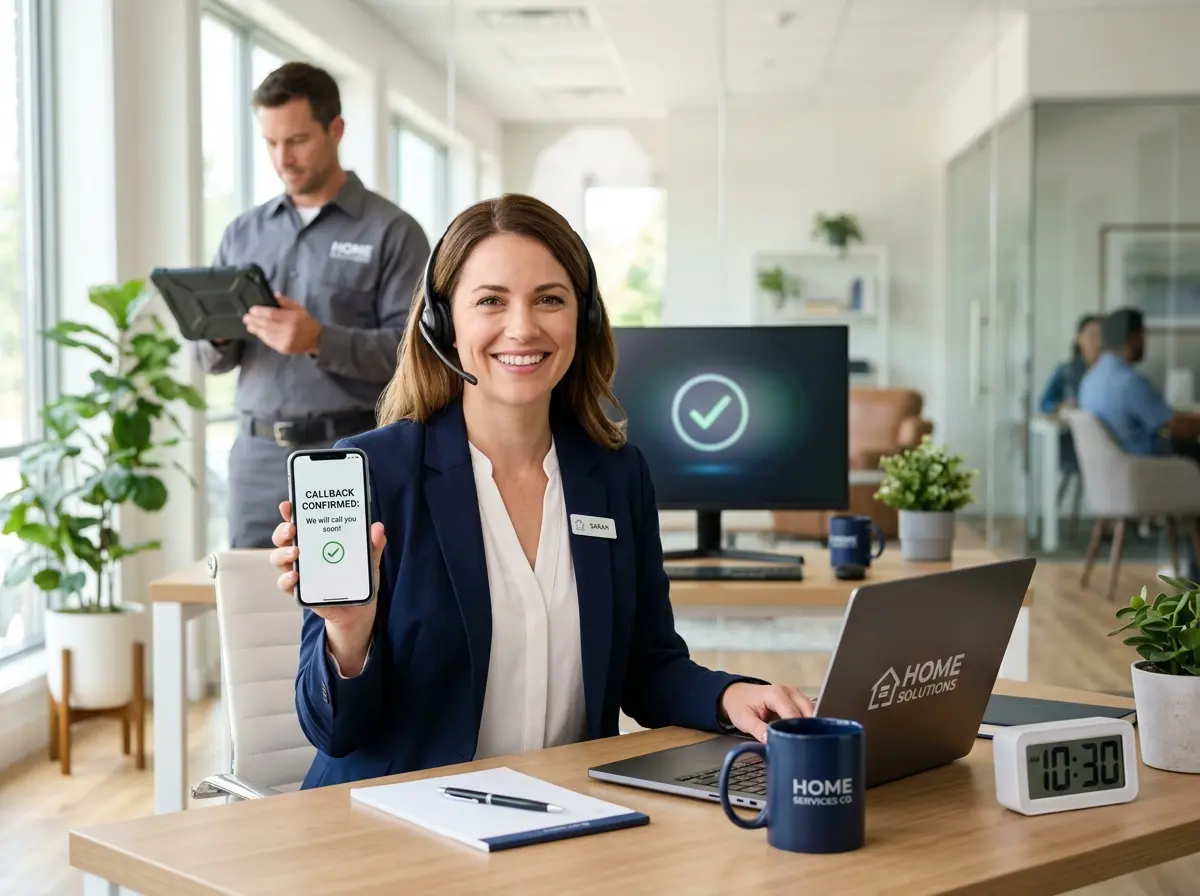
Your callback commitment should be visible — on your website, in your voicemail greeting, in your on-hold messaging, and even in any follow-up texts or emails. Customers should never wonder whether you received their message. A quick automated text that says, "Thanks for calling [Your Company]. We received your message and will call you back within two hours," costs almost nothing to send and dramatically reduces customer anxiety.
This kind of proactive communication signals professionalism. It says: we have our act together. And in an industry where the bar is distressingly low, that alone can set you apart from the competition.
How Technology Can Carry the Weight
Automating the First Response So Nothing Falls Through the Cracks
Let's be honest — you're a home services business owner, not a call center operator. You're managing crews, sourcing materials, handling job sites, and probably answering texts while driving (please don't). Expecting a human to catch every single incoming call during peak hours is unrealistic, and missed calls are silently killing your revenue.
This is where Stella, the AI robot employee and phone receptionist, can make a genuine difference. Stella answers every call, 24 hours a day, seven days a week — no hold music, no "please leave a message," no dropped balls. She can collect the caller's name, contact information, and the nature of their service request through a natural, conversational intake process, then push an AI-generated summary and notification directly to you or your manager. When Stella takes a voicemail, it doesn't disappear into the void — you get an instant alert with all the context you need to call back fast and prepared.
For businesses with a physical location — like a showroom for a flooring company or a service counter for an appliance repair shop — Stella's in-store kiosk presence means walk-in customers are greeted and engaged immediately, while her built-in CRM automatically captures and organizes customer contact details, inquiry history, and custom notes. That means whether someone calls in or walks in, their information flows into one unified system. No more hunting through napkins and voicemail transcripts at 9 PM trying to remember who needed a water heater quote.
Turning the Callback Into a Trust-Building Touchpoint
What to Say When You Actually Call Back
The callback itself is an opportunity that most businesses squander by treating it like a chore. When you or your team picks up the phone to return a call, you have a brief, powerful window to make a strong impression. Start by acknowledging the wait — even if it was only 45 minutes. A simple "Hi, this is Marcus from Apex Plumbing — I'm returning your call and I want to make sure we take great care of you today" sets an entirely different tone than "Yeah, someone called this number?"
Have the customer's information in front of you before you dial. If they called about a leaking faucet, reference it. If they left a voicemail, mention what they said. This signals attentiveness and professionalism, and it eliminates the frustration customers feel when they have to repeat themselves. That frustration, by the way, is one of the top reasons customers switch service providers — even when the work itself was fine.
Following Up After the Job: The Second Callback Nobody Does
Here's the move that almost no home services company makes, and it's the easiest trust-builder on the list: the post-job follow-up call. Twenty-four to 48 hours after completing a service, have someone on your team call the customer to ask how everything is working and whether they have any questions. That's it. No upsell required — though if it comes up naturally, go for it.
This single habit creates loyalty that advertising dollars simply cannot buy. Customers remember being checked on. They tell their neighbors about it. They leave reviews about it. A BrightLocal survey found that 77% of consumers are willing to leave a review when asked — and a post-job callback is the perfect moment to ask. Build a simple script, assign the task to a specific team member, and put it in your calendar workflow as a non-negotiable step in every completed job.
Measuring Whether Your System Is Actually Working
You can't improve what you don't measure. Track your average callback time weekly. Monitor how many calls go unanswered. Note which time windows create the most missed calls and staff accordingly. Review how many leads converted after a callback versus how many went cold. These aren't vanity metrics — they directly correlate to revenue.
Set a monthly review cadence where you look at these numbers as a team. If your average callback time is creeping up, find the bottleneck. If conversions are dropping, revisit your callback script. Continuous improvement isn't just for manufacturing floors — it belongs in your customer communication process, too.
Quick Reminder About Stella
Stella is an AI robot employee and phone receptionist built for businesses of all sizes — from solo service operators to multi-location home services companies. She answers every call around the clock, greets walk-in customers at in-store kiosks, captures customer information through conversational intake forms, and keeps everything organized in a built-in CRM with AI-generated contact profiles. All of this starts at just $99/month with no upfront hardware costs and no complicated setup — which, frankly, is less than what most businesses spend on leads that never get called back.
Conclusion: Stop Promising Callbacks — Start Delivering Them
The home services market is competitive, and customers have options. What they don't always have is a service provider who does what they say they're going to do, when they say they're going to do it. That gap is your opportunity.
Start by auditing your current callback process honestly — or admitting you don't really have one yet. Then build the structure: a clear, specific promise, a system to log and track every incoming inquiry, automated first-response tools to make sure nothing gets missed, and a scripted, professional approach to every callback conversation. Layer in post-job follow-up calls, measure your performance consistently, and iterate.
Your action items this week are simple:
- Define your official callback promise in writing and communicate it to your team.
- Set up a callback log or CRM to track every missed call and voicemail.
- Create or update your voicemail greeting to include your specific callback window.
- Draft a short post-job follow-up call script and assign ownership to a team member.
- Explore automation tools — like Stella — that can handle first contact and capture customer details so your callbacks are faster and better informed.
In an industry where the competition forgets to call back, just showing up consistently makes you the hero. You don't need to be the cheapest or the flashiest — you just need to be the one they can count on. That's the whole game.