You're Building Dream Kitchens While Missing Dream Clients
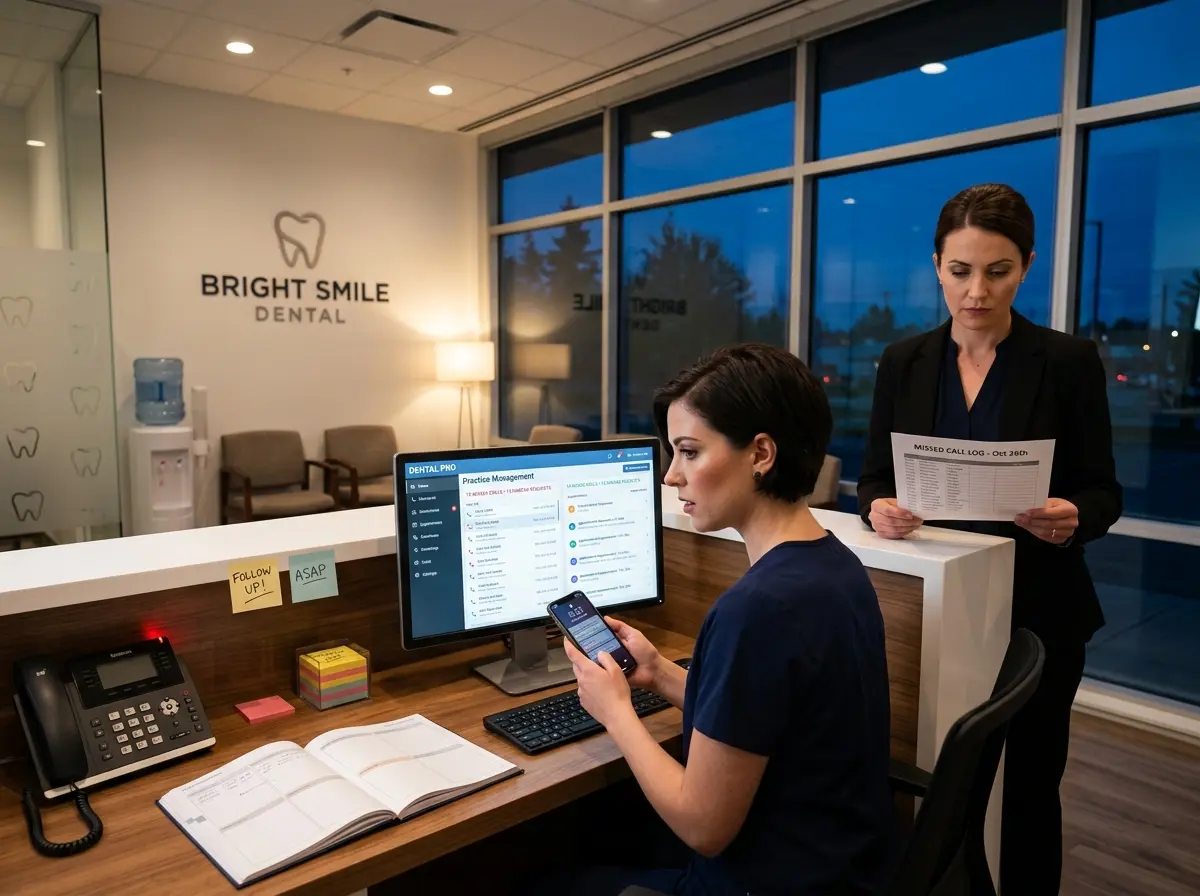
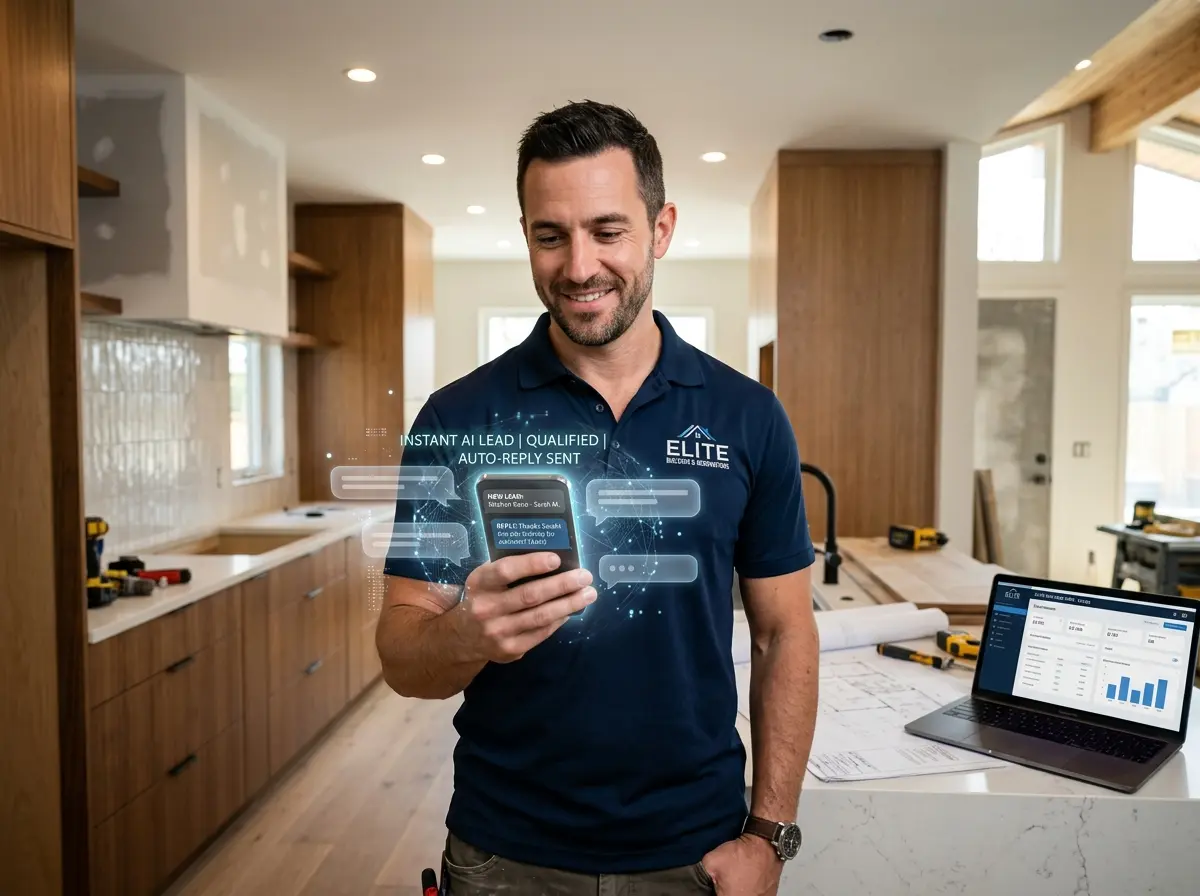
Here's a scenario that probably sounds familiar: You're on a job site, knee-deep in a bathroom remodel, hands full of tile and ambition — and your phone buzzes. It's a lead. A good one, actually. Someone who found you online, loves your work, and is ready to talk about a $40,000 kitchen renovation. You tell yourself you'll call back in 20 minutes. Except 20 minutes turns into two hours, and by the time you call back, they've already booked a consultation with your competitor.
Welcome to the contractor's paradox: the better you are at your job, the harder it is to actually run your business. You can't be elbow-deep in drywall and simultaneously charming new leads over the phone. And yet, in the contracting world, speed is everything. Studies show that responding to a lead within five minutes makes you 21 times more likely to qualify them compared to waiting just 30 minutes. Twenty-one times. Let that sink in while you grout something.
The good news? AI has quietly become the best employee a contractor never had to hire — one that answers calls at midnight, qualifies leads on Sunday mornings, and never asks for overtime. This guide breaks down exactly how to put it to work for your contracting business.
Why Lead Response Time Is Your Biggest Competitive Advantage
The Five-Minute Window That Changes Everything
Most contractors treat lead response like a game of telephone tag — call when you can, hope for the best, follow up eventually. Meanwhile, the top 10% of contractors in any market are winning disproportionately more jobs, and their secret often isn't better craftsmanship. It's better systems. When a homeowner submits a form or calls your number, they're in a window of peak intent. They want help now. Every minute that passes, their excitement cools, their attention drifts, and your competition looks more appealing.
The math is brutal but honest: the majority of leads go to the first contractor who responds with something useful. Not the cheapest. Not the most experienced. The fastest. That reality should make you very motivated to stop relying on checking your voicemail at the end of a long day.
Qualification Is Half the Battle
Speed matters, but so does quality. Not every lead is worth your time, and part of what makes AI so powerful for contractors is its ability to do the initial filtering before you ever get involved. A well-configured AI phone system can ask the right questions upfront — What's the project scope? What's the timeline? Do you own the property? What's your approximate budget? — and collect the answers in an organized way so that when you do engage, you're walking into a conversation already knowing whether it's worth your energy.
This isn't about being cold or transactional. It's about respecting both your time and the customer's. No one enjoys a 30-minute phone call that ends with "yeah, I was just getting some ballpark numbers." With AI handling the intake, those conversations get screened out automatically, and the high-value leads rise to the top of your attention where they belong.
The Real Cost of a Missed Call
Let's do some quick math. If your average job is worth $8,000 and you're missing three to four qualified leads per month because you couldn't answer the phone fast enough, you're potentially leaving $24,000 to $32,000 on the table every single month. That's not a rounding error. That's a problem worth solving — and it's one that AI solves for a fraction of what you'd pay a part-time receptionist.
How AI Tools Like Stella Fit Into a Contractor's Workflow
Always-On Lead Capture Without Hiring Anyone
This is where things get genuinely exciting for contractors. Stella — an AI robot employee and phone receptionist — answers every call your business receives, 24 hours a day, seven days a week, with the same knowledge about your services, pricing structure, service area, and availability that you'd give a human receptionist. The difference is that Stella never puts someone on hold because she's helping another caller, never forgets to ask a key qualifying question, and never has a bad day that bleeds into a client conversation.
For contractors, this means every inbound call — whether it comes in at 7 a.m. on a Tuesday or 9 p.m. on a Saturday — gets answered professionally and immediately. Stella can collect project details through conversational intake, log everything into her built-in CRM with custom fields and AI-generated contact profiles, and send you a push notification with a summary so you can follow up at the right time with full context already in hand. For contractors who also run a showroom or supply location, she's available as an in-store kiosk as well — greeting walk-in customers and handling questions while your team stays focused on the work.
Building a Lead Response System That Actually Works
Map Out Your Intake Process Before You Automate It
The biggest mistake contractors make when adopting AI for lead management is automating a bad process. If your current intake process is "we figure it out as we go," then automating it just means you'll figure it out faster and more consistently — which is marginally better, but not transformative. Before you set up any AI tool, spend an hour writing down exactly what information you need from a lead to determine whether to pursue them. Project type, property address, ownership status, budget range, desired start date, how they heard about you — these are the building blocks of a real intake form, and they're the questions your AI should be asking every caller automatically.
Once you have that list, you can configure your AI receptionist to gather it conversationally, so it feels like a helpful exchange rather than a cold survey. Customers are actually quite comfortable sharing this information when it's framed as "I want to make sure we send the right person to your consultation."
Use AI Summaries to Prioritize Your Follow-Up Queue
One of the most underappreciated features of modern AI lead tools is the automatic summarization of conversations. When Stella takes a call and a customer describes their project in detail, you don't receive a raw transcript or a generic voicemail notification. You receive a clean, organized summary: the customer's name, contact information, project description, budget indication, timeline, and any flags worth noting. You can look at three summaries in two minutes and immediately know which call to return first.
This changes how you start your mornings. Instead of listening to seven voicemails back-to-back and scribbling notes on whatever's nearby, you open an organized queue of leads, each with a profile already built, and you make smart decisions about where to invest your follow-up energy. That's not just efficiency — that's competitive positioning.
Set Clear Escalation Rules So Nothing Falls Through the Cracks
AI handles a remarkable amount on its own, but you still need to define when a human should step in. For contractors, common escalation triggers include a caller who has an urgent timeline (project needs to start within two weeks), a project above a certain dollar threshold, or a returning client requesting a specific team member. These rules should be set up clearly in your AI system so that high-priority calls get routed to a live person immediately, while routine inquiries get handled and logged without interrupting anyone's workflow.
Think of it less as "AI versus humans" and more as a well-run front desk where the receptionist handles the routine with grace and knows exactly when to loop in the boss. That's the dynamic you're building — and it's one that scales with your business without requiring you to hire a dedicated office manager every time you take on more volume.
A Quick Reminder About Stella
Stella is an AI robot employee and phone receptionist built for businesses of all sizes, including contractors and service providers who need a reliable, professional front-line presence without the overhead. She answers calls around the clock, qualifies leads through conversational intake, manages contacts in a built-in CRM, and keeps your team informed with AI-generated summaries and push notifications — all for $99 a month with no upfront hardware costs. She's essentially the receptionist you always needed but could never quite justify hiring.
Start Winning Jobs You Didn't Know You Were Losing
The contractors who thrive in the next five years won't necessarily be the ones with the best crews or the most Instagram-worthy portfolios. They'll be the ones who built smart systems around their business so that every lead gets a response, every caller feels heard, and every follow-up conversation starts from a position of preparation rather than scrambling.
Here's what to do this week. First, calculate how many calls you're missing each month — your phone carrier's call log will tell you. Then estimate the average value of a job you could have landed from those calls. If that number bothers you, it should. Second, write down the five to seven questions every new lead should answer before you invest time in a consultation. Third, look at an AI receptionist solution that can automate that intake process and keep your pipeline organized while you stay focused on the work you're actually great at.
The tools exist. The ROI is obvious. The only thing standing between you and a lead pipeline that runs itself is deciding it's worth setting up — which, given the math, it very clearly is.