Why Your Service Menu Might Be Leaving Money on the Table
Let's be honest — most service businesses don't have a pricing strategy. They have a price list. There's a difference, and that difference is often measured in thousands of dollars of annual revenue that quietly walks out the door (or hangs up the phone) because nobody ever offered customers a reason to spend more.
A well-structured menu of service packages isn't just about looking polished and professional. It's a psychological roadmap that guides customers toward better decisions — decisions that happen to also be better for your bottom line. When done right, upselling doesn't feel like upselling. It feels like good service. It feels like someone actually thought about what the customer needs, presented sensible options, and made the choice feel natural.
The good news? You don't need to hire a pricing consultant or earn an MBA to pull this off. You just need to understand a few proven principles, apply them thoughtfully to your specific business, and make sure every customer-facing touchpoint — human or otherwise — is reinforcing the same message.
The Psychology Behind Packages That Sell Themselves
The Power of Three (Tiers, That Is)
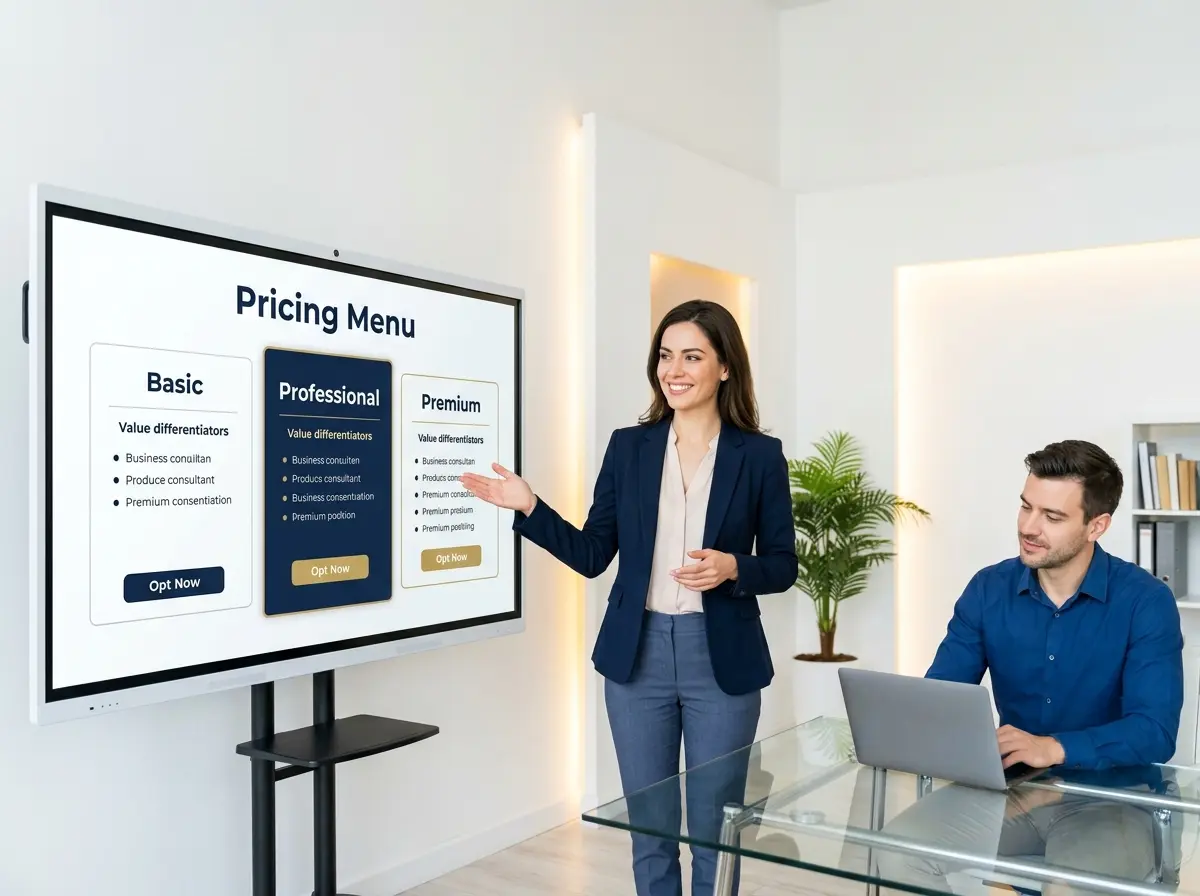
There's a reason you see Good / Better / Best pricing literally everywhere — from cable packages to car washes to software subscriptions. It works because of a cognitive bias called the compromise effect. When people are presented with three options, they instinctively gravitate toward the middle one. It feels safe, reasonable, and smart. Nobody wants the cheapest option (it feels like settling), and the most expensive option can feel like overkill. The middle tier? That's the Goldilocks zone.
For your business, this means deliberately designing your middle package to be your real money-maker. Don't stuff it with leftover services. Load it with genuine value — the things most of your customers actually want — and price it at a point that feels like a deal compared to your premium tier. Your entry-level package should be just limited enough to make upgrading feel obvious, not punishing.
Naming Your Packages Like a Marketer, Not an Accountant
Here's where a lot of businesses quietly sabotage themselves. They name their packages things like "Basic," "Standard," and "Premium" — and then wonder why everyone picks Basic. Words carry weight. "Basic" sounds like you're getting the bare minimum. "Starter" or "Essential" sounds intentional. "Signature," "Elite," or even something industry-specific like "Full Detail" or "Complete Care" signals status and completeness.
Think about how your customers talk about what they want. A spa client doesn't want the "Basic Facial Package." They want the "Radiance Experience." An auto shop customer doesn't want "Package A." They want the "Road-Ready Bundle." Your package names should do part of the selling before anyone even reads the description.
Anchoring, Contrast, and the Art of the Strategic Price Gap
Price anchoring is simple: the first number a customer sees shapes how they perceive every price that follows. If your premium package is listed first at $299, your mid-tier at $179 suddenly looks like a bargain — even if $179 is actually higher than your old flat rate. Strategic price gaps also matter. If your three tiers are priced at $49, $55, and $59, customers will wonder what the point is. If they're $49, $89, and $149, each jump feels meaningful and each tier feels distinct. Make the gap earn its place.
How the Right Tools Keep Upsells Consistent (Without Extra Effort)
Consistency Is the Upsell You Keep Forgetting
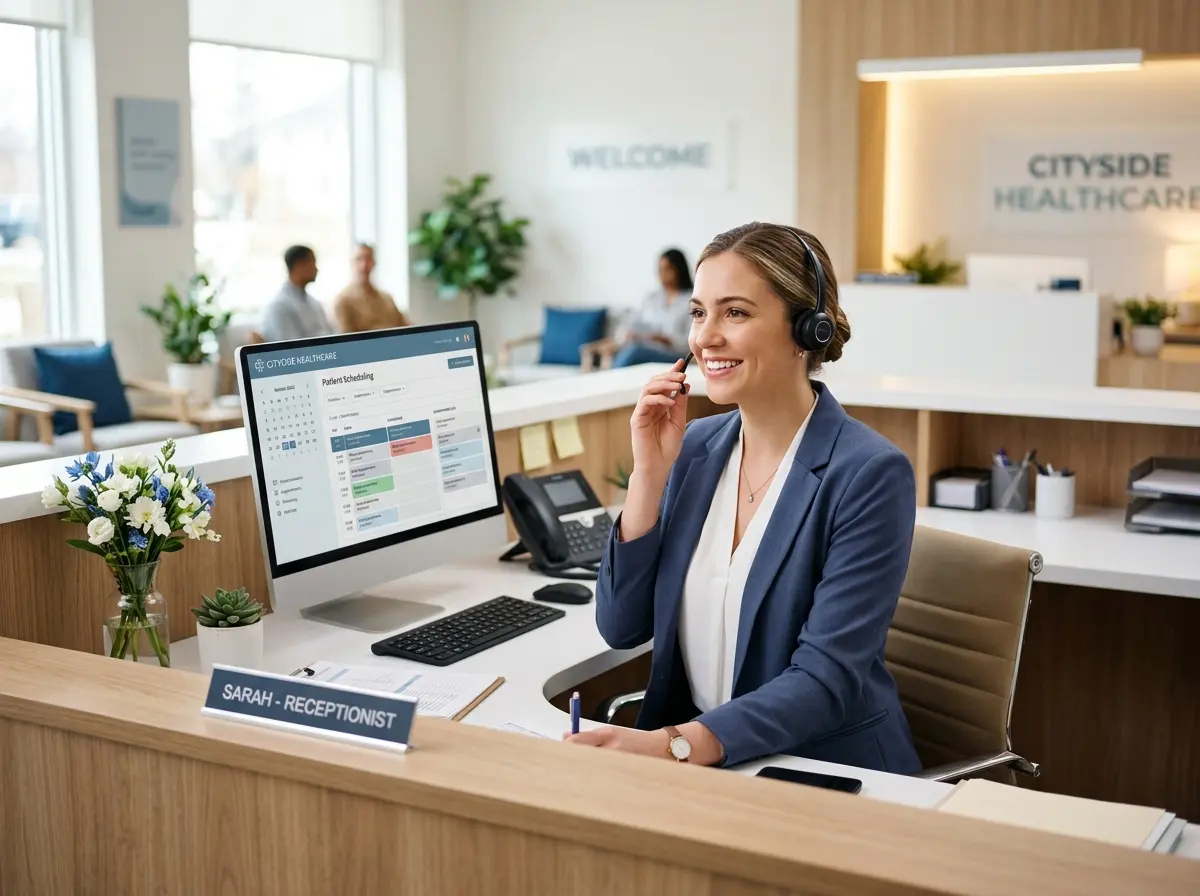
You can build the most beautifully structured package menu in the world, but if your front desk forgets to mention the mid-tier option, or your phone receptionist just answers the basic question and says goodbye, you're leaving money on the table every single interaction. The challenge most business owners face isn't strategy — it's consistent execution. Humans get busy, distracted, or just don't love the sales conversation. That inconsistency costs you.
This is where Stella becomes genuinely useful. As an AI robot receptionist and in-store kiosk, Stella proactively engages every customer who walks through your door and answers every phone call — 24/7, without ever having an off day. She can be trained on your exact package structure and programmed to naturally surface your mid-tier and premium options during conversations, highlight current promotions, and recommend add-ons based on what a customer is asking about. She doesn't forget. She doesn't get awkward about upselling. She just does it, every time, in a friendly and conversational way.
For service businesses managing customer relationships over time, Stella's built-in CRM and conversational intake forms mean you're also capturing the data that makes future upsells smarter — tracking what services customers have used, noting preferences, and building profiles that let you personalize the next interaction.
Designing Add-Ons and Upgrades That Feel Like Logic, Not Sales
Build Add-Ons That Solve the Next Obvious Problem
The best upsell is the one the customer almost thought of themselves. Once you understand the journey your customer is on — what they're trying to accomplish, what frustrations typically follow their purchase, what the next logical step looks like — you can design add-ons that feel less like extras and more like obvious completions.
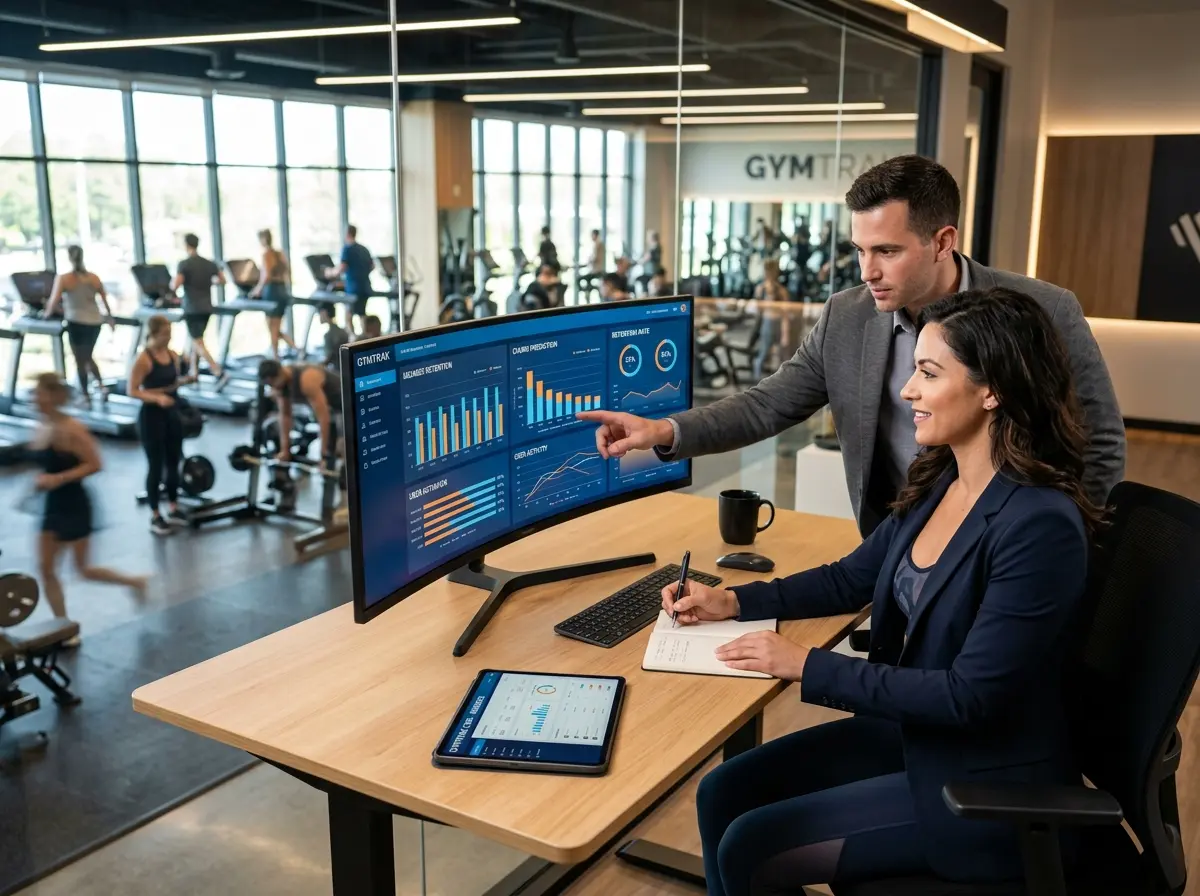
A gym selling personal training packages might add a nutrition consultation as an obvious complement. A law firm handling a business formation might offer a trademark search. An auto shop doing an oil change might bundle a tire rotation and a multi-point inspection. In every case, the add-on addresses a real and near-term need. That's what separates a smart upsell from a pushy one — relevance. If your customer has to think hard about why they'd want the add-on, it's not the right add-on.
Make the Upgrade Feel Like a Rescue, Not a Luxury
Luxury framing works for some businesses, but for most service providers, the more powerful angle is peace of mind or problem prevention. When you position your premium package not as "more stuff" but as "the version where things don't go wrong," you're appealing to something far more motivating than aspiration — you're appealing to risk aversion.
A salon's premium package isn't just a longer appointment with fancier products. It's the one where your color is guaranteed to last, your stylist has more time to get it exactly right, and you leave without a single doubt. A medical office's comprehensive annual package isn't an upsell — it's the version where nothing gets missed. Frame your premium tier as the version for customers who take their [health / vehicle / appearance / business] seriously, and you'll find far less resistance.
Use Real Customer Language in Your Package Descriptions
One of the most underused tools in package design is simply paying attention to how your customers describe their own problems and goals. When a customer calls and says, "I just want to make sure my car is safe for a road trip," that's a description of a package. When a spa client says, "I want to actually feel relaxed when I leave, not just like I had a nice hour," that's a description of an experience your premium package should deliver — and the copy should say so. Mine your customer conversations, your reviews, and your intake forms for the exact words real people use, and then use those words in your menu. Customers will feel like you built that package specifically for them.
Quick Reminder About Stella
Stella is an AI robot employee and phone receptionist built for businesses like yours — she stands inside your location as a friendly, human-sized kiosk and answers phone calls around the clock as a knowledgeable virtual receptionist. Starting at just $99/month with no upfront hardware costs, she's always on, always consistent, and always ready to represent your business professionally. Whether you're a solopreneur or running a multi-staff operation, she fills the gaps that cost you customers and revenue every single day.
Your Next Steps Start With Your Menu
Building a service package menu that drives natural upsells isn't about being clever or manipulative. It's about doing the thoughtful work of understanding what your customers actually need, presenting options in a way that makes the decision easy, and then making sure every single touchpoint — in person, on the phone, on your website — is delivering that message consistently.
Start with an honest audit of what you're currently offering. Do you have three clearly differentiated tiers? Is your middle tier genuinely the most attractive option? Are your package names doing any work for you? Do your add-ons solve real, obvious problems? If the answer to any of these is no, you have a straightforward opportunity sitting right in front of you.
Then tackle consistency. The best menu in the world is useless if it's only being presented half the time. Invest in training, scripts, and tools that ensure your packages are being surfaced to every customer at every relevant moment — not just when a staff member happens to remember.
The businesses that win on packaging aren't necessarily the ones with the best services. They're the ones who made it easy for customers to see the full value of what they offer — and gave them an obvious, comfortable path to saying yes.