One Bad Review Can Haunt You Forever (But It Doesn't Have To)
Let's set the scene: a client leaves your med spa, feeling fine — not thrilled, not upset, just somewhere in that dangerous middle ground where they don't say anything to you but have plenty to say on Google. A few days later, you're sipping your morning coffee, open your review dashboard, and there it is. One star. A paragraph of grievances you had absolutely no idea existed. Congratulations — you've just experienced the feedback void.
The feedback void is that uncomfortable gap between what clients actually experience and what you ever get to hear about. Most unhappy customers don't complain directly. According to research by Lee Resources, 91% of unhappy customers simply won't come back — and a significant portion of them will tell others why. For a med spa, where trust, discretion, and results are everything, a handful of avoidable negative reviews can do serious damage to your reputation and your bottom line.
The good news? One med spa figured out how to close that gap — and the results were dramatic. Here's the feedback loop they built, why it worked, and how you can replicate it without losing your mind (or hiring a full-time reputation manager).
Understanding Why Negative Reviews Happen in the First Place
The Silence Before the Storm
Most negative reviews aren't the result of catastrophic failures. They're the result of small, unaddressed frustrations that compound over time. A client who waited 15 minutes without an acknowledgment. A follow-up call that never came. A question about aftercare that got a rushed answer. None of these feel like dealbreakers in the moment, but when clients sit down at home and start typing, suddenly every minor inconvenience becomes exhibit A.
The problem is that businesses are often the last to know any of this happened. Staff are busy, front desks are chaotic, and nobody's keeping a running tally of which clients walked out with a slight frown. Without a proactive system to surface dissatisfaction early, you're always reacting — never preventing.
Timing Is Everything
Here's a frustrating truth: the window to save a client relationship is much shorter than most business owners think. Research suggests that customer frustration peaks quickly after a negative experience, and if it isn't addressed within 24 to 48 hours, the emotional investment in that grievance starts to solidify. After that, they're not looking for resolution — they're looking for validation, usually from a review platform audience.
The med spa in our case study identified this window as their primary opportunity. Instead of waiting for clients to reach out (spoiler: they usually won't), they built a system designed to reach clients first — quickly, personally, and in a way that actually invited honest feedback rather than a scripted "How was everything?" at checkout that everyone answers with "Fine."
The Review Request Mistake Most Businesses Make
Asking for reviews without filtering for sentiment first is a bit like spinning a roulette wheel and announcing the result on the internet. You'll get lucky sometimes. Other times, you'll hand a megaphone to your most frustrated client. The smarter approach — and the one this med spa adopted — is to collect internal feedback before directing clients toward public review platforms. Happy clients get nudged toward Google or Yelp. Unhappy clients get connected with someone who can actually fix the problem. It's not manipulation; it's triage.
How Stella Fits Into a Smarter Feedback System
Capturing Feedback Before It Goes Public
This is where technology earns its keep. Stella, the AI robot employee and phone receptionist, can be a surprisingly powerful tool in the feedback loop — both at your physical location and over the phone. In-person, Stella engages clients naturally as they're wrapping up their visit, which is the ideal moment to ask how things went. Because she's approachable, consistent, and not a nervous junior staff member who dreads conflict, clients tend to be more candid with her. That honest answer is exactly what you need before they get home and open Google.
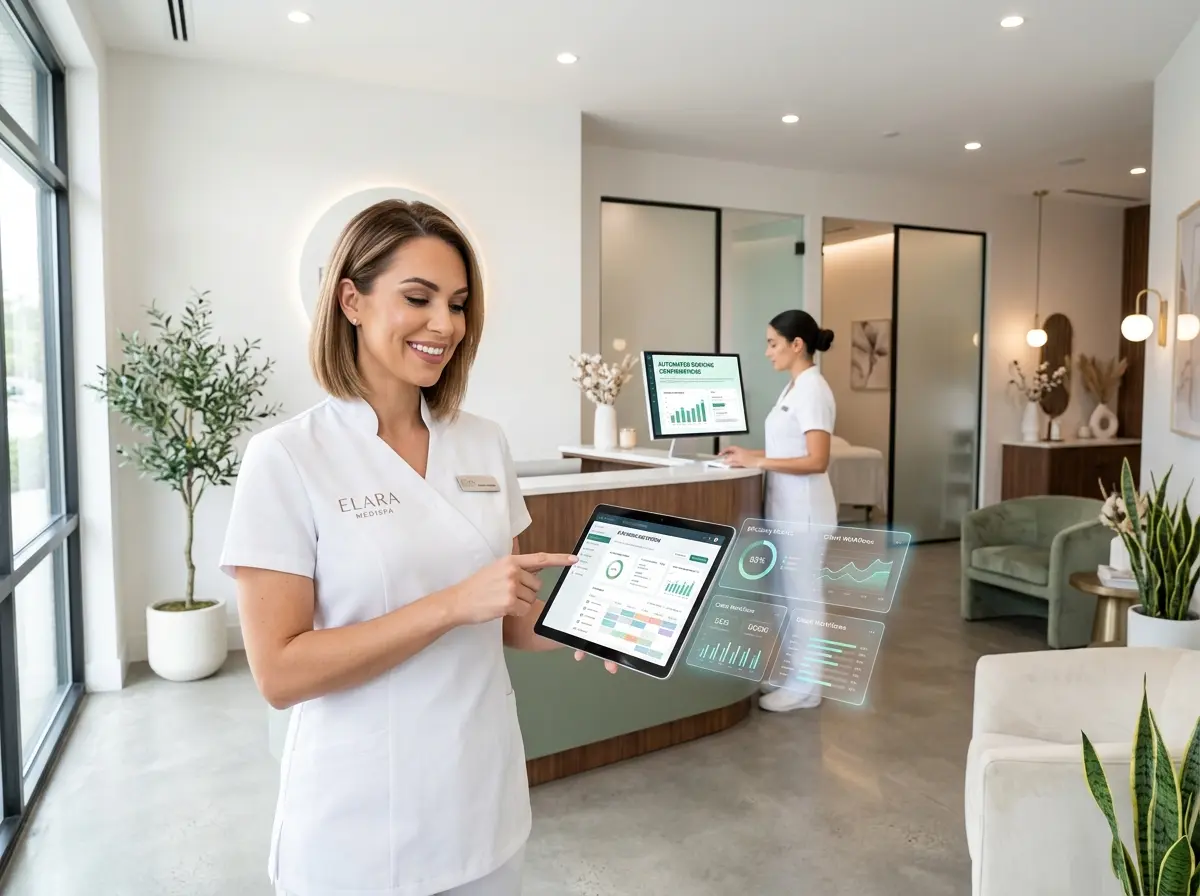
On the phone side, Stella handles follow-up calls, collects responses through conversational intake forms, and logs everything directly into her built-in CRM — complete with AI-generated summaries, custom tags, and client notes. So when a client mentions they were a little disappointed with their results, that note doesn't disappear into a sticky note abyss. It's tracked, flagged, and ready for a human team member to follow up with intention. That's the difference between a client who leaves a one-star review and a client who becomes loyal because someone actually listened.
Building Your Own Feedback Loop: A Step-by-Step Approach
Step 1 — Create a Post-Visit Touchpoint Within 24 Hours
The feedback loop starts immediately after the client leaves. Within 24 hours, they should receive some form of outreach — a text, an email, or a brief follow-up call — that asks a simple, low-friction question about their experience. Keep it conversational. "How are you feeling after your treatment today?" works better than a clinical 10-point survey. The goal is to open a dialogue, not conduct a thesis defense.
The med spa in our example automated this outreach using their CRM, but personalized the message based on which service the client received. A client who came in for a laser treatment got a different message than someone who had an injectables appointment. This small detail made clients feel seen rather than mass-emailed, and response rates reflected that.
Step 2 — Segment Responses and Act Immediately on Negative Signals
Once you have feedback coming in, you need a decision tree. Glowing responses? Send a follow-up with a direct link to your preferred review platform. Neutral or negative responses? Trigger an immediate internal alert so a manager or owner can personally reach out within the hour.
This is the step most businesses skip because it requires someone to actually do something with the data. But it's also the most valuable step in the entire process. A client who receives a personal call from a manager — not a templated apology email, but an actual human conversation — is remarkably likely to reconsider their frustration. People want to feel heard. Give them that before Yelp does.
Step 3 — Close the Loop and Measure Everything
A feedback loop that doesn't loop isn't a loop — it's a dead end. After every resolved complaint, document what happened, what was said, and what you did about it. Over time, you'll start to see patterns. Maybe aftercare instructions are consistently confusing. Maybe wait times spike on Thursdays. Maybe one service consistently generates more mixed feedback than others. These patterns are gold. They tell you exactly where to invest your improvement efforts, which is far more efficient than guessing or reacting to individual reviews in isolation.
The med spa tracked these patterns monthly and made operational adjustments based on what the data revealed. That's how a 70% reduction in negative reviews becomes achievable — not through a single magic fix, but through sustained, data-informed iteration. Boring? Maybe. Effective? Absolutely.
Quick Reminder About Stella
Stella is an AI robot employee and phone receptionist designed for businesses of all types — including med spas, salons, gyms, retail stores, and more. She greets clients in person at your location, answers phones 24/7, collects intake information, manages your contacts through a built-in CRM, and never calls in sick. At $99/month with no upfront hardware costs, she's one of the more practical investments a client-facing business can make.
Turning Feedback Into Your Competitive Advantage
Negative reviews will always exist — that's just the reality of running a business that serves actual humans with actual opinions. But the businesses that thrive aren't the ones with zero complaints. They're the ones with systems smart enough to catch problems early, respond fast, and learn from every interaction. A 70% reduction in negative reviews isn't a fluke. It's the result of treating feedback as a business asset rather than an occasional inconvenience.
Here's your action plan to get started:
- Audit your current follow-up process. If you don't have one, that's your answer. Build a 24-hour post-visit touchpoint this week.
- Set up a simple sentiment triage system. Positive feedback routes to review requests. Negative feedback routes to a manager. This alone will change your trajectory.
- Document and review your feedback data monthly. Look for patterns, not just individual complaints.
- Close the loop with every unhappy client personally. One real conversation is worth a hundred templated apology emails.
- Use technology to handle the touchpoints that don't require a human. Automate what you can so your team can focus on the conversations that actually matter.
Your reputation is being written every single day by clients who are either impressed, indifferent, or quietly annoyed. The feedback loop doesn't just protect you from bad reviews — it gives you the information you need to make the first two categories much, much larger than the last one. And that's a business worth building.