So You Want to Offer Group Personal Training — Good Luck (You'll Actually Do Great)
Here's the scenario: your group fitness classes are packed, your members love the energy, and everyone's having a blast — but almost nobody is actually progressing. Meanwhile, your one-on-one personal training slots are delivering incredible results, but only a handful of members can afford them. You're sitting in the middle of this gap, watching revenue potential walk out the door, and thinking, "There has to be a better way."
There is. It's called group personal training (GPT), and it's one of the fastest-growing service formats in the fitness industry — and for good reason. It blends the accountability and individualized programming of personal training with the affordability and social energy of group classes. Done right, it's a win for your members and a serious win for your bottom line. Done wrong, it's just a chaotic class where a trainer occasionally yells someone's name.
This guide will walk you through how to actually build a GPT format that works — one that bridges the gap between your packed group classes and your premium one-on-one sessions, without burning out your trainers or confusing your members.
Designing a Format That Actually Works
Before you start slapping "Group Personal Training" on your schedule and calling it a day, you need a structure. The magic of GPT lives in its design — specifically, in how you manage individual attention inside a group setting. This is where most gyms get it wrong. They either run it too much like a class (losing the personal element) or try to deliver full one-on-one attention to everyone at once (losing their trainers' sanity in the process).
Define Your Group Size Sweet Spot
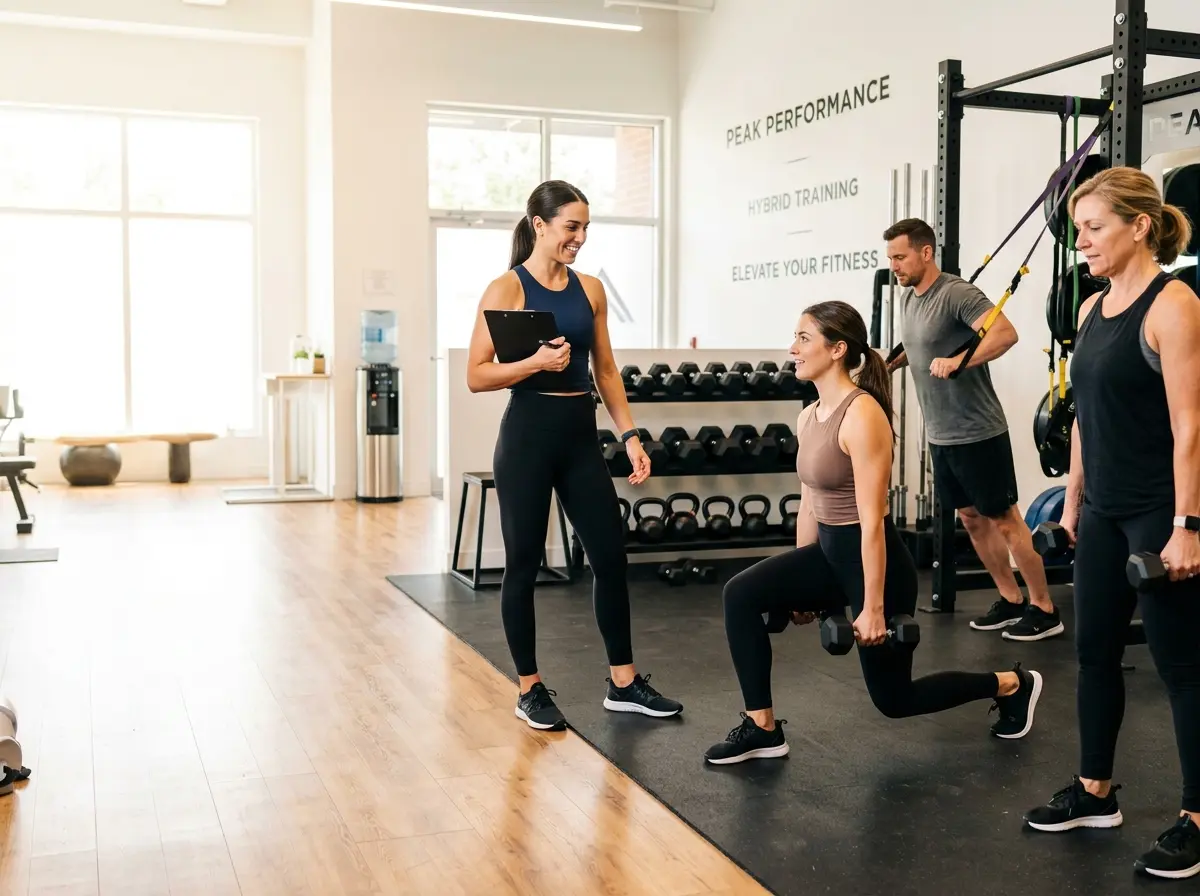
The most critical decision you'll make is group size. Too few and you lose the pricing advantage that makes GPT attractive. Too many and your trainer is basically just a class instructor with a clipboard. Research and industry experience consistently point to a sweet spot of 4 to 8 participants per trainer as the ideal range. This allows for genuine check-ins, form corrections, and individualized modifications — without turning your trainer into an air traffic controller.
Some higher-end gyms push this to 10–12 with tiered pricing, but that typically requires a very experienced trainer and a well-structured program that limits variability. If you're just starting out, stay in the 4–6 range. You'll be able to charge more per head, your trainer can deliver real value, and your members will actually feel seen.
Program for the Individual, Schedule for the Group
The defining characteristic of real GPT — as opposed to a class with a fancy name — is individualized programming inside a shared session structure. This means your trainer isn't running everyone through identical reps and sets. Instead, each participant has their own program card or profile that the trainer references throughout the session.
The workout structure itself can be shared: perhaps a warm-up block, a primary lifting block with two or three movements, and a conditioning finisher. But within that block, Member A might be squatting to a box because of a knee issue, Member B is working up to a new one-rep max, and Member C is nailing tempo work for hypertrophy. Same room, same time slot, different programs. That's the product you're selling — and it's genuinely more valuable than a class.
Price It Like the Premium Product It Is
Don't undersell this. Group personal training should be priced above your group classes but below your one-on-one sessions — and it should be framed that way explicitly in your marketing. A typical breakdown might look like: group class at $20–$30 per session, GPT at $45–$75 per session, and one-on-one personal training at $80–$150 per session. The exact numbers depend on your market, but the positioning matters. If you price GPT too close to your classes, members won't perceive the difference. If you price it too close to one-on-one, they'll just pay the premium for full attention.
Consider selling it in packages or monthly memberships rather than drop-in sessions. This stabilizes your revenue, improves retention, and makes scheduling dramatically easier. A "12-session GPT package" or a "GPT membership with 3 sessions per week" creates commitment on both sides — and that commitment is what drives results for your members.
Running Your Gym Smarter While You Build This Out
Here's a reality check: launching a new service format takes time and attention, and if your front desk is overwhelmed or you're missing inquiries because no one answered the phone, you're leaving money on the table before your first GPT session even starts.
Let Technology Handle the Front End
This is where Stella, the AI robot employee and phone receptionist, becomes genuinely useful for gym owners. Stella can stand at your front entrance and proactively greet members and walk-ins, answer questions about your new GPT program, explain pricing, and even collect contact information from interested prospects — all without pulling a staff member away from a training session or the front desk. For gym owners who are running lean on staff while building out new offerings, that kind of consistent, knowledgeable presence is worth its weight in dumbbells.
Stella also answers phone calls 24/7, which matters more than you'd think. A huge percentage of gym inquiries happen outside business hours — after work, on weekends, late at night. If those calls go to voicemail, you lose the lead. Stella handles those calls with the same knowledge she uses in person, and can even collect intake information, so when you follow up, you already know what the prospect is looking for.
Retention, Results, and Filling Your Sessions
A beautiful GPT program structure means nothing if your sessions are half-empty or your members drop off after six weeks. Retention is where GPT programs either prove their value or quietly fade away. The good news is that the format itself — when designed correctly — is one of the best retention tools in your gym.
Build In Progress Tracking From Day One
Members stay when they see results, and they see results when progress is tracked. Every GPT participant should have a profile that documents their starting metrics, their goals, and their ongoing performance — weights lifted, movement benchmarks, body composition changes, or whatever matters most to them and their program. This doesn't need to be complicated. A simple digital sheet or a solid gym management app is enough. What matters is that your trainers are actually using it every session, not just at onboarding.
Schedule quarterly progress reviews as part of your GPT offering. Sit down with each member (even if it's just 15 minutes), walk them through what they've achieved, and map out the next phase. This single touchpoint dramatically increases retention and gives members a reason to renew their package or upgrade their commitment. It also gives your trainers a chance to upsell one-on-one sessions for members with specific goals that benefit from extra individual attention.
Market GPT as the Smart Middle Ground
Your marketing message for GPT should do one thing clearly: make it obvious that this is not just a class. Lead with the personal element. "Personalized programming in a small group setting" is a stronger hook than "small group training." Highlight the trainer-to-client ratio. Showcase member testimonials that specifically mention feeling coached rather than just instructed. Run a short intro offer — perhaps a two-week trial at a discounted rate — to get skeptical class members to experience the difference firsthand.
Internally, train your staff to recognize which class members are hitting plateaus or expressing frustration with their lack of progress. Those are your best GPT prospects. A simple, low-pressure conversation — "Have you ever thought about trying our GPT sessions? It's like having a trainer, but way more affordable than one-on-one" — can convert a loyal class member into a higher-value GPT client without any hard selling at all.
Quick Reminder About Stella
Stella is an AI robot employee and phone receptionist that works in your gym 24/7 — greeting walk-ins at the kiosk, answering calls after hours, promoting your GPT program, and collecting prospect information without interrupting your staff. At $99/month with no upfront hardware costs, she's the easiest hire you'll ever make and the only one who never calls in sick on leg day.
Your Next Steps: From Concept to Full Sessions
Building a group personal training format that genuinely bridges the gap between classes and one-on-one doesn't happen overnight, but it also doesn't have to be complicated. Start with a clear structure, price it correctly, train your staff to deliver it consistently, and track results obsessively. The members who try it will feel the difference — and they'll tell their friends.
Here's a practical launch sequence to get you moving:
- Define your GPT structure — group size, session length, programming approach, and trainer assignments.
- Build your pricing and packaging — monthly memberships or session packages, positioned clearly between classes and one-on-one.
- Create individual member profiles for tracking progress from the very first session.
- Soft-launch with existing class members by offering a trial period to your most engaged, plateau-prone regulars.
- Gather testimonials early and use them immediately in your marketing materials and social channels.
- Review and refine after 60 days — what's working, which sessions are filling up, and where you're losing members.
The fitness market is crowded, and members have more options than ever. What they're hungry for is personalization at a price they can actually sustain. Group personal training, done right, is exactly that. Stop leaving that revenue gap open. Build the bridge, fill the sessions, and give your members the coaching they actually came to your gym for.