Your Phone Is Ringing. Again. And You're Elbow-Deep in a Transmission.
Let's paint a picture. It's Tuesday morning, your best technician just called in sick, you've got three cars backed up in the bay, and your phone has rung seven times in the last hour. Each call is someone asking what your oil change special is, whether you're open on Saturdays, or if you can "squeeze in a quick brake job" this afternoon. Meanwhile, your service advisor is juggling invoices, the waiting room needs attention, and nobody has time to explain your tire rotation pricing for the fourteenth time this week.
Sound familiar? For most auto shop owners, this isn't a bad day — it's just a Tuesday.
The good news is that artificial intelligence has quietly entered the automotive service industry, and it's doing something genuinely useful: answering the phone, booking appointments, capturing customer information, and promoting your services — all without taking a lunch break, calling in sick, or requiring a benefits package. This isn't science fiction. It's what forward-thinking auto shops are already doing to reclaim their time and grow their revenue.
The Real Cost of Missed Calls and Distracted Staff
Every Missed Call Is a Missed Opportunity
Here's a number worth sitting with: studies suggest that 62% of calls to small businesses go unanswered. In an auto shop environment, where customers are actively looking for a place to bring their car right now, a missed call is almost never a voicemail that gets returned — it's a customer who just called your competitor down the street.
The average automotive repair ticket can range anywhere from $150 to well over $1,000 depending on the service. If you're missing even five calls a week that could have converted to appointments, the math gets uncomfortable fast. Over the course of a year, that's potentially hundreds of thousands of dollars in unrealized revenue walking out the door before it ever walked in.
The Hidden Cost of Interrupting Your Team
There's another cost that doesn't show up on any spreadsheet, but every shop owner feels it. Every time a technician has to stop what they're doing to answer a basic question — "Do you do alignments?" or "What are your hours?" — that's lost productivity. Every time your service advisor has to explain your oil change pricing while simultaneously trying to write up a work order, something suffers. Usually it's customer experience, and occasionally it's the work order.
Repetitive, low-complexity phone inquiries are exactly the kind of task that burns out good employees over time. It's not glamorous work, and it pulls skilled people away from the skilled work they were actually hired to do. Automating the routine so your team can focus on the complex isn't cutting corners — it's smart operations.
Customers Expect Immediate Answers, Even After Hours
Consumer expectations have shifted dramatically. People are scheduling everything on their phones — restaurant reservations, doctor appointments, haircuts — and they increasingly expect to be able to get information and book services outside of normal business hours. If someone decides at 9 PM that they need an oil change before a road trip this weekend, and they can't get any information from your shop until you open at 8 AM, there's a reasonable chance they've already booked with someone else by morning.
Auto shops that can engage with customers 24/7 — even just answering questions and collecting booking requests — have a meaningful competitive advantage over shops that can only respond during staffed hours.
How AI Tools Like Stella Are Changing the Game for Auto Shops
An AI Receptionist That Actually Knows Your Business
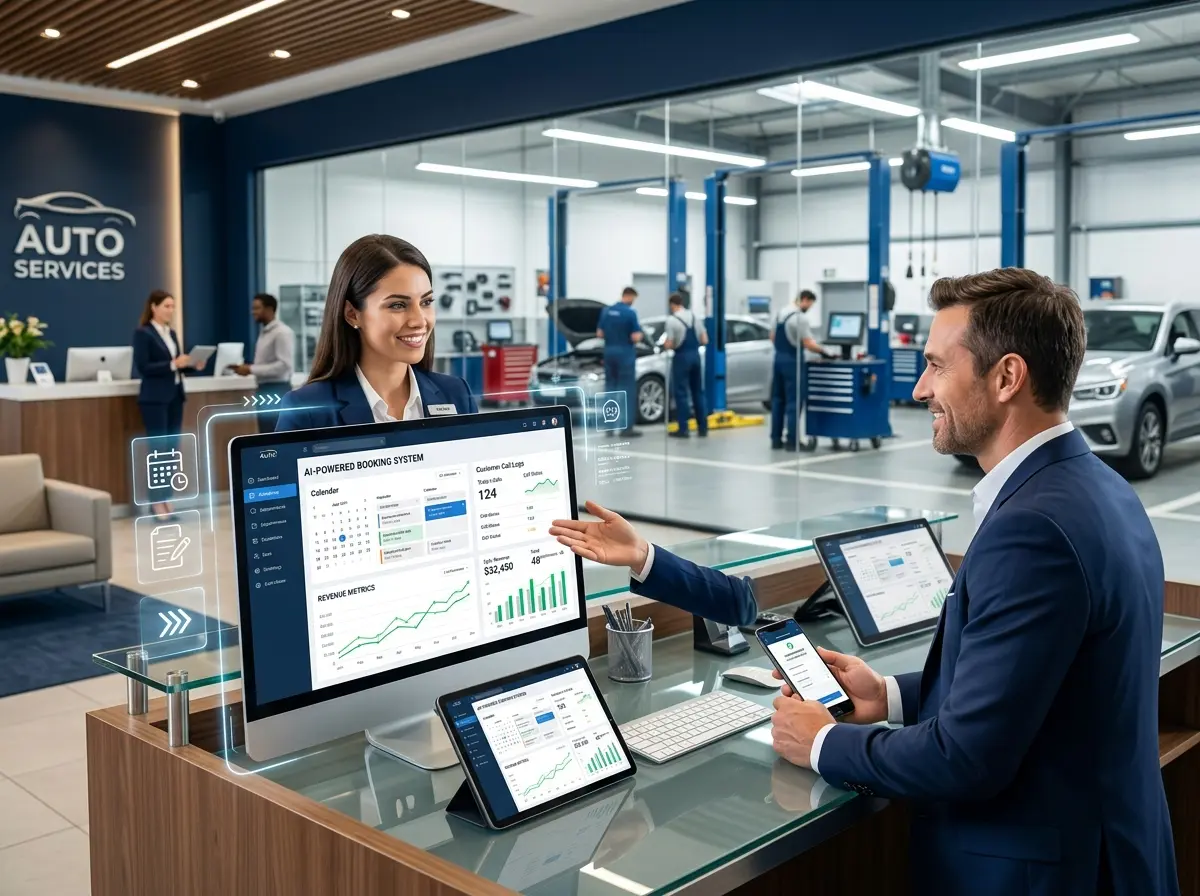
Stella is an AI robot employee and phone receptionist designed to act as a knowledgeable, professional front-of-house presence for businesses — including auto shops. On the phone, she answers calls 24/7, handles common inquiries about services, pricing, hours, and specials, collects customer information through conversational intake forms, and can forward calls to human staff when the situation genuinely calls for it. In a physical shop, she operates as a human-sized kiosk that greets customers in the waiting area and proactively engages walk-ins.
What makes this practical for auto shops specifically is that Stella can be configured with your specific service menu, your current promotions, your scheduling preferences, and your call-handling rules. She's not giving generic answers — she's answering as your shop, with your information. And her built-in CRM captures customer contact details, interaction history, and AI-generated profiles, so your team has context when they follow up. Intake forms can be completed conversationally over the phone, meaning you get the information you need before a customer even arrives.
At $99 per month with no upfront hardware costs, the math is straightforward — she costs less than a single missed repair appointment.
Practical Ways Auto Shops Can Use AI to Book More Business
Automate the Appointment Intake Process
One of the most immediate wins for any auto shop is automating the information-gathering process for new appointments. When a customer calls to schedule service, there's a standard set of questions: What's the year, make, and model? What's the issue or service needed? What's the best contact number? Are there any preferred times? This is a scripted conversation that doesn't require human judgment — it just requires consistency and patience, both of which AI handles exceptionally well.
When this intake happens automatically, your service advisor gets a clean summary of the appointment request waiting in their queue rather than a stack of handwritten notes or a pile of voicemails to return. It also means the customer gets a faster, more professional experience, which sets a positive tone before they've ever driven into your bay.
Use AI to Promote Seasonal Specials and Upsell Services
Auto shops run on seasonal rhythms — winter tire changeovers, summer AC checks, back-to-school oil change specials, pre-road-trip inspections. AI phone receptionists and kiosk tools can be programmed to proactively mention current promotions during every customer interaction, something a busy human receptionist often forgets to do when they're managing multiple priorities simultaneously.
Beyond promotions, AI tools can be configured to make logical service suggestions. If a customer calls in to schedule an oil change, there's nothing pushy about mentioning that your technicians also do a complimentary multi-point inspection with every oil service, or that your current special includes a tire rotation. This kind of consistent, low-pressure upselling — done at scale across every interaction — adds up in meaningful ways over the course of a month.
Collect and Act on Customer Interaction Data
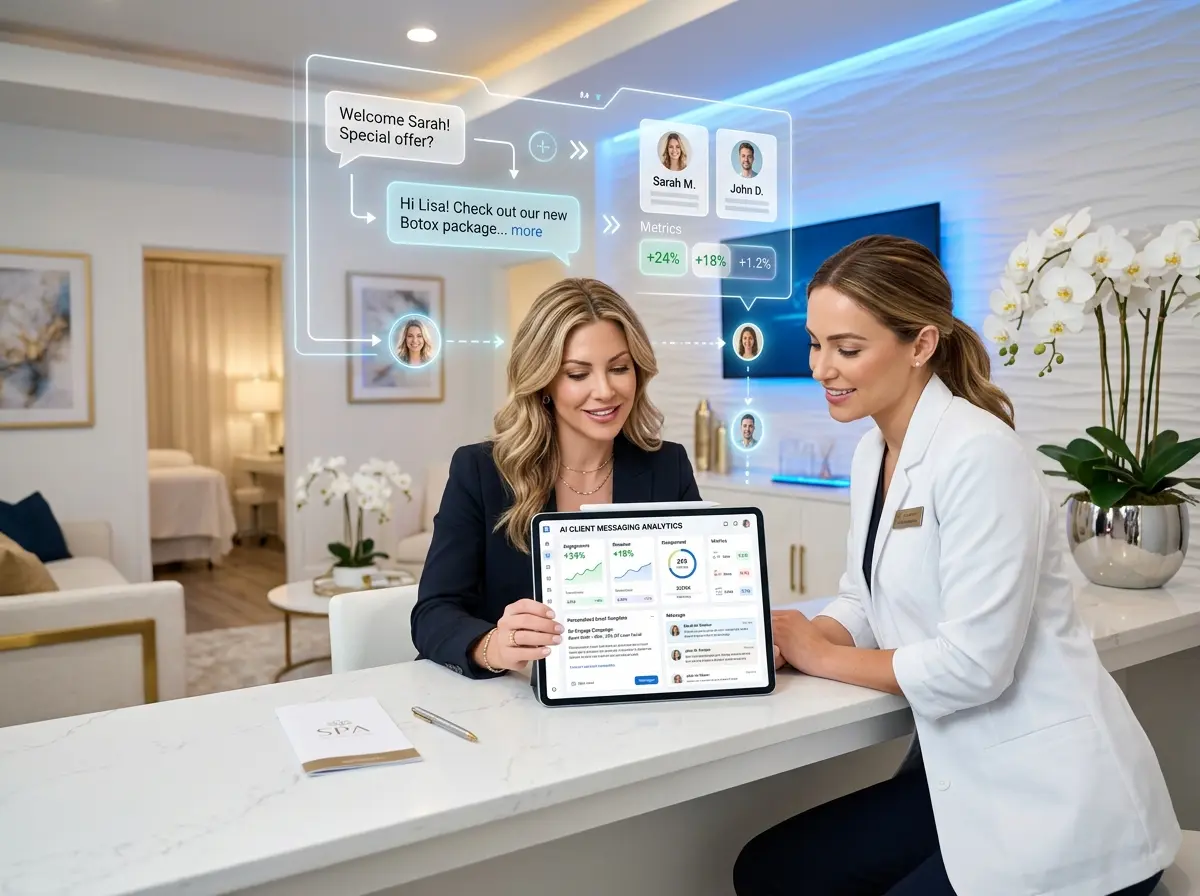
Most independent auto shops operate without a reliable system for tracking what customers are asking about, which promotions are resonating, and which services are most frequently requested. This isn't a criticism — it's simply the reality of running a busy operation without a dedicated marketing team. AI tools that log and summarize every customer interaction change that equation entirely.
When you can see that thirty customers in the past month asked about fleet service but you don't actively advertise it, that's a marketing insight. When you can see that your Saturday hours question comes up constantly, that's an operational insight. Data collected from routine customer interactions, properly organized, turns into better business decisions — and that's a competitive edge most of your local competitors aren't leveraging yet.
Quick Reminder About Stella
Stella is an AI robot employee and phone receptionist that works for businesses of all sizes — including auto shops — starting at just $99/month with no upfront hardware costs. She answers calls around the clock, greets customers in your waiting area, promotes your services, collects customer information, and manages it all through a built-in CRM. She doesn't call in sick, doesn't need training refreshers, and never puts a customer on hold to go find someone who knows the answer.
What to Do Next If You're Ready to Stop Losing Calls
If you've read this far, you probably already know that your shop is leaving money on the table somewhere in the customer communication process. The question is just what you're going to do about it. Here are three concrete steps to get started.
First, audit your missed calls for one week. Pull your phone records or check with your phone provider to see how many incoming calls went unanswered during both business hours and after hours. If you don't know this number, you're managing blind — and once you see it, it tends to be motivating.
Second, list the five questions your staff answers most frequently by phone. These are the questions that an AI receptionist could handle immediately and consistently, freeing your team for higher-value work. For most auto shops, the list includes hours, services offered, pricing on common jobs, and appointment availability.
Third, explore what AI tools are actually designed for your type of business. Generic chatbots and clunky phone trees aren't the same thing as a purpose-built AI receptionist that understands your service menu and can engage customers naturally. The technology has matured, the pricing is accessible, and the barrier to getting started is genuinely low.
Your competitors are still letting calls go to voicemail and hoping customers leave a message. You don't have to be one of them.