Because "I Think Things Are Fine" Is Not a Business Strategy
Let's be honest: most spa managers start their day by checking their phone, grabbing a coffee, and then — if you're lucky — eventually getting around to figuring out how the business actually performed yesterday. If this sounds familiar, you're not alone. But you're also leaving money on the table, and probably making decisions based on vibes rather than data.
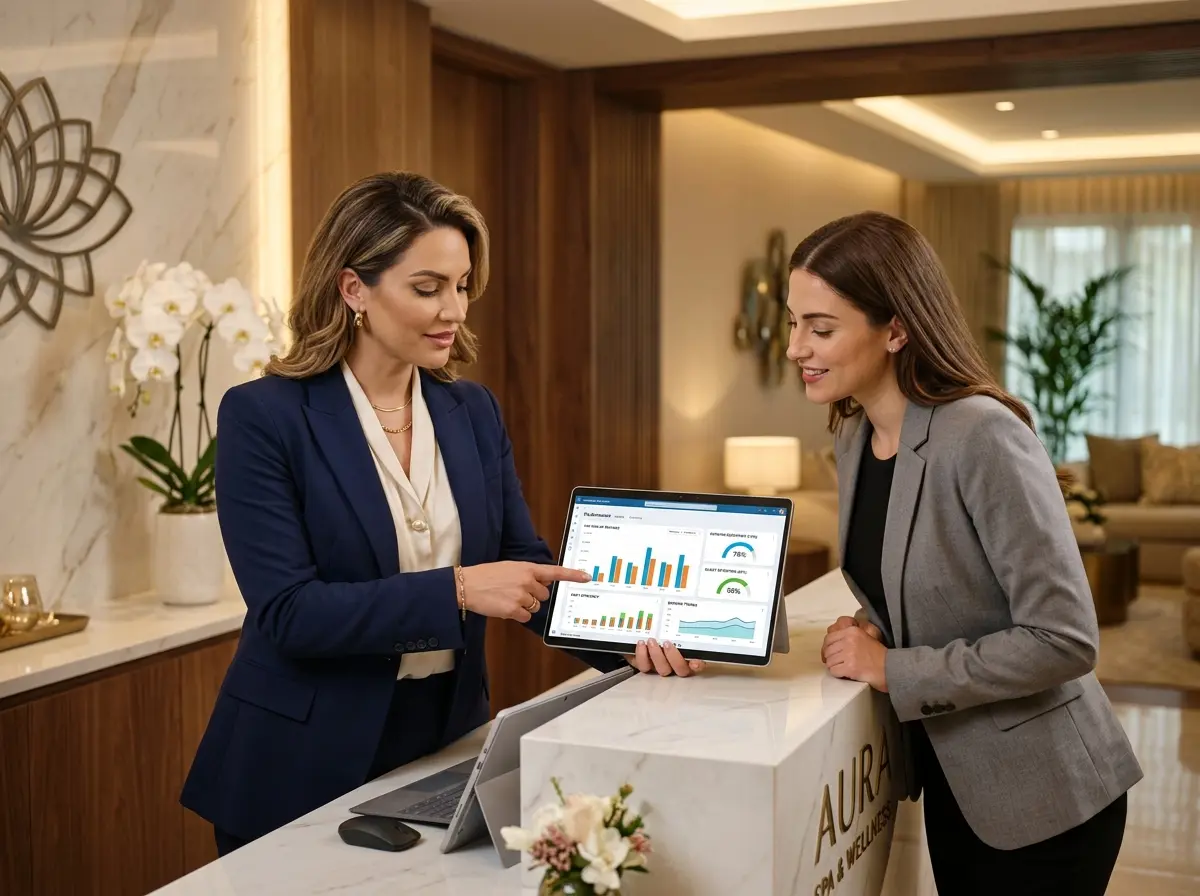
A morning report dashboard changes all of that. When done right, it becomes the first thing every manager opens each morning — a single, clear snapshot of what happened yesterday, what needs attention today, and where the business is headed. Think of it as your spa's daily health check, minus the awkward gown and the cold stethoscope.
This guide walks you through exactly how to build a morning report dashboard that your management team will actually use — and that gives you the operational clarity to make real decisions, fast.
What Should Actually Be on Your Spa Dashboard
Before you start throwing every metric imaginable onto a screen, take a breath. A good dashboard isn't a data dump — it's a curated set of indicators that tell a story about your business in under five minutes. The goal is insight, not information overload.
Revenue and Booking Metrics
This is the obvious starting point, and for good reason. Every morning, your managers should be able to see yesterday's total revenue, broken down by service category (massages, facials, body treatments, add-ons, retail product sales, etc.). Alongside that, you want to see total appointments booked versus available slots — your occupancy rate. Industry benchmarks suggest that a healthy spa should aim for 75–85% occupancy during peak hours. If you're consistently below that, it's a problem worth solving before it becomes a crisis.
Also include a quick comparison to the same day last week and the same day last month. Context matters enormously. A slow Tuesday in February looks very different when you realize it was 30% better than the Tuesday before Valentine's Day last year.
Staff Performance Snapshot
Your therapists and aestheticians are your product. A morning dashboard should surface key per-staff metrics: appointments completed, average ticket value, retail sales attached, and any no-shows or last-minute cancellations attributed to specific providers. This isn't about micromanagement — it's about identifying coaching opportunities, recognizing top performers, and catching problems before they become patterns. If one provider is consistently underperforming on retail attachment, that's a training conversation. If another is generating 40% more revenue per hour than average, that's a best-practice worth studying.
Customer Experience Indicators
Revenue tells you what happened. Customer experience metrics tell you why. Include new vs. returning client ratios, post-appointment review scores (pull from Google, Yelp, or your booking platform), and any flagged complaints or service recovery notes from the previous day. According to a study by Bain & Company, increasing customer retention rates by just 5% increases profits by 25–95%. For a spa, where the relationship between client and provider is deeply personal, tracking repeat visit rates isn't optional — it's essential.
Using Automation to Keep the Dashboard Fresh Without Extra Work
Here's where most spa owners get stuck: they love the idea of a morning dashboard but dread the thought of someone manually compiling data every morning at 7 a.m. Good news — you don't have to.
Connect Your Tools and Let Data Flow Automatically
Most modern spa management platforms (Mindbody, Vagaro, Boulevard, and others) offer API integrations or built-in reporting exports that can feed directly into dashboard tools like Google Looker Studio (free), Databox, or even a well-structured Google Sheets setup with automated imports. The key is to build the pipeline once and let it run. Your managers should open the dashboard and find it already populated — not wait for someone to paste numbers into a spreadsheet.
Set your dashboard to refresh automatically each morning before your team arrives. Schedule automated email delivery of the report at 7:30 a.m. so it lands in inboxes before the first client walks through the door. This is a setup-once, benefit-forever situation.
How Stella Fits Into Your Front-Desk Intelligence
Stella, the AI robot employee and phone receptionist, is a surprisingly useful contributor to the kind of operational data that makes morning dashboards more complete. As a physical in-store kiosk, she captures interaction data from walk-in customers — what questions they asked, what promotions they engaged with, and what services they expressed interest in. As a 24/7 phone receptionist, she logs every call, generates AI-powered summaries of voicemails, and sends push notifications to managers for anything urgent. All of that interaction data becomes insight. If 15 people called yesterday asking about a specific service you don't prominently advertise, that's a signal worth seeing on your morning report.
Making Sure Managers Actually Use It
You can build the most beautiful, data-rich dashboard in the history of spa management and still have your team ignore it completely. Human nature is a formidable opponent. Here's how to make daily dashboard review a real habit rather than a good intention.
Keep It Ruthlessly Simple
Limit your dashboard to 8–12 key metrics maximum. Yes, you could track 47 different data points. You should not. The longer it takes to process the dashboard, the less likely it is to be reviewed consistently. Design it so that a manager can absorb the key takeaways in three minutes flat, with the option to drill down into specifics when something looks off. Use color coding — green for on-target, yellow for watch, red for action required. Remove anything that doesn't directly inform a decision or action.
Build It Into the Opening Routine
Habits attach to existing behaviors. Anchor the dashboard review to something managers already do — the morning team huddle, the shift handoff, the pre-open checklist. Make it the first agenda item of the day, not something that competes with 30 other morning tasks. Some spa operators even display the dashboard on a screen at the front desk or in the break room, making it ambient and visible rather than something that requires a deliberate login. When the numbers are just there, people look at them.
Tie the Dashboard to Accountability and Recognition
Data without consequence is just decoration. Link the morning metrics to your team meetings, performance conversations, and recognition moments. Celebrate when the occupancy rate hits a weekly high. Flag when retail attachment drops below target and discuss it openly. When managers and staff see that the dashboard actually drives decisions — and that good numbers lead to real recognition — engagement with the data becomes self-sustaining. The dashboard stops being a reporting tool and starts being a scoreboard everyone cares about.
Quick Reminder About Stella
Stella is an AI robot employee and phone receptionist built for businesses exactly like yours. She greets clients in person at your kiosk, answers calls around the clock, captures customer intake information, and keeps your CRM organized with AI-generated profiles and interaction notes — all for $99/month with no upfront hardware costs. If you're building out your operational reporting, the data Stella generates from real customer interactions is exactly the kind of front-desk intelligence that belongs on a morning dashboard.
Start Monday Morning With Clarity Instead of Chaos
Building a morning report dashboard for your spa isn't a technology project — it's a leadership decision. You're deciding that your management team deserves better than guesswork, and that your business deserves to be run on real information rather than assumptions and optimism.
Here's how to get started this week:
- Audit your current tools. Identify what data your spa management software already collects and what export or integration options are available.
- Choose your dashboard platform. Google Looker Studio is free and powerful. Databox is excellent for mobile-first teams. A well-built Google Sheets setup works perfectly for smaller operations.
- Define your 8–12 core metrics. Revenue, occupancy, staff performance, customer retention, and experience scores are a strong foundation.
- Automate the data flow. Set up integrations so the dashboard populates itself before your team arrives each morning.
- Anchor it to your opening routine. Make dashboard review the first official act of every manager's day.
The spas that outperform their competition aren't necessarily offering better services or charging higher prices. They're paying closer attention. A morning report dashboard is how you pay closer attention — systematically, consistently, and without relying on someone to remember to check.
Your data is already there. It's time to start reading it.