The 11 PM Email Problem Nobody Talks About
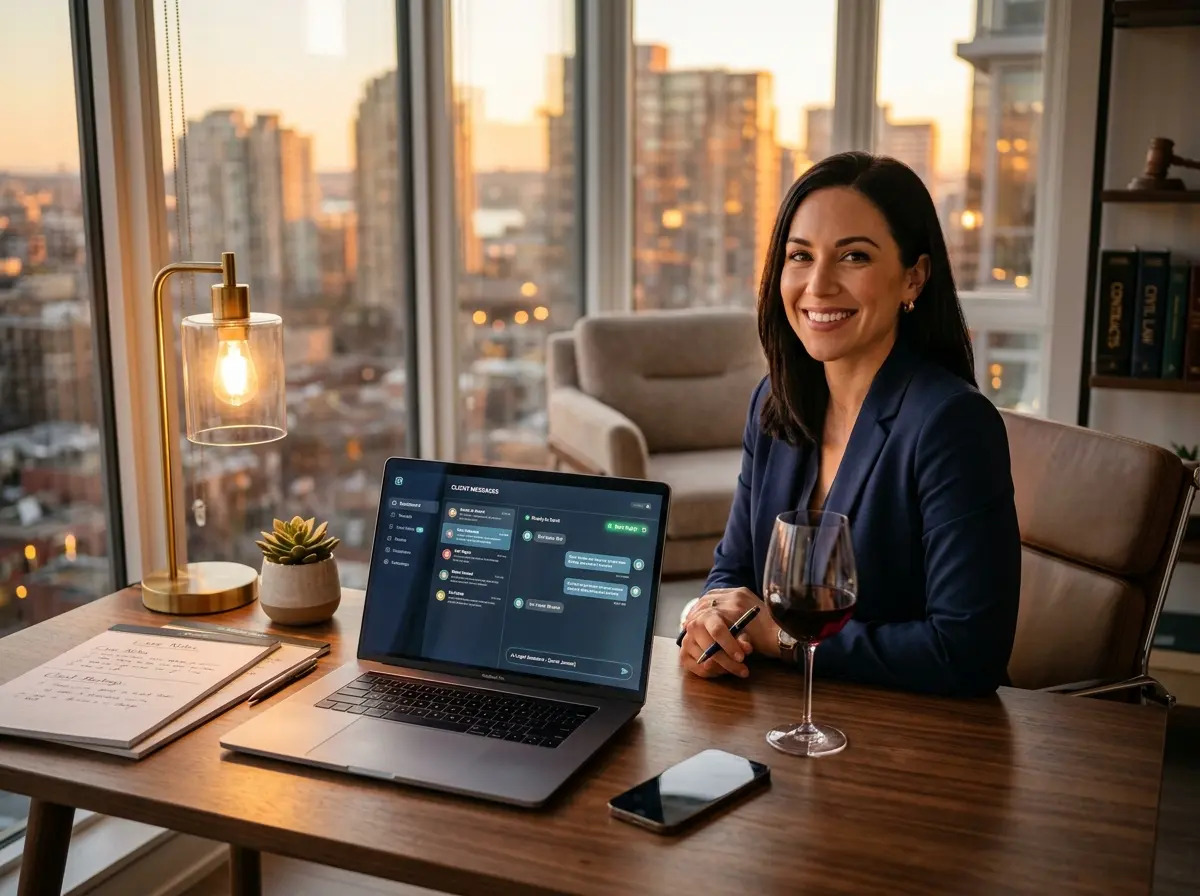
Picture this: It's 11:07 PM on a Tuesday. A reasonable person would be asleep, watching bad television, or at minimum, not thinking about work. But you're a solo attorney, which means you're staring at a new email from a prospective client who found your website, has a question about your consultation process, and would very much like to know your fees before deciding whether to call tomorrow.
Do you answer it now — because if you don't, they'll find someone else by morning? Or do you let it sit — because you're a human being with a nervous system that deserves rest — and hope they're still interested at 8 AM?
This is the quiet, exhausting tax of running a solo law practice. It's not the courtroom drama. It's the communication overhead — the emails, the intake forms, the missed calls, the voicemails you forgot to check — that chips away at your time, your energy, and honestly, your sanity. The good news? AI-powered client communication tools have gotten remarkably good at solving exactly this problem, and solo attorneys are quietly transforming their practices because of it.
Why Client Communication Is the Hidden Time Sink in Solo Law Practices
The Volume Problem Nobody Budgeted For
When attorneys go solo, they typically plan for the work — the briefs, the research, the client representation. What catches most of them off guard is the sheer volume of administrative communication that comes with running the whole operation yourself. According to various legal industry surveys, solo practitioners can spend anywhere from 30 to 50 percent of their working hours on tasks that have nothing to do with practicing law. A significant chunk of that is client communication: answering the same intake questions, explaining consultation fees, following up on documents, and fielding after-hours calls from anxious clients who just need reassurance that their case is still moving forward.
None of this is billable. All of it is necessary. And when you're the only person in the office, there's no receptionist to absorb the load.
The After-Hours Availability Trap
Prospective clients don't operate on business hours — especially in practice areas like family law, criminal defense, or immigration, where people reach out in moments of crisis. A person who just received divorce papers at 9 PM isn't going to wait until Thursday morning to explore their options. They're going to call the first attorney whose website they find, and if nobody picks up, they're calling the second one.
Solo attorneys know this. So they answer. They answer late at night, on weekends, during family dinners. They become available in ways that are genuinely unsustainable, not because they lack discipline, but because the economics of solo practice make every lead feel precious. This is the availability trap, and it's one of the most common reasons otherwise successful solo practitioners burn out within the first three years.
The Intake Bottleneck
Even when a prospective client does successfully reach a solo attorney, the intake process itself can be a friction point. Manually collecting names, contact information, case details, and relevant background — either over the phone or through a clunky form on the website — takes time and creates inconsistency. Without a streamlined system, important details get missed, follow-ups fall through the cracks, and the attorney ends up doing a second intake call just to fill in the gaps. It's redundant, it's frustrating, and it signals to the prospective client that maybe this office isn't quite as organized as they'd hoped.
How AI Communication Tools Are Changing the Game for Solo Attorneys
AI Phone Answering and Intake — A Practical Solution Worth Knowing About
This is where tools like Stella become genuinely relevant to solo attorneys. Stella is an AI robot employee and phone receptionist that answers calls 24/7 with the same knowledge and professionalism you'd expect from a trained human receptionist — except she never sleeps, never calls in sick, and costs a fraction of what a part-time hire would run.
For solo law practices, Stella can handle after-hours calls, answer common questions about consultation availability and fees, and walk prospective clients through a conversational intake process — collecting their name, contact information, case type, and relevant background details before the attorney ever picks up the phone. Those details get organized in a built-in CRM with AI-generated contact profiles, custom fields, and notes, so when you do sit down the next morning, you're not starting from zero. You have context. For practices with a physical office, Stella also operates as an in-person kiosk, greeting visitors and handling walk-in inquiries with the same consistent professionalism. At $99 per month with no hardware costs, it's the kind of tool that pays for itself the first time it captures a lead you would have otherwise missed at midnight.
Building a Communication System That Actually Works for a Solo Practice
Define What Needs a Human and What Doesn't
The first step toward communication sanity is an honest audit. Not every incoming message requires your personal attention — and pretending otherwise is how you end up answering emails at 11 PM indefinitely. Walk through your typical week and categorize your communication touchpoints. Questions about office hours, consultation fees, and general practice areas? Those can be handled automatically. A prospective client who has already completed intake and wants to discuss case strategy? That one needs you.
The goal isn't to remove yourself from client communication — it's to protect your time and attention for the conversations where your expertise actually matters. Creating clear tiers of communication (automated, delegated, and attorney-only) is the foundation of any sustainable system.
Use Asynchronous Communication Strategically
One of the most practical shifts solo attorneys can make is leaning into asynchronous communication — not as a cop-out, but as a professional workflow design choice. This means using intake forms that collect detailed information before a consultation, sending templated follow-up emails after calls so clients always know the next step, and setting clear expectations about response times so you're not implicitly promising real-time availability.
Clients — especially in emotionally charged legal matters — often feel better when they receive a thorough, thoughtful response than a fast but vague one. Structuring your communication around quality over immediacy also subtly positions you as more deliberate and professional. You're not ignoring them; you're being appropriately thorough. There's a significant difference, and most clients understand it when it's explained upfront.
Create Boundaries That Protect Your Capacity
This one sounds obvious until you're actually doing it. Setting and maintaining communication boundaries — specific hours when you respond to non-urgent emails, a voicemail message that sets clear callback expectations, an auto-reply that acknowledges receipt without committing to an instant response — creates a professional framework that actually improves client confidence rather than undermining it. Clients don't want an attorney who is perpetually frazzled and overextended. They want an attorney who is organized, reliable, and in control of their practice. Boundaries communicate exactly that.
The attorneys who implement these systems consistently report not just better work-life balance, but better client relationships. When you're not operating from a place of exhaustion and reactivity, you communicate more clearly, you're more present in consultations, and your work product improves. That's not a soft benefit — it's a direct business outcome.
Quick Reminder About Stella
Stella is an AI robot employee and phone receptionist built for businesses of all types — including solo law practices. She answers calls 24/7, handles intake through conversational forms, organizes client contacts in a built-in CRM, and keeps your practice professionally accessible even when you're finally, blessedly, offline. At $99/month with no upfront hardware costs, she's one of the more practical investments a solo attorney can make in their own sustainability.
You Deserve to Sleep Through the Night
Here's the honest truth: the solo attorneys who build sustainable, successful practices aren't the ones who are available every hour of the day. They're the ones who build systems that are. There's a meaningful distinction between your practice being responsive and you personally being tethered to your inbox at all hours. One is a competitive advantage. The other is a slow burn toward burnout.
The practical next steps are straightforward. Start by auditing your current communication workflow and identifying the three to five most common inquiries you handle manually that could be automated. Implement asynchronous intake before your next week of consultations and notice how much more prepared you feel walking into each call. Set a firm after-hours boundary — even just for the next two weeks — and see what happens to your energy levels.
If you want to go further, explore AI phone answering tools built specifically for practices like yours. The technology is genuinely good now, the cost is reasonable, and the alternative — another Tuesday night answering emails at 11 PM — is not exactly aspirational. Your clients need a sharp, well-rested attorney. Build the systems that make that possible, and everyone wins.