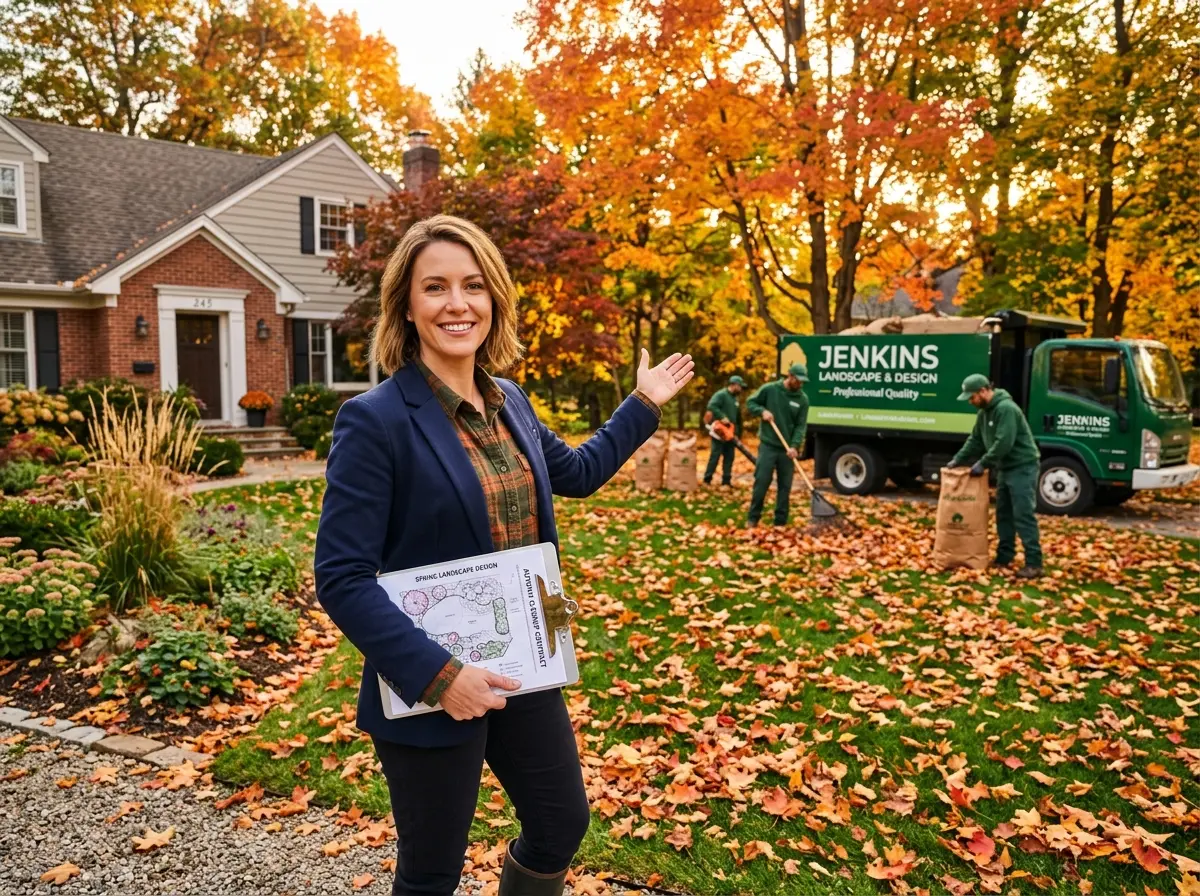
The Leaves Are Falling — And So Are Your Chances of Booking Spring Clients
Every fall, landscaping companies across the country fire up their leaf blowers, rally their crews, and dive headfirst into cleanup season. It's busy, it's profitable, and it's over before you know it. Then January rolls around, the phones go quiet, and everyone starts refreshing their email hoping spring inquiries will magically appear. Spoiler: they usually don't — at least not for companies that treat fall cleanup as just another seasonal job rather than the golden marketing opportunity it actually is.
Here's the thing: your fall cleanup customers are your warmest possible leads for spring contracts. They already trust you with their property. They've already handed you their credit card. They've already watched your crew show up on time (hopefully) and leave their yard looking immaculate. The hard part — building the relationship — is already done. All you have to do is ask for the next step while the moment is fresh.
This guide walks you through building a fall cleanup campaign that doesn't just pay the bills this season, but strategically fills your spring schedule before the snow melts. Let's dig in.
Designing a Fall Campaign That Does Double Duty
A great fall cleanup campaign isn't just about advertising your leaf removal services — it's about framing every touchpoint as the beginning of a longer relationship. That mindset shift changes everything from how you write your emails to what your crews say at the door.
Lead with Value, Follow with the Ask
Nobody wants to feel sold to. But everyone appreciates useful information. Consider launching your fall campaign with genuinely helpful content — think email newsletters, social posts, or even a simple flyer — that educates homeowners about why fall lawn prep matters. Cover topics like why aerating in the fall leads to a healthier spring lawn, or how leaving wet leaves on grass over winter can cause fungal damage. Position your company as the knowledgeable local expert, not just the crew with the truck.
Once you've delivered value, the ask becomes natural: "We're already going to be in your neighborhood — want us to handle this for you?" According to the National Association of Landscape Professionals, homeowners who receive educational content from a landscaping provider are significantly more likely to convert to recurring service agreements. The trust is already built before the first call is made.
Bundle Services to Increase Average Job Value
Fall cleanup is often viewed as a one-time transaction, but smart landscapers bundle it with complementary services to increase ticket size and create natural entry points for ongoing work. Consider packaging leaf removal with gutter cleaning, winterization of irrigation systems, lawn aeration, or a final seasonal fertilization treatment.
Not only does this increase your revenue per stop, it also gives you more face time on the property — which means more opportunities for your team to notice (and mention) what the yard will need come spring. A crew member who casually says, "Your front beds are going to need a solid refresh in April — want us to pencil that in now?" is doing sales work without it feeling like a sales pitch. Train your crews to make these observations a habit.
Create an Early-Bird Spring Booking Incentive
The single most effective tool for converting fall clients into pre-booked spring contracts is a well-structured incentive. Offer a modest discount — 10 to 15 percent is typically the sweet spot — for customers who book their spring cleanup or lawn maintenance package before a set deadline, like December 1st. Pair this with urgency messaging around limited availability (which, if you're any good at your job, is probably true anyway).
You can promote this through post-service invoices, follow-up emails, direct mail to past customers, and social media. The goal is to make booking spring feel like the obvious, financially smart thing to do right now — because it is.
Streamlining Your Follow-Up Without Losing Your Mind
Here's where a lot of landscaping companies fall apart: the follow-up. The work gets done, the invoice goes out, and then... nothing. No check-in, no spring pitch, no relationship maintenance. If you're running a small crew and managing everything yourself, consistent follow-up is genuinely hard to do manually. This is where smart tools make a real difference.
Automate the Conversation Without Losing the Personal Touch
Stella, the AI robot employee and phone receptionist, is built to handle exactly this kind of follow-up work without you having to think about it. For landscaping companies that receive a high volume of inbound calls during peak season, Stella answers every call 24/7 — which means a homeowner calling at 8pm to ask about your fall cleanup pricing gets a real, helpful response instead of voicemail. She can collect customer information through conversational intake forms during the call, so by the time you or your office staff follow up, the lead is already warm and documented.
Stella's built-in CRM lets you tag customers by service type, neighborhood, or season so you can easily segment your fall cleanup clients and target them with spring booking outreach. Every interaction is logged, summarized, and organized — no sticky notes, no forgotten callbacks, no dropped leads during your busiest weeks.
Converting Fall Clients Into Spring Contracts
Getting the spring booking is the whole point, and it requires a deliberate process — not wishful thinking. Here's how to close the loop effectively.
Send the Right Follow-Up at the Right Time
Timing matters enormously. The optimal window to pitch spring services is within 48 to 72 hours after completing a fall cleanup job — while your work is still fresh in the customer's mind and they're still feeling that satisfying "yard looks great" glow. Send a personalized follow-up message (email, text, or both) that thanks them for their business, summarizes what was done, and introduces your spring booking offer.
Keep the message short and warm. Don't bury the offer in a wall of text. Something like: "Your yard is all set for winter — and we'd love to be the first call you make in spring. Book before December 1st and save 12% on your first spring service." That's it. Link to a simple booking form and let the offer do the work.
Use Social Proof During the Sales Window
Between October and December, lean hard into before-and-after content on social media. Post photos of your fall cleanup results, share quick video walkthroughs of properties you've transformed, and — most importantly — ask satisfied fall clients to leave a Google review right after service. A steady stream of fresh reviews during this window does two things: it builds credibility for anyone searching for landscaping services in your area, and it keeps your company top of mind for your existing customers when the spring booking pitch arrives.
Build a Simple Renewal System for Year-Over-Year Retention
The best spring clients are the ones who don't require any convincing — because you've already set them up on an annual agreement. Consider creating a straightforward seasonal maintenance plan that auto-renews each year, covering spring cleanup, summer maintenance visits, and fall cleanup as a package. Customers on annual agreements represent dramatically more predictable revenue, and they're far less likely to comparison shop. Price it at a slight premium to one-off services, and the value proposition practically explains itself.
Quick Reminder About Stella
Stella is an AI robot employee and phone receptionist that works 24/7 — answering calls, promoting your services, collecting customer info, and managing your contacts through a built-in CRM, all for $99/month with no upfront hardware costs. For landscaping companies juggling crews, customer calls, and seasonal campaigns simultaneously, she's the reliable, always-on presence that keeps your front office running even when everyone's outside with a rake. She never calls in sick, never misses a lead, and never puts a potential spring client on hold indefinitely.
Put the Plan Into Action Before the Last Leaf Falls
Fall cleanup season is shorter than it feels when you're in the middle of it. The window to convert those customers into pre-booked spring contracts is even shorter. The good news is that the strategy isn't complicated — it just requires intention and consistency.
Here's your action plan:
- Build your fall campaign now. Write the emails, design the bundle packages, and set the early-bird spring booking offer with a clear deadline.
- Train your crews to make spring observations on-site. A single well-placed comment at the door is worth more than three follow-up emails.
- Set up your follow-up sequence. Automate the 48-hour post-service message and connect it to a simple booking form.
- Use your CRM to tag and segment fall clients so your spring outreach is targeted, not blasted to everyone on your list.
- Collect reviews aggressively during the October–December window while client satisfaction is high.
- Pitch annual agreements to your best customers before the new year.
The landscaping companies that thrive year after year aren't necessarily the ones with the best equipment or the biggest crews. They're the ones who understand that every job is a relationship, every relationship is an opportunity, and fall — as unglamorous as leaf blowing sounds — is one of the best sales seasons of the year if you're paying attention.
So get out there, rake in the fall revenue, and — while you're at it — lock in the spring while the leaves are still warm.