Let’s Be Honest, Your Shelves Can’t Sell Themselves
So, you run an independent bookstore. Congratulations on choosing a career path known for its mountains of cash, leisurely work hours, and zero competition from a certain trillion-dollar online retailer named after a jungle. Oh, wait. That’s not right, is it?
The reality is you’re in a constant battle for attention, loyalty, and, let’s face it, survival. You offer a curated experience, a haven for book lovers, and the intoxicating smell of paper and ink. But that doesn’t always translate to a predictable revenue stream. You have great months and you have… character-building months. What if you could build a loyal, paying community that guarantees income every single month? No, it’s not a literary pyramid scheme. It’s a subscription box.
And before you roll your eyes and mutter, “Not another subscription box,” hear me out. A well-executed book box is more than just a product. It’s a tangible connection to your brand, an exclusive club for your biggest fans, and a secret weapon against the soulless algorithm. This is your guide to creating a subscription box that people will actually line up for—without you having a complete nervous breakdown in the process.
The Blueprint for a Box That Doesn’t Suck
The difference between a bestselling box and a dusty pile of inventory in your backroom is all in the planning. Slapping a book and a random candle together won’t cut it. Your customers are savvy; they can smell a low-effort cash grab from a mile away. You need a strategy, a story, and a whole lot of personality.
Find Your Niche (Because "Books" is Not a Niche)
The subscription box market is crowded. A generic "Fiction Book Box" will be instantly lost in the noise. You need to get specific. Hyper-specific. Your unique identity as a store is your greatest strength, so lean into it. What are you known for? What do your regulars flock to? That’s your starting point.
- Instead of "Mystery Box," try: "Cozy Mysteries & Warm Teas," targeting readers who love a good whodunnit without the gore, paired with artisanal teas.
- Instead of "Fantasy Box," try: "Indie SFF Universe," focusing exclusively on small-press science fiction and fantasy authors your customers won't find on every bestseller list.
- Instead of "Romance Box," try: "Historical Romance Retreat," complete with a new release, a vintage-style bookmark, and a scented sachet.
Don't guess. Ask your customers. Run a poll on social media. Put a little suggestion box on your counter. Your data is your goldmine. Use it to find a niche that isn't just unique but has a built-in audience ready to click "subscribe."
Curation Is Your Superpower
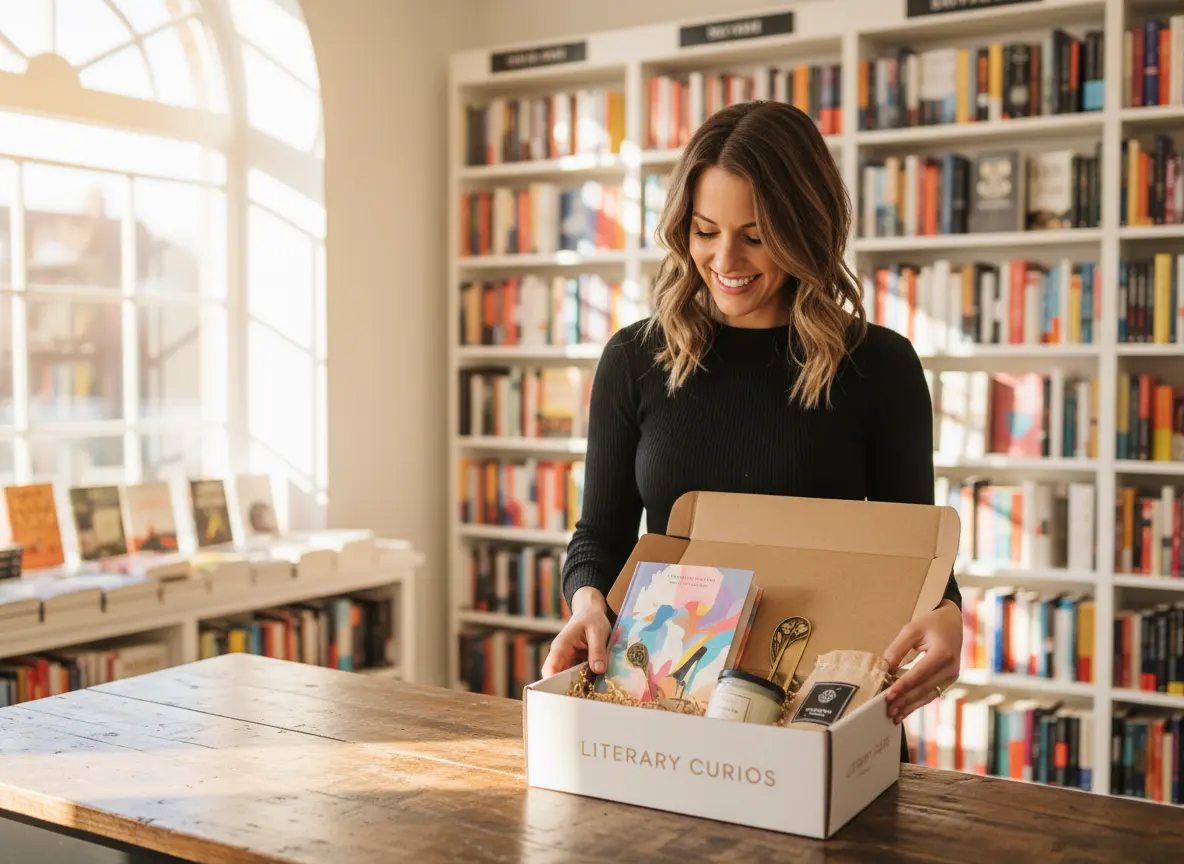
Anyone can ship a book. Your job is to create an experience. The unboxing moment is everything; it’s a little slice of Christmas morning that you’re selling every month. This means every single item in the box needs to feel intentional and part of a cohesive theme.
Think beyond the book. Partner with local artisans to create exclusive items.
- A candle maker who can create a scent inspired by the book's setting.
- A local coffee roaster to create a special "Page-Turner Blend."
- An artist on Etsy to design an exclusive enamel pin or art print.
These unique collaborations add immense perceived value and make your box impossible to replicate. Remember the details: quality tissue paper, a custom sticker to seal it, and a printed note explaining why you chose each item. You’re not just packing a box; you’re curating delight.
Pricing: Don't Bankrupt Yourself for an "Experience"
Ah, pricing. The part where passion meets cold, hard math. It's tempting to underprice your box to attract subscribers, but that’s a fast track to burnout and bankruptcy. You need to be ruthless in calculating your costs.
Your Cost of Goods Sold (COGS) includes:
- The wholesale cost of the book.
- The cost of every single piece of merchandise.
- The box itself, tissue paper, filler, stickers, and any other packaging.
- A small percentage for potential shipping damage or "oops" moments.
A common retail formula is to price the box at 2 to 3 times your COGS. So, if your total cost per box is $25, you should be charging between $50 and $75, plus shipping. This covers your costs, your time (do not forget to pay yourself!), and gives you a healthy enough margin to reinvest in making the next box even better. The perceived value should always feel higher than the price tag.
Marketing Your Box Without Yelling Into the Void
You’ve designed a fantastic box. Now you have to sell it. The good news is, your greatest marketing tool is the very place you’re probably reading this from: your store. You have a captive audience of book lovers walking through your doors every single day.
Turning Your Bricks-and-Mortar into a Launchpad
Don't just hide your subscription box on a webpage. Make it tangible. Create a beautiful, impossible-to-ignore display right near your checkout counter. Showcase a fully assembled box so customers can see, touch, and get excited about what’s inside. But who has time to pitch it to every single person who walks in? You’re busy running a store. That's where your secret weapon comes in.
Imagine a world where you don't have to give the same "subscription box" spiel a hundred times a day. Your in-store robotic assistant, Stella, can become your dedicated Subscription Box Ambassador. She can greet every customer at the door and seamlessly introduce your new offering. For example, a shopper walks in and Stella chirps, "Welcome! I see you're looking for an adventure. Before you get lost in the stacks, have you heard about our 'Forgotten Worlds' fantasy box? This month includes a signed first edition from a debut author, a hand-poured candle that smells like a dragon's hoard, and an exclusive map of the book's world. I can even sign you up for the waitlist right now!" She never gets tired, she never forgets the key selling points, and she frees up you and your staff to do what you do best: offer personal, human-to-human recommendations.
The Nitty-Gritty: Logistics That Won't Make You Cry
Okay, you’ve got the concept and the marketing plan. Now for the… fun part? Logistics. This is the operational backbone of your subscription service, and getting it right is the difference between a smooth-sailing ship and a chaotic mess of packing tape and lost packages.
Sourcing, Packing, and Shipping, Oh My!
Sourcing your items requires you to put on your detective hat. Start local. Visit farmers' markets, craft fairs, and other small businesses in your community. Building local partnerships not only gets you unique products but also creates a wonderful cross-promotional story. For packing, create an assembly line, even if it’s just on a foldable table in the back. Pre-fold your boxes, lay out your materials, and pack in batches. It’s infinitely more efficient than doing one at a time. And shipping? Don't just walk into the post office. Use services like Pirate Ship, Shippo, or Sendle to access commercial pricing and print labels from your own computer. It will save you an astonishing amount of time and money.
Managing Subscriptions: Your New Best Friend is Software
Please, for the love of all that is holy, do not try to manage recurring payments and addresses in an Excel spreadsheet. You will lose your mind. Investing in subscription management software is non-negotiable. If you use a platform like Shopify, there are excellent apps like Recharge or Bold Subscriptions. If you're on a different e-commerce system or want a standalone platform, services like Cratejoy or Subbly are built for this exact purpose. They handle automated recurring billing, allow customers to manage their own accounts (like updating an address, which is a huge time-saver for you), and provide you with crucial data on growth and churn.
A Quick Reminder About Stella
While you're becoming a master curator and a logistics wizard, don't forget who's holding down the fort. Your tireless retail assistant, Stella, is on the floor 24/7, making sure every customer is greeted, every promotion is mentioned, and your day-to-day sales stay strong while you build this exciting new part of your business. She's the most reliable employee you'll ever have.
Ready to Ship It?
Launching a subscription box is a lot of work, there’s no sugar-coating it. But the payoff is immense. It’s a direct line to your most passionate customers, a buffer against slow sales months, and a powerful way to solidify your brand in a sea of retail giants. You're not just selling books; you're building a community, one box at a time.
So, start brainstorming. Poll your customers. Find that weird, wonderful niche that only your store can fill. The predictable income and customer loyalty you’ve been dreaming of are within reach. Now go on, get packing.