Welcome to Your Store. Now, How Does It Feel?
Let’s be honest. You spend countless hours agonizing over inventory, perfecting your pricing strategy, and training your staff to be top-notch sales wizards. You’ve built a business from the ground up. But have you ever stopped, stood at your front door, closed your eyes, and just… experienced it? No, really. What does your store smell like? What does it sound like? What’s the first thing a customer feels when they walk through the door?
Too often, the "vibe" of a store is an afterthought—a random playlist on repeat and whatever scent drifts in from the Cinnabon next door. But creating a deliberate ambiance isn't just fluffy, feel-good nonsense; it's a core part of the customer experience that directly impacts how long people stay and how much they spend. In a world dominated by the sterile, one-click convenience of online shopping, your physical store's greatest weapon is its ability to engage all five senses.
So, let's put on our customer goggles (they’re very stylish, I promise) and walk through a sensory checklist. It's time to stop leaving your store's atmosphere to chance and start designing an experience that’s as memorable as your products.
Setting the Stage: Sight and Scent
First impressions are everything, and they’re usually formed before a customer even speaks to anyone. What they see and smell in those first few seconds sets the entire tone for their visit. Get it right, and you’ve got them hooked. Get it wrong, and they might just do a polite 180-degree turn and walk right back out.
The Look: More Than Just Pretty Shelves
You could have the best products in the world, but if they’re displayed under the harsh, soul-crushing glare of a single fluorescent tube, they might as well be in a warehouse. Sight is the most dominant sense, and it’s about more than just being tidy. It's about telling a story.
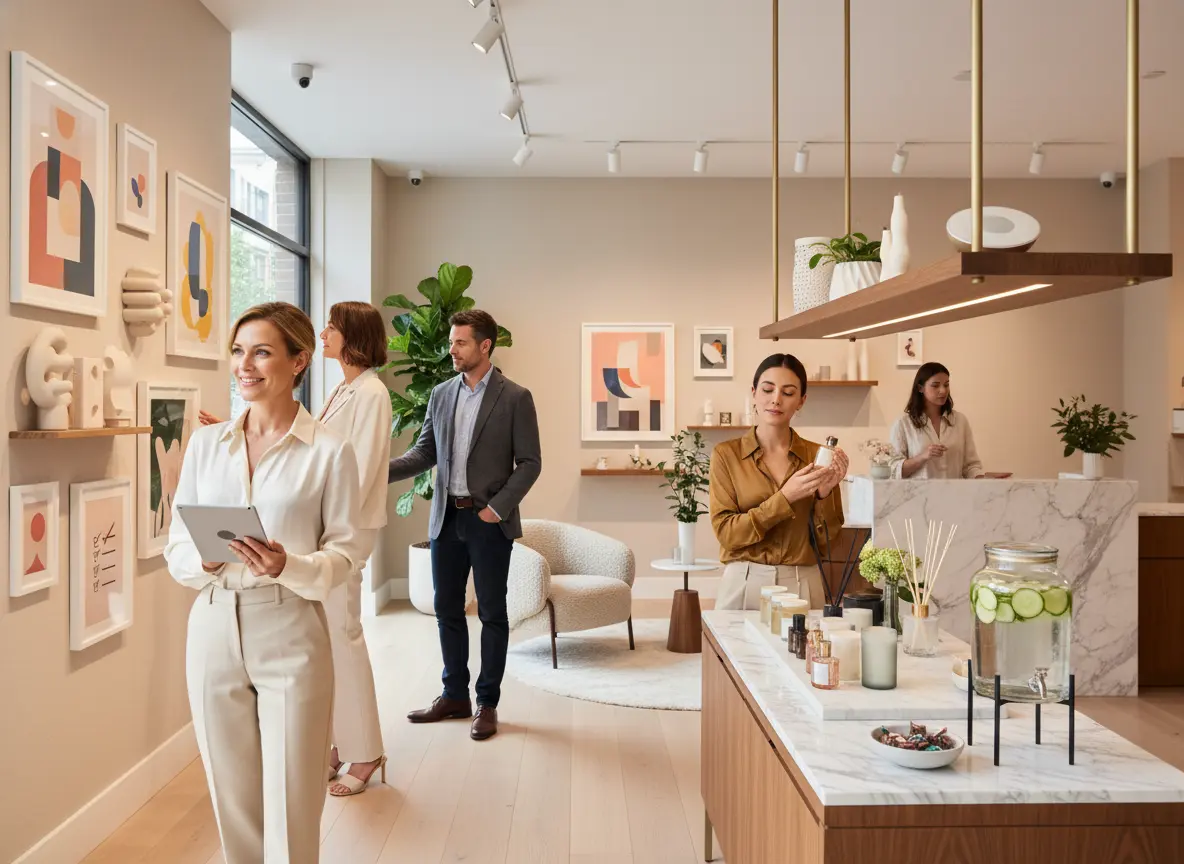
- Lighting is Your Mood Ring: Is your lighting warm and inviting, like a cozy living room? Or is it bright and clinical, like an operating theater? Use a mix of ambient, task, and accent lighting. Softer, warmer lights encourage leisurely browsing, while brighter lights are great for creating energy and highlighting specific products. Pro tip: Don't point a spotlight directly at a reflective surface unless you want to temporarily blind your customers. It’s a memorable experience, just not the right kind.
- Visual Merchandising Magic: Clutter is the enemy of sales. A crowded, overwhelming space makes customers anxious. Your layout should guide them on a journey, with clear pathways and "breathing room" around displays. Use color psychology to your advantage—calming blues and greens for a wellness shop, energetic reds and oranges to signal a sale. And for heaven’s sake, create at least one “Instagrammable moment.” A cool neon sign, a unique art piece, a perfectly styled corner—give shoppers a reason to pull out their phones and become your free marketing team.
The Scent: Your Store's Secret Signature
Scent is the sense most closely linked to memory and emotion. You can use this powerful connection to create a lasting brand impression. Done right, it's an invisible, sales-driving superstar. Done wrong, it’s an allergy attack waiting to happen.
A 2018 study published in the Journal of Marketing found that the presence of a simple, pleasant ambient scent in a retail store improved customer evaluations of the store and its products. The key word here is subtle. You’re not trying to fumigate your customers. Think of a signature scent as a gentle handshake, not a full-body tackle.
- Choose Your Weapon Wisely: Your scent should match your brand. A boutique selling leather goods could have a hint of sandalwood and cedar. A candy store might diffuse a light vanilla scent. A bookstore? Coffee and old paper, obviously. The goal is an aroma that feels authentic and enhances the environment, not a generic “fresh linen” blast from a can.
- Less is More: Remember that person at the office who bathes in cologne? Don’t be the retail version of that person. The scent should be barely perceptible—a pleasant background note that customers might not even consciously register, but that makes them feel comfortable and happy.
Making an Entrance: Sound and Greeting
Once a customer is visually and olfactorily pleased, what do they hear? The sounds of your store—from the music to the first words of welcome—are critical in either building on that great first impression or shattering it completely.
The Sound: Your Unofficial Soundtrack
Please, for the love of all that is profitable, turn off the local top-40 radio station. Nothing kills a carefully curated vibe faster than a jarring commercial for a rival car dealership. Your music should be an extension of your brand identity. A high-end fashion store might play downtempo electronic or indie pop, while a vintage shop could have a playlist of classic rock or soul. The tempo matters, too. Slower-paced music has been shown to encourage shoppers to take their time and browse, while faster music can increase turnover in a high-traffic environment. Just make sure the volume is at a "background" level. Customers should be able to have a conversation without shouting.
The Welcome: Your First Impression, Personified
Arguably the most important "sound" in your store is the initial greeting. A warm, genuine welcome makes a customer feel seen and valued. An ignored customer feels, well, invisible—and invisible customers don't buy things. But your team is often busy—stocking shelves, helping another customer, or processing a transaction. That critical window when a new shopper walks in can easily be missed.
This is where a consistent, reliable greeter can be a game-changer. An assistant like Stella is always positioned perfectly at the entrance, ready to offer a friendly welcome to every single person who walks through the door. She doesn't get distracted or need a coffee break. Stella can immediately engage shoppers by highlighting your latest promotion, pointing them toward a new collection, or simply offering a warm "Hello, welcome in!" This ensures that no customer goes unnoticed and sets a positive, helpful tone from the very beginning, freeing up your human staff to provide in-depth assistance where it's needed most.
The Finishing Touches: Touch and Taste
You’ve nailed the sights, smells, and sounds. Now it’s time for the final, immersive layers that turn a shopping trip into a true sensory experience. These are the details that signal quality and make your customers feel truly cared for.
The Feel: Encouraging Interaction
In an age of "add to cart," the ability to physically touch a product is a massive advantage for brick-and-mortar stores. Don't hide your merchandise behind glass or "Do Not Touch" signs. Encourage interaction!
- Let Them Play: Set up your products so they invite engagement. Drape cozy blankets over a chair. Leave tech gadgets out on a table where they can be picked up and tested. Unbox a board game and set it up for display. The more a customer can physically interact with an item, the more ownership they feel over it, which significantly increases their likelihood of buying it.
- Think Beyond the Product: The sense of touch extends to your entire store. What do your fixtures feel like? A sturdy, reclaimed wood table feels different from a flimsy plastic one. Even the weight of your shopping bags sends a message. A thick, high-quality bag feels luxurious and reinforces the value of the purchase inside.
The Taste: A Little Something Extra
While not applicable to every type of retail, incorporating taste can be an incredibly powerful way to create a positive association with your brand. It’s the ultimate gesture of hospitality.
Obviously, a gourmet food store should be offering samples of cheese or chocolate. A kitchen supply store could have a coffee machine brewing for customers. But you can get creative even if you don't sell consumables. A high-end clothing boutique might offer customers a small bottle of water or a glass of sparkling cider while they shop. Even something as simple as a dish of high-quality mints or wrapped chocolates at the checkout counter provides a small moment of delight and leaves a literal good taste in their mouth as they leave. Just, you know, maybe steer clear of the communal bowl of stale pretzels. We’re aiming for chic, not a biohazard.
A Quick Reminder About Stella
As you craft your perfect sensory experience, remember that the first interaction is the most crucial. While you perfect the lighting and scent, Stella can perfect your welcome, ensuring every customer feels acknowledged and informed from the moment they arrive. She's the ever-vigilant, always-friendly start to the amazing in-store journey you’ve designed.
Your Sensory Masterpiece Awaits
Creating a five-star sensory experience isn't about a massive budget or a complete overhaul. It's about being intentional. It’s about understanding that every tiny detail—from the music's volume to the texture of your shopping bags—contributes to the overall feeling your store evokes. This feeling is what separates you from the soulless scroll of online shopping. It's what builds loyalty, encourages word-of-mouth marketing, and ultimately, drives sales.
So here's your homework: This week, conduct your own Sensory Audit.
- Stand at your entrance and just observe. What do you see, hear, and smell first?
- Walk through the aisles as a customer would. Pick things up. What do they feel like?
- Ask yourself: Is this an environment where I would want to spend my time and money?
Pick one sense and make one small, actionable change this week. Adjust the lighting on a key display. Create a new, on-brand playlist. Find a subtle, signature scent. You’ll be amazed at the difference it can make. Now go forth and orchestrate a symphony for the senses. Your bottom line will thank you for it.