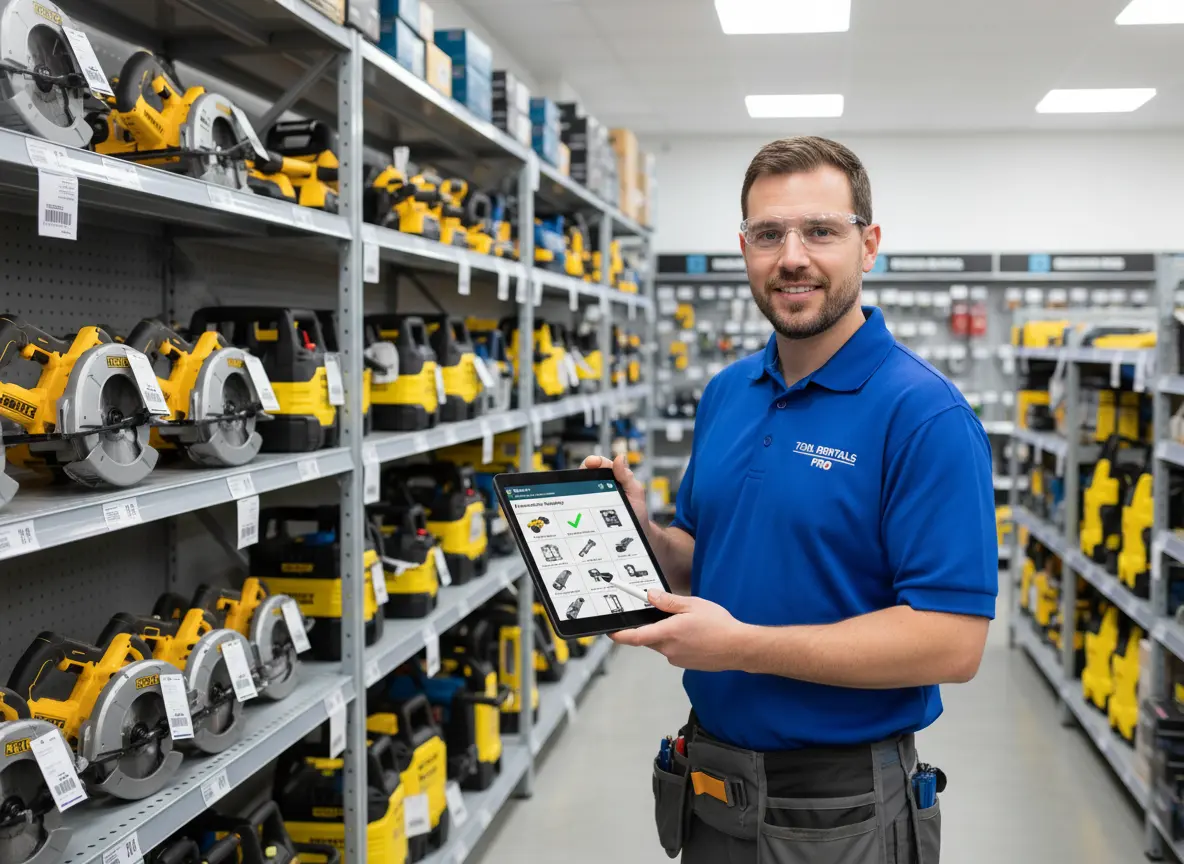
Welcome to the Thunderdome: A Hardware Store's Guide to Managing Tool Rentals
Let’s paint a picture. It’s 9:02 AM on a Saturday. The line is four deep. A guy named Dave—it’s always a Dave—wants to rent the heavy-duty tile saw. You have a vague memory of it coming back last night, but was it cleaned? Does it even work? Your employee, who is 18 and just wants to get back to stocking shelves, gives a noncommittal shrug. You excuse yourself to go play "find the very expensive, possibly broken asset" in the back room. Fun, right?
Tool rental is one of the most brilliant, and most maddening, revenue streams for a hardware store. It’s a fantastic way to bring in customers who might otherwise just visit a big-box competitor. But let’s be honest: it’s also a high-maintenance, high-risk, logistical circus. You’re not just selling a hammer; you’re lending out your expensive, complicated, and occasionally dangerous power tools to people who might use a pressure washer to clean their cat. But fear not. With the right systems, you can turn your rental department from a chaotic money pit into a streamlined profit machine. Let's get our hands dirty.
The Nuts and Bolts of Rental Inventory Management
Success in the rental game isn’t about luck; it’s about having processes so solid that even the most, let's say, creative customer can’t derail your day. This is where you separate the pros from the people who end up with a collection of broken-down generators and a mountain of regret.
Mastering the Check-In/Check-Out Dance
Your check-in/check-out counter is your command center. If this process is sloppy, everything else falls apart. A clipboard and a pen might feel charmingly old-school, but they’re also a recipe for disaster. Today, rental management software is not a luxury; it's a necessity. It tracks availability, maintenance schedules, and customer history all in one place.
Your process should be a non-negotiable ritual:
- Pre-Rental Inspection: Before any tool leaves your store, you and the customer inspect it together. Start it up. Check the fuel. Count the accessories. Note any existing cosmetic damage on the rental agreement. This 60-second step prevents 90% of the "it was already like that" arguments.
- Post-Rental Inspection: The moment it comes back, repeat the process. Is the gas cap missing? Is the blade chipped? Is there a suspicious amount of what looks like cake batter in the motor housing? Document everything. Charge for damages and missing parts immediately. You are not running a charity for the mechanically inept.
To Repair, Retire, or Resurrect? The Art of Maintenance
That plate compactor isn't going to service itself. Deferring maintenance on rental equipment is like playing financial Russian roulette. Eventually, it’s going to cost you big—either in a massive repair bill or a lost rental on the busiest weekend of the year.
Implement a strict preventative maintenance schedule for every single item. An oil change is cheap; a seized engine is not. More importantly, you need to track the profitability of each tool. If you’ve spent $800 over the last year repairing a tiller that only brought in $1,200 in rental fees, is it really pulling its weight? Sometimes, the smartest financial decision is to give a tool a dignified retirement and send it to the great workshop in the sky (or sell it for parts).
Pricing for Profit (Not Just Popularity)
Just because the monolithic chain store down the street rents a log splitter for $80 a day doesn't mean you should. They're playing a different game, one based on volume and loss leaders. You need to price for your reality. Your pricing strategy should be a calculated formula, not a wild guess. Factor in:
- The initial purchase price of the equipment.
- Its expected operational lifespan.
- Average annual maintenance and repair costs.
- The cost of your staff's time to check it in, clean it, and demonstrate it.
- Consumables (blades, belts, filters, etc.).
Offer tiered pricing (e.g., 4-hour, daily, weekly) to maximize utilization, and always, always require a security deposit and offer a damage waiver. The waiver provides peace of mind for the customer and a high-margin revenue stream for you. The deposit ensures you’re not left holding the bag when that new airless paint sprayer comes back looking like a Jackson Pollock painting.
Turning Renters into Repeat Customers (and Buyers)
A well-run rental department doesn’t just generate rental fees. It’s a powerful marketing tool that drives in-store sales and builds fierce customer loyalty. It’s your chance to be the indispensable resource for every weekend warrior and small contractor in town.
The Art of the Upsell: "While You're At It..."
No one rents a floor sander in a vacuum. They need sandpaper of various grits. They need staining pads, polyurethane, painter's tape, and a good quality dust mask. Your rental counter should be an upselling and cross-selling machine. This requires a team that is trained to think one step ahead of the customer's project.
This is also where you can get a little help from modern technology. While your best employee is in the back showing a customer how not to lose a finger to a chainsaw, who’s greeting new arrivals? An in-store assistant like Stella can be a game-changer. Positioned near the entrance, she can greet every single person and highlight your rental department's offerings. Imagine a customer walking in for a single bag of concrete and hearing, "Welcome! Did you know we rent professional-grade cement mixers? It'll save your back and get the job done in half the time!" That’s a seed planted. Stella can also promote weekend rental specials or bundle deals, ensuring no one misses an opportunity simply because your team is tied up.
The Not-So-Fun Stuff That Will Save Your Bacon
Let's talk about the boring-but-critical backend work. It's not glamorous, but ignoring it is how you end up in court or, worse, with an unprofitable department that drains time and resources from the rest of your store.
Liability, Waivers, and Why Your Lawyer Should Be on Speed Dial
You are handing powerful, potentially dangerous equipment to non-professionals. The phrase "hold my beer and watch this" was practically invented for the tool rental industry. Your rental agreement shouldn't be a template you downloaded from the internet. It needs to be an iron-clad document drafted or at least reviewed by a lawyer who understands your business and your state's liability laws. It should be clear, comprehensive, and signed every single time. Furthermore, call your insurance agent. Confirm that your business liability policy specifically covers your rental operations. Don't just assume it does. Assumptions are expensive.
Training Your Team to Be Tool Gurus (and Part-Time Therapists)
Your rental staff need to be more than just cashiers. They are your front line of defense against equipment damage and customer injury. They must be thoroughly trained on the safe operation of every tool you rent. They need to be able to provide a clear, concise, and confident demonstration to every customer. This isn't just good service; it's a crucial part of your risk management strategy.
They also need a bit of training in the soft skills. How do you patiently explain for the third time how to start the wood chipper? How do you de-escalate a situation when a customer is furious about a cleaning fee? Investing in your team's expertise and emotional intelligence will pay for itself tenfold.
Tracking Your ROI: Are These Tools Actually Making You Money?
Popularity does not equal profitability. You need to know your numbers. For your most-rented items, calculate their true Return on Investment (ROI). This means tracking the Total Cost of Ownership (TCO), which includes the initial purchase price, all maintenance, all repairs, and all consumables over the tool's life. Compare that TCO against its lifetime rental revenue. You might be shocked to find that your most "popular" generator is actually a break-even asset at best, while the unassuming lawn dethatcher is a quiet cash cow. This data is pure gold. It tells you what to invest in, what to phase out, and where the real money is.
A Quick Reminder About Stella
While you’re busy managing the controlled chaos of your rental department, remember that an AI retail assistant can be your store's tireless brand ambassador. Stella greets customers, promotes your high-margin rental add-ons, and answers common questions, freeing up your expert team for the complex, hands-on work that only they can do.
Conclusion: Build Your Rental Empire
Managing a tool rental inventory is not for the faint of heart. It requires meticulous processes, a stomach for risk, and an unshakeable commitment to maintenance. But the rewards are immense. A well-run rental department establishes your store as a cornerstone of the community, drives consistent foot traffic, and creates a lucrative revenue stream that is largely insulated from online competition. Nobody is getting a sod cutter delivered by drone tomorrow.
Your next steps are clear:
- Audit Your Process: This week, secretly observe your check-in and check-out procedure. Where are the cracks? Is every step followed, every time?
- Run the Numbers: Pick your top five rental tools and calculate their true TCO and ROI from the last 12 months. Are you surprised by the results?
- Call Your Lawyer: Seriously. Dust off that rental agreement and have a professional look at it. It’s the cheapest insurance you’ll ever buy.
Stop letting your rental department run you. Take control, implement systems, and build the profitable, efficient, and customer-loving operation you know it can be.