Is Your Front Desk Working For You — Or Just Surviving?
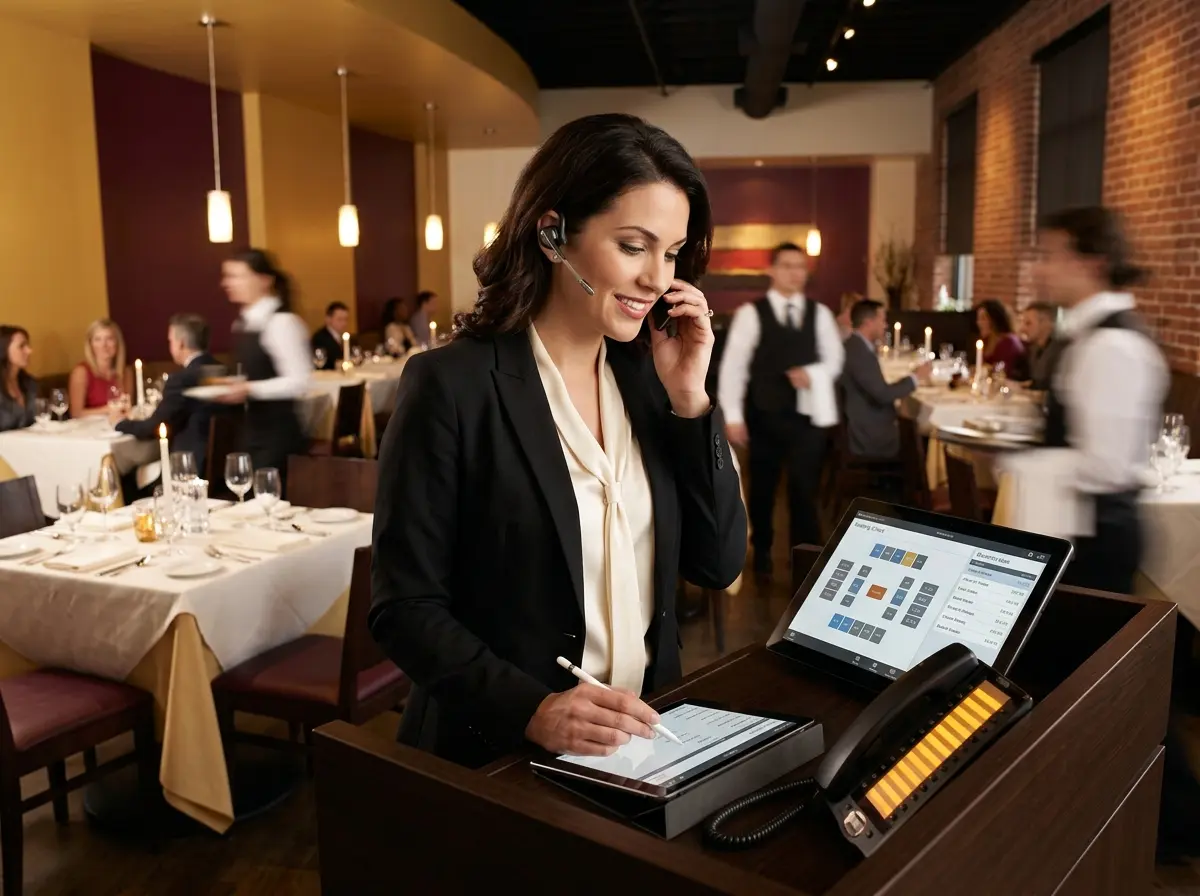
Let's paint a picture. It's a busy Tuesday morning at your medical practice. The phone is ringing. A patient just walked in and looks confused. Someone needs to be checked in. Another patient is asking about their copay. And your front desk receptionist — bless their heart — is doing their absolute best to juggle all of it while also trying to remember if they confirmed tomorrow's appointments.
Sound familiar? If so, you're not alone. The front desk of a medical practice is one of the most high-pressure, high-stakes environments in any business. It's the first impression, the scheduling hub, the billing question center, and the emotional support desk all rolled into one. And yet, many practices are still relying entirely on one or two overworked humans to hold it all together.
There's a better way — and it doesn't require hiring a small army of receptionists. It requires working smarter, not harder. That means taking a hard look at where your front desk is breaking down and filling those gaps with tools that actually scale.
The Real Cost of a Struggling Front Desk
Missed Calls Mean Missed Patients
Here's a statistic that should make any practice manager uncomfortable: studies suggest that up to 35% of callers who reach a voicemail will hang up and call a competitor instead of leaving a message. In healthcare, that's not just a lost appointment — that's a lost patient relationship, potentially for years.
When your front desk is slammed with in-person check-ins, insurance verifications, and the seventeen other things on their plate, answering every call promptly simply isn't realistic. Calls go to voicemail. Voicemails pile up. Callbacks happen hours later — if at all. And in the meantime, that patient has already booked with the practice down the street.
Administrative Overload Is a Patient Experience Problem
It's easy to think of front desk inefficiency as a purely internal problem — a staff issue, a training issue, a workflow issue. But patients experience it directly. Long hold times, rushed intake conversations, incorrect information given under pressure, and a frazzled receptionist who barely has time to make eye contact — these things shape how patients feel about your practice before they ever see a provider.
In a world where patients increasingly treat healthcare like a consumer experience — complete with online reviews, comparison shopping, and high expectations — a chaotic front desk is a liability. According to a Press Ganey survey, patient satisfaction scores are strongly correlated with communication and accessibility, not just clinical outcomes. Your front desk is clinical infrastructure. Treat it that way.
Staff Burnout Is a Real and Growing Problem
Turnover in medical administrative roles is notoriously high. The combination of high call volumes, emotionally demanding patient interactions, complex scheduling systems, and relatively modest compensation creates a revolving door that's expensive for practices to manage. The cost of recruiting, onboarding, and training a new front desk employee can easily exceed $3,000 to $5,000 — and that doesn't account for the productivity lost during the transition period.
When good staff leave because they're burned out, the remaining team absorbs more work, which accelerates their own burnout. It's a cycle that's very hard to break without fundamentally rethinking how front desk responsibilities are distributed.
How AI Can Lighten the Load — Without Replacing Your Team
Automation That Actually Understands Your Practice
The good news is that a significant portion of front desk work is repetitive and predictable. Questions about office hours, accepted insurance plans, parking, appointment prep instructions, cancellation policies — these come up dozens of times a day, and the answers don't change. This is exactly where AI-powered tools can take meaningful work off your team's plate without compromising the patient experience.
Stella, an AI robot employee and phone receptionist, is one example of how this plays out in practice. For medical offices with a physical location, Stella can stand at the front of the waiting room as a friendly kiosk — greeting patients as they arrive, answering common questions, and providing a calm, helpful presence even when the human staff is occupied. For phone management, Stella answers calls 24/7 using the same knowledge base she uses in person, so patients get accurate, consistent information whether they call at 2 PM or 2 AM.
She can also collect patient intake information conversationally over the phone or at the kiosk, forward calls to human staff when clinical judgment is needed, and generate AI-powered voicemail summaries with push notifications so nothing falls through the cracks. Her built-in CRM even helps you manage patient contact records, add notes, and track interaction history — all without a separate platform. It's the kind of infrastructure that lets your human staff focus on the work that actually requires a human.
Building a Front Desk System That Actually Scales
Define What Your Receptionist Should — and Shouldn't — Be Doing
One of the most common mistakes medical practices make is treating the front desk as a catch-all. If something doesn't have a clear owner, it lands on the receptionist. Over time, this creates a role that's impossible to perform well, because it was never designed — it just accumulated.
Start by auditing what your front desk staff actually spends their time on throughout the day. You'll likely find that a large percentage of their tasks are informational or administrative in nature — things that don't require clinical knowledge, relationship history, or emotional intelligence. Those are the tasks to automate or streamline first. Reserve your human staff's energy and attention for the moments that genuinely require it: de-escalating a frustrated patient, navigating a complex scheduling situation, or providing a warm handoff to a provider.
Create Repeatable Processes for Every Common Scenario
A front desk that runs on tribal knowledge is a front desk that breaks every time someone calls in sick. If the only person who knows how to handle a prior authorization question is the one employee who's been there for eight years, you have a process problem disguised as a people problem.
Document everything. Create scripts for common phone interactions. Build decision trees for escalation scenarios. Standardize how intake information is collected. Not only does this make training faster and easier, it also makes it possible for AI tools to handle routine interactions accurately — because the logic is already defined. Think of it as building the playbook that both your human staff and your AI tools can follow consistently.
Use Data to Continuously Improve
One underutilized advantage of modern front desk tools is the data they generate. Which questions come up most often? What times of day see the highest call volume? Which promotions or services are patients asking about? This information is sitting in your interactions every single day — most practices just aren't capturing it.
When you can see patterns in patient questions and behaviors, you can make smarter decisions about staffing levels, training focus areas, website content, and even service offerings. A front desk that generates insights, not just transactions, becomes a strategic asset rather than an operational headache.
Quick Reminder About Stella
Stella is an AI robot employee and phone receptionist built for businesses of all kinds — including medical practices. She greets patients in person at a friendly kiosk, answers phone calls around the clock with consistent and accurate information, collects intake data, manages voicemails with smart summaries, and helps keep your team focused on what matters most. At just $99/month with no upfront hardware costs, she's designed to be accessible for practices of any size.
Your Front Desk Deserves Better — And So Do Your Patients
The front desk problem at most medical practices isn't a people problem. It's a systems problem. Overworked staff, missed calls, inconsistent information, and administrative chaos are symptoms — not root causes. The root cause is a front desk infrastructure that hasn't kept pace with patient expectations or operational complexity.
The path forward doesn't require firing your team or making a massive technology investment. It requires being honest about where the gaps are, automating what can be automated, documenting what needs to be consistent, and giving your staff the support they need to actually do their best work.
Here's where to start:
- Audit your front desk tasks for one week and categorize them by whether they require human judgment or not.
- Identify your top five most-asked patient questions and make sure the answers are available in every channel — phone, kiosk, and website.
- Map your call volume by time of day and figure out when you're losing patients to unanswered calls.
- Document your intake process and standardize it so it can be replicated consistently.
- Explore AI receptionist tools that can handle after-hours calls, routine inquiries, and patient intake without adding headcount.
Your front desk is the face of your practice. With the right systems behind it, it can be an asset you're proud of — instead of a problem you're constantly putting out fires around.