Let's Talk About the Waiting Room Elephant in the Room
You didn't go to dental school for eight-plus years to spend your days chasing down patients who "forgot" their appointment, manually entering the same information from paper forms into your practice management software for the fourth time, or listening to your front desk staff answer the same five questions on repeat while a waiting room full of anxious patients stares at the ceiling tiles. And yet, here we are.
The new patient intake process at most dental offices is, to put it diplomatically, a little rough around the edges. Between missed calls, no-shows, incomplete paperwork, and staff burnout, the administrative side of running a dental practice can feel like a second full-time job — one that pays nothing and requires you to be in four places at once. The good news? Most of these problems are solvable, and they don't require hiring three more people or performing a miracle.
This guide is for dentists and dental office managers who are ready to take a hard look at their intake and scheduling processes and make some meaningful improvements. We'll cover how to reduce no-shows before they happen, how to make your new patient experience smoother from first contact to first appointment, and how modern tools can take a significant load off your team — all without sacrificing the warm, human touch that keeps patients coming back.
Fixing the No-Show Problem Before It Starts
No-shows cost dental practices an average of $200 per missed appointment, and some estimates put the no-show rate for dental offices as high as 10–20%. That's not just lost revenue — it's a scheduling ripple effect that throws off your entire day and leaves your hygienists standing around wondering what to do with themselves. The fix isn't to get angry about it. The fix is to build systems that make no-shows far less likely in the first place.
Confirm, Remind, and Confirm Again
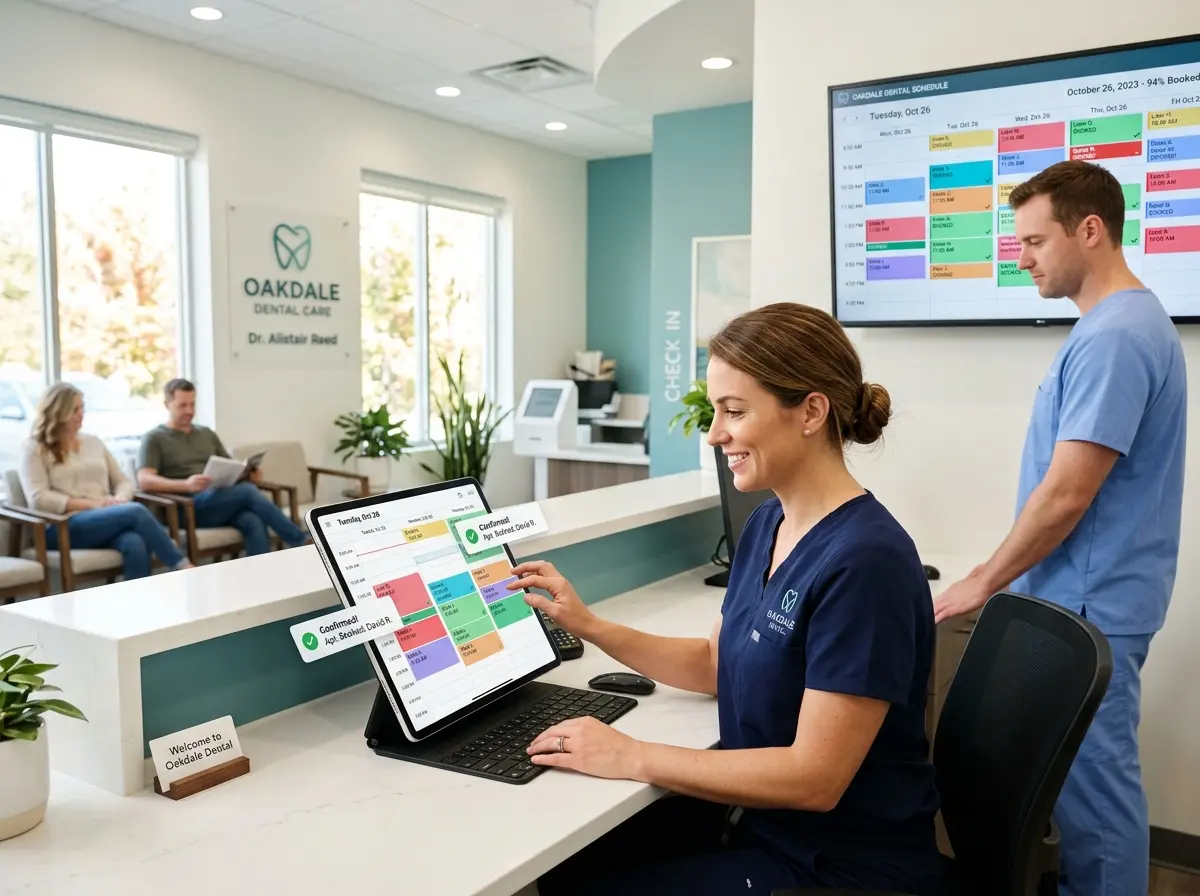
The single most effective thing you can do to reduce no-shows is to implement a multi-touch reminder strategy. A single confirmation email sent the day before is not a strategy — it's a wish. Best practices suggest reaching out at multiple intervals: a confirmation at the time of booking, a reminder 72 hours before the appointment, and a final reminder the morning of. Mix your channels. Some patients respond to texts, others prefer email, and a surprising number still appreciate an actual phone call. When patients feel seen and reminded, they show up. When they don't hear from you until the day before, they forget — or worse, they book somewhere else and don't bother telling you.
Make Cancellations Easy (Yes, Really)
This one feels counterintuitive, but hear it out. When cancellations are difficult or awkward, patients don't cancel — they just don't show up. If you make it simple for a patient to reschedule or cancel with 24–48 hours' notice, you win. You get your slot back, you can fill it with someone from your waitlist, and you maintain a positive relationship with a patient who will actually return. Consider allowing cancellations via text, through a patient portal, or even just by replying to a reminder message. Removing friction from the cancellation process paradoxically reduces no-shows because patients feel respected, not trapped.
Use a Waitlist Strategically
A well-maintained waitlist is one of the most underutilized tools in dental practice management. When a cancellation comes in, your front desk should be able to reach out immediately to fill that slot. The key word there is immediately — most patients decide within hours whether to book a last-minute opening, so speed matters enormously. If your team is too busy answering phones and handling walk-ins to proactively work the waitlist, that open appointment stays open. Consider automating waitlist outreach so that when a cancellation hits, the next eligible patient is notified without requiring manual intervention from your staff.
Modernizing Your New Patient Intake Process
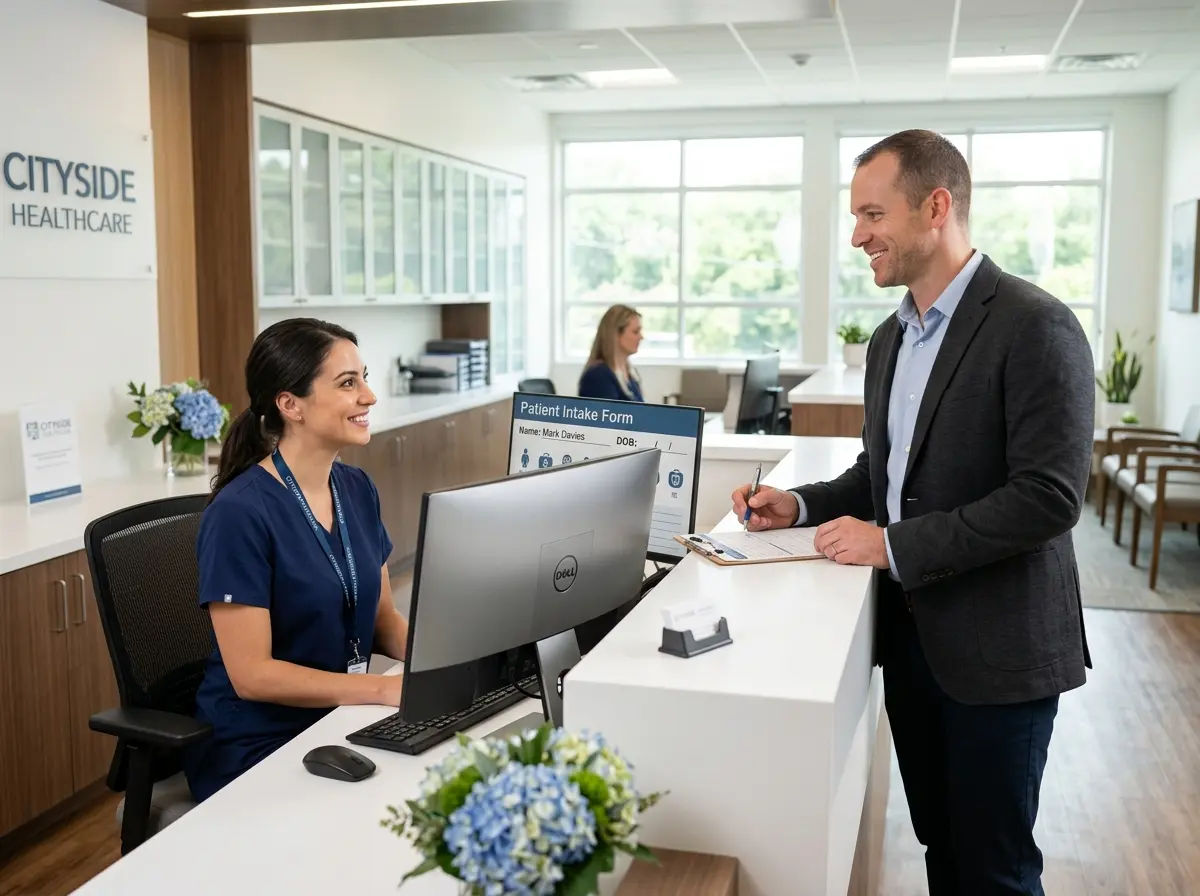
The words "please fill out this clipboard" should be retired alongside fax machines and paper appointment books. Today's patients — especially new ones — form their first real impression of your practice through the intake process. If that experience involves arriving early to fill out six pages of handwritten forms, squinting at tiny checkboxes, and handing them back to a receptionist who then types everything in manually, you've already started the relationship on shaky ground.
How Technology Can Take the Pressure Off Your Front Desk
This is where smart tools make a real difference — and where Stella, the AI robot employee and phone receptionist, is worth knowing about. Stella handles intake conversations over the phone, collecting new patient information naturally during the call — insurance details, reason for visit, contact preferences, medical history flags — and feeding that directly into a built-in CRM with AI-generated patient profiles. Her built-in intake forms work across phone calls, the web, and even at a physical kiosk, so your patients can share their information however is most convenient for them. That means your front desk staff spends less time transcribing and more time actually connecting with patients. Stella also answers calls 24/7, so the new patient who calls at 8 PM on a Thursday doesn't just get voicemail — they get a real intake conversation and a scheduled appointment, without anyone on your team lifting a finger.
Creating a First Visit Experience Worth Coming Back For
Getting a new patient through the door is only half the battle. What happens during and after that first visit determines whether they become a loyal, referring patient or a one-and-done. The good news is that dental practices have enormous opportunity here, because the bar for a great patient experience is, frankly, not set particularly high. Exceed basic expectations and you'll stand out immediately.
Set Expectations Early and Communicate Clearly
Before a new patient ever sits in your chair, they should know exactly what to expect: how long the appointment will take, what to bring, what the first visit will involve, and roughly what their financial responsibility might look like. Uncertainty is one of the biggest drivers of dental anxiety — and dental anxiety is one of the biggest drivers of avoidance and cancellations. A brief, friendly pre-visit communication that walks new patients through what to expect does wonders for their comfort level and your no-show rate simultaneously. This doesn't need to be elaborate; even a short email or text with a few bullet points makes a meaningful difference.
Follow Up After the Appointment — Every Time
The follow-up is where most dental practices drop the ball entirely, and it's one of the highest-leverage things you can do to build patient loyalty. A simple message 24–48 hours after the appointment — asking how they're feeling, reminding them of any post-procedure care instructions, and expressing genuine appreciation for their visit — makes patients feel cared for rather than processed. This is also an ideal moment to introduce the concept of future scheduling. If treatment was recommended, a warm, no-pressure follow-up is far more effective at converting that recommendation into a booked appointment than waiting for the patient to call you. And if they had a great experience, this is a natural moment to ask for a review or referral.
Make Rebooking Frictionless
The easiest appointment to fill is the one you schedule before the patient leaves the office — or immediately after, while the visit is still fresh in their mind. For hygiene recall appointments especially, practices that book the next visit at checkout see dramatically higher return rates than those who rely on patients to call back six months later. If in-person rebooking isn't possible, an automated prompt sent shortly after the appointment with a direct link to scheduling removes every excuse a patient might have to put it off. The goal is to make returning to your practice the path of least resistance.
Quick Reminder About Stella
Stella is an AI robot employee and phone receptionist that handles calls 24/7, conducts patient intake conversations, manages a built-in CRM, and even operates as a physical in-office kiosk for practices with a waiting room presence. She's available for just $99/month with no upfront hardware costs — a fraction of what a missed appointment or a front desk hire costs. If your phones, intake process, or patient communication could use a reliable, professional upgrade, she's worth a serious look.
Your Next Steps Toward a Smoother, Fuller Schedule
None of the improvements covered in this guide require a complete overhaul of how you run your practice. They require intention, the right tools, and a willingness to audit what's actually happening versus what you assume is happening. Start by pulling your no-show rate for the last 90 days — if it's above 5%, your reminder and confirmation process needs attention. Look at your new patient intake workflow and count how many manual steps are involved. If the answer is "many," that's where efficiency gains are waiting.
Then look at your post-visit follow-up process. Is there one? If your honest answer is "sort of," build one. A consistent, warm touchpoint after every appointment is one of the simplest things you can do to improve retention and generate referrals — and it costs almost nothing to implement.
Running a great dental practice is hard enough when you're focused on the clinical side. The administrative and patient communication side of the business doesn't have to be a constant source of chaos. Tighten your intake process, automate your reminders, follow up like you mean it, and use the tools available to you. Your schedule — and your sanity — will thank you.