When "Would You Like to Add On?" Becomes a Revenue Strategy
Let's be honest — most spa menus look like they were designed by someone who got paid by the word. Twelve variations of "relaxing massage," a few facials with names like "Radiant Glow Renewal Experience," and somewhere buried at the bottom, a lonely hot stone add-on that nobody ever orders because nobody ever asks about it. Sound familiar?
Here's the thing: your add-ons and upgrades are often your highest-margin services. They require minimal extra setup, your staff is already there, and the customer is already lying on a table in a bathrobe. That is what sales professionals call a captive audience. Yet most spas leave enormous money on the table simply because they don't have a structured, intentional way to present upgrades to clients.
One day spa decided to stop leaving that money on the table. By building a thoughtful Signature Upgrade Menu — and pairing it with smarter communication before, during, and after appointments — they grew revenue by 30% without adding a single new treatment room or staff member. Here's exactly how they did it, and how you can replicate it.
Building a Signature Upgrade Menu That Actually Sells
Step 1: Audit What You Already Offer (And What People Actually Buy)
Before you design anything, you need to understand what's already on your menu — not just what's listed, but what's actually being sold. Pull your sales data from the past six to twelve months and look for patterns. Which services are booked most often? Which ones almost always come back with a "that was amazing" review? Which add-ons are buried so deep in your menu that your own front desk staff has forgotten they exist?
The spa in our case study did exactly this and discovered three things that changed everything. First, their aromatherapy enhancement was ordered less than 4% of the time — but when it was ordered, clients who received it tipped 22% more and rebooked at a significantly higher rate. Second, their "hot towel scalp treatment" had near-zero awareness among clients. Third, their most popular service (a 60-minute Swedish massage) had a natural pairing — a CBD muscle balm upgrade — that staff almost never mentioned out loud.
Audit before you build. You may already have gold sitting in your menu; it just needs a spotlight.
Step 2: Design the Menu Around Pairings, Not Just Options
The fatal flaw in most spa upgrade menus is that they present add-ons as an arbitrary list — a buffet of extras with no clear relationship to what the client already booked. This forces the client to do mental work they didn't come to your spa to do. Instead, design your upgrade menu around natural service pairings.
Think of it like a restaurant that suggests wine pairings rather than simply handing you a wine list the size of a small novel. When a client books a deep tissue massage, your upgrade menu should immediately surface: a CBD or arnica muscle balm add-on, a post-massage stretch session, or a targeted back and shoulder focus extension. When someone books a facial, the upgrade is a neck and décolleté treatment, or a collagen eye mask. The logic is obvious, the upsell feels helpful rather than pushy, and the client feels guided rather than sold to.
The spa in our case study created three distinct "Signature Upgrade Collections" — one for massage clients, one for facial clients, and one for body treatment clients — each with two to four curated options priced between $15 and $45. Keeping the price range accessible was intentional. At $25, a client doesn't need to think hard. They just say yes.
Step 3: Price, Name, and Present It Like a Premium Experience
Names matter more than you think. "Hot Stone Add-On — $20" sounds like an afterthought. "Thermal Stone Ritual — $20" sounds like something you'd post about on Instagram. This isn't manipulation; it's merchandising, and every successful retail and hospitality brand does it. Your upgrades deserve names that communicate the experience they deliver.
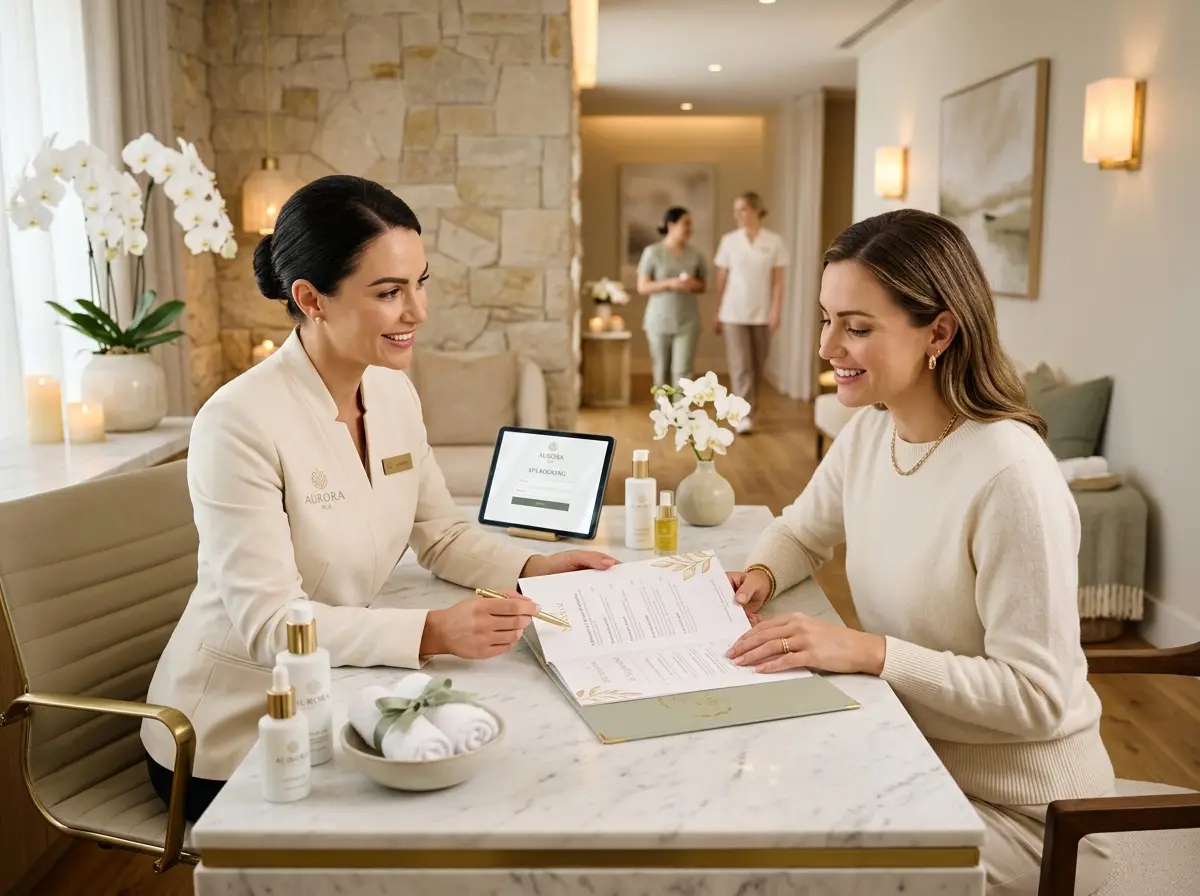
Presentation is equally important. The spa printed a small, beautifully designed upgrade card that sat on the check-in desk and was handed to every client at intake. It wasn't buried in a brochure rack. It was placed directly in the client's hands with a simple script from front desk staff: "While you're getting settled, take a look at our Signature Upgrades — these are the ones our guests love most." That single behavioral shift — proactive, warm, and low-pressure — drove the majority of their revenue increase.
How Technology Can Make Upgrade Conversations Happen Automatically
Let Your Front Desk (Human or AI) Do the Heavy Lifting
One of the spa's biggest breakthroughs was realizing that upgrade conversations were inconsistent — they happened when staff remembered to have them, which wasn't always. This is an extremely common problem in service businesses. Your best employee remembers to mention the upgrade every time. Your newest hire forgets it exists. The result is wildly inconsistent revenue and a client experience that varies depending on who happens to be working that day.
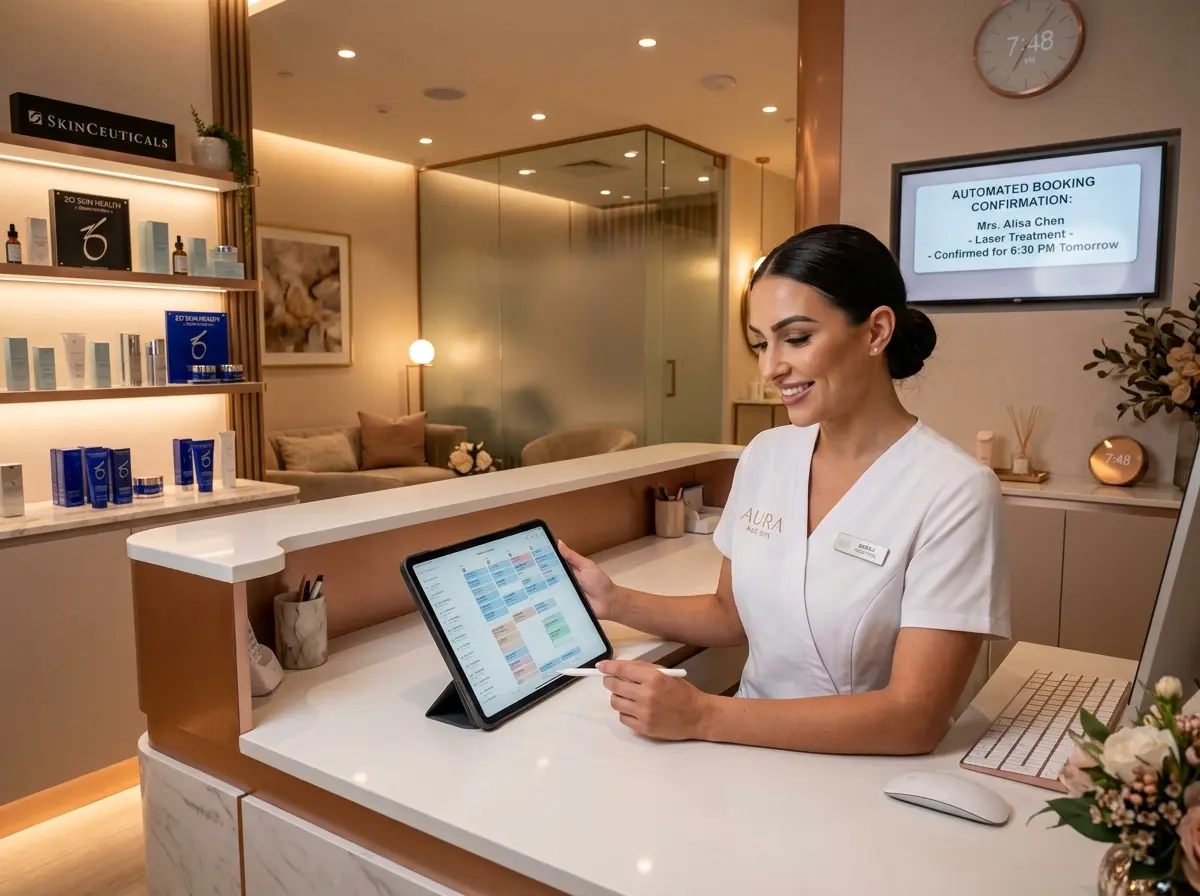
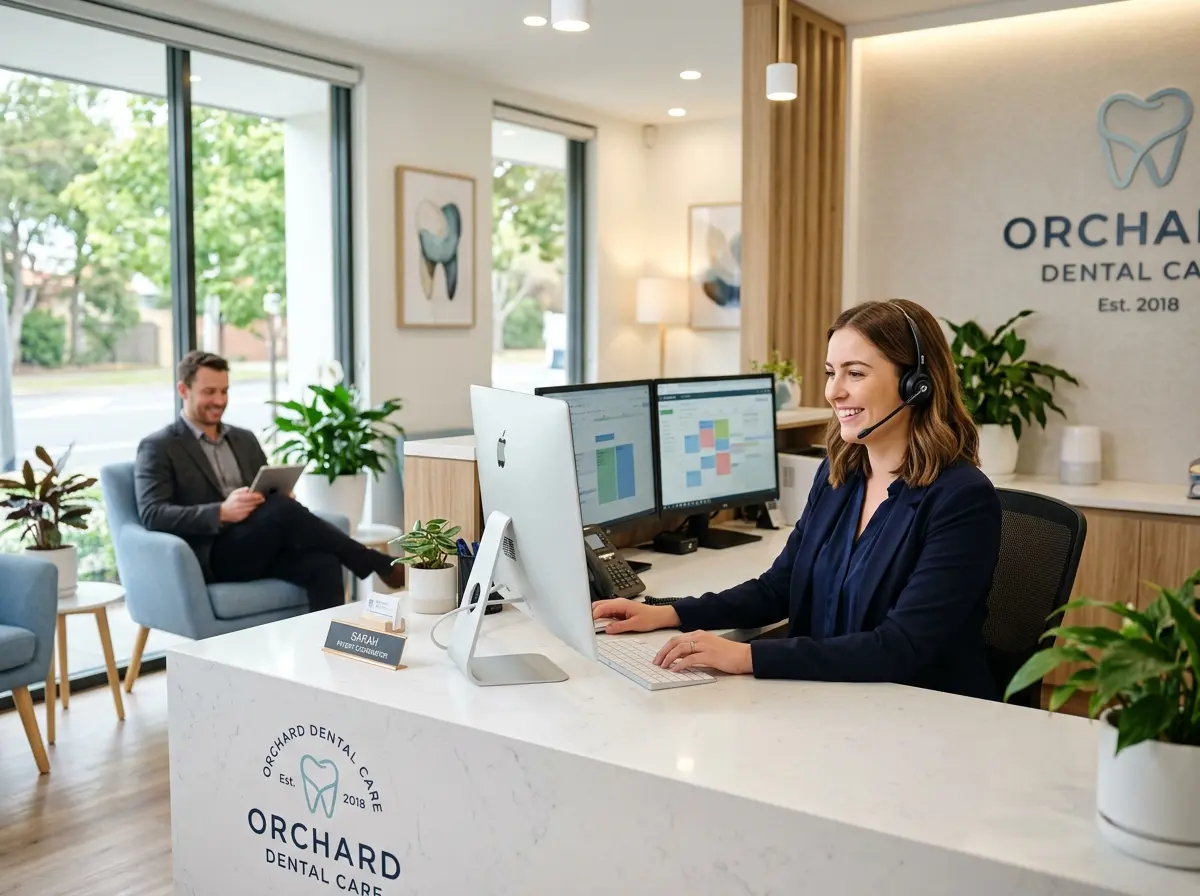
This is exactly where Stella — the AI robot employee and phone receptionist — can make a meaningful difference for spas and service businesses of all kinds. Standing at the front of your location, Stella greets every client who walks in and can proactively introduce your Signature Upgrade Menu in a warm, natural conversation — every single time, without exception. She doesn't have off days, she doesn't forget the script, and she doesn't feel awkward mentioning add-ons. On the phone side, Stella answers calls 24/7 and can mention current promotions and upgrade options as part of the booking conversation, ensuring that clients who book over the phone hear about your upgrades before they ever arrive. Consistent promotion equals consistent revenue — and that consistency is hard to achieve with humans alone.
Training Your Team to Close the Upgrade Conversation
Shift the Language from Selling to Recommending
Nobody wants to feel sold to, especially when they're about to spend 60 minutes in a zen environment specifically to escape the pressures of everyday life. The secret to high upgrade conversion isn't a pushy script — it's language that positions your staff as knowledgeable guides rather than salespeople. Train your team to use recommendation framing: "Based on what you mentioned about tension in your shoulders, I'd actually suggest adding our Thermal Stone Ritual — a lot of our guests find it makes a huge difference."
This kind of personalized recommendation feels like good service. It ties the upgrade directly to something the client told you, which makes it feel relevant rather than generic. And when your intake process asks the right questions — what areas of tension they have, what their goal is for today's visit, how often they experience stress — your staff suddenly has everything they need to make a genuinely useful recommendation.
Use Timing Strategically
Timing is everything in the upgrade conversation. There are three windows where upgrades convert best in a spa environment, and most businesses only use one of them.
- At booking — whether by phone, online, or in person, this is when anticipation is highest and the client is mentally engaged in planning their visit.
- At check-in — the client is present, relaxed, and transitioning into "spa mode." A well-placed upgrade card and a warm verbal mention here is highly effective.
- Mid-service check-in — therapists who briefly note "I have a few minutes if you'd like me to focus more on your lower back with the muscle balm" report surprisingly high conversion, because the client is already in a positive state.
The spa in our case study trained staff to use all three windows intentionally. They also added a simple follow-up email after each visit that highlighted the upgrades the client didn't try this time, with a gentle nudge to add them at their next booking. That follow-up alone contributed to a measurable increase in repeat visit revenue.
Track, Test, and Refine
Once your upgrade menu is live, treat it like a living document. Track which upgrades are selling and which aren't. A/B test different names, different price points, and different placement strategies. Survey clients (briefly — this is a spa, not a focus group) about their awareness of your upgrades. If your aromatherapy add-on has a 2% conversion rate, the answer isn't to eliminate it — it's to figure out whether the problem is awareness, price, how it's being described, or when it's being offered.
Successful spas review their upgrade performance monthly and make small, informed adjustments. The 30% revenue increase our case study spa achieved didn't happen overnight — it was the result of building a smart system and then continuously improving it based on real data.
Quick Reminder About Stella
Stella is an AI robot employee and phone receptionist designed to help businesses like yours run smoother, sell smarter, and never miss a customer interaction. She stands inside your location to greet and engage walk-in clients, and she answers phone calls 24/7 with the same knowledge and promotional awareness she uses in person. At just $99/month with no upfront hardware costs, she's one of the most affordable ways to add a consistent, professional presence to your front-of-house operation.
Your Next Steps to a 30% Revenue Lift
A Signature Upgrade Menu isn't a gimmick — it's a disciplined approach to revenue growth that leverages what you already have: great services, a captive audience, and staff who genuinely know what clients need. The spa in our case study didn't reinvent their business. They just got smarter about how they presented and promoted what they already offered.
Here's where to start this week:
- Pull your sales data and identify your highest-margin, lowest-awareness add-ons. Those are your quick wins.
- Design two to three curated upgrade collections based on your most popular services, with pairings that feel natural and prices under $45.
- Rename your upgrades to reflect the experience, not just the service. Invest fifteen minutes in better copy — it pays off.
- Train your team on recommendation language and identify all three timing windows where upgrades can be introduced naturally.
- Track results monthly and adjust based on what the data tells you.
Your clients already trust you enough to walk in, lie down, and let someone put hot rocks on their back. Trusting your recommendation to add an aromatherapy enhancement? That's the easy part — as long as you actually remember to ask.