Introduction: The Revolving Door Problem (And How to Finally Close It)
If you've been running a salon for more than five minutes, you already know the pain. You invest weeks — sometimes months — training a talented stylist, they build a loyal clientele, and then one day they walk in and hand you a notice because the salon down the street offered them an extra dollar per hour and a slightly fancier breakroom. Fantastic.
Salon turnover is a genuine crisis in the beauty industry. According to the Professional Beauty Association, the salon industry sees annual turnover rates as high as 30-40% — and that's on a good year. Every time you lose a stylist, you're not just losing their labor. You're losing their clients, their institutional knowledge, and anywhere from $3,000 to $10,000 in recruiting and retraining costs. That adds up fast.
The good news? You don't have to accept the revolving door as a fact of life. A well-designed employee incentive program can dramatically improve retention by making your salon the place people actually want to stay. This post will walk you through how to build one that works — practically, affordably, and without requiring an HR department.
Understanding What Your Employees Actually Want
Before you can build an incentive program worth anything, you need to resist the urge to guess. Most salon owners default to bonuses and call it a day. And while nobody has ever turned down extra cash, money is rarely the whole story — and often not even the main one.
It's Not Always About the Money
Research consistently shows that employees — especially in service industries — are motivated by a mix of financial rewards, recognition, flexibility, and growth opportunities. A 2023 Gallup survey found that 51% of currently employed workers were watching for or actively seeking new jobs. The top reasons they cited weren't low pay — they were lack of engagement, no sense of purpose, and feeling undervalued.
For salon professionals specifically, things like flexible scheduling, continued education, and being treated as skilled artists (rather than just booth renters) carry enormous weight. Ask your team directly — via anonymous surveys or casual one-on-ones — what matters most to them. You might be surprised. One team might rave about wanting more advanced training; another might be quietly desperate for better shift flexibility so they can pick their kids up from school.
Define What "Winning" Looks Like for Your Salon
Your incentive program should reward behavior that's actually valuable to your business. That means getting specific about what you want more of. Do you want stylists to upsell retail products? Book more appointments during slow hours? Retain clients long-term? Refer new hires? Each of these goals calls for a different kind of incentive, and trying to reward everything at once dilutes the impact of your program considerably.
Start by identifying your top two or three business priorities for the next quarter. Build your incentive structure around those, and then revisit and adjust every few months. An incentive program isn't a "set it and forget it" policy — it's a living system that should evolve with your business.
Building an Incentive Program That Actually Sticks
The Tier System: Rewarding Consistency and Growth
One of the most effective structures for salons is a tiered incentive system, where employees unlock better perks and bonuses as they hit performance milestones. Think of it like a loyalty program — but for your staff instead of your customers.
For example, you might structure it like this:
- Tier 1 (0–6 months): Standard hourly or commission rate, access to in-house training, birthday recognition, and a welcome gift.
- Tier 2 (6–18 months + performance targets met): Bonus commission percentage on retail sales, priority scheduling choices, and a monthly "spotlight" feature on social media.
- Tier 3 (18+ months + senior performance benchmarks): Paid advanced education (think Balayage certifications or color classes), mentorship stipends, and profit-sharing or quarterly bonuses.
This kind of structure makes longevity feel like an asset rather than an afterthought. Employees can see a clear path forward — and that visibility alone is a powerful retention tool.
Non-Monetary Perks That Make a Real Difference
Don't underestimate the value of perks that cost you little but mean a lot. Flexible scheduling for top performers, free or discounted services for staff and their families, annual paid education allowances, and even something as simple as a dedicated employee break area can shift the culture of your salon meaningfully.
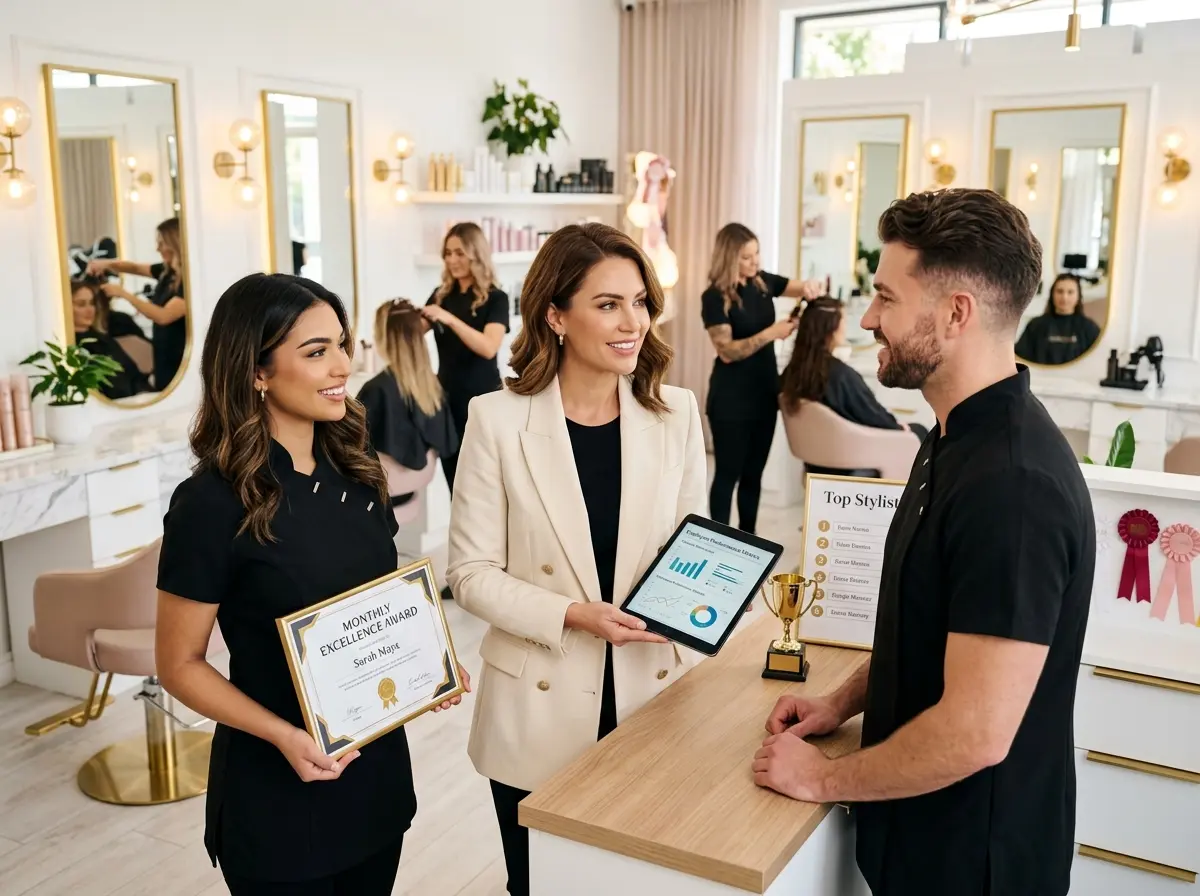
Recognition matters too. A monthly "Stylist of the Month" program with a small gift card and public acknowledgment — on your website, your social pages, your in-salon signage — goes a surprisingly long way. People want to feel seen. When your team feels genuinely appreciated, they're far less likely to be tempted by a competitor's offer.
Freeing Up Your Staff to Actually Enjoy Their Work
Here's something that doesn't get discussed enough in conversations about retention: burnout caused by administrative overload. Your stylists didn't get into the beauty industry because they love answering phones and repeating your hours and pricing to every caller. But in many salons, that's exactly what eats up their energy — and their patience.
This is where Stella, the AI robot employee and phone receptionist, can genuinely lighten the load. Stella greets walk-in customers, answers their questions about services and promotions, and handles incoming phone calls 24/7 — all without pulling your stylists away from the chair. When your team isn't constantly interrupted, they can focus on what they actually love doing. That quality-of-work improvement is itself an incentive, even if it never shows up as a line item on a bonus check.
Stella also captures customer information, manages contacts through her built-in CRM, and provides a consistent, professional presence during every hour you're open. For salon owners, that means fewer dropped calls, fewer missed opportunities, and less reliance on your staff to juggle service and reception simultaneously.
Keeping the Program Going (Without Burning Out Yourself)
Make It Transparent and Simple
The fastest way to kill a great incentive program is to make it so complicated that nobody understands it. If your team has to do mental gymnastics to figure out whether they qualify for a bonus this month, the motivational effect evaporates entirely. Write out the rules clearly, post them somewhere visible in your salon, and go over them during onboarding and team meetings. Transparency builds trust — and trust keeps people around.
It also helps to track progress openly. A simple leaderboard in your break room showing retail sales or client retention stats — framed as celebration rather than competition — can create healthy motivation without turning your salon into a pressure cooker.
Review, Adjust, and Actually Ask for Feedback
Schedule a formal review of your incentive program every quarter. Look at what's being used, what's being ignored, and whether your retention numbers are improving. Survey your staff — anonymously if needed — to find out what's landing and what feels hollow. An employee who feels like their voice shapes the culture is far more invested in staying than one who's handed a policy and told to be grateful for it.
Small adjustments based on real feedback show your team that the program is genuine, not just a retention tactic dressed up in a nice memo. And honestly? The act of asking for feedback is itself a form of recognition — it says, "Your opinion matters here." That message is worth more than most bonuses.
A Quick Reminder About Stella
Stella is an AI robot employee and phone receptionist designed to handle the front-of-house work that constantly pulls your staff away from their actual jobs. She greets customers in person, answers calls around the clock, promotes your services and specials, and manages customer information — all for just $99/month with no upfront hardware costs. For salons trying to reduce staff burnout and improve the overall work environment, she's a surprisingly impactful addition to the team.
Conclusion: Build the Salon People Want to Work At
Reducing turnover isn't about throwing money at the problem and hoping it goes away. It's about creating an environment where talented people feel valued, see a future, and actually enjoy coming to work. A well-built incentive program — one that's tiered, transparent, and tuned to what your specific team cares about — is one of the most cost-effective investments you can make in your salon's long-term health.
Here's where to start:
- Survey your team this week — even informally — to learn what matters most to them.
- Define two or three business goals you want your incentive program to support.
- Draft a simple tiered structure with clear milestones and mix of financial and non-monetary perks.
- Communicate it clearly and revisit it every quarter.
- Look for ways to reduce administrative burden on your team so their day-to-day experience actually improves.
The salons that win the talent war aren't always the ones with the biggest budgets. They're the ones that make people feel like they matter. Start there, and the rest tends to follow.