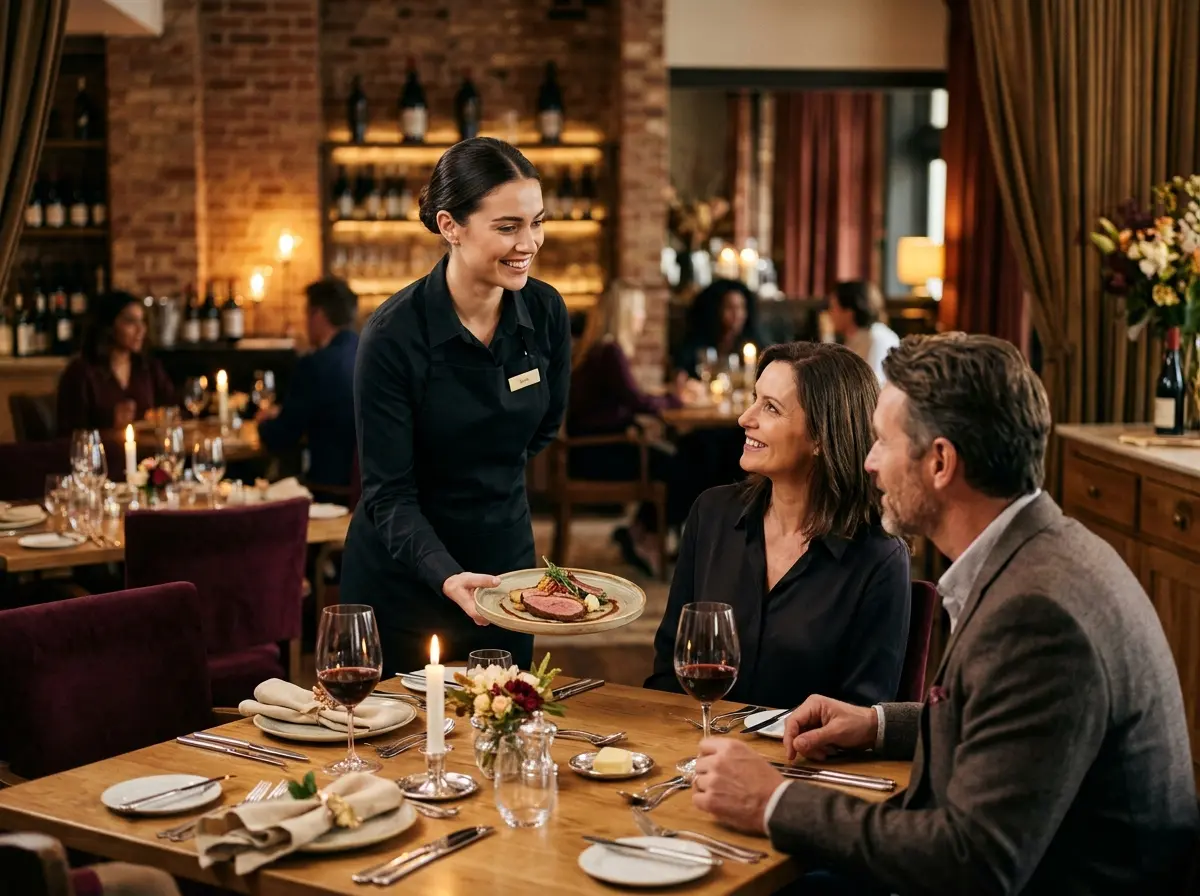
The Fine Art of Selling More Without Making Customers Want to Run
Picture this: You sit down at a restaurant, glance at the menu, and before you can even locate the pasta section, your server is already hovering with a rehearsed speech about the lobster bisque, the chef's tasting menu, the artisanal bread basket, the wine pairing, and — would you like to hear about dessert? You haven't even ordered water yet.
We've all been there. And we've all left a slightly smaller tip because of it.
Here's the uncomfortable truth for restaurant owners and managers: upselling is one of the most powerful revenue tools in the hospitality industry, but it's also one of the easiest to get spectacularly wrong. Done well, upselling increases your average check size, improves customer satisfaction, and turns a Tuesday night dinner into a memorable experience. Done poorly, it turns your servers into used car salespeople and your customers into people who suddenly remembered they have somewhere else to be.
The good news? There's a clear difference between upselling that works and upselling that annoys — and it mostly comes down to timing, authenticity, and knowing your customer. Let's break it down.
The Psychology Behind Why Upselling Goes Wrong
Before we talk about what to do, it helps to understand why so many restaurants get this wrong in the first place. Most bad upselling isn't malicious — it's just poorly trained, poorly timed, or aggressively incentivized in ways that prioritize the restaurant's wallet over the customer's experience.
The "Script Reading" Problem
When servers sound like they're reciting from a teleprompter, customers can tell immediately. Phrases like "Can I interest you in our signature appetizer sampler to start your evening?" delivered in a flat monotone signal one thing: this person doesn't actually care whether you order it, they just have to say the words. Customers are remarkably good at detecting inauthenticity, and once they sense it, their guard goes up for the rest of the meal. Train your staff to speak like humans, not brochures. If your server genuinely loves the mushroom risotto, let them say so — and mean it.
The Timing Trap
Timing is everything in upselling, and most failures happen because someone tried to sell something at the wrong moment. Suggesting a dessert upgrade while a customer is still reading the appetizer menu, or pushing a premium wine on someone who just asked for a water, creates friction instead of value. According to a Cornell University study on restaurant consumer behavior, customers are significantly more receptive to suggestions after they've settled in and feel comfortable — not the moment they sit down. Let the relationship breathe a little before you start recommending add-ons.
The Commission-Breath Effect
Customers have a sixth sense for desperation. If your upselling incentive structure is so aggressive that servers start recommending the most expensive item on the menu regardless of what the customer actually ordered, guests will feel it. The most effective upsell recommendations are ones that genuinely make sense for the customer's order — suggesting a bold red wine to complement a ribeye feels helpful; suggesting it to someone who just ordered the grilled salmon salad feels pushy. Train your team to upsell contextually, not reflexively.
How Technology Can Take the Pressure Off Your Staff
One of the underappreciated challenges of upselling in a restaurant is that servers are managing approximately seventeen things at once. They're tracking table turns, handling complaints, memorizing specials, running food, and trying to remember who ordered the allergy-modified dish at table six. Expecting them to also deliver perfectly timed, personalized upsell recommendations on every interaction is a tall order — and when they're overwhelmed, upselling is usually the first thing that gets dropped or, worse, delivered sloppily.
This is where smart tools can genuinely help. Stella, the AI robot employee and phone receptionist, is designed to handle exactly this kind of consistent, proactive customer engagement without the human fatigue factor. In a restaurant setting, Stella can greet customers as they walk in, share current specials and promotions, and highlight high-margin items — all before a server even arrives at the table. That means your team walks up to a table where the customer is already informed and potentially already interested, rather than starting from scratch every time. Stella also answers phone calls 24/7, so when someone calls to make a reservation or ask about the menu, she can mention the weekend prix fixe menu or the new seasonal cocktail list without your host staff needing to remember to bring it up. It's upselling on autopilot, done politely and consistently.
What Effective Upselling Actually Looks Like
Now that we've covered what to avoid, let's talk about what works. The most successful upselling strategies in restaurants share a few common traits: they add genuine value, they feel natural, and they're delivered by staff who actually believe in what they're recommending.
Lead with Knowledge, Not a Script
Your servers should know your menu deeply — not just what's on it, but what pairs well together, what the kitchen is particularly proud of this week, and what's flying off the tables tonight. When a server says, "The short rib is incredible right now — the chef has been doing a slow braise that's honestly one of the best things on the menu," that's not a sales pitch. That's a recommendation from someone who knows what they're talking about. Invest in regular staff tastings and menu education sessions. It pays for itself many times over in increased check averages and better reviews.
Use Anchoring and Framing Strategically
Menu psychology is real and well-documented. Research published in the International Journal of Hospitality Management found that how items are described — not just priced — significantly influences ordering behavior. Servers can apply the same principle verbally. Instead of asking "Do you want to add a salad?" (closed question, easy to say no), try "The house salad with the lemon herb dressing is a really popular starter — would you like to add one to share?" The framing implies social proof, adds specificity, and makes it easy to say yes. Small language shifts consistently produce measurable results in average ticket size.
Master the Dessert Moment
The end of the meal is one of the most underutilized upsell opportunities in restaurants. After a great dining experience, customers are emotionally primed to say yes — but most servers blow it by simply dropping the check or asking a closed-ended question like "Do you want to see the dessert menu?" Instead, train your team to describe one or two desserts enthusiastically and specifically, or to bring out a visual dessert tray when possible. The conversion rate on a warm, confident dessert recommendation from a server who actually makes it sound delicious is significantly higher than a laminated card placed on the table in silence.
Quick Reminder About Stella
Stella is an AI robot employee and phone receptionist available for just $99/month — no upfront hardware costs, no training headaches, no sick days. She stands in your restaurant, greets guests, promotes your specials, and answers your phones around the clock with the same energy and knowledge every single time. If you're looking for a consistent, professional way to engage customers before your staff even says hello, she's worth a serious look.
Turning Upselling Into a Culture, Not a Chore
The restaurants that upsell most effectively aren't the ones with the most aggressive commission structures or the longest server scripts — they're the ones where the entire team genuinely believes in the product and enjoys sharing it. That kind of culture doesn't happen by accident. It's built through leadership, training, and the right incentives.
Celebrate the Right Wins
If you only track and reward total sales, you'll get servers who rush through tables and push high-ticket items indiscriminately. Instead, track customer satisfaction scores alongside upsell metrics. Reward servers who consistently get five-star reviews and maintain strong average check sizes — because those are the people who have figured out how to make upselling feel like hospitality. Post the numbers publicly, celebrate the wins in pre-shift meetings, and make it part of the culture rather than a grudging compliance exercise.
Make It Easy with Menu Engineering
Your physical menu is your most powerful upselling tool, and most restaurants underinvest in it. Work with a professional menu designer who understands pricing psychology, visual hierarchy, and strategic item placement. High-margin items should be visually prominent. Descriptions should be evocative and specific. Combo suggestions and pairing recommendations should be built into the menu itself — so even before a server says a word, the menu is already doing half the upselling for you. Revisit and refine your menu design at least once a year.
Role-Play Until It Feels Natural
The single most effective training technique for improving upselling confidence is role-playing — and yes, your staff will hate it at first. Do it anyway. Run through common scenarios: the table that only wants water, the guest who can't decide, the couple celebrating an anniversary. Practice different ways to introduce specials, recommend wine pairings, and close the dessert conversation. The goal is to make these interactions feel so natural that they never feel like a sales pitch again — to the customer or the server. Fifteen minutes of role-play before a busy Friday shift will do more for your revenue than any commission restructuring.
The Bottom Line: Sell More by Pushing Less
The irony of great upselling is that it doesn't feel like upselling at all. When it's done right, customers leave thinking their server was exceptionally helpful and knowledgeable. They recommend the restaurant to friends. They come back. And yes, they spent more than they planned — but they feel good about it.
Start by auditing your current upselling approach honestly. Are your servers timing their recommendations well? Do they actually know the menu deeply enough to make genuine suggestions? Is your training producing authentic enthusiasm or robotic script recitation? Fix the fundamentals first.
Then look at the systems around your staff — your menu design, your pre-shift briefings, your technology — and ask where you can reduce friction and increase consistency. Small, intentional improvements across all of these areas compound quickly. A 10% increase in average check size might not sound dramatic, but across hundreds of covers a week, it transforms your bottom line without adding a single new customer to your dining room.
Now go enjoy a nice meal somewhere. And if the server recommends the lobster bisque, maybe give it a chance. They might actually mean it.