Your Members Aren't Leaving Because They Hate Your Gym — They're Leaving Because They Can't Get Into Class
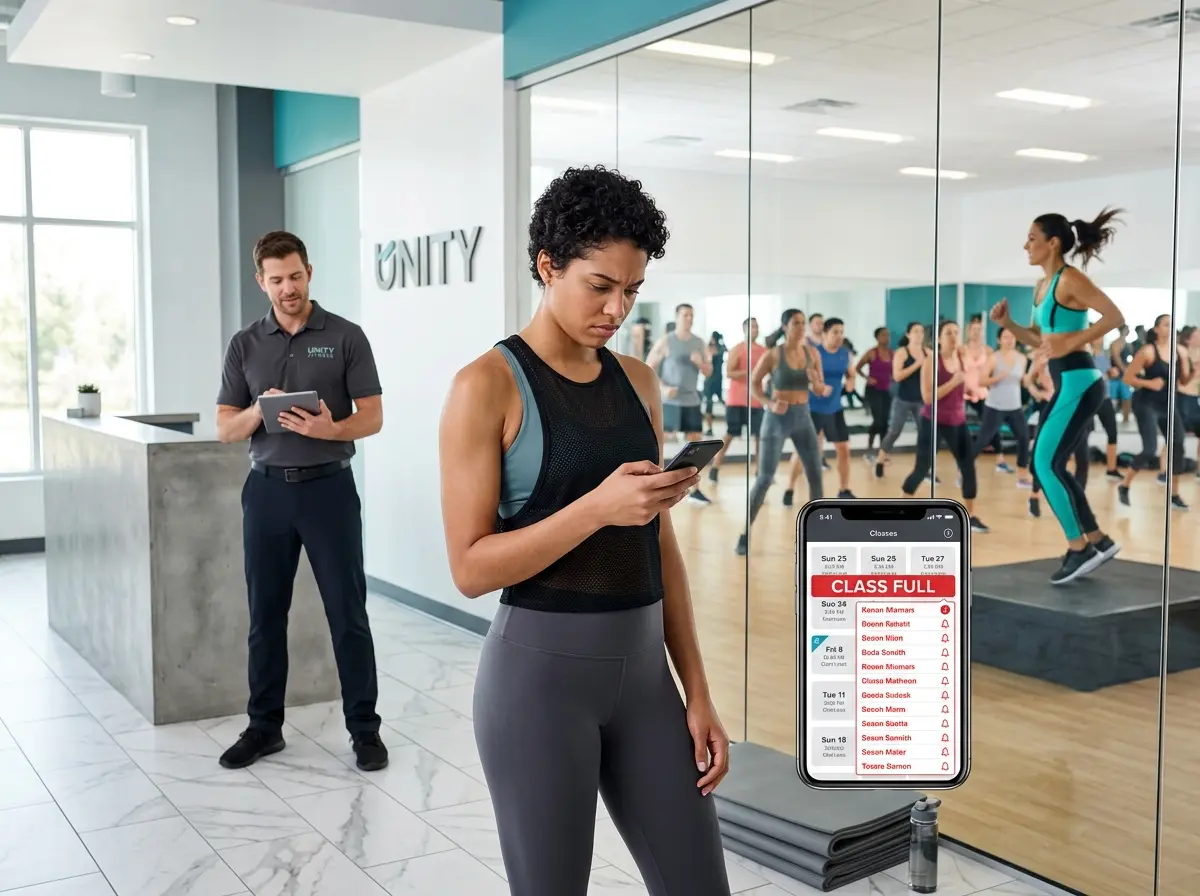
Here's a scenario that plays out at gyms across the country every single day: A motivated member wakes up, checks your app or website to grab a spot in the 6 AM spin class, finds it's full (or worse, finds a confusing scheduling interface that makes them feel like they're filing taxes), gives up, and eventually cancels their membership. Not because they lost their fitness goals. Not because your instructors aren't great. But because your class scheduling software failed them at the most basic level — getting a body into a room.
Gym member retention is a brutal game. Industry data suggests that the average gym loses 50% of its new members within the first six months. While some of that churn is inevitable, a surprising chunk of it is driven by friction — specifically, the friction of trying to book a class and failing. If your members can't find a spot, can't figure out how to join a waitlist, or can't get a straight answer about availability when they call, they will simply find a gym that makes it easier. And they'll do it without sending you a breakup email.
The good news? Most of these problems are fixable. Let's talk about what's actually going wrong with your scheduling setup — and how to stop hemorrhaging members over something this preventable.
The Real Reasons Members Can't Find a Spot (And Why It's Probably Your Fault)
Before you blame the software entirely, it's worth being honest: in many cases, the tool isn't the problem — the way it's being used is. Scheduling software is only as good as the configuration, communication, and processes behind it. Here's where most gyms drop the ball.
Your Waitlist Isn't Working the Way You Think It Is
Most scheduling platforms offer a waitlist feature. Far fewer gyms actually use it correctly. A functional waitlist should automatically notify members when a spot opens, give them a reasonable window to claim it, and move to the next person if they don't respond. Simple, right? And yet, countless gyms have waitlists that send notifications at 2 AM, give members a three-minute window to respond, or — the classic — don't notify anyone at all because no one set up the email integration properly when the software was first installed.
Take a hard look at your waitlist conversion rate. If members are being added to waitlists but rarely converting to confirmed spots, your notification flow is broken. Test it yourself. Join a waitlist for a class and see what happens. You might be unpleasantly surprised.
Your Class Capacity Is Set Too Conservatively (Or Too Generously)
There's a real tension in class capacity management. Set it too low, and you create the illusion of scarcity that frustrates members and drives them away. Set it too high, and you're cramming 30 people into a yoga studio designed for 20, which creates a different kind of member dissatisfaction entirely. Many gyms set their capacity limits once during onboarding and never revisit them, even as their member base grows, their equipment changes, or they hire additional instructors who could run concurrent sessions.
Capacity decisions should be reviewed quarterly, not annually. And they should be driven by actual usage data — not gut instinct and the number your software defaulted to when you signed up.
The Schedule Itself Is the Problem
Sometimes members can't find a spot because there genuinely aren't enough spots — and the solution isn't better software, it's better scheduling. If your 6 AM and 7 AM classes fill up in minutes while your 2 PM class runs with four people, that's not a technology problem. That's a signal that your schedule doesn't match your members' lives. Analyze your booking data and look for patterns. Where is demand outpacing supply? Could you add a second instructor for peak time slots? Could you offer a hybrid format for popular classes that allows some members to join remotely? The data is almost always there — someone just needs to look at it.
Where Better Communication and Smarter Tools Can Fill the Gap
The Phone Call Problem No One Talks About
Here's something worth thinking about: not every member is going to use your app. Plenty of people — particularly those in older demographics or those who simply prefer human interaction — are going to pick up the phone and call your gym to ask about class availability. And if your front desk is slammed (which it usually is during peak hours, when class inquiries are also highest), those calls go unanswered or get a rushed, incomplete response.
Stella, an AI robot employee and phone receptionist, is built for exactly this kind of gap. She can answer calls 24/7, answer questions about class schedules, availability, and policies, and ensure that no member hangs up frustrated because no one picked up. For gyms with a physical location, she also operates as an in-store kiosk — greeting members as they walk in, answering questions at the front desk, and proactively promoting open class spots or special offerings. She's essentially a front desk team member who never takes a lunch break and never calls in sick. At $99/month, she's also considerably less expensive than the alternative.
How to Actually Fix Your Scheduling Problem (Step by Step)
Complaining about broken scheduling is easy. Actually improving it requires a little more structure. Here's a practical framework for getting your house in order.
Audit Your Current Setup Before Shopping for New Software
The instinct when something isn't working is to replace it. Resist that instinct — at least temporarily. New software comes with a learning curve, a migration headache, and the very real possibility that you'll recreate the same problems on a shinier platform. Before you go shopping, spend a few hours auditing your current setup:
- Are your class capacities accurate and up to date?
- Are waitlist notifications actually being sent and received?
- Do members know the waitlist exists and how to use it?
- Is your schedule published far enough in advance for members to plan around it?
- Is your booking interface mobile-friendly and genuinely intuitive?
You may find that the problem isn't the software at all — it's configuration gaps that can be fixed in an afternoon.
Use Your Data to Make Scheduling Decisions
Modern scheduling software generates a remarkable amount of useful data that most gym owners completely ignore. Booking rates by time slot, cancellation patterns, waitlist conversion rates, no-show rates by class type — all of this tells a story about where your schedule is misaligned with demand. Pull a report and actually read it. If your platform doesn't offer this kind of reporting, that's a legitimate reason to consider switching.
Once you have the data, use it to make specific changes. Add a second session at peak times. Remove underperforming classes that drain instructor resources without serving members. Experiment with early-release scheduling for popular classes to give your most loyal members first access. Small, data-driven adjustments compound over time into meaningfully better member retention.
Communicate Schedule Changes Like a Business, Not an Afterthought
One of the most common — and most avoidable — causes of member frustration is finding out about schedule changes after the fact. Class cancelled? Instructor swap? New session added? Members should know about this proactively, through push notifications, email, and visible in-studio signage, not because they showed up and found a dark studio. Build a communication protocol around schedule changes and stick to it. It signals professionalism, and it keeps members from feeling like they're constantly playing catch-up with a gym that can't be bothered to keep them informed.
A Quick Reminder About Stella
Stella is an AI robot employee and phone receptionist that works for businesses of all sizes, including gyms, studios, and fitness centers. She greets customers in person at a physical kiosk, answers phone calls around the clock, promotes current offerings, and handles the kinds of repetitive front-desk questions that eat up your staff's time and patience. At $99/month with no upfront hardware costs, she's a practical solution for gyms that want a more reliable, professional front-of-house presence without adding headcount.
Stop Losing Members to a Problem You Can Actually Solve
Member retention at a gym is hard enough without handing people a reason to leave. Scheduling friction is one of the most common — and most correctable — drivers of cancellations, and it deserves more attention than most gym owners give it. The fix isn't always dramatic. Sometimes it's as simple as testing your own waitlist, adjusting a capacity setting, or making sure someone answers the phone when a member calls to ask about class availability.
Here's what to do this week. Pull your scheduling data and look for peak demand patterns. Test your waitlist notifications end to end. Review your class capacities against actual room limits. And evaluate whether your front-desk communication — in person and by phone — is actually serving members the way it should. If you find gaps, address them one at a time. You don't need a full platform overhaul to start keeping more of the members you've already worked hard to acquire.
Your members want to show up. Make it easy for them to do exactly that.