When "Add-Ons" Actually Add Up
Let's be honest — most day spas leave a significant chunk of revenue on the table every single day. Not because their services aren't good enough, not because their staff doesn't care, but because nobody asked. A client books a 60-minute Swedish massage, gets a 60-minute Swedish massage, and goes home. Transaction complete. Opportunity missed.
One spa decided to fix that. By building a thoughtfully designed Signature Upgrade Menu — a curated list of service enhancements that could be added to any existing booking — they didn't just improve the customer experience. They grew revenue by 30% without adding a single new service, hiring additional staff, or spending a fortune on marketing. The secret wasn't magic. It was structure, smart promotion, and knowing when (and how) to ask.
If you're running a spa and still relying on your front desk staff to casually mention upgrades between phone calls and check-ins, this post is your wake-up call — served warm, with a side of eucalyptus.
Building a Signature Upgrade Menu That Sells Itself
Start With What You Already Have
The biggest mistake spa owners make when thinking about upsells is assuming they need to create something entirely new. They don't. The most effective upgrade menus are built from enhancements that already exist in the treatment room — hot stone add-ons, aromatherapy selections, scalp massages, CBD oil upgrades, extended treatment time, deep conditioning hair treatments, paraffin wax dips. These aren't exotic inventions; they're things your therapists are already capable of delivering.
The spa in our case study started by auditing every service on their menu and asking one simple question: "What could make this better in 10 to 20 minutes for an additional cost?" From that exercise alone, they identified nine viable upgrades. They narrowed it down to six that were easiest to execute, most popular with existing clients who had requested them informally, and most profitable per minute of therapist time.
The key here is keeping the list tight. A menu with 20 add-ons is overwhelming. A menu with five to seven curated options feels exclusive and intentional — which is exactly the vibe a day spa should be going for.
Name Them Like You Mean It
Here's where a lot of spas completely drop the ball. They create the upgrades, print them on a sad photocopied sheet, and call them things like "Hot Stone Add-On – $20." Riveting. Really makes you want to open your wallet.
The spa in our example took a different approach. They gave each upgrade a Signature name tied to the spa's brand identity. "Volcanic Warmth Enhancement." "Citrus Renewal Scalp Ritual." "Golden Hour Extension." Suddenly, adding $25 to your bill didn't feel like an upsell — it felt like an experience. The language wasn't pretentious, it was evocative. There's a big difference.
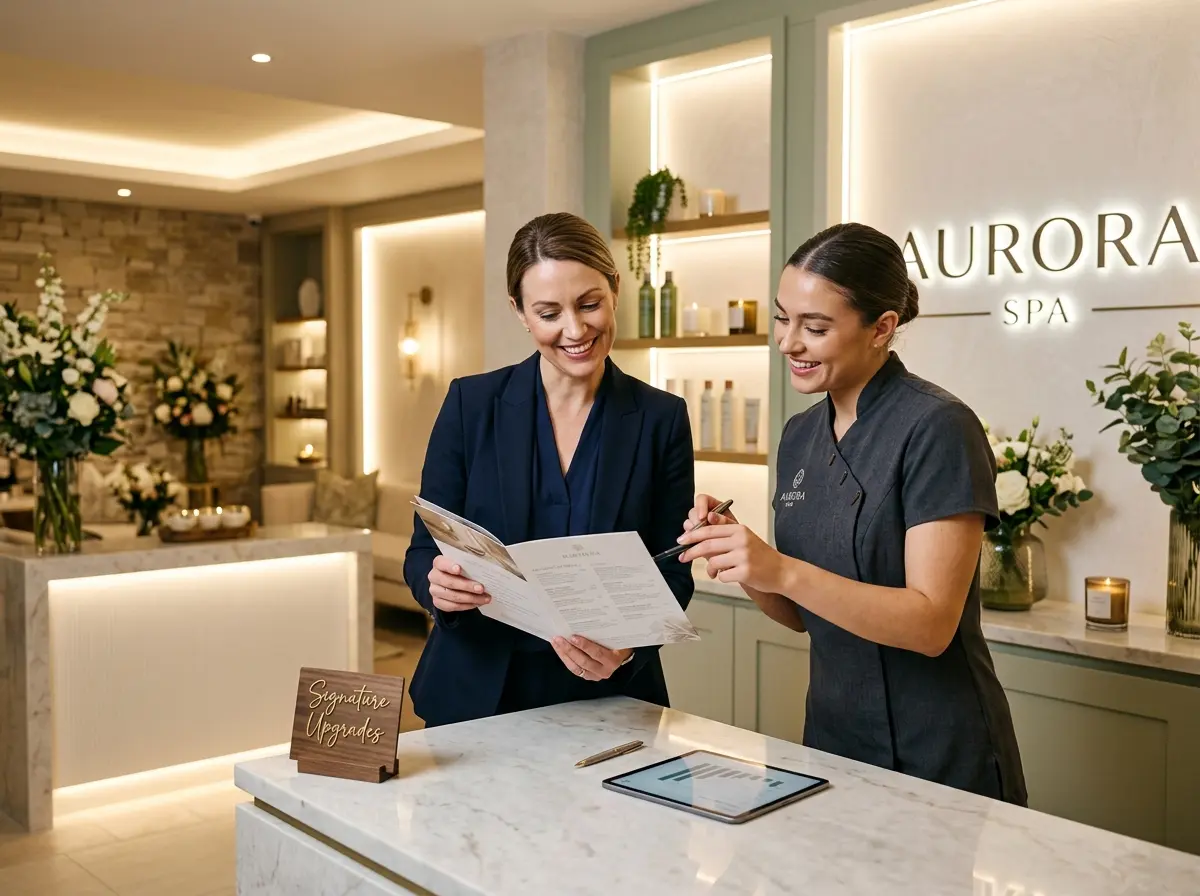
Your upgrade menu is a marketing document as much as a service list. Treat the copy with the same care you'd give your website or Instagram. Each upgrade should have a name, a one-sentence description, and a clear price. That's it. Clean, confident, and compelling.
Make It Visible Before, During, and After Booking
Timing matters enormously. Presenting an upgrade menu when a client is already on the table and half-asleep is charming, but not particularly strategic. The most effective upgrade promotions happen at multiple touchpoints: during the online booking process, at check-in, and in any pre-appointment confirmation communications.
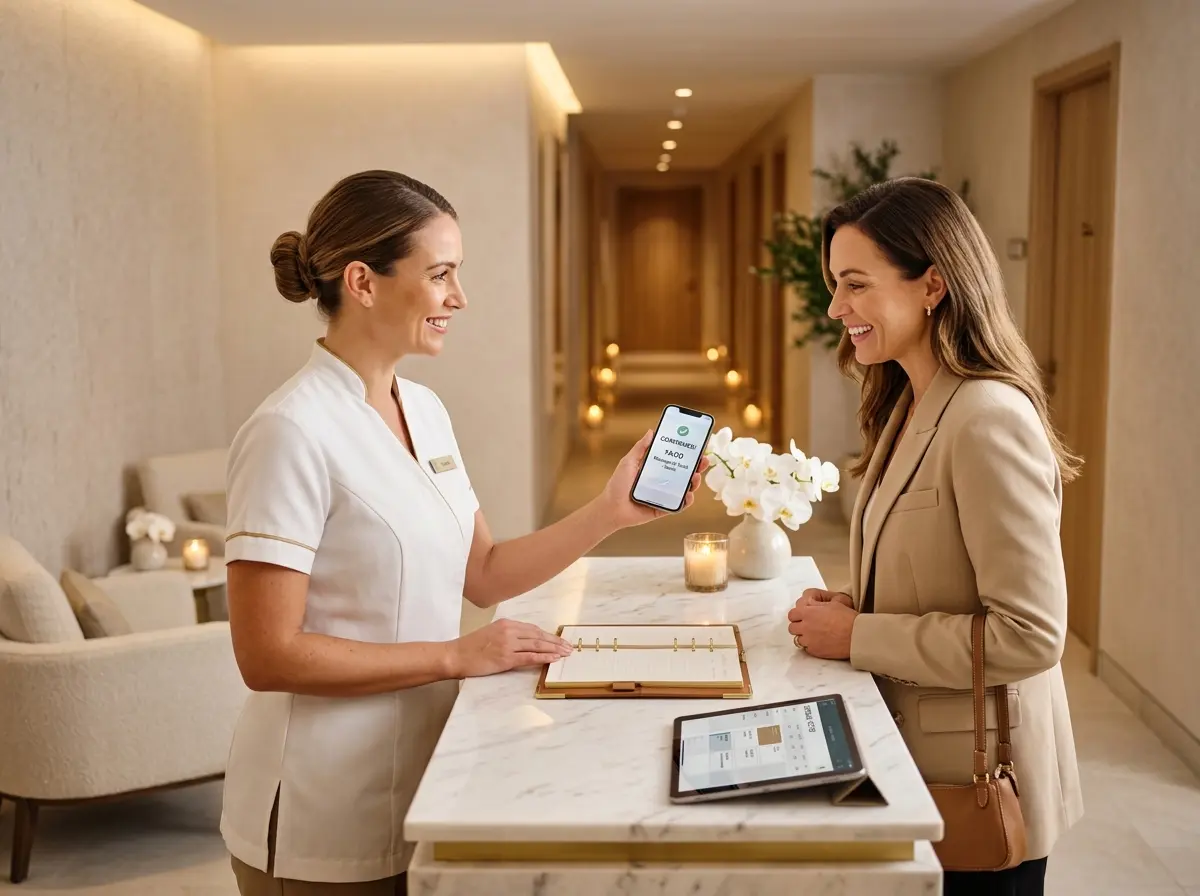
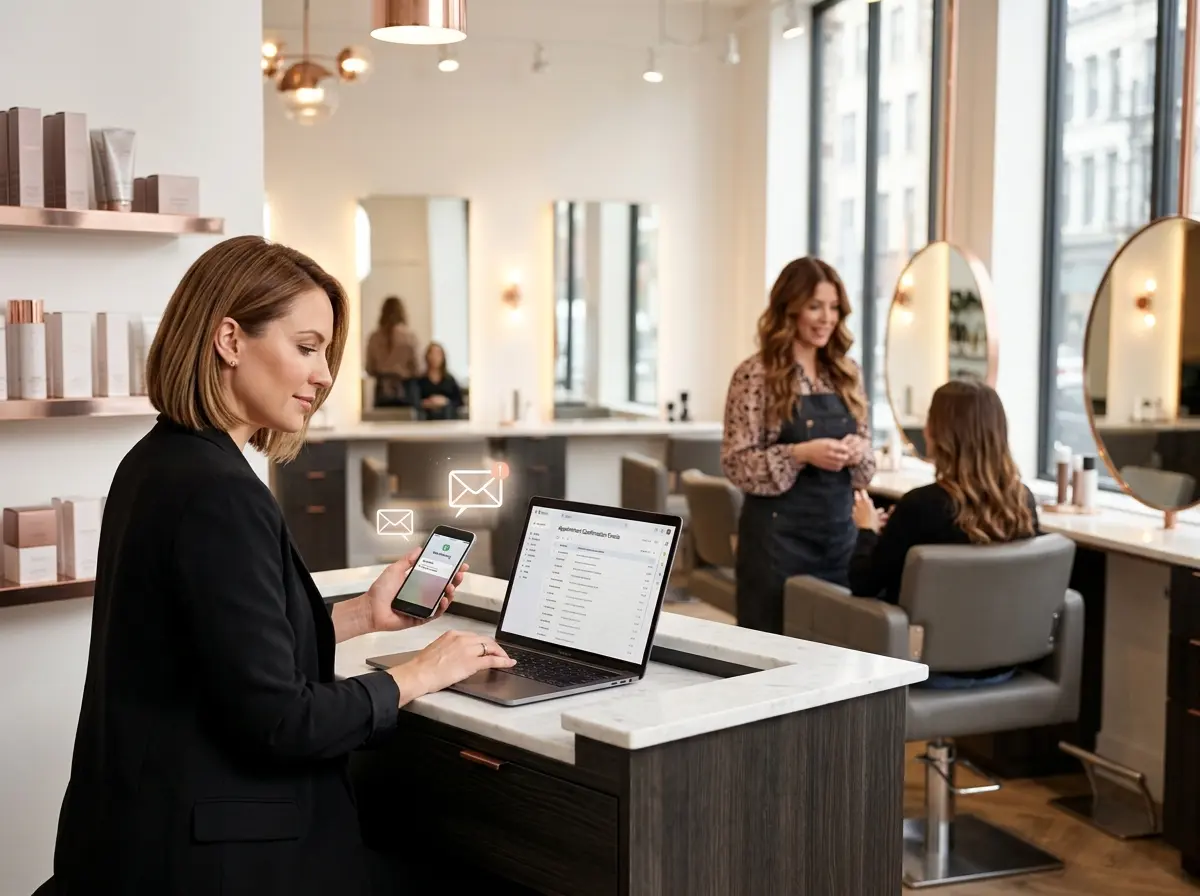
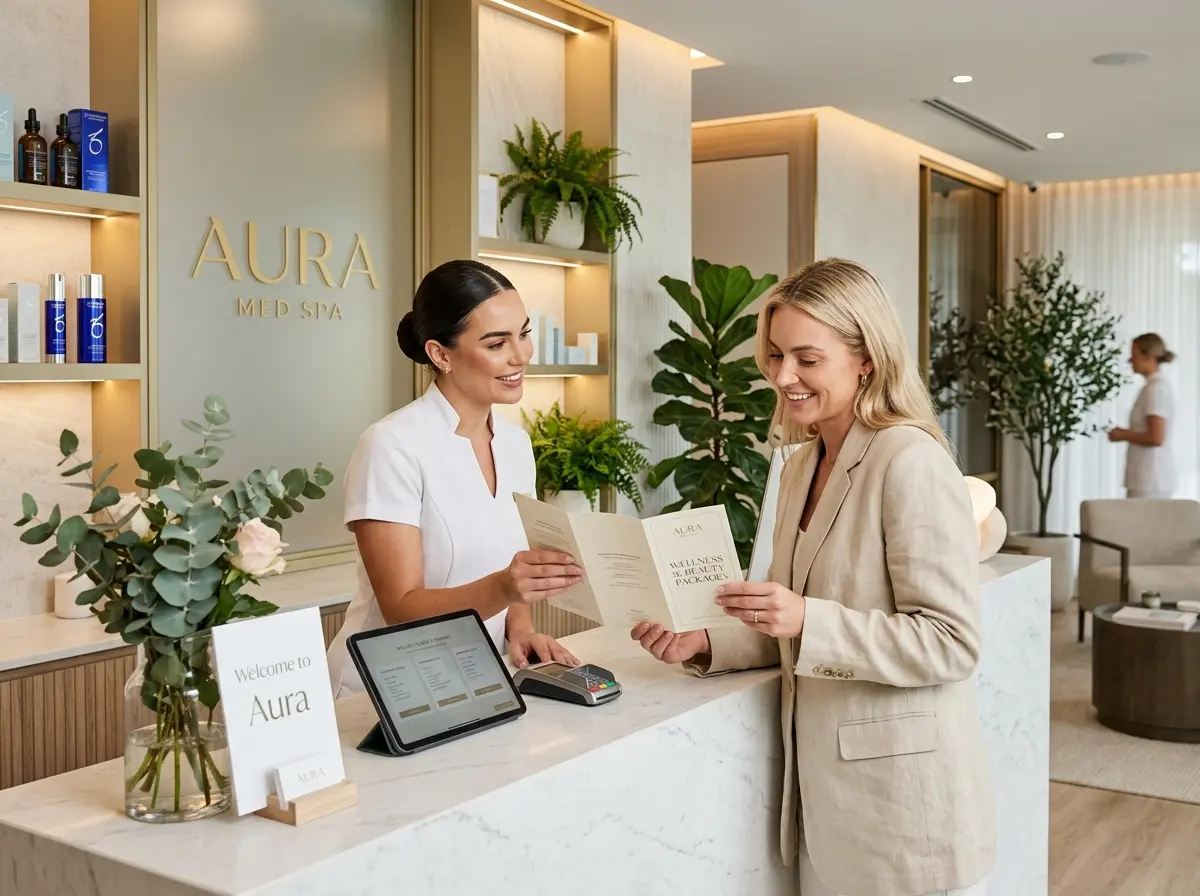
The spa added upgrade prompts to their booking confirmation emails and displayed the Signature Upgrade Menu prominently at the front desk. They trained staff to mention one specific upgrade — not all six — during check-in, based on what the client had booked. A client booking a facial? They were told about the LED light therapy add-on. Booking a massage? They heard about the hot stone enhancement. Personalized suggestions convert at dramatically higher rates than a general "we have add-ons available."
How Technology Can Take the Awkwardness Out of Upselling
Let Your Front Desk Focus on the Human Stuff
There's an inherent awkwardness when a human receptionist has to pitch upgrades during a busy check-in rush. They're juggling phone calls, managing the appointment schedule, handling payments, and trying to remember which therapist is running five minutes late. Asking them to also deliver a polished upsell conversation consistently, across every single client interaction, is a tall order — and the results are predictably inconsistent.
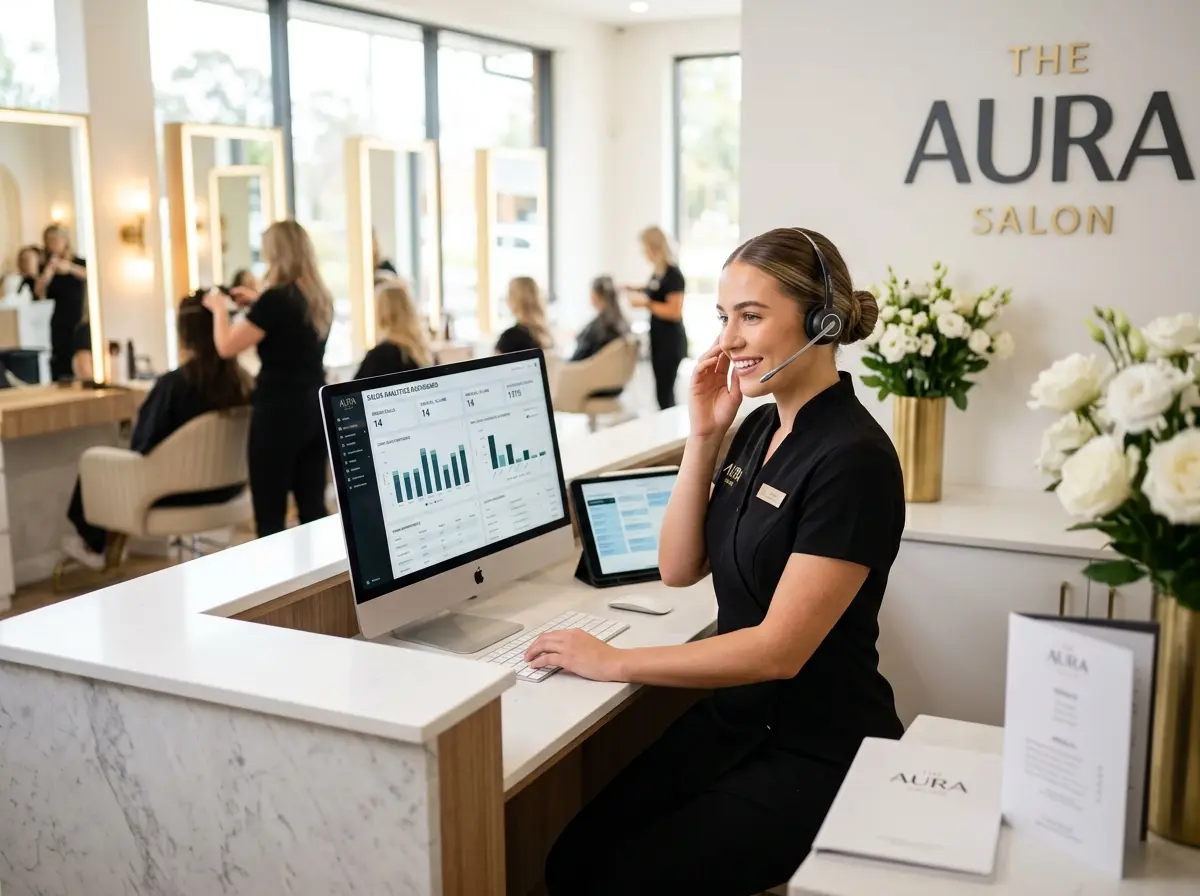
This is exactly where Stella, the AI robot receptionist, can step in. Stella stands at the entrance or front desk area of your spa and proactively engages walk-in clients and arriving appointments — answering questions about services, explaining upgrade options from your Signature Menu, and promoting current specials without ever having an off day, forgetting a talking point, or getting flustered by a busy lobby. She's also answering your phone calls 24/7, which means a client calling at 9 PM to ask whether they can add an aromatherapy upgrade to tomorrow's appointment gets a real, helpful answer — not voicemail. Stella's built-in CRM and intake forms mean you can also capture client preferences and upgrade history, so your team walks into every interaction already knowing what that client loves.
Pricing, Packaging, and Psychology That Actually Works
Price Upgrades at the "Why Not?" Threshold
Upgrade pricing is both an art and a mild social experiment. Price too low, and the add-on feels cheap or unimportant — which undermines the luxury positioning your spa has worked hard to build. Price too high, and the client hesitates, does mental math, and politely declines. The sweet spot for most day spa upgrades sits between $15 and $45, depending on the service and your market.
The spa that grew revenue 30% priced their upgrades at an average of $28 each. At that price point, a client who has already committed to a $95 massage doesn't experience much psychological resistance. It's a small increment relative to what they've already decided to spend. Behavioral economists call this the contrast effect — the upgrade looks like a bargain when anchored against the base service price. Your spa doesn't need a PhD in psychology to use this principle. You just need a menu and a price point that doesn't make people flinch.
Bundle Strategically Without Getting Greedy
Beyond individual upgrades, the spa introduced two curated Signature Packages — pre-built combinations of their most popular service with two upgrades included, offered at a slight discount compared to booking everything separately. The packages accounted for nearly 40% of all upgrade revenue, despite being the most premium option on the menu.
Why do bundles work so well? Because they remove decision fatigue. A client doesn't have to evaluate each upgrade independently — they just choose "The Retreat Package" or "The Renewal Package" and feel like they got a deal. From the spa's perspective, the slight discount on the bundle was more than offset by the increase in average ticket size. Everyone wins, and the mental math is already done before the client even arrives.
Track What's Working and Adjust Ruthlessly
A Signature Upgrade Menu is not a "set it and forget it" strategy. The spa reviewed upgrade conversion rates monthly and retired underperformers quickly. One upgrade — a detox body wrap add-on — sounded compelling in theory but consistently underperformed because it required too much additional preparation time. It was replaced with a simpler hot compress enhancement that delivered better margins and higher client satisfaction scores.
The habit of tracking matters more than the specific tool you use to do it. Whether you're using booking software reports, a simple spreadsheet, or client management data, knowing which upgrades sell and which collect dust lets you continually refine your menu into a sharper, more effective revenue engine.
A Quick Reminder About Stella
Stella is an AI robot employee and phone receptionist designed for businesses exactly like yours. She greets clients in person at your spa, answers calls around the clock, promotes your Signature Upgrades and specials, and never has a bad shift. At $99/month with no upfront hardware costs, she's one of the more straightforward investments you can make in consistent, professional client communication.
Your Next Steps Start at the Front Desk
A 30% revenue increase sounds like the kind of thing that requires a rebrand, a renovation, or a very expensive consultant. This spa proved otherwise. They audited what they already had, named it beautifully, priced it smartly, promoted it consistently, and tracked what worked. That's a repeatable playbook any spa owner can run.
Here's how to get started this week:
- Audit your current services and identify five to seven logical enhancement opportunities — things that add time, ingredients, or sensory value to existing treatments.
- Name and describe each upgrade with language that reflects your brand's tone and makes the experience sound irresistible.
- Set prices in the $15–$45 range, anchored against your base service prices for maximum psychological impact.
- Build one or two curated packages that bundle popular services with your best upgrades at a modest discount.
- Train your team to recommend one specific upgrade per client based on what they've booked — not a generic pitch, a targeted one.
- Review performance monthly and retire anything that isn't converting within 60 days.
Your clients already want a better experience. They're already in your spa, already relaxed, already in the mood to be pampered. Your Signature Upgrade Menu is simply the mechanism that lets them say yes to more of what they came for. Build it, promote it consistently, and watch your average ticket size do something very satisfying.