Introduction: Because "Please Don't Steal" Doesn't Quite Cut It
Let's be honest — shoplifting is one of those business problems nobody really wants to talk about, but everyone has to deal with. The National Retail Federation estimates that retail shrink costs U.S. businesses over $100 billion annually, and a significant chunk of that walks right out the front door in someone's jacket pocket. Whether you run a boutique clothing shop, a pharmacy, a hardware store, or a convenience shop, theft is an invisible line item quietly eating into your margins.
The good news? You don't need a full-time security team or a surveillance setup worthy of a Vegas casino to protect your store. What you need is a smart, layered approach — a combination of physical deterrents, staff habits, technology, and strategic store design that makes would-be shoplifters decide your store simply isn't worth the risk. And yes, some of these solutions are more elegant than others. (We're looking at you, hand-written "Smile, You're on Camera" signs.)
Below is your practical, no-nonsense checklist of 15 ways to deter shoplifters — organized by category so you can tackle them one at a time without feeling overwhelmed. Let's get into it.
Physical Deterrents and Store Layout
Before we talk tech or staffing, let's talk about your store's physical environment. The way your space is arranged sends a signal — either "we're paying attention" or "good luck finding us if something goes missing." You want to send the first message, loudly and clearly.
1–5: Layout, Lighting, and Signage
1. Optimize Your Store Layout for Visibility. Arrange shelving and displays so that your staff has clear sightlines across the store. Tall, dense shelving units in the back corners are basically an invitation. Keep high-theft items — electronics, cosmetics, liquor, small accessories — in areas that are naturally visible or closer to staffed counters.
2. Light Every Corner. Poorly lit areas are a shoplifter's best friend. Bright, even lighting throughout your store — especially near exits, fitting rooms, and back aisles — removes the comfort of shadows. It also just makes your store look better, which is a nice bonus.
3. Use Mirrors Strategically. Convex security mirrors in blind spots and corners cost very little and cover a lot of ground. They're a low-tech, high-value addition to any retail space.
4. Post Visible Security Signage. Signage that indicates active video surveillance, security tagging, or prosecution policies creates a psychological deterrent. Shoplifters — particularly opportunistic ones — prefer easy targets. A few well-placed signs can shift their risk calculation.
5. Secure Your Fitting Rooms. Fitting rooms are among the highest-risk areas in any apparel store. Limit the number of items customers can bring in at once, use numbered hangers, and have staff check items in and out. It's a small process change that makes a meaningful difference.
6–8: Merchandising and Product Security
6. Use EAS (Electronic Article Surveillance) Tags. Security tags and labels attached to merchandise trigger alarms at exit points if not properly removed. They're standard practice in retail for a reason — they work. Even the presence of a tag on a product makes casual theft significantly harder.
7. Lock Up High-Value Items. Display cases, locked cabinets, and cable locks for expensive items create friction that deters theft without removing the product from sight. Customers can still browse; they just need to ask for assistance. That assistance, by the way, is also a natural upsell opportunity.
8. Minimize Clutter at the Checkout Counter. Small, high-value items near the register are frequent targets for grab-and-go theft. Keep the area organized and attended, and consider positioning items like gift cards, batteries, or travel-size products within direct sightline of your cashier.
How a Visible, Engaged Presence Changes the Game
Here's something theft-prevention experts consistently emphasize: the single biggest deterrent to shoplifting is attentive staff presence. Shoplifters — especially opportunistic ones — avoid stores where they feel seen, greeted, and watched. The challenge for many small businesses is that staff can't be everywhere at once, and it's awkward to hover over every customer in the name of security.
9–10: Customer Engagement as a Deterrent
Train your team to greet every customer who enters the store. A simple "Welcome in, let me know if I can help you find anything!" does double duty: it creates a positive shopping experience and signals that your staff is alert and engaged. Shoplifters hate being acknowledged. It collapses the anonymity they rely on.
This is also where Stella, the AI robot employee and phone receptionist, becomes genuinely useful for retail and service businesses. Stella stands inside your store as a human-sized kiosk and proactively greets customers as they enter — naturally and conversationally. She answers questions about products, services, and promotions, which frees up your human staff to stay mobile and attentive on the floor rather than stuck behind a counter answering the same five questions all day. Beyond the store, Stella also handles incoming phone calls 24/7, so your team isn't constantly stepping away to grab the phone — which, if you've ever worked retail, you know is exactly when the chaos starts. A consistent, visible, engaging presence at the front of your store is both a hospitality win and a security asset.
Technology, Policies, and Staff Training
Deterrence is about creating an environment where theft seems risky, difficult, and not worth the trouble. Technology and clear policies form the backbone of that environment — and when paired with a well-trained team, they're remarkably effective.
11–13: Surveillance and Technology
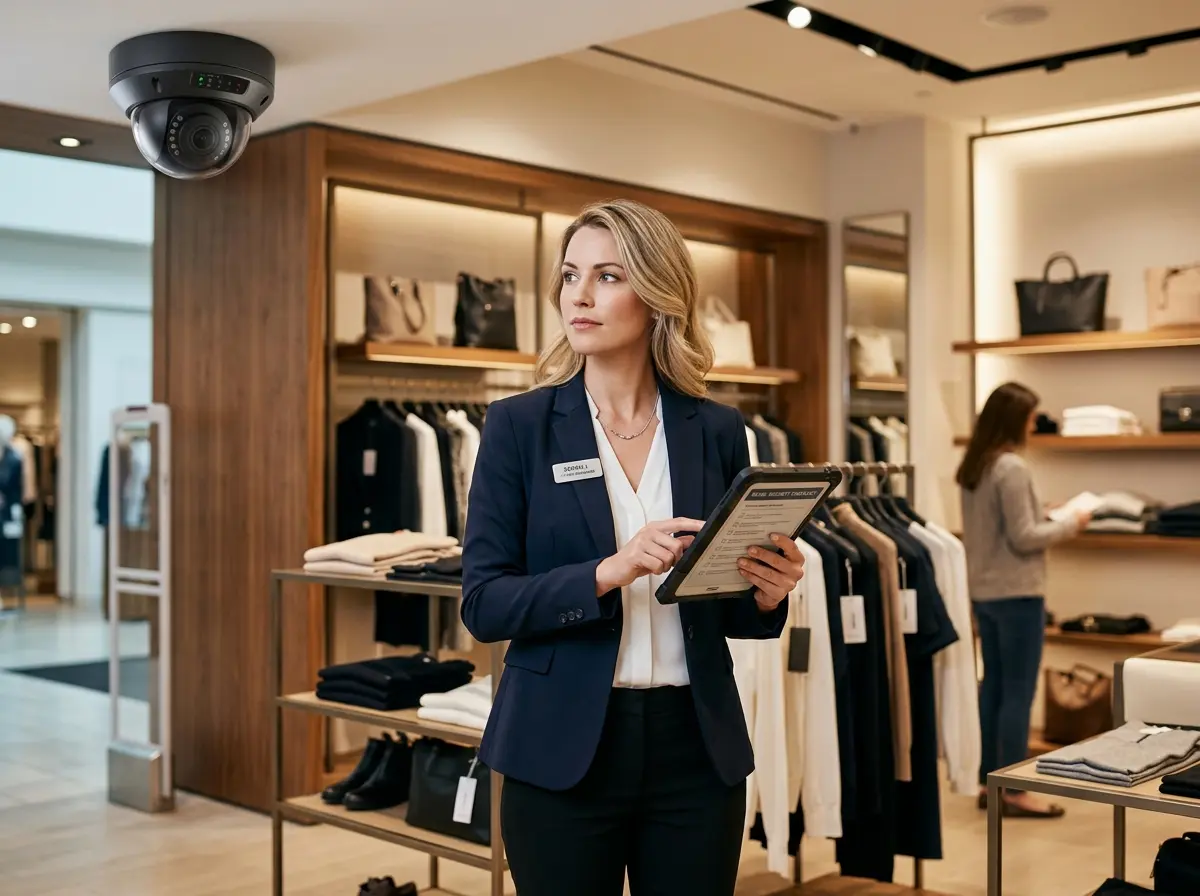
11. Install a Quality CCTV System — and Make It Visible. Cameras are most effective when shoplifters know they're there. Position cameras at entrances, exits, registers, and high-theft zones. Display monitors near the entrance so customers can see themselves on screen when they walk in. It's a subtle but powerful message.
12. Invest in Point-of-Sale (POS) Monitoring. Internal theft is a real and often underestimated problem. Modern POS systems allow you to track voids, refunds, discounts, and transaction anomalies that can indicate employee theft or register manipulation. Run regular reports and review them — not because you assume the worst about your team, but because the data keeps everyone honest.
13. Consider AI-Powered Loss Prevention Tools. The loss prevention technology landscape has matured significantly. Solutions now exist that use computer vision to detect suspicious behaviors — like item concealment or repeated unpurchased trips — and alert staff in real time. For higher-volume retailers, the ROI can be significant.
14–15: Policy, Training, and Accountability
14. Create Clear Loss Prevention Policies — and Enforce Them. This means a written policy for how staff should respond to suspected shoplifting (hint: nobody should physically intervene — safety first, always), as well as internal policies around employee theft, bag checks, and cash handling. Documented policies protect both your business and your employees.
15. Train Your Team Regularly. Loss prevention training doesn't need to be a full-day seminar. Even a 20-minute quarterly refresher that covers what to look for, how to engage suspicious customers appropriately, and what to do (and not do) if theft occurs can dramatically improve your team's confidence and consistency. Knowledge is a surprisingly affordable security tool.
A Quick Reminder About Stella
Stella is an AI robot employee and phone receptionist designed to help businesses run smoother, look more professional, and serve customers better — all for just $99/month with no upfront hardware costs. In-store, she greets and engages customers from the moment they walk in. On the phone, she answers calls around the clock with the same knowledge she uses at the kiosk. If you're a retail or service business looking for a friendly, always-on presence that supports your team without adding to your payroll headaches, Stella is worth a serious look.
Conclusion: Build Your Layers, Protect Your Margins
Shoplifting prevention isn't about turning your store into a fortress — it's about stacking smart, low-friction deterrents that collectively make theft feel like more trouble than it's worth. No single item on this list is a silver bullet, but together they create an environment of accountability, visibility, and engagement that works around the clock.
Here's your action plan: Start with the quick wins — lighting, mirrors, signage, and greeting every customer. Then work your way toward the structural changes like surveillance upgrades, POS auditing, and formal loss prevention training. Build your checklist, assign ownership to specific improvements, and revisit it quarterly.
- This week: Walk your store with fresh eyes. Identify blind spots, dim corners, and high-theft areas that need attention.
- This month: Audit your security tags, signage, and camera placements. Train your team on engagement protocols.
- This quarter: Review your POS data, update your loss prevention policy, and evaluate whether your current technology stack is doing enough heavy lifting.
Your margins are worth protecting. And with the right combination of smart design, engaged staff, and modern tools, you can make your store a much less appealing target — no Vegas-level security budget required.