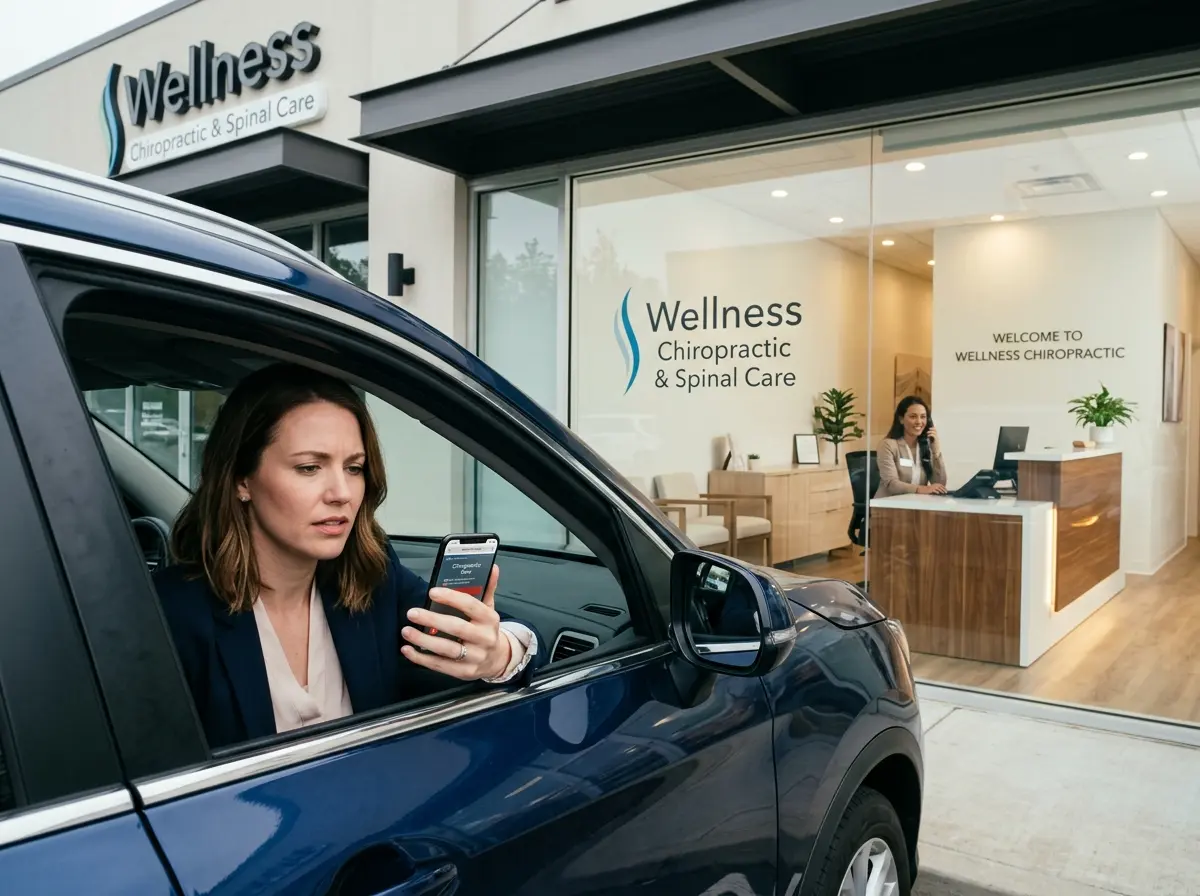
You're Losing Patients Before They Even Meet You
Let's paint a picture. Someone wakes up with a stiff neck that's been bothering them for three weeks. They finally decide to do something about it. They Google chiropractors in their area, find your practice, and — here's where the story gets interesting — they call you. It rings. And rings. And rings. They hang up and call the next chiropractor on the list. Congratulations, you just lost a patient you never knew you had.
Here's the uncomfortable truth: most chiropractic offices are hemorrhaging new patients not because of bad care, but because of bad first impressions. And those first impressions happen before anyone ever lies down on your adjustment table. They happen on the phone, on your website intake form, and in those critical few seconds when a potential patient is deciding whether to trust you with their health — or move on.
According to research, nearly 62% of calls to small businesses go unanswered. In a healthcare setting, where someone is already anxious about their pain and their decision to seek help, an unanswered call doesn't just feel inconvenient — it feels like rejection. So let's talk about what's actually driving patients away, and more importantly, what you can do about it.
The Patient Journey Starts Long Before the Appointment
The Phone Call Problem Nobody Talks About
Your front desk staff is doing their best. They're checking in patients, answering questions, processing payments, and managing a waiting room that's somehow always three minutes behind schedule. Answering every incoming call with warmth, accuracy, and a smile? That's a tall order — and patients feel it when the ball gets dropped.
The problem is compounded after hours. A potential new patient researching their options at 9 PM on a Tuesday isn't going to leave a voicemail and patiently wait for a callback. They're going to book an appointment with the practice that answered. Your competitor's office that picked up — yes, even at 9 PM — just got that patient. That's the reality of the modern healthcare consumer: they're not waiting for business hours to make decisions about their health.
The fix isn't necessarily hiring more staff (though we won't judge if that's in the budget). It's making sure that every call — during lunch, after hours, on weekends — gets answered professionally, with accurate information about your services, availability, and intake process.
The Intake Form Friction Nobody Notices (Until They Leave)
Let's say a patient does make it through the phone call successfully. Great! Now you send them a link to a PDF intake form they need to print, fill out with a pen, and either fax back (yes, fax) or bring with them on the day of their appointment. If that sentence made you wince, good — it should.
Friction in the intake process is a silent killer of new patient conversions. Every extra step between "I want to book an appointment" and "I'm confirmed and ready to show up" is an opportunity for someone to reconsider, get distracted, or just pick a different practice that made it easier. Conversational intake — where patients answer simple questions in a natural, guided flow rather than staring at a clinical PDF — dramatically reduces drop-off and makes patients feel welcomed before they've ever met you in person.
The Follow-Up Black Hole
Someone called, left a message, and got a callback — two days later. By then, they'd either forgotten why they called, resolved their immediate pain with ibuprofen and denial, or booked with someone else. Speed-to-follow-up is one of the highest-impact factors in converting inquiries into actual appointments. Studies in healthcare marketing consistently show that the odds of reaching a lead drop dramatically after the first hour. After 24 hours, you might as well be mailing them a letter.
This isn't about being pushy or salesy — it's about being responsive. Patients interpreting responsiveness as a signal of how you'll treat them in your office isn't a stretch. It's human nature.
Where Smart Technology Can Pick Up the Slack
Let an AI Receptionist Handle What Your Staff Can't
This is where a little technological backup can make a meaningful difference. Stella is an AI robot employee and phone receptionist that answers calls 24/7 with the same knowledge a well-trained front desk staff member would have — your services, pricing, hours, insurance policies, and current promotions. She can handle new patient inquiries, collect intake information through a conversational flow, and even forward urgent calls to a human team member based on whatever conditions you configure.
For chiropractic practices with a physical location, Stella also shows up as a friendly, human-sized kiosk inside your office — greeting walk-ins, answering questions, and making sure no one stands awkwardly at the front desk while your staff is busy with another patient. Her built-in CRM captures contact information, generates AI-powered patient profiles, and gives you a complete picture of your interactions — all on a $99/month subscription that won't require a finance committee to approve.
What a Great First Impression Actually Looks Like
Answering With Confidence and Consistency
The best first impression isn't flashy — it's reliable. When a potential patient calls your office, they should hear a friendly, informed voice that can answer their actual questions. Not "let me check with the doctor on that" for every query about whether you accept their insurance. Not hold music that plays for four minutes before someone picks up sounding slightly out of breath. Consistency in how your practice presents itself on the phone builds trust, and trust is the entire currency of healthcare.
Train your staff on call scripts for common questions. Record your hold message and make sure it's current. And yes — make sure someone (or something) is always available to pick up, even when your team is busy or your office is closed.
Making the Booking Process Feel Easy and Human
New patients are often mildly anxious. They don't know what to expect from their first chiropractic visit. They might have questions they feel silly asking. A booking experience that feels warm, guided, and low-pressure goes a long way toward getting them through the door. This means offering multiple ways to book (call, online, walk-in), providing clear next-step instructions after booking, and sending a confirmation that tells them exactly what to bring, what to expect, and where to park — because yes, parking genuinely stresses people out.
Building Loyalty Before Day One
The patient experience doesn't start at the adjustment table. It starts at the first point of contact. Practices that understand this invest in communication touchpoints that make new patients feel informed and valued before they ever arrive. A simple confirmation text, a new patient welcome message, or even just a voicemail callback that sounds genuinely glad to hear from them — these micro-moments compound into a reputation. And in a world where Google reviews and word-of-mouth referrals are the lifeblood of a local chiropractic practice, reputation is everything.
A Quick Reminder About Stella
Stella is an AI robot employee and phone receptionist built to help businesses like yours never miss a call, a customer, or a conversion — whether that's answering phones after hours, greeting patients at the kiosk, collecting intake information, or managing contacts through a built-in CRM. She works 24/7, never calls in sick, and costs less per month than most office supply budgets. Setup is simple, and she's ready to represent your practice professionally from day one.
Stop Losing Patients to a Phone That Rings Too Long
The good news is that most of the patient leakage happening at chiropractic offices is entirely fixable. You don't need a massive marketing budget or a complete operational overhaul — you need to close the gaps where potential patients are slipping through.
Here's where to start:
- Audit your call answer rate. For one week, track how many incoming calls are answered live versus going to voicemail. The number might surprise you.
- Streamline your intake process. If new patients are filling out paper forms or navigating a clunky PDF, modernize it. Conversational intake tools can dramatically reduce friction.
- Implement a follow-up protocol. Any new patient inquiry — call, voicemail, web form — should receive a response within one hour during business hours, and first thing the next morning for after-hours inquiries.
- Look at your after-hours coverage. If your phone goes unanswered from 5 PM to 9 AM, that's 16 hours a day where potential patients are bouncing to a competitor.
- Ask your existing patients how they found you — and what almost stopped them. You'll learn more from that question than from most marketing reports.
Your clinical skills are not the problem. Your care is probably excellent. But in a competitive local market, the practices that grow consistently aren't always the ones with the best adjustments — they're the ones that make it easiest to become a patient. Fix the front door, and the rest tends to follow.