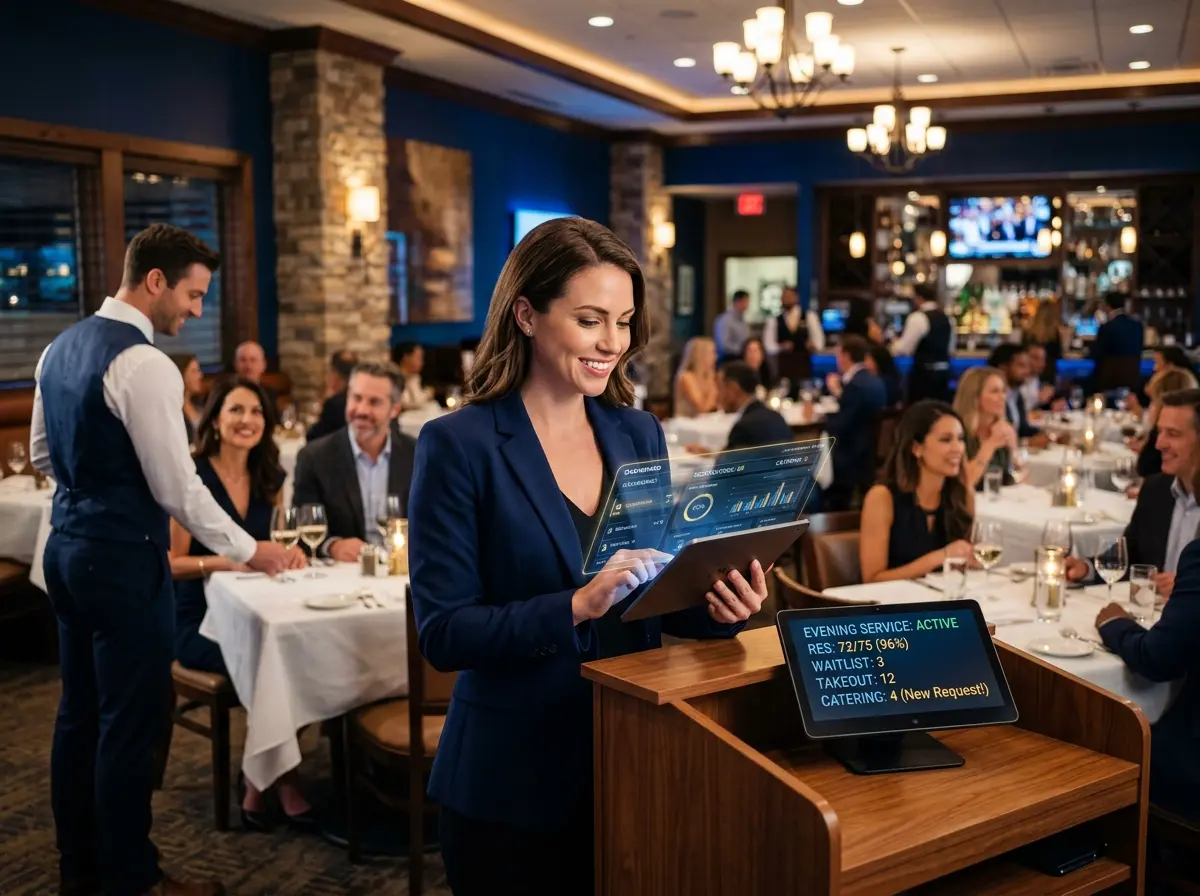
Because "We'll Call You Back" Is Not a Reservation Strategy
Let's paint a familiar picture. It's a Friday evening, your dining room is packed, your kitchen is in full swing, and somewhere in the chaos, the phone is ringing. And ringing. And ringing. Your host is seating a party of six. Your manager is handling a catering inquiry that walked in without warning. And nobody — absolutely nobody — is answering that phone. Meanwhile, the person on the other end just decided to try the restaurant down the street.
If this sounds like a regular Tuesday (or Friday, or Saturday), you're not alone. Restaurants are one of the most operationally demanding businesses on the planet, and managing reservations, takeout orders, and catering inquiries simultaneously is the kind of multitasking that would humble even the most seasoned juggler. The good news? AI is here to help — not to replace your team, but to make sure no customer ever gets ignored again.
The Real Cost of Missed Calls and Clunky Reservation Processes
Every Missed Call Is a Missed Meal (and Missed Revenue)
It's easy to dismiss a missed call as a minor inconvenience, but the numbers tell a different story. Studies suggest that 85% of customers who can't reach a business on the first try will not call back. In the restaurant world, that's a reservation that never got booked, a catering order that went to your competitor, and a loyal customer relationship that never had a chance to begin. Multiply that by even five missed calls a week, and you're looking at a meaningful dent in your monthly revenue — all because nobody picked up the phone.
Worse, it's not just about the lost booking. Customers talk. A frustrated caller who couldn't get through is far more likely to leave a lukewarm review mentioning "poor communication" than to quietly move on. In an industry where reputation is everything, that stings.
The Catering Inquiry Problem Nobody Talks About
Catering is one of the highest-margin revenue streams a restaurant can have — and also one of the most poorly managed, at least from a first-contact perspective. Catering clients typically call during business hours, which, ironically, are your busiest hours. They have detailed questions: menu options, minimum guest counts, deposit requirements, delivery radius, setup times. These are not questions your line cook or busser can answer on the fly, and they're not questions that get resolved with a voicemail that says "leave your number and we'll get back to you."
A well-handled catering inquiry can turn into a $2,000 corporate lunch order. A poorly handled one — or an unanswered one — turns into nothing. The businesses that are winning the catering game are the ones that respond quickly, professionally, and with enough detail to make the client feel like they're in good hands from the very first interaction.
Takeout Logistics: Streamlined or Stressful?
Takeout volume has exploded in recent years, and with it, the operational complexity that comes along for the ride. Customers want to know wait times, confirm order details, ask about allergens, and sometimes just check if you're open. These are fast questions with fast answers — except when your team is slammed and the phone becomes a second job nobody signed up for. Building a smoother intake process for takeout inquiries isn't just about customer experience; it's about protecting your staff from constant interruption during peak service.
How AI Can Step In Without Getting in the Way
Your Front-of-House That Never Clocks Out
This is where tools like Stella — an AI robot employee and phone receptionist — start to make a lot of sense for restaurant owners. Stella answers your phone calls 24/7 with the same knowledge your best front-of-house team member would have: your hours, your menu, your reservation policies, your catering packages, your specials. She doesn't put customers on hold, she doesn't get flustered during a dinner rush, and she doesn't forget to mention the weekend prix fixe when someone calls to ask about the menu.
For restaurants with a physical location, Stella also operates as a human-sized in-store kiosk, engaging walk-in customers, answering questions, and even promoting current deals — all without pulling your host or server away from the floor. Her built-in CRM and conversational intake forms mean that catering inquiries don't just get answered; they get logged, organized, and flagged for follow-up so nothing slips through the cracks.
Building a Smarter Reservation and Inquiry System
Start With a Clear Phone Protocol
Before you can fix your reservation process, you need to audit your current one. How are calls being handled right now? Is there a script? Is there a dedicated person during peak hours? What happens when that person is busy? Most restaurants answer these questions with some variation of "it depends on who's around," which is not a system — it's wishful thinking dressed up as a plan.
A clear phone protocol means defining exactly what should happen when a call comes in: who answers, what information gets collected, how reservations are confirmed, and what the escalation path looks like if a call needs a manager. Even if you implement AI to handle the front end of those calls, having a documented process ensures consistency and makes training far easier.
Collect the Right Information Upfront
One of the biggest inefficiencies in restaurant reservations is back-and-forth. A customer calls, leaves a name and a party size, and then you have to call them back to confirm the date, ask about dietary restrictions, clarify the time, and verify a phone number. That's two to three interactions that could've been one. Structured intake — whether through a phone conversation guided by AI, an online form, or both — eliminates the back-and-forth by capturing everything you need the first time.
For catering, this becomes even more important. A well-designed intake flow should collect the event date, guest count, venue type, menu preferences, budget range, and contact information in a single conversation. Customers don't mind providing this information; they mind being asked for it three separate times by three different people.
Use Confirmations and Reminders Like You Mean It
No-shows are the silent killers of restaurant revenue. A party of eight that doesn't show up on a Saturday night isn't just an empty table — it's a table you could have filled twice over with proper management. Confirmation messages and reminder nudges (via text or email) dramatically reduce no-show rates. According to industry data, automated reminders can cut no-show rates by up to 30%. That's not a small number. That's meaningful, measurable improvement from a relatively simple operational change.
If your current reservation system isn't sending confirmations automatically, fix that today. If it is, make sure the messages are clear, on-brand, and include everything a customer needs: date, time, party size, your address, and a way to cancel or modify if plans change. A customer who can easily cancel is far more valuable than one who ghosts you — at least you can rebook the table.
Quick Reminder About Stella
Stella is an AI robot employee and phone receptionist built for businesses exactly like yours — restaurants juggling reservations, takeout calls, and catering inquiries all at once. She answers calls around the clock, engages in-store customers from her kiosk, and keeps your staff focused on what they do best: delivering great hospitality. At $99/month with no upfront hardware costs, she's the team member who's always on time, always on-brand, and never asks to leave early.
Take Control of Your Reservation Experience Before It Controls You
The restaurant industry doesn't reward chaos management — it rewards systems. The operators who are scaling successfully right now are the ones who've stopped treating reservations, takeout, and catering inquiries as interruptions and started treating them as the revenue opportunities they actually are. That shift in mindset, combined with the right tools, is what separates a restaurant that's constantly putting out fires from one that's actually growing.
Here's where to start:
- Audit your current phone and reservation process — honestly and thoroughly. Find every gap where a customer could fall through.
- Define a structured intake process for reservations, takeout, and catering so you're collecting the right information every time.
- Implement automated confirmations and reminders to reduce no-shows and improve the customer experience.
- Explore AI-powered reception tools to handle after-hours calls, peak-hour overflow, and routine inquiries without adding headcount.
- Track your inquiry-to-booking conversion rate so you actually know whether your process is working — or just working well enough to be dangerous.
Your restaurant has great food, a talented team, and a loyal customer base that wants to spend money with you. The least you can do is make it easy for them to get in the door — or on the phone — without wondering if anyone's actually there. Because in 2024, "we'll call you back" is not a reservation strategy. It's a missed opportunity with a callback number attached.