Introduction: The Walk-In vs. Appointment Struggle Is Real
Picture this: It's a busy Saturday afternoon at your nail salon. Your appointment clients are lined up like royalty, expecting their reserved thrones. Meanwhile, a group of walk-ins just wandered in off the street, full of hope and fresh nails dreams. Your front desk staff is frantically juggling a ringing phone, a clipboard, and what appears to be a minor existential crisis. Sound familiar?
If you run a nail salon, you already know that managing walk-in clients alongside appointment-based ones isn't just a scheduling challenge — it's practically an art form. Lean too far toward appointments-only, and you're leaving spontaneous revenue on the table. Open the floodgates to walk-ins without a plan, and your booked clients start giving you looks that could strip a gel manicure.
The good news? A hybrid scheduling model can elegantly solve this tension. When done right, it maximizes your chair utilization, keeps both client types happy, and stops your staff from playing traffic cop all day. This post breaks down exactly how to build one that works — without losing your mind (or your best nail tech) in the process.
Building the Foundation of Your Hybrid Schedule
Understanding Your Flow: Data Before Decisions
Before you redesign your scheduling system, you need to understand what's actually happening in your salon. Pull your records from the last three to six months and look for patterns. Which days and hours do walk-ins tend to cluster? When are your appointment slots most consistently booked? Are there predictable dead zones on Tuesday afternoons that could be walk-in-friendly windows?
Most salon owners operate on gut feeling alone, which is charming but not always profitable. According to industry data, salons that actively track and analyze traffic patterns see up to a 20–30% improvement in chair utilization just by adjusting their availability windows. Knowledge is power — and in this case, it's also revenue.
Map out your weekly rhythm honestly. If Friday evenings are appointment-packed and walk-ins tend to show up anyway, you have a capacity problem, not a scheduling philosophy problem. Conversely, if your Wednesday mornings look like a ghost town despite being "open," that's your walk-in opportunity window hiding in plain sight.
Designating Walk-In Windows vs. Appointment Blocks
The core mechanic of a hybrid model is simple: time segmentation. Rather than leaving your schedule entirely open or rigidly appointment-only, you carve out dedicated blocks for each client type.
A practical approach many salons use successfully is the 70/30 split — roughly 70% of your weekly capacity reserved for appointments and 30% held open as walk-in-friendly windows. These walk-in windows are strategically placed during your historically slower periods, or at the beginning and end of each day as buffer zones. Here's how that might look in practice:
- Morning buffers (first 60–90 minutes): Hold two to three chairs open for walk-ins before the appointment rush kicks in.
- Midday windows: If your data shows a lull between 1–3 PM on weekdays, designate that as walk-in-friendly time.
- Late-day slots: Keep one or two chairs flexible in the final hour to catch after-work walk-in traffic.
The key is consistency. Post your walk-in windows clearly — on your door, your website, your Google Business profile, and anywhere else clients might look. When people know when to show up without an appointment, they'll plan accordingly instead of playing roulette with your schedule.
Setting Realistic Expectations on Both Sides
A hybrid model only works if both your appointment clients and walk-in clients understand the rules of engagement. Appointment clients need to trust that their reserved time is protected and won't be bumped for a spontaneous pedicure. Walk-in clients need to understand that they may wait during peak hours — and that's perfectly okay.
Train your staff to communicate this clearly and warmly from the moment a client walks in or calls. A simple script goes a long way: "We do accept walk-ins during certain windows, and right now we can get you in within about 20 minutes — would you like to grab a seat?" That's honest, welcoming, and sets expectations without sounding like a corporate disclaimer.
How Smarter Tools Can Take the Pressure Off Your Team
Letting Technology Handle the Scheduling Chaos
Here's where smart tools earn their keep. Managing a hybrid schedule manually — especially during a busy Saturday when your phone won't stop ringing — is a recipe for errors, double-bookings, and one very frazzled receptionist. This is exactly where Stella, the AI robot employee and phone receptionist, can make a meaningful difference for your salon.
As a physical kiosk inside your salon, Stella can greet walk-ins the moment they step through the door, let them know about current wait times or available walk-in windows, and collect their information conversationally — so your nail techs can stay focused on what they do best. On the phone side, she answers calls 24/7, answers questions about services and availability, and can collect intake information without your front desk staff ever picking up the receiver. For a salon juggling two types of clients simultaneously, having a reliable, always-on presence handling initial touchpoints is less of a luxury and more of a lifeline.
Keeping the Experience Seamless for Every Client Type
The Waiting Experience Is Part of the Service
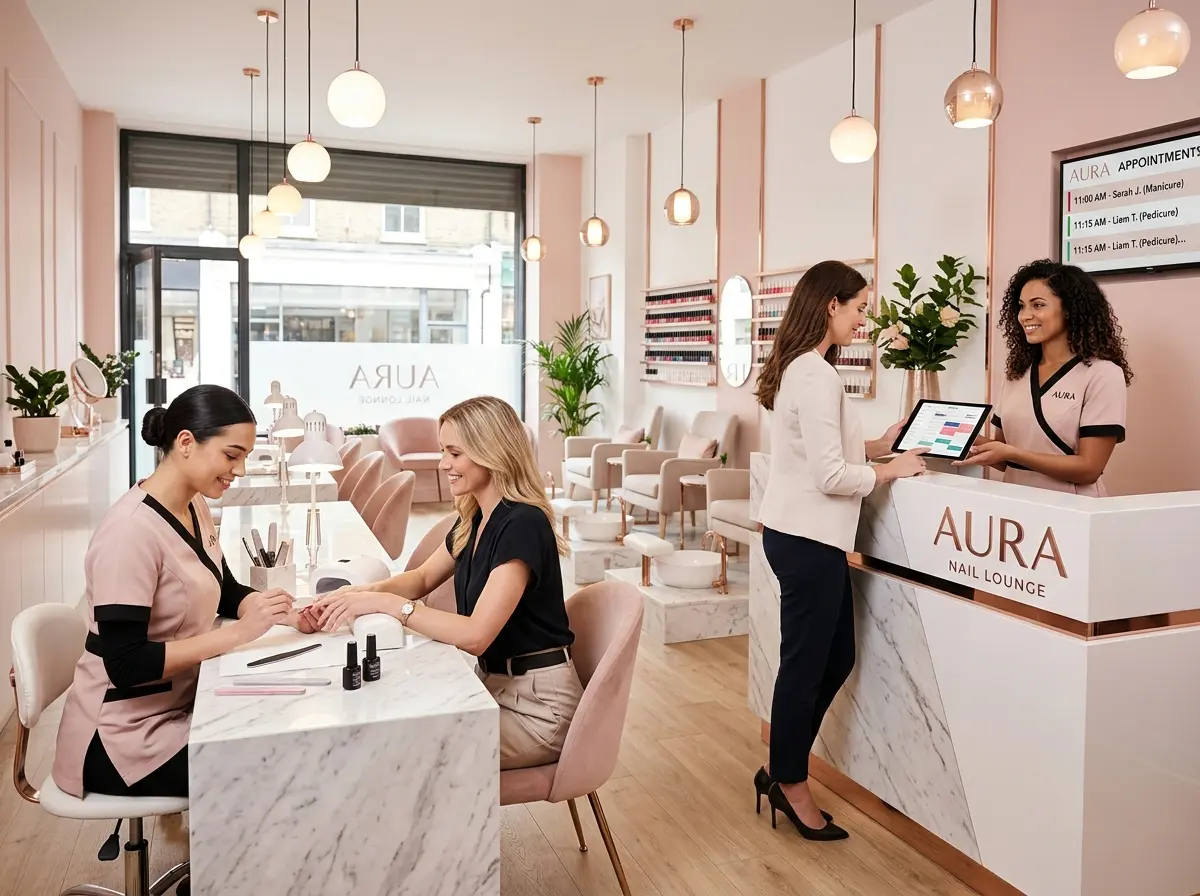
Walk-in clients expect to wait — but that doesn't mean the wait has to feel like a punishment. Your waiting area is valuable real estate. Comfortable seating, good lighting, a curated menu of services with pricing, and maybe a beverage station can transform a 20-minute wait into an enjoyable preview of your brand. Salons that invest in their waiting experience consistently report higher conversion rates on upsells like nail art add-ons, paraffin treatments, and retail polish purchases.
Consider using a simple digital check-in system or a tablet that lets walk-ins browse services while they wait. This not only keeps them engaged but gives your staff a heads-up on what the client is considering — making it easier to recommend complementary services when they finally sit down.
Protecting Your Appointment Clients' Experience
Your appointment clients are, in many ways, your most valuable regulars. They planned ahead, they're likely to rebook, and they expect a certain level of reliability. The fastest way to lose them is to let walk-in chaos bleed into their reserved time.
A few non-negotiables to build into your hybrid model:
- Never overbook to accommodate walk-ins when your appointment slots are full. Protect those blocks fiercely.
- Send appointment reminders 24 hours and 2 hours before — this reduces no-shows and frees up capacity for walk-ins when cancellations happen.
- Build buffer time between appointments (even just 10–15 minutes) to absorb overruns without creating a domino effect on the rest of your day.
- Have a clear late policy — if an appointment client is more than 15 minutes late, their slot may be converted to walk-in availability. Communicate this upfront, not in the heat of the moment.
Training Your Team to Navigate Both Worlds
Even the best scheduling system falls apart without buy-in from your staff. Your nail techs and any front desk personnel need to understand the hybrid model deeply enough to make real-time judgment calls when things get busy. That means regular brief check-ins (not hour-long meetings — everyone's time is valuable) to review what's working, where bottlenecks are forming, and how the walk-in windows are actually performing week to week.
Role-play common scenarios during slower periods: What do you say when a walk-in arrives during a fully booked window? How do you handle an appointment client who shows up late and expects their full slot? When your team has confident, practiced answers to these situations, the client experience stays smooth even when the schedule gets bumpy. Empowered staff make better decisions — and happier clients.
A Quick Reminder About Stella
Stella is an AI robot employee and phone receptionist built for businesses like yours — she works as a friendly, human-sized kiosk inside your salon and answers phone calls around the clock. At just $99/month with no upfront hardware costs, she's the kind of team member who never calls in sick, never misses a walk-in at the door, and never lets a phone call go to voicemail without a helpful, professional response. For a salon running a hybrid schedule, that kind of consistent presence isn't just convenient — it's a competitive advantage.
Conclusion: Your Hybrid Model Starts With One Decision
The hybrid scheduling model isn't a magic fix — it's a deliberate, data-informed strategy that requires some upfront thought and ongoing refinement. But the payoff is real: better chair utilization, more satisfied clients on both sides of the appointment equation, and a calmer, more confident team that isn't constantly playing catch-up.
Here's your actionable starting point:
- Pull your traffic data from the last three months and identify your natural walk-in windows and peak appointment times.
- Establish your time segmentation — decide which blocks are appointment-only and which are walk-in-friendly, and build that into your booking system.
- Communicate the model clearly to clients through your website, signage, and booking confirmations.
- Train your team on how to handle common hybrid scheduling scenarios with confidence and warmth.
- Audit and adjust monthly — your walk-in windows may need to shift as your business grows and your client mix evolves.
Running a nail salon is genuinely hard work, and the scheduling piece deserves as much strategic attention as your color menu or retail display. Get the hybrid model right, and you'll stop choosing between walk-in revenue and appointment loyalty — you'll have both, running smoothly, on the same floor, at the same time. Now that deserves a fresh set of nails.