The Awkward Silence Between "Booking Confirmed" and "Welcome, Here's Your Key"
You've done the hard part. The guest found your hotel, loved what they saw, and clicked "Book Now." Congratulations — that's genuinely difficult in a world where travelers have approximately 47 tabs open and the attention span of a golden retriever near a squirrel. But here's where a lot of independent hotels quietly drop the ball: the stretch of time between confirmation and check-in.
It's not glamorous. It doesn't show up in your TripAdvisor reviews. But what happens — or doesn't happen — in that window can be the difference between a guest who arrives excited and prepared, and one who shows up frustrated, confused, and already composing their one-star review in their head.
According to research by Skift, guests who receive personalized pre-arrival communication report significantly higher satisfaction scores. And yet, most independent hotels either send a single automated confirmation email and go silent, or they rely on a front desk team that's already juggling check-ins, phone calls, and the gentleman at the vending machine who is very upset about losing $1.75. There has to be a better way — and increasingly, AI is it.
The Pre-Arrival Communication Gap (And Why It Costs You More Than You Think)
What Guests Actually Want Before They Arrive
Let's be honest: guests have questions. Lots of them. What time is check-in, really? Can they get a room with a quieter HVAC unit? Is there parking? Is it free? Is the pool heated, or is it that specific temperature that can only be described as "punishment"? They want to know about local dining, whether you offer early check-in, and if that room upgrade is still available.
These are not unreasonable questions. They're the natural result of a guest who is genuinely excited about their stay and wants to plan accordingly. The problem is, they're asking these questions at 10:47 PM on a Tuesday, and your front desk team is either off-duty or underwater with other tasks. The guest sends an email, waits 36 hours for a response, and by then has already called the OTA, left a question in the booking platform, and silently lost a little faith in your property.
The Real Cost of Slow or No Response
Beyond guest frustration, there's a measurable business cost to poor pre-arrival communication. Upsell opportunities evaporate when there's no one around to suggest that room upgrade, the spa package, or the late checkout add-on. Guests who feel uninformed are more likely to cancel. And guests who arrive with unmet expectations — because no one addressed their concerns beforehand — are your most likely source of negative reviews.
For an independent hotel without the corporate resources of a Marriott or Hilton, this gap is especially painful. You're competing on experience and personal touch, and radio silence between booking and arrival is the opposite of that. The good news is that closing this gap doesn't require hiring a dedicated guest relations coordinator who works around the clock. It requires a smarter system.
What "Good" Pre-Arrival Communication Actually Looks Like
Effective pre-arrival communication is timely, personalized, and genuinely useful. It acknowledges the booking, confirms the key details, answers likely questions before they're asked, and creates a moment of warmth that reminds the guest why they chose your property. It also presents natural opportunities to upsell — a well-timed message about a dinner reservation, a spa treatment, or a room upgrade doesn't feel pushy when it's framed as helpful information rather than a sales pitch. The best hotels treat the pre-arrival window as the first chapter of the guest experience, not a bureaucratic formality.
How AI Steps In (Without Stepping on Your Brand Voice)
Handling Guest Inquiries Around the Clock
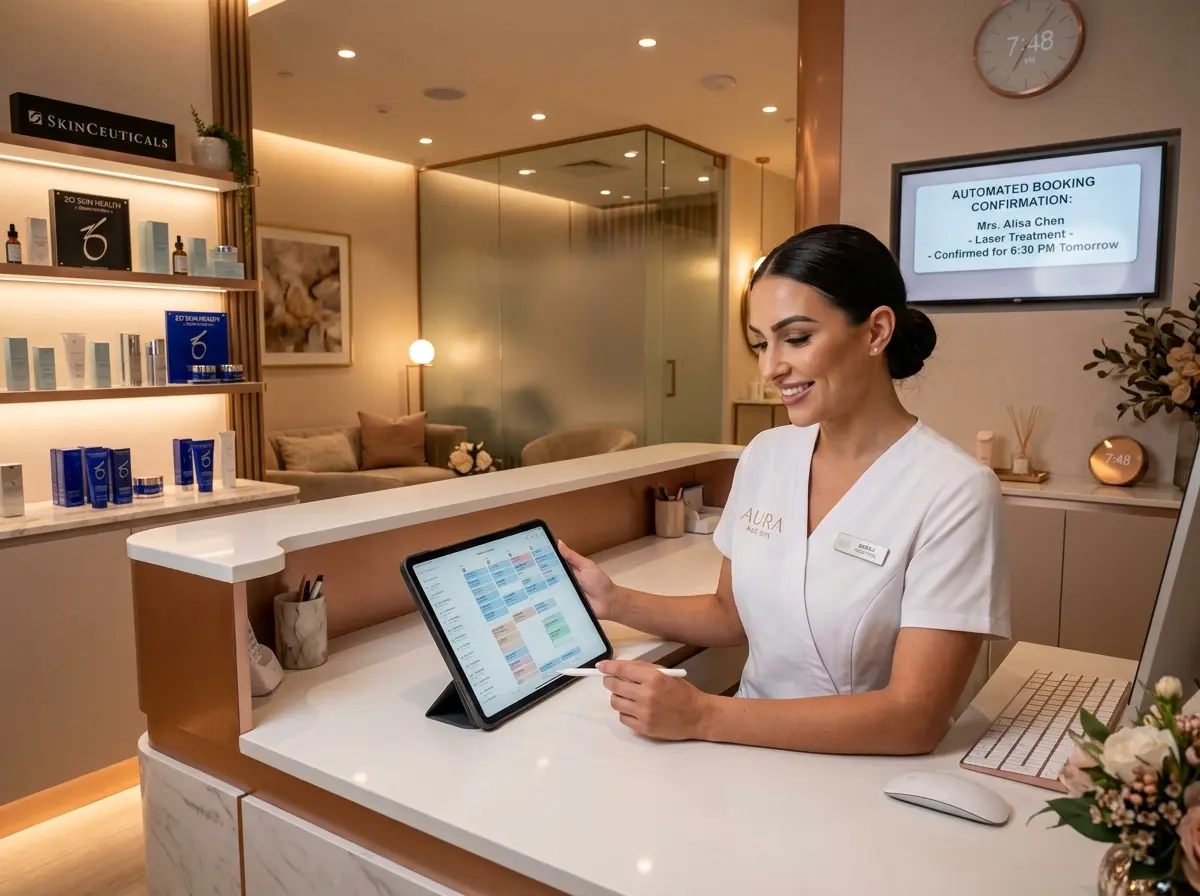
This is where AI earns its keep. An AI communication system can handle inbound guest questions 24/7, responding instantly with accurate, helpful, and on-brand answers. A guest who books on a Friday night and immediately wonders whether they can request a crib gets a response in seconds — not Monday morning. That kind of responsiveness doesn't just feel good; it actively builds trust and reduces the likelihood of cancellation.
For independent hotels managing phone communication, Stella is worth knowing about. She's an AI robot employee and phone receptionist that answers calls around the clock, handling questions about amenities, policies, availability, and more — with the same knowledge and tone you'd expect from your best human staff member on their best day. She can collect guest information through conversational intake forms over the phone, automatically log contacts in her built-in CRM with custom fields and AI-generated guest profiles, and even flag calls for human follow-up when a situation genuinely warrants it. For a small hotel team stretched thin, that's a meaningful operational upgrade. Stella's built-in CRM also means every interaction is captured — no sticky notes, no dropped details, no "I thought someone else handled that."
Building a Pre-Arrival Touchpoint Strategy That Actually Works
Timing Is Everything: The Three-Touch Framework
Rather than sending one confirmation email and hoping for the best, consider structuring your pre-arrival communication around three deliberate touchpoints. The first is the booking confirmation itself — warm, clear, and containing all the essential information a guest needs. The second is a message sent roughly five to seven days before arrival (or immediately, if the booking window is short), which answers common questions proactively, introduces upsell options, and reminds the guest why they're excited about their trip. The third is a same-day or day-before message with practical logistics: check-in time, parking instructions, a note about any current property features or local events, and a genuine expression of anticipation for their arrival.
Each touchpoint should feel like it came from a human being who cares, even if it was largely automated. Tone matters enormously here. Generic, corporate-sounding messages undermine the very thing that makes independent hotels appealing. Keep your personality in the copy.
Personalizing at Scale Without Losing Your Mind
Personalization sounds wonderful until you're managing 40 upcoming reservations and trying to remember that the couple in Room 12 is celebrating an anniversary while the family in Room 7 asked about the pool hours. AI-assisted communication systems can segment and personalize messaging based on guest data — occasion, room type, length of stay, source of booking — without requiring a human to manually manage every conversation.
The practical takeaway is this: set up your messaging templates with dynamic fields and clear decision logic. Guests celebrating a special occasion get a different message than corporate travelers. Guests with a three-night stay are better candidates for an upsell message than one-night stopover guests. Done well, this feels like attentive service. Done poorly, it feels like a mail merge gone rogue — so invest the time upfront to get the tone and logic right.
Turning Pre-Arrival Conversations Into Upsell Opportunities
A guest who reaches out before arrival is a guest who is engaged — and engagement is an upsell opportunity in disguise. When someone emails to ask about parking, that's a natural opening to mention your on-site restaurant and validate parking offer. When someone calls to ask about the pool, that's a moment to mention the poolside cabana rental or the Sunday brunch package. Training your AI communication tools to recognize these moments and respond with a gentle, relevant suggestion can meaningfully increase ancillary revenue without any hard-sell tactics.
The key is integration. Your pre-arrival communication system should know what's available, what's already been booked, and what's most relevant to this specific guest. That requires a connected stack — your property management system, your CRM, and your communication tools all talking to each other. It's not a small lift to set up, but the return on investment is real and recurring.
Quick Reminder About Stella
Stella is an AI robot employee and phone receptionist built for businesses that want to deliver a professional, responsive customer experience without burning out their team. She answers calls 24/7, engages with guests through conversational intake, manages contacts in a built-in CRM, and is available for just $99/month with no upfront hardware costs. For hotel owners looking to improve pre-arrival communication without adding headcount, she's a practical and immediate solution.
Your Next Steps Start Before the Guest Walks Through the Door
The pre-arrival experience is one of the most underleveraged competitive advantages available to independent hotel owners. It costs relatively little to get right, and the payoff — higher guest satisfaction, more upsell revenue, fewer surprises at check-in, and better reviews — is substantial and compounding. Guests who feel well-informed and genuinely welcomed before they arrive are more likely to extend their stay, spend more on-property, and tell their friends about you.
Here's where to start. First, audit your current pre-arrival communication honestly. How many touchpoints do you have? How fast do you respond to inbound inquiries? Are you capturing upsell opportunities, or letting them slip by? Second, identify the gaps. Is it response time? Personalization? Coverage during off-hours? Third, implement a fix — whether that's an AI phone receptionist, an automated messaging sequence, a better CRM, or all of the above. Start with the highest-impact gap and build from there.
The guests who book your hotel have already made a choice in your favor. Pre-arrival communication is your first real opportunity to make them feel like that was the right call. Don't waste it on silence.