Introduction: Because Your Best Marketers Are Already Sitting in Your Chairs
Let's be honest — word-of-mouth has been the lifeblood of salons and spas since the very first person walked out of a cut and color looking like a million dollars and immediately told their entire social circle who did it. Nothing has changed, except now you can actually incentivize that behavior instead of just hoping Karen tells her book club about your balayage skills.
A well-executed refer-a-friend campaign turns your happiest clients into your most effective sales team. And unlike your actual sales team, they work for gift cards and discounts instead of a salary. The math is pretty compelling. According to Nielsen, 92% of consumers trust recommendations from friends and family over any other form of advertising. Meanwhile, referred customers have a 37% higher retention rate and tend to spend more over their lifetime than customers acquired through paid ads.
So if you're still relying solely on Instagram ads and sidewalk signage to grow your client base, this guide is your wake-up call. Let's walk through exactly how to design, launch, and sustain a refer-a-friend campaign that actually works for your salon or spa — without turning the whole thing into a part-time job.
Building a Campaign Worth Talking About
Choose the Right Incentive Structure
Here's where most salon and spa owners go wrong: they offer a reward that sounds nice on paper but doesn't actually motivate anyone to pick up their phone and text a friend. A 10% discount on a future visit? Thrilling. A free deep conditioning treatment or a complimentary add-on service? Now we're talking.
The most effective refer-a-friend programs reward both the referrer and the new client. This two-sided approach removes the awkward "I'm trying to get something out of this" feeling for the person making the referral, and gives the new client an actual reason to walk through your door instead of the salon down the street.
Here are a few incentive models that work well for salons and spas specifically:
- Service credit: Give the referring client $20–$30 off their next appointment when the new client books and completes a service. Simple, trackable, and directly tied to revenue.
- Complimentary add-on: Offer a free scalp massage, eyebrow tint, or paraffin treatment — something with a high perceived value but low cost to you.
- Tiered rewards: The more friends a client refers, the better their reward gets. This turns your top clients into genuine brand ambassadors.
- New client discount: Give the referred friend 15–20% off their first visit to reduce the barrier to trying somewhere new.
Whatever you choose, keep it simple enough to explain in one sentence. If your front desk has to pull out a flowchart to describe the program, it's too complicated.
Make It Easy to Refer — Painfully Easy
The fastest way to kill a referral program is to make participating feel like filing taxes. Your clients are busy. They'll happily recommend you to a friend, but the moment they have to fill out a form, remember a code, or visit a website they can't find, they're moving on.
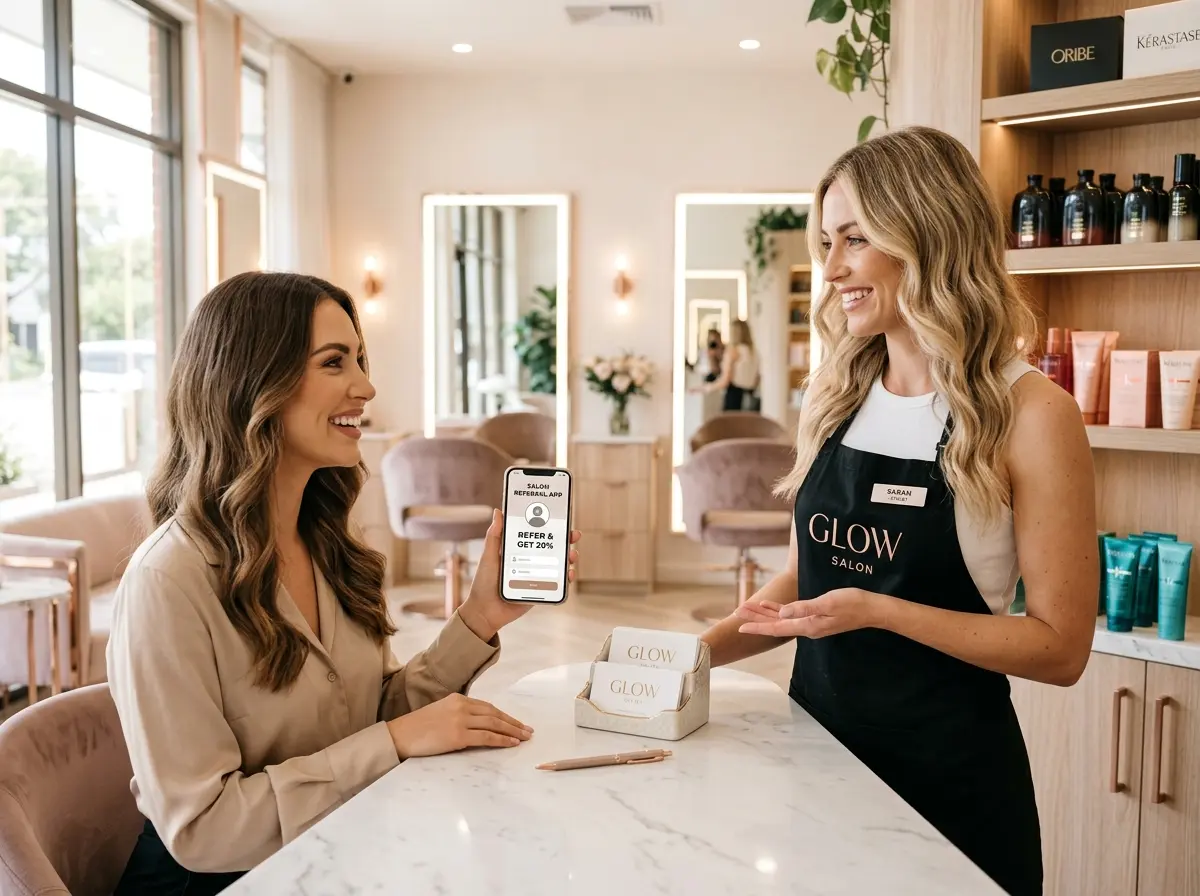
The friction-free approach works best. Give clients a physical referral card at checkout — yes, an actual card they can hand to someone. Create a simple digital option too, like a unique referral link they can text. If you're using booking software, many platforms have built-in referral tracking that ties back to client profiles automatically. The goal is to make the act of referring as thoughtful and effortless as texting a restaurant recommendation.
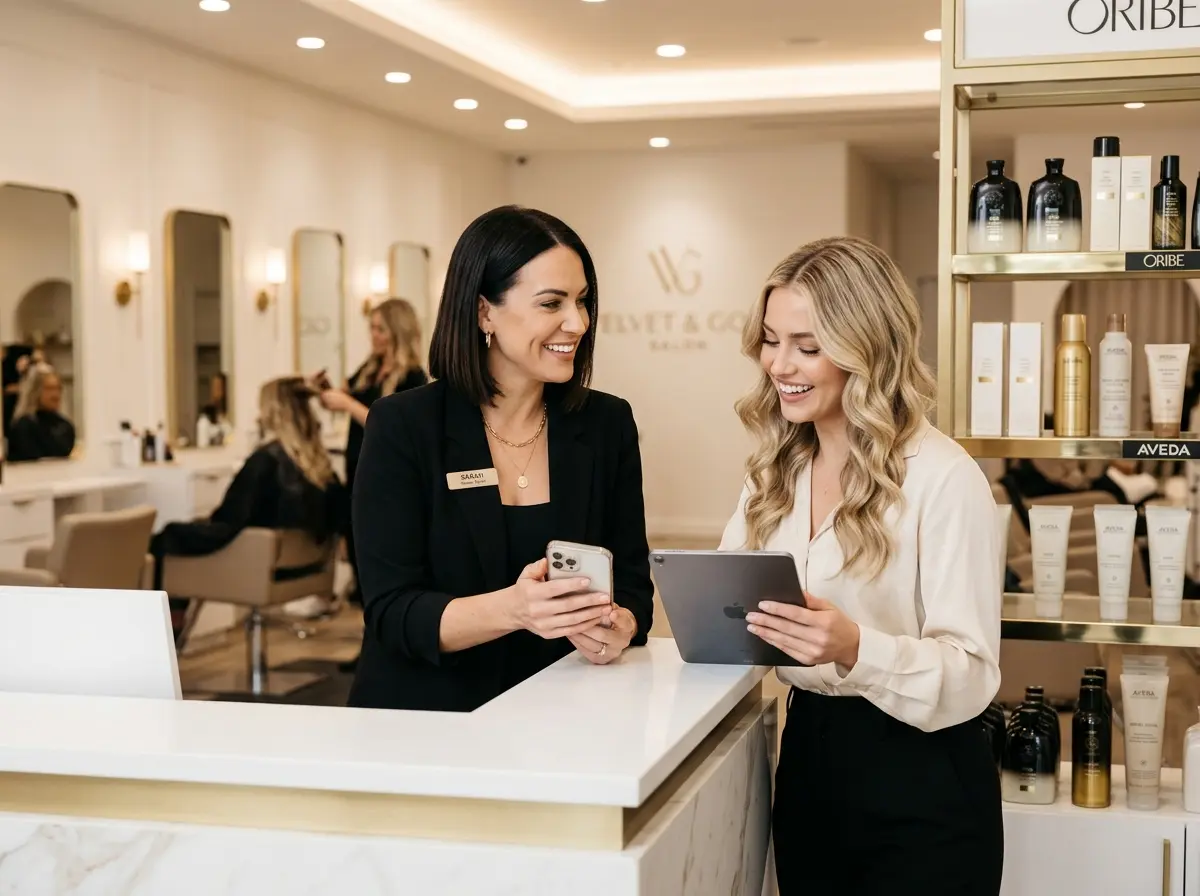
Train your staff to mention the program at natural touchpoints — during checkout, while processing payment, or when a client says something like, "I love what you did with my hair." That's your cue. A simple, "We'd love to meet your friends — here's a referral card that gets you both a little something" is all it takes.
Using Technology to Handle the Logistics
Let Automation Do the Heavy Lifting
Running a referral program manually — tracking who referred whom, who redeemed what, and who's owed a reward — is a logistical nightmare that gets worse as your program succeeds. This is exactly where technology earns its keep.
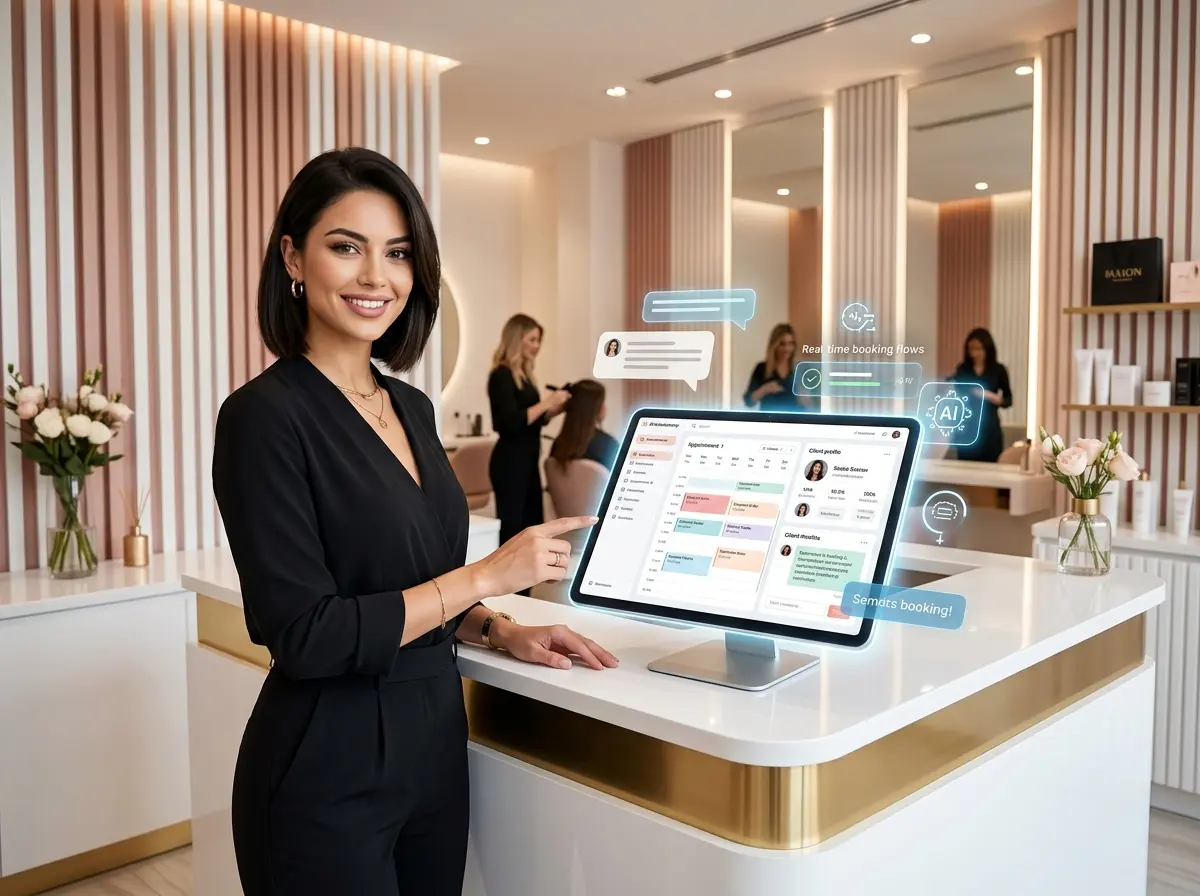
Stella, the AI robot employee and phone receptionist, is a natural fit here. At your salon or spa, Stella stands right at the front as a friendly, knowledgeable kiosk presence — she can proactively mention your refer-a-friend program to every walk-in client, answer questions about how it works, and collect their information on the spot through her conversational intake forms. On the phone side, she answers calls 24/7 and can inform callers about the referral promotion, capturing new client details and flagging them in her built-in CRM for your team. No more sticky notes, spreadsheets, or awkward "wait, who referred you again?" moments at the front desk.
Stella also tracks interaction data, so you can actually see how often the referral program comes up in conversations and whether it's resonating with clients — which brings us to the next point.
Promoting, Tracking, and Refining Your Campaign
Get the Word Out Without Being Annoying About It
Launching your referral program and saying nothing about it is a remarkably common mistake. You don't have to be obnoxious about promotion, but you do need to be consistent. Here's a practical promotion checklist for salon and spa owners:
- Post about the program on Instagram and Facebook — once at launch, then periodically as a reminder (stories work great for this).
- Add a mention to your email newsletter or appointment confirmation emails.
- Put a small sign or table card near your front desk or checkout area.
- Include a line about it in your auto-reply text messages after appointments.
- Brief every staff member so they can mention it naturally — not robotically — during client interactions.
You don't need to run paid ads for this. Your existing clients are your audience, and you already have their attention at every appointment. Use it.
Track What's Actually Working
A referral campaign with no tracking is just a discount program with extra steps. You need to know how many new clients came in through referrals, what their average spend was, how many referring clients redeemed their reward, and whether those referred clients came back for a second visit.
Set a 90-day review cadence for your referral program. Look at the numbers and ask honest questions. Is the incentive compelling enough? Are staff mentioning it consistently? Are referred clients returning, or are they one-and-done discount hunters? Adjust accordingly. Maybe the reward needs a bump. Maybe you need to simplify the redemption process. Maybe Tuesday afternoon is when your front desk is slammed and nobody has time to explain the program. These are fixable problems — but only if you're paying attention.
Keep the Momentum Going Long-Term
Most referral programs die a quiet death around month three when the initial excitement wears off and nobody's actively promoting it anymore. To avoid this fate, build the program into your operational rhythm rather than treating it as a one-time campaign.
Consider running seasonal variations — a summer referral push, a "New Year, New You" January promotion, or a holiday gifting angle where you encourage clients to give a new-client discount card to a friend as a gift. These seasonal refreshes give you a reason to talk about the program again without it feeling repetitive. They also create urgency, which is one of the most underrated drivers of referral behavior. "Refer a friend this month and you both get 20% off" is more motivating than "refer a friend anytime for a discount."
Quick Reminder About Stella
Stella is an AI robot employee and phone receptionist built for businesses like yours — she greets clients in person at your salon or spa, answers phone calls around the clock, promotes your current offers, and manages client information through a built-in CRM, all for just $99 a month with no upfront hardware costs. Whether you're running a referral campaign, filling appointment slots, or just trying to make sure no call goes unanswered, she's got it covered without a coffee break in sight.
Conclusion: Stop Leaving Referrals to Chance
Your happiest clients are already telling their friends about you — you're just not getting credit for it or capitalizing on it. A structured refer-a-friend program changes that by turning organic word-of-mouth into a measurable, repeatable growth channel.
Here's your action plan to get started:
- Decide on your incentive structure — two-sided rewards work best. Pick something with real perceived value.
- Create your referral materials — physical cards, a digital link, or both. Make participation frictionless.
- Brief your team — every staff member should be able to explain the program in 30 seconds.
- Promote it across your channels — email, social, in-store signage, and appointment messages.
- Track your results — review the numbers at 30, 60, and 90 days and adjust as needed.
- Keep it alive — refresh the campaign seasonally so it stays relevant and visible.
The clients who love your work are your most underutilized marketing asset. Give them a reason to spread the word, make it easy to do so, and watch your appointment book fill up with people who already trust you before they've even walked through the door. That's the kind of growth no ad budget can buy.