Why Most Restaurants Are Sitting on a Goldmine of Feedback and Ignoring It
Here's a fun little paradox: restaurant owners spend thousands of dollars on new menu items, remodels, and marketing campaigns trying to figure out what customers want — while simultaneously ignoring the customers who are already telling them exactly what they want. For free. Every single day.
Customer feedback isn't just a nice-to-have. It's the closest thing your restaurant has to a cheat code. Done right, a structured feedback loop can help you reduce food waste, improve service speed, retain more regulars, and yes — make more money. Done poorly (or not at all), it's just a stack of comment cards that nobody reads sitting next to the toothpicks at the host stand.
The good news? Building a feedback loop that actually improves your restaurant week over week isn't complicated. It just requires a little intention, the right tools, and the willingness to hear things you might not always love. Let's get into it.
Building a Feedback System That Actually Works
Step One: Make It Ridiculously Easy to Give Feedback
The single biggest reason customers don't leave feedback isn't that they don't have opinions — trust us, they have opinions — it's that the process is too inconvenient. A QR code buried at the bottom of the receipt, a survey email that arrives three days after their visit, or a manager who's too busy to stop and chat are all friction points that kill feedback volume before it even starts.
Think about where your customers naturally pause: waiting for their food, waiting for the check, or waiting at the host stand. These are prime feedback windows. A simple table card with a QR code linking to a short three-question survey can capture real-time impressions while the experience is still fresh. And "short" means short — three to five questions maximum. If your survey takes longer than ninety seconds to complete, most people will abandon it. According to SurveyMonkey, surveys with one to three questions have an average completion rate of 83.34%. Add more questions and that number drops fast.
Also consider verbal feedback. Train your floor staff to ask one specific question beyond the standard "How is everything?" Something like "Was there anything tonight you'd change or add to the menu?" opens a real conversation. Specificity invites honesty.
Step Two: Centralize Everything in One Place
Feedback collected in five different places — Google reviews, a paper comment box, a third-party survey tool, direct emails to the owner, and offhand comments passed along by servers — is feedback that's nearly impossible to act on. You'll spend more time sorting through data than using it.
Pick a system and funnel everything into it. This could be a dedicated section in your POS system, a simple spreadsheet that a manager updates weekly, or a CRM tool that aggregates customer interactions automatically. The format matters less than the consistency. What you're building is a living document that you actually review, not an archive you'll get around to eventually.
Tag feedback by category — food quality, service speed, ambiance, pricing, cleanliness — so you can spot patterns quickly. One complaint about a cold entrée is a bad night. Seven complaints in two weeks about cold entrées is a kitchen process problem that's costing you customers.
Step Three: Close the Loop With Customers
Here's where most restaurants completely drop the ball. They collect feedback, maybe even read it, and then... nothing. No response. No acknowledgment. No change.
Closing the loop means responding to reviews (yes, even the negative ones — especially the negative ones), following up with dissatisfied guests when you have their contact information, and making visible changes based on what you're hearing. When a customer sees that you actually added the extra sauce option they suggested, or that you fixed the parking issue they flagged, it creates an almost irrational level of loyalty. People want to know their voice mattered.
According to Harvard Business Review, businesses that respond to customer reviews see higher ratings over time compared to those that don't respond at all. A simple, genuine reply takes two minutes and signals to every future customer reading that review that you take hospitality seriously.
How Technology Can Help You Collect and Manage Feedback Faster
Automating the Boring Parts So You Can Focus on the Insights
Let's be honest — manually collecting, organizing, and following up on customer feedback is tedious. And when service is slammed on a Friday night, it's the first thing that gets deprioritized. That's where technology earns its keep.
Stella, the AI robot employee and phone receptionist, is one tool worth knowing about here. Her in-store kiosk presence means she's actively engaging with customers as they arrive or wait — and she can naturally gather feedback during those conversations, log customer information, and feed it into a built-in CRM with custom fields, tags, and AI-generated customer profiles. She also handles phone calls around the clock, which means customer concerns raised over the phone after hours actually get captured and summarized — not lost because nobody picked up.
For restaurant owners who struggle to keep customer interaction data organized, having an AI tool that automatically logs contacts, notes, and interaction histories takes one major administrative headache off the plate entirely.
Turning Feedback Into Weekly Improvements
Set a Non-Negotiable Weekly Review Meeting
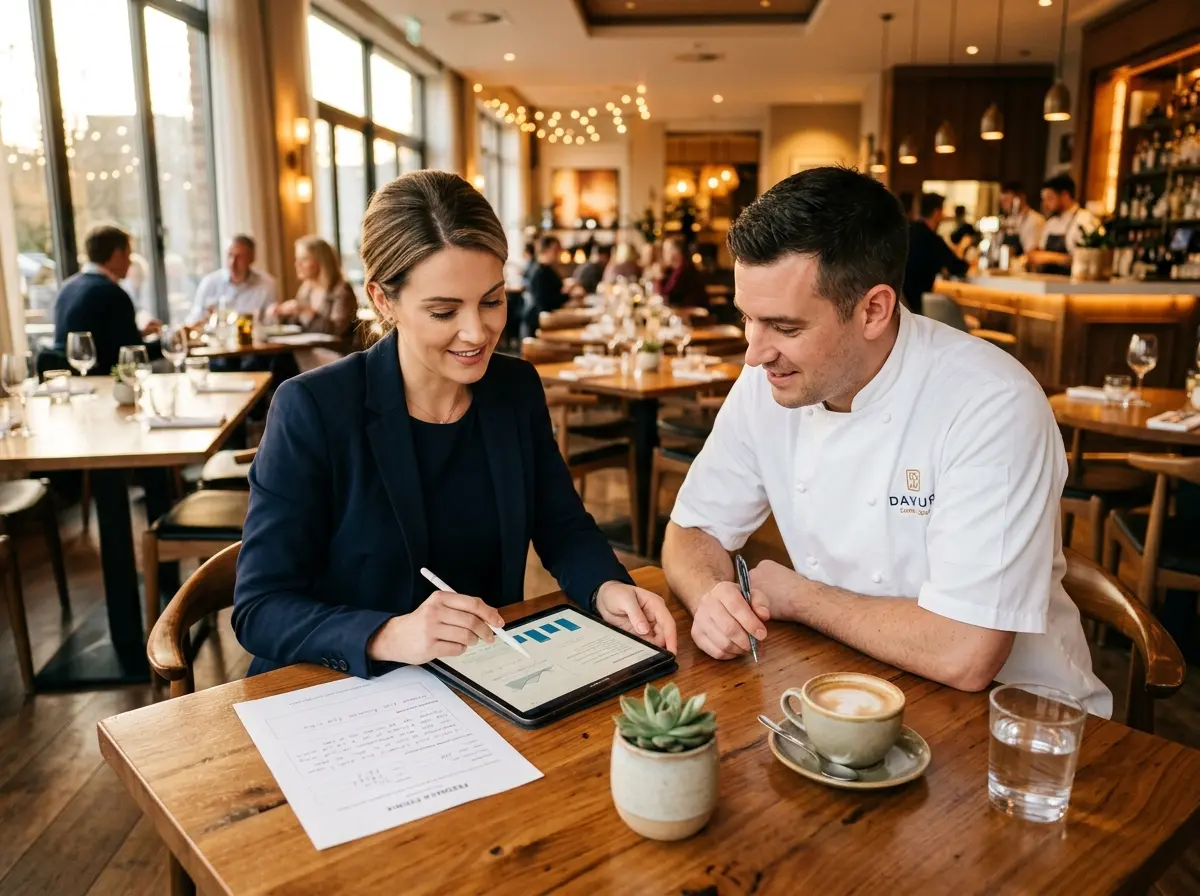
The difference between restaurants that use feedback effectively and those that don't often comes down to one thing: a standing meeting. It doesn't need to be long. Fifteen to twenty minutes, once a week, with your kitchen lead and front-of-house manager reviewing the week's feedback together. Look at what came in, identify the top two or three recurring themes, and assign an action item to each one with a clear owner and deadline.
That's it. No elaborate process. Just consistent attention. Over the course of a month, you'll have addressed eight to twelve specific friction points in your operation. Over a quarter, that's a meaningfully different restaurant than the one you were running before. Small, compounding improvements are how great restaurants are actually built — not through one grand overhaul, but through relentless iteration.
Track Changes and Measure the Impact
Making changes is only half the equation. You also need to know if those changes worked. If you updated your chicken sandwich recipe based on feedback and then saw zero improvement in related reviews or repeat orders, that's a data point too. Maybe the recipe wasn't the issue — maybe it was the temperature it was being served at, or the wait time.
Keep a simple change log: what you changed, when, and why. Then, four to six weeks later, check your feedback data and see if the relevant complaints decreased. This doesn't require a data science degree. A basic spreadsheet works fine. What it requires is the discipline to actually do it, week after week, even when it feels like a lot of work for incremental gains. Because those incremental gains stack — and eventually, they become your competitive advantage.
Use Positive Feedback Just as Strategically as Negative Feedback
Most owners treat positive feedback as ego fuel and negative feedback as operational data. In reality, both deserve equal analytical attention. When customers consistently rave about a specific dish, that's a signal to feature it more prominently, promote it on social media, or use it as a training benchmark for quality across the rest of your menu. When a server gets mentioned by name repeatedly for outstanding service, that's someone whose approach deserves to be studied and replicated.
Your best performers — on the floor, in the kitchen, on the menu — are telling you exactly what excellence looks like in your specific context. That's invaluable. Don't just smile at the compliments and move on. Mine them for what's actually working and intentionally do more of it.
Quick Reminder About Stella
Stella is an AI robot employee and phone receptionist designed for businesses like yours — standing inside your restaurant to engage guests and answer questions, while also answering every phone call 24/7 so nothing falls through the cracks. At just $99/month with no upfront hardware costs, she's one of the more practical tools available for restaurants that want a consistent, professional presence without adding to the payroll.
Start This Week, Not Next Quarter
Here's your action plan, and it's deliberately simple because simple things actually get done:
- This week: Create or streamline your feedback collection method. One QR code survey, three to five questions, placed at every table.
- This week: Set a recurring fifteen-minute Friday morning meeting with your managers to review feedback from the past seven days.
- Next week: Pick one specific change based on the feedback you've collected and implement it. Document what you changed and why.
- Ongoing: Respond to every online review — positive and negative — within 48 hours.
- Monthly: Review your change log and check whether your interventions are actually moving the needle.
The restaurants that win over the long haul aren't always the ones with the best initial concept or the flashiest decor. They're the ones that listen, adapt, and keep getting better. Your customers are already talking — the only question is whether you're building a system to hear them.
Start the loop. Run it every week. Watch what happens.