Open Houses Are Great — If Anyone Actually Shows Up
You've staged the home beautifully. The cookies are in the oven. The brochures are fanned out on the kitchen counter like a Pinterest board come to life. And then... crickets. Three people show up — one is a nosy neighbor, one is "just looking," and one forgot they were supposed to be at a different open house entirely.
Sound familiar? Getting people through the door is often harder than closing the deal itself, and traditional marketing methods like yard signs and MLS listings only go so far. The good news? Facebook Lead Ads are one of the most effective (and surprisingly affordable) tools for filling your open house with actual, qualified prospects — not just curious passersby who want free cookies.
This guide will walk you through exactly how to set up and run Facebook Lead Ads to drive real attendance to your next open house, from targeting the right audience to following up before the event even starts.
Setting Up Facebook Lead Ads That Actually Work
Facebook Lead Ads are different from regular ads because they let users submit their contact information directly within Facebook — no redirecting to a landing page, no friction, no excuse not to sign up. On mobile especially, the form pre-fills with the user's information, which means the barrier to entry is about as low as it gets. According to Meta, Lead Ads can reduce cost-per-lead by up to 50% compared to link-click campaigns. That's not nothing.
Choosing the Right Campaign Objective and Setup
When creating your campaign in Meta Ads Manager, select Lead Generation as your campaign objective. This tells Facebook's algorithm exactly what you're optimizing for, and it will serve your ad to people most likely to fill out a form. Give your campaign a clear name that includes the property address and event date — you'll thank yourself later when you're managing multiple listings.
Set your budget conservatively at first. For a single open house, a $5–$15 per day budget running for 5–7 days before the event is a solid starting point. You're not trying to reach all of greater Chicago here — you're trying to reach a few dozen motivated, relevant people in a specific geographic area.
Building a High-Converting Lead Form
Your lead form is where the magic (or the disaster) happens. Keep it short. Ask for name, email, and phone number — and maybe one qualifying question like "Are you currently pre-approved for a mortgage?" or "Are you working with a real estate agent?" This small addition helps filter out tire-kickers and gives you a natural conversation starter during follow-up.
Write a compelling headline for the form itself, something like "Reserve Your Spot at Our Exclusive Open House — [Address]". The word "reserve" creates a sense of scarcity and importance, even if the event is technically open to anyone. Add a brief description of the property's highlights — square footage, number of beds/baths, and one irresistible feature like "newly renovated chef's kitchen" or "panoramic lake views."
Targeting the Right Audience
This is where most agents leave money on the table. Facebook's targeting options are remarkably granular, and you should be using them. Build a custom audience that targets users within a 10–20 mile radius of the property, with household income filters, homeownership status (yes, you can target renters who may be looking to buy), and life events like "recently married" or "new job." You can also layer in interest-based targeting around home buying, real estate investment, or home improvement — all signals that someone might be in the market.
If you have a past client list or email database, upload it as a Custom Audience and create a Lookalike Audience from it. This tells Facebook to find people who look just like your best clients. It's like cloning your ideal prospect, which sounds slightly dystopian but works extremely well.
Keeping Leads Warm Before the Big Day
Generating leads is only half the battle. The other half — the half most agents fumble — is following up fast enough and consistently enough to actually get people to show up. Studies show that responding to a lead within five minutes increases conversion rates by up to 900% compared to waiting 30 minutes. Five minutes. That's barely enough time to finish your coffee.
Automating Your Follow-Up Workflow
Connect your Facebook Lead Ad to a CRM or email automation tool (Zapier makes this easy) so that every new lead instantly receives a confirmation email with the event details, a calendar invite, and a friendly reminder of what makes the property special. Set up a second reminder 24 hours before the open house and a third the morning of. Yes, this feels like a lot — but people are busy, distracted, and signed up for seventeen other things. You need to stay top of mind without being annoying about it.
For phone follow-up, Stella — the AI robot employee and phone receptionist — can handle inbound calls from interested leads around the clock, answering questions about the property, the neighborhood, or the event schedule without you having to drop everything every time your phone buzzes. If a lead calls at 9 PM after seeing your ad, Stella is there, professional and ready, while you're hopefully not.
Quick Reminder About Stella
Stella is an AI robot employee and phone receptionist built for businesses of all sizes. She answers calls 24/7, engages walk-in visitors at her in-store kiosk, collects lead information through conversational intake forms, and manages contacts in her built-in CRM — all for just $99/month with no upfront hardware costs. For real estate professionals juggling listings, showings, and open houses, having a reliably professional presence handling the phones is less of a luxury and more of a sanity-saving necessity.
Making the Most of Your Open House Data
Here's a secret that separates good real estate agents from great ones: the open house isn't just an event — it's a data collection opportunity. Every person who walks through that door (or almost walked through it) is a potential future client, a referral source, or at minimum a data point that makes your next campaign smarter.
Tracking What Worked and What Didn't
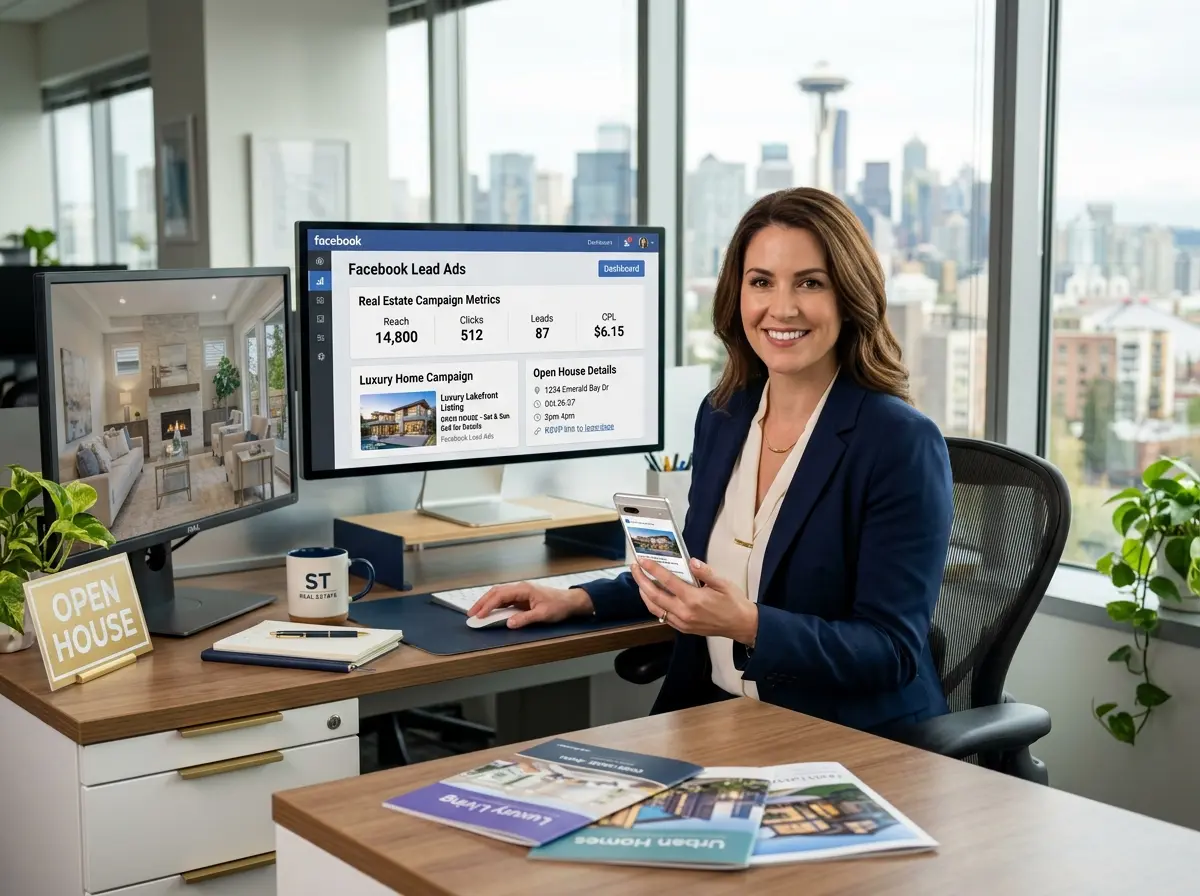
Inside Meta Ads Manager, review your lead ad results with a critical eye. What was your cost per lead? Which ad creative (image vs. video, short copy vs. long copy) generated more form submissions? What was your lead-to-attendee conversion rate? If 50 people submitted the form and only 8 showed up, your follow-up process needs work. If 20 people showed up but your cost per lead was $40, consider tightening your targeting next time.
Facebook's Attribution tools can also show you whether leads who didn't attend still interacted with your content, which matters if you're retargeting them for a future listing. Don't let that data go to waste — it's essentially market research you paid for with your ad spend.
Retargeting and Staying in the Game
Not everyone who expressed interest will show up, and that's completely normal. Create a retargeting audience from people who opened your lead form but didn't submit it, or who clicked your ad but didn't engage further. Run a follow-up ad after the open house with a message like "Missed the open house? Schedule a private showing today." This keeps momentum going and turns a missed opportunity into a booked appointment.
You can also use your lead list to build a longer-term nurture campaign — monthly market update emails, new listing announcements, or helpful home-buying guides. Real estate is a relationship business, and staying in front of your leads with genuinely useful content means you'll be the first person they call when they're finally ready to make a move.
Building a Repeatable System
The agents who consistently fill their open houses don't reinvent the wheel every time. They build a repeatable playbook: create the lead ad, set up the automated follow-up sequence, make the personal follow-up calls, send the reminders, run the event, collect attendee info, and retarget the no-shows. Once you've done this two or three times and refined the pieces that didn't work, you'll have a system that practically runs itself — and your open houses will start feeling a lot less like a gamble and a lot more like a science.
Conclusion: Stop Hoping People Show Up and Start Making It Happen
Filling a real estate open house isn't magic — it's marketing. Facebook Lead Ads give you a direct, affordable, and highly targeted way to put your event in front of exactly the kind of buyers you want to attract, collect their information before they forget about you, and stay in touch long enough to actually get them through the door.
Here's your action plan: Set up a Lead Ad campaign at least one week before your next open house, targeting a 15-mile radius with income, life event, and interest filters. Build a simple lead form with three fields and one qualifying question. Connect it to your CRM and set up at minimum three automated follow-up touchpoints. Review your results afterward and adjust. Repeat.
And if the phone keeps ringing while you're busy showing the property, staging the kitchen, or simply trying to breathe for a moment, let Stella handle it. She doesn't need a break, she doesn't miss calls, and she'll never eat the open house cookies.