Introduction: The Revolving Door of Retail (And How to Stop It)
Here's a fun little statistic that should keep you up at night: acquiring a new customer costs five to seven times more than retaining an existing one. Yet most retail businesses spend the vast majority of their marketing budget chasing strangers while their existing customers quietly drift away to competitors. Congratulations — you've built a very expensive revolving door.
The good news? Customer loyalty isn't some mystical force that only mega-brands like Apple or Starbucks can conjure. It's a system — a ladder, if you will — and every rung is something you can deliberately build. The journey from "one-time buyer" to "raving fan who tells all their friends and leaves glowing reviews" doesn't happen by accident. It happens because you made intentional choices about how you engage, follow up, reward, and communicate with your customers at every stage of the relationship.
In this post, we'll walk you through the loyalty ladder rung by rung, with practical strategies to move customers up — and stop them from falling off entirely.
Understanding the Loyalty Ladder
The Five Rungs You Need to Know
Think of customer loyalty as a ladder with five distinct levels. At the bottom, you have the Prospect — someone who's curious but hasn't committed yet. One rung up is the First-Time Buyer, who took a chance on you. Then comes the Repeat Customer, who liked what they saw and came back. Above that is the Client — someone who regularly buys from you and thinks of you first. And at the very top? The Raving Fan: the customer who doesn't just buy from you, they recruit for you.
Most businesses do a decent job converting prospects into first-time buyers (you ran the ad, they clicked, they bought — great). Where things fall apart is the gap between the first-time buyer and the repeat customer. That gap is where loyalty is won or lost, and it's largely determined by what happens after the sale.
Why First Impressions Are Just the Cover of the Book
You've heard that first impressions matter, and they absolutely do. But in retail, the second impression is arguably more important. The first visit tells customers whether you're worth their money. The second visit tells them whether you're worth their loyalty.
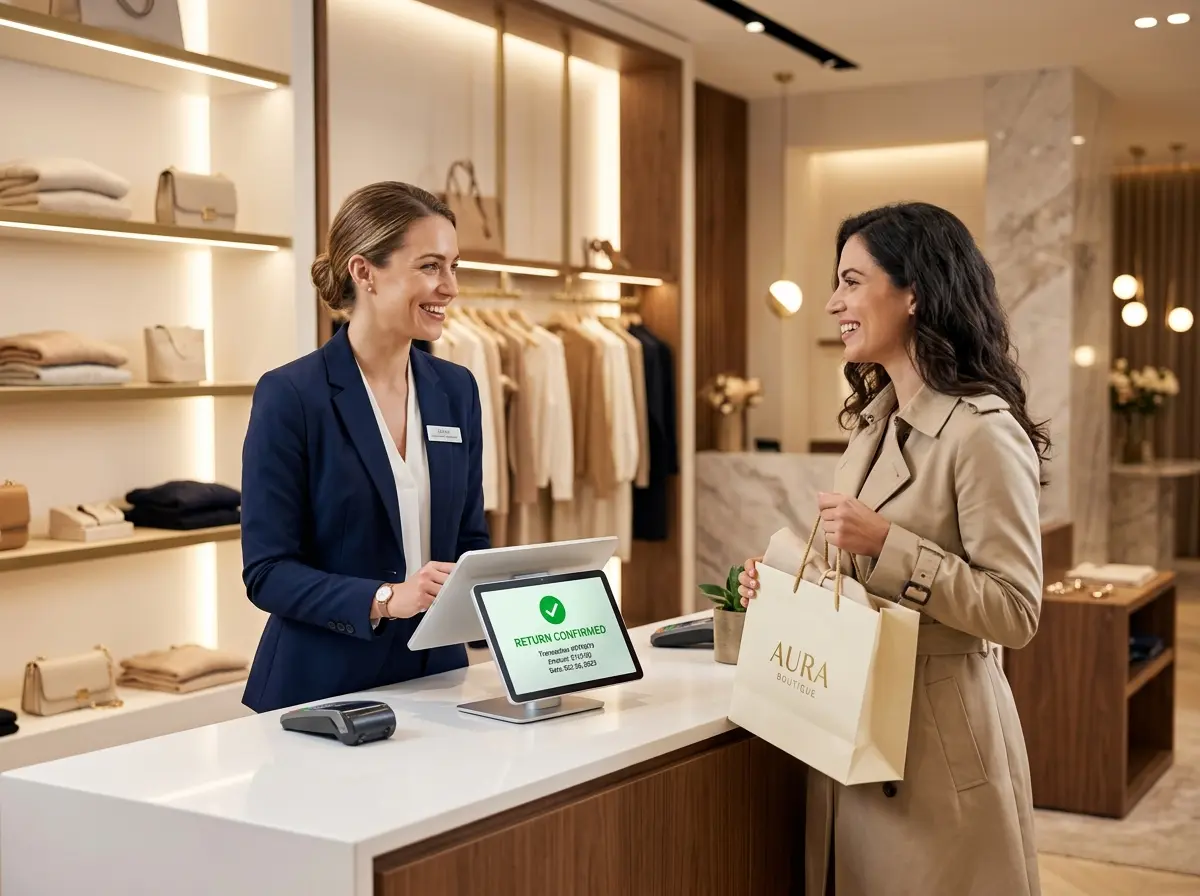
Research from Harvard Business Review found that increasing customer retention rates by just 5% can increase profits by 25% to 95%. That's not a typo. The math on loyalty is staggering, which makes it all the more baffling that so many businesses treat post-purchase follow-up as an afterthought. Send a receipt, maybe a "thanks for shopping" email, and then... crickets. Meanwhile, your competitor just sent a personalized discount for exactly the product your customer was eyeing last time they visited.
The point is simple: the first transaction is the beginning of a conversation, not the end of one. Treat it that way.
Tools and Touchpoints That Move Customers Up the Ladder
How Stella Fits Into Your Loyalty Strategy
One of the most underrated drivers of customer loyalty is consistency — and one of the most common killers of consistency is the unpredictable human element. Staff have bad days. People quit. The friendly employee who remembered your regulars' names just put in their two weeks' notice. Enter Stella, the AI robot employee and phone receptionist who shows up every single day, greets every customer who walks through the door, and never once forgets a promotion or has an off-Monday.
For retail businesses, Stella's in-store kiosk presence means every visitor gets a warm, knowledgeable welcome — including proactive mentions of current deals and cross-sell recommendations that your human staff might forget to mention during a rush. She also answers phone calls 24/7 with the same product and policy knowledge she uses on the floor, so the experience is seamless whether a customer is standing in your store or calling from their couch at 10pm. Her built-in CRM captures customer information through conversational intake forms — during calls, at the kiosk, or on your website — giving you the data you need to personalize future interactions and build real relationships, not just transactions.
Building a Loyalty Program That Actually Works
Points, Perks, and the Psychology of Progress
Loyalty programs are almost comically common at this point — your customers are probably members of a dozen of them and actively using about two. So the question isn't whether to have a loyalty program; it's whether yours is worth carrying around. The ones that work share a few key traits.
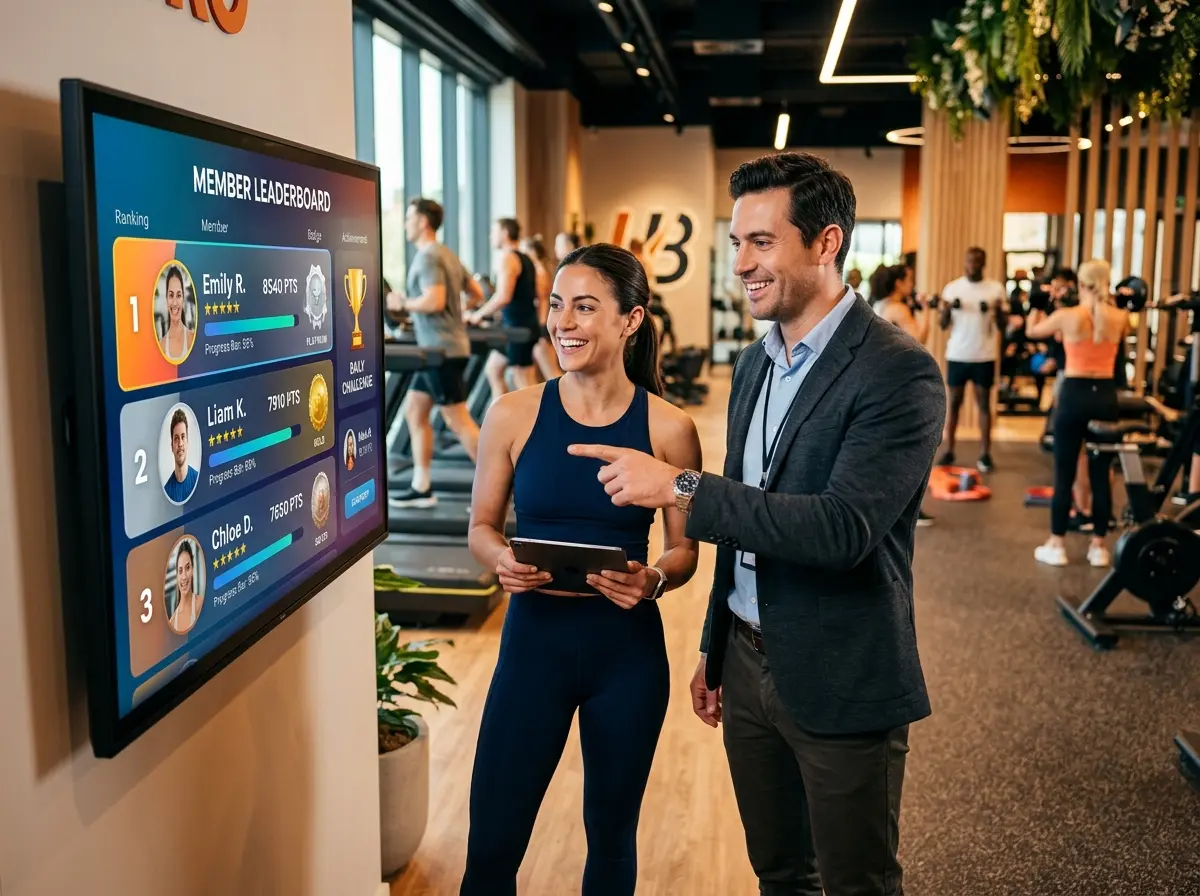
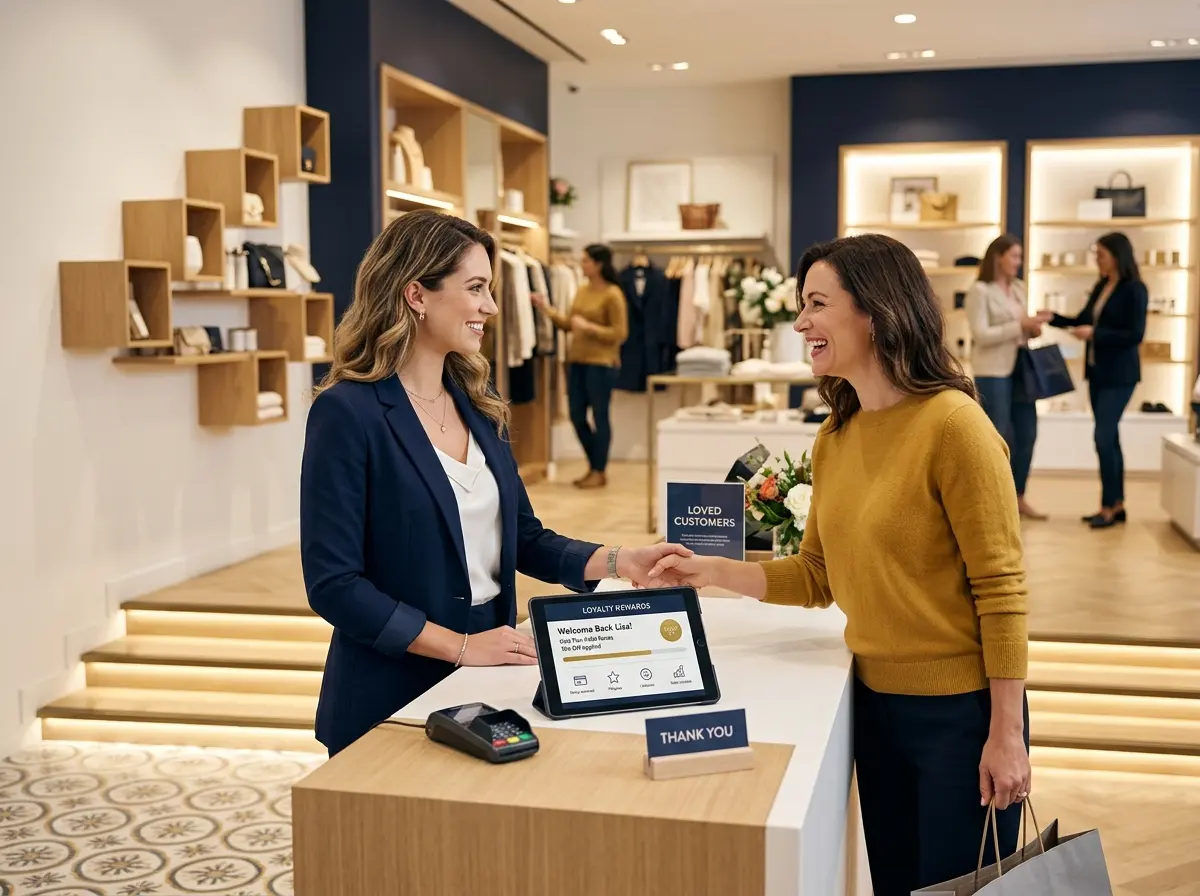
First, they make progress visible. The "progress principle" in behavioral psychology tells us that people are motivated by seeing movement toward a goal. A punch card with three punches already on it feels more valuable than a new, empty one — even if the total required is the same. Digital loyalty apps that show a progress bar toward the next reward leverage this brilliantly. Second, successful programs offer rewards that feel genuinely valuable, not like you're redeeming airline miles for a tote bag. Early access to new products, birthday rewards, exclusive member-only events, and meaningful discounts all outperform generic "earn 1 point per dollar" schemes that offer a $5 coupon after someone spends $500.
Finally — and this is critical — make it effortless to join and easy to use. If signing up requires filling out a paper form in front of a line of impatient customers, you've already lost.
Personalization: The Secret Ingredient Most Retailers Ignore
Mass marketing is comfortable. It's also increasingly ineffective. Today's customers have been so thoroughly marketed to that generic messaging barely registers. What does register is relevance. A study by Epsilon found that 80% of consumers are more likely to make a purchase when brands offer personalized experiences.
Personalization doesn't have to be complicated. It starts with knowing who your customers are and what they've bought before. Use that data to send targeted follow-up offers — if someone bought a yoga mat, they might be interested in your new resistance bands. If a customer hasn't visited in 90 days, a "we miss you" email with a small incentive can bring them back. Segment your customer list by purchase history, frequency, and spending level. Talk to your high-value customers differently than you talk to someone who bought once during a sale. The technology to do this is more accessible than ever; the only thing stopping most small retailers is the will to set it up.
From Repeat Customer to Raving Fan: Making the Leap
Raving fans aren't manufactured with discounts — they're created through experiences. Think about the brands you genuinely evangelize to your friends. Chances are, it's not because they gave you 10% off once. It's because they surprised you, delighted you, solved a problem you didn't know you had, or made you feel genuinely valued.
Creating those moments in retail requires a few deliberate habits. Surprise upgrades and unexpected freebies go a long way. So does actually resolving complaints generously and without friction — a customer whose problem you fixed beautifully is often more loyal than one who never had a problem at all. Community building, whether through in-store events, a VIP customer group, or social media engagement, gives your best customers a sense of belonging that no competitor can easily replicate. The goal is to make customers feel like insiders, not just transactions.
Quick Reminder About Stella
Stella is an AI robot employee and phone receptionist available for just $99/month with no upfront hardware costs. She greets customers in-store, answers phones around the clock, manages customer data through a built-in CRM, and promotes your deals with consistent enthusiasm — whether you run a bustling retail shop, a service business, or anything in between. No breaks, no bad days, no turnover.
Conclusion: Start Climbing
The loyalty ladder isn't a concept reserved for big-box retailers with eight-figure marketing budgets. It's a framework that any business can apply with the right combination of intentionality, data, and genuine care for the customer experience. Here's how to put this into practice starting this week:
- Audit your post-purchase follow-up. What happens after someone buys from you for the first time? If the answer is "not much," that's your first fix.
- Launch or refresh your loyalty program with visible progress, genuinely valuable rewards, and a frictionless sign-up process.
- Start collecting and using customer data to personalize communications — even basic segmentation will outperform one-size-fits-all blasts.
- Create at least one "wow" moment in your customer experience that people will actually talk about. Surprise. Delight. Solve problems generously.
- Ensure consistency at every touchpoint — in-store, on the phone, and online — so customers always know what to expect from you.
Loyalty isn't given. It's earned, one interaction at a time. But here's the thing — most of your competitors are too busy chasing new customers to bother nurturing the ones they already have. That's your opportunity. Start climbing the ladder, and give your customers a reason to climb it with you.