The Case Is Closed — But the Relationship Doesn't Have to Be
Congratulations — you won the case, settled the dispute, drafted the airtight contract, or successfully navigated whatever legal labyrinth your client brought through your door. Champagne all around. But here's the part most law firms completely skip: what happens next.
Your client just had a meaningful, often emotionally charged experience with your firm. They trusted you during a stressful period of their life. They saw firsthand how your team works, how you communicate, and whether you delivered on your promises. And then... you send a final invoice and wave goodbye. No follow-up. No check-in. No "hey, how did we do?" Just silence.
That silence is costing you referrals. Real ones. The kind that walk in already trusting you because their friend, colleague, or family member wouldn't stop talking about how great your firm was to work with. According to Nielsen, 92% of consumers trust referrals from people they know above any other form of advertising. In the legal industry — where trust is literally your product — that number might as well be tattooed on your marketing budget.
Enter the case closure survey: a simple, structured tool that not only captures client satisfaction but actively nudges happy clients toward spreading the word. Let's talk about why you need one, what it should include, and how to turn a closed case into an open referral pipeline.
The Referral Problem Most Law Firms Are Ignoring
Satisfied Clients Don't Automatically Become Vocal Clients
Here's an uncomfortable truth: most satisfied clients don't do anything with their satisfaction. They think you were great. They'd recommend you if asked. But they're busy. They're not lying awake thinking about how to send business your way — they're thinking about their next meeting, their kid's soccer game, and whether they left the stove on. Without a prompt, that goodwill just quietly evaporates.
A case closure survey is that prompt. It re-engages the client at the exact moment their experience with your firm is freshest in their mind. It says, "We care about how we did, and we'd love to hear from you." That simple act of asking — professionally and genuinely — is often enough to remind a satisfied client that yes, they do know someone who needs a good attorney, and yes, they should absolutely mention your name.
The Window of Opportunity Is Shorter Than You Think
Timing matters enormously. Studies on customer feedback consistently show that response rates and emotional engagement drop significantly the longer you wait after a service interaction ends. In legal terms: the moment the case closes is your golden window. The client is relieved, grateful, and — if things went well — genuinely impressed with your work.
Wait two weeks and you've lost half the emotional momentum. Wait a month and you're competing with a dozen other things demanding their attention. A well-timed case closure survey, sent within a day or two of resolution, catches clients at peak satisfaction. That's when they're most likely to leave a glowing review, fill out your feedback form earnestly, and yes — tell their brother-in-law to call your office.
Referrals Are Not the Only Benefit
While referral generation is the headline act, case closure surveys deliver supporting benefits that are equally valuable for a growing firm. They surface operational blind spots your team might not notice from the inside — communication gaps, billing confusion, delays in document delivery. They give you concrete data to improve your client experience over time. And perhaps most importantly, they signal to your clients that your firm takes quality seriously, which itself reinforces the very confidence that makes them comfortable recommending you to others.
Building a Case Closure Survey That Actually Works
Keep It Short, Purposeful, and Human
No one wants to fill out a 47-question survey after wrapping up a stressful legal matter. Your case closure survey should be concise — ideally five to ten questions — and every single question should earn its place. Ask about overall satisfaction, communication quality, outcome clarity, and whether they'd refer a friend. Include one open-ended field for comments, because that's often where the most useful (and quotable) feedback lives.
Critically, write it like a human being. Legal professionals are trained to be precise, which sometimes translates into forms that read like depositions. Resist that urge. Warm, conversational language gets better responses and leaves clients with a positive final impression of your firm.
Embed a Referral Ask Directly Into the Survey
Don't make the referral ask feel like a separate, awkward step. Weave it naturally into the survey flow. After a question about their satisfaction, include something like: "Is there anyone in your network who might benefit from our services? If so, we'd love an introduction." You can include a simple text field where they can enter a name and contact information, or just plant the seed and let it bloom organically.
For clients who rate their experience highly, consider triggering a follow-up message that thanks them and directly invites them to leave a Google or Avvo review. Happy clients rarely decline when the path is made easy for them — most just never thought to do it unprompted.
How Technology Can Support Your Client Follow-Up Process
Automate the Touchpoint, Personalize the Experience
Your attorneys are busy closing cases, not manually sending follow-up emails to every former client. That's exactly where smart automation earns its keep. Whether you use your practice management software, a dedicated CRM, or a standalone email tool, automating the delivery of your case closure survey ensures it actually goes out — every time, without relying on someone remembering to do it.
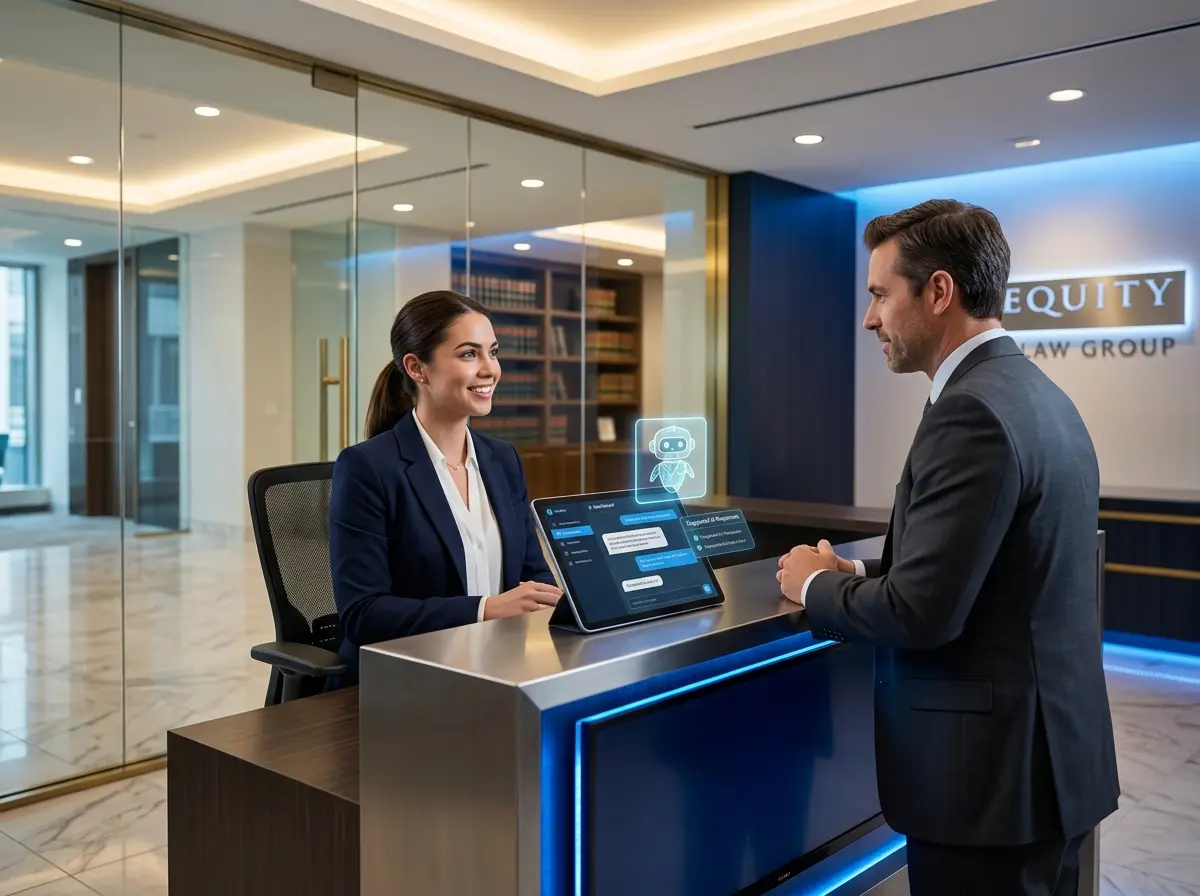
This is also a good moment to mention that Stella, the AI robot employee and phone receptionist, can support law firms in meaningful ways beyond just answering the front desk phone. Stella handles intake forms and client contact collection through natural conversation — whether that's over the phone, on the web, or at a physical kiosk in your office lobby. Her built-in CRM lets you tag clients, add notes, and track interactions, so your team always knows where a client relationship stands. When a case closes, the data Stella has captured throughout the relationship can help inform and personalize your follow-up outreach, making that case closure survey feel less like a form and more like a genuine check-in from people who actually paid attention.
Turning Survey Responses Into a Referral Engine
Create a Simple Follow-Up Workflow Based on Responses
Not every survey response warrants the same follow-up, and treating them all identically is a missed opportunity. Build a simple workflow: clients who rate their experience a nine or ten get a warm thank-you and a direct link to leave a public review. Clients who rate it a seven or eight get a personalized note acknowledging their feedback and inviting them to share any additional thoughts. Clients who rate it lower — and yes, it happens — get a prompt personal follow-up from a senior team member to address their concerns before the dissatisfaction has a chance to spread.
This tiered approach ensures happy clients are being actively leveraged as advocates, while less-satisfied clients feel heard rather than ignored. The latter is particularly important in the legal industry, where a poorly handled complaint can do far more reputational damage than the original issue ever would have.
Track, Measure, and Refine Over Time
Your case closure survey is not a set-it-and-forget-it asset. Track your response rates. Monitor your average satisfaction scores across practice areas and individual attorneys. Note which questions generate the most useful responses and which ones clients consistently skip. Over time, you'll build a rich picture of your firm's client experience that goes far beyond gut feel — and that data becomes a competitive advantage when you're making decisions about hiring, training, service offerings, or marketing.
Referrals generated through survey follow-ups should also be tracked. When a new client calls and says they were referred, ask how they heard about you and log it. Over a year, you'll be able to draw a direct line between your case closure process and new revenue — which makes it very easy to justify the time investment to any skeptical partners in the firm.
Don't Overlook the Power of Testimonials
When a client provides a glowing open-ended response in your survey, that's a testimonial waiting to happen. With their permission, those words can appear on your website, in your marketing materials, and in your intake process to reassure prospective clients. A real quote from a real client who navigated a real legal challenge carries more weight than any tagline your marketing team could ever write. Your satisfied clients are, quite literally, your best marketing department — and most of them don't even know it yet.
A Quick Reminder About Stella
Stella is an AI robot employee and phone receptionist designed to help businesses like law firms stay responsive, organized, and professional — without adding to your headcount. She greets clients in your physical office, answers calls around the clock, handles intake, manages your CRM, and makes sure no potential client ever hits a dead end trying to reach you. At $99/month with no hardware costs, she's the kind of team member who never calls in sick and never misses a follow-up.
Your Next Case Closure Should Open a New Opportunity
The math here is not complicated. You worked hard to earn that client's trust. You delivered results. You have every right to ask them to pay it forward — and a well-designed case closure survey is the professional, non-pushy way to do exactly that.
Here's how to get started this week:
- Draft a five-to-eight question survey covering satisfaction, communication, outcome, and referral intent. Keep the language warm and human.
- Set up automated delivery to trigger within 24–48 hours of case closure — most practice management platforms and CRM tools support this.
- Build a simple three-tier response workflow for promoters, passives, and detractors — and assign ownership to a specific team member.
- Track referrals and reviews generated over the next quarter and use that data to refine your questions and timing.
Your satisfied clients are walking around with your best advertisement stored in their memory. A case closure survey is how you give them permission — and a gentle push — to use it. Stop leaving those referrals on the table. Your next great client is probably already in someone's contact list.