Let's Talk About the Awkward Moment That's Costing You Money
Picture this: A customer drops off their car for a routine oil change. Your technician pops the hood, takes one look underneath, and spots a serpentine belt that looks like it survived a war. So what happens next? Does your tech call the customer directly? Does the front desk handle it? Does someone scribble a note on a napkin and hope for the best?
If your answer is "it depends on who's available" or "we kind of just figure it out," congratulations — you've identified a problem that's quietly undermining your shop's revenue, reputation, and customer relationships. Additional repair recommendations, often called "upsells" (though that word makes some shop owners squirm), are one of the most valuable touchpoints in the entire customer journey. And yet, most auto shops handle them with all the consistency of a coin flip.
A formal communication policy for additional repair recommendations isn't just a nice-to-have. It's a foundational business practice that protects your shop legally, builds customer trust, and — yes — makes you more money. Let's talk about how to build one.
Why Informal "We'll Just Call Them" Doesn't Cut It
The Real Cost of Inconsistency
When every technician and service advisor handles additional repair conversations differently, the results are all over the place. One advisor might present every recommended service with confidence and context. Another might nervously mention it at the end of a call like an afterthought, making the customer feel like they're being pressured into something shady. The customer experience shouldn't depend on which employee happened to pick up the phone that day.
Inconsistency also creates a trust problem. Customers who feel blindsided by unexpected recommendations — especially when they weren't informed of the process upfront — are far more likely to decline the service and far less likely to return. Studies in the automotive service industry consistently show that transparent communication is the single biggest factor in customer retention. When your policy is clear and predictably applied, customers feel informed rather than ambushed.
Liability Is a Real Thing — Seriously
Here's the less fun part of the conversation: documentation matters legally. If a customer declines a safety-related recommendation — say, worn brake pads or a cracked CV axle boot — and later gets into an accident, your shop needs a paper trail showing that the issue was identified, communicated, and declined in writing. Without a formal process, you're exposed.
A proper policy should include a documented record of every additional recommendation made, whether the customer accepted or declined, and ideally a signature or digital confirmation. This protects your shop and, more importantly, keeps your customers safe by ensuring nothing slips through the cracks.
Revenue You're Leaving on the Table
Let's get back to the money, because it matters. Industry data suggests that auto shops that use a consistent, transparent process for presenting additional services see acceptance rates 20–40% higher than shops that handle it ad hoc. That's not because they're being pushy — it's because they're being professional. Customers are far more likely to say yes when the recommendation is presented clearly, explained in plain language, and offered with an easy approval or decline process. An informal approach feels like a sales pitch. A formal process feels like expertise.
A Smarter Front-End Experience Can Set the Stage
How Stella Can Help You Stay Consistent From the First Touchpoint
Before a customer even drops off their car, the tone of communication is already being set. Stella, the AI robot employee and phone receptionist, helps auto shops establish a professional, consistent customer experience from the very first interaction — whether that's a phone call to schedule an appointment or a walk-in at the front desk.
When Stella handles incoming calls, she can gather intake information, explain your shop's inspection and recommendation process upfront, and set clear expectations about how customers will be contacted if additional services are identified. That kind of proactive transparency — before the car even gets on the lift — dramatically reduces friction later. Her built-in CRM also means customer preferences, contact history, and notes are captured and accessible, so your staff isn't starting from scratch every time someone calls. No more "wait, did we already talk to this person?" moments.
Building a Policy That Actually Works
Define the Communication Channel and Timeline
Your policy needs to answer two basic questions: how will you communicate additional recommendations, and when? These seem obvious, but most shops have never written down the answers.
Best practice is to define a primary contact method (phone call for anything over a certain dollar amount, text or app for smaller items), a timeline for reaching out (within a defined window of when the inspection is complete), and a backup plan if the customer doesn't respond. For example: call within 30 minutes of completing the inspection, follow up with a text if no answer within an hour, and do not proceed with any additional work without explicit approval. Simple. Documented. Consistently applied.
Create a Standardized Presentation Format
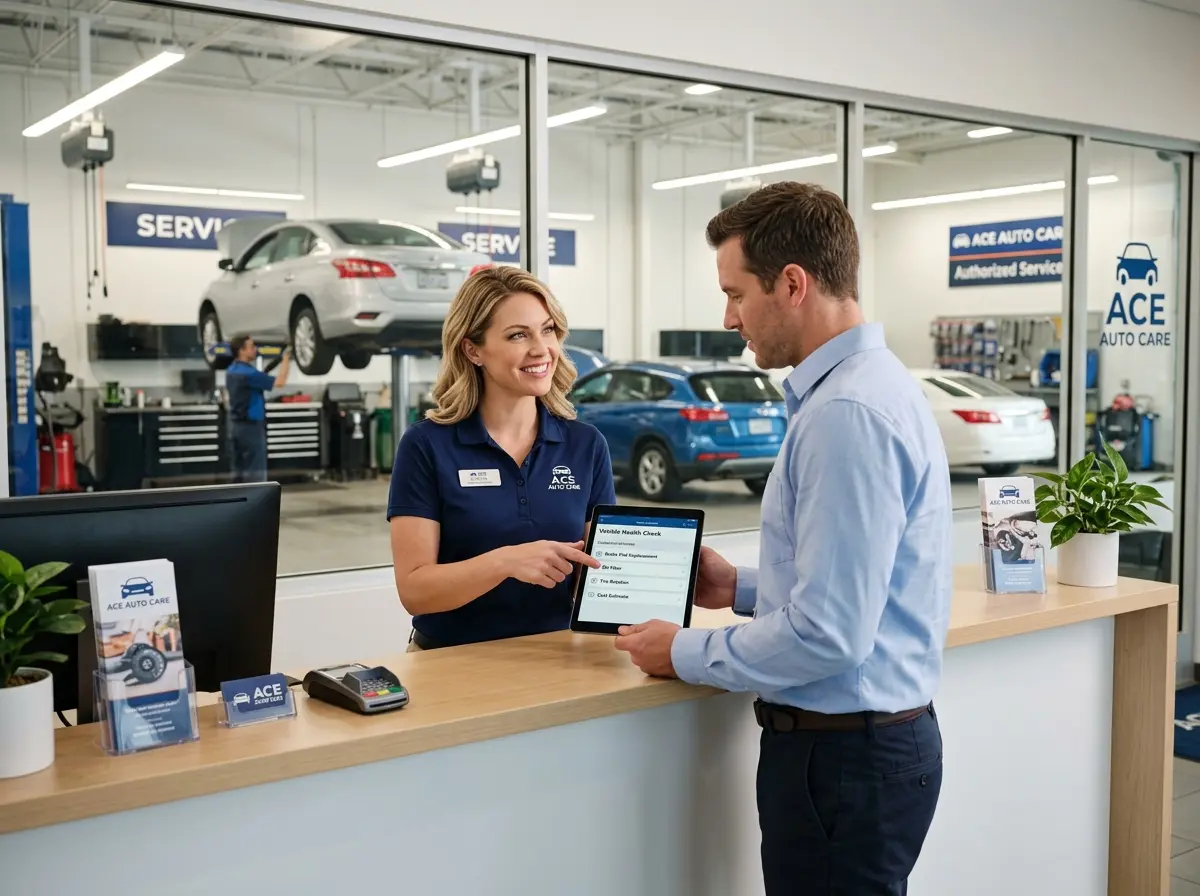
How your service advisor presents a recommendation matters enormously. Train your team to use a consistent framework: identify the issue, explain why it matters in plain English (not mechanic-speak), provide a clear price estimate, and give the customer a genuine choice without pressure. Something as simple as: "We noticed your rear brakes are at about 2mm — they're approaching the point where they should be replaced for safe stopping. We can take care of that today for $X. Would you like to add that on, or would you prefer to schedule it for another visit?"
That's it. No guilt. No doom-and-gloom. Just clear information and a real choice. When every advisor delivers recommendations this way, your shop sounds professional every single time.
Document Everything — Every Time
Every recommendation made should be logged. Accepted or declined. Include the date, the specific service, the estimated cost, and how the customer responded. For declined safety-related items, a signed or digitally confirmed decline form is strongly recommended. This documentation serves multiple purposes: it protects you legally, it gives your team visibility into a customer's service history, and it creates a natural follow-up opportunity the next time that customer comes in. A customer who declined new tires in March is a warm lead for tires in July. Your documentation makes that follow-up feel helpful rather than pushy.
Quick Reminder About Stella
Stella is an AI robot employee and phone receptionist built to handle customer interactions around the clock — whether she's greeting customers in person at your front counter or answering phone calls when your team is busy under a hood. For auto shops juggling service bays, phone lines, and walk-ins simultaneously, having a consistent, always-available front-end presence isn't a luxury. It's a competitive advantage. At just $99/month with no upfront hardware costs, she's one of the more practical tools you can add to your operation.
Putting Your Policy Into Practice
If you've made it this far, here's what actually doing something about this looks like:
Start with a written document. Even a one-page policy is infinitely better than nothing. Write down your communication channels, your timelines, your presentation framework, and your documentation requirements. Share it with every member of your team and make it part of new employee onboarding.
Audit your current process. For the next two weeks, track every additional recommendation your shop makes. Note who made it, how it was communicated, whether it was accepted or declined, and whether it was documented. You'll likely spot patterns — and gaps — pretty quickly.
Train your team on language. Role-play recommendation conversations. It feels awkward, but it works. The goal is to make these conversations feel natural, confident, and helpful — not like an upsell from a used car lot.
Use your tools. Whether it's a shop management system, a CRM, or a front-end tool like Stella, make sure your technology is working with your policy, not around it. Capturing customer communication preferences, appointment history, and declined services should be automatic, not an afterthought.
Your auto shop is a business built on trust, and trust is built through consistency. A formal policy for communicating additional repair recommendations isn't bureaucracy for its own sake — it's the difference between a customer who feels informed and returns for every future service, and one who feels surprised and never comes back. The good news is that building this policy isn't complicated. It just requires deciding, once and for all, that "we'll figure it out" isn't good enough anymore.