Introduction: Because Chasing Down Recurring Customers Shouldn't Feel Like Chasing Pests
You're in the pest control business. You deal with termites, rodents, roaches, and the occasional customer who swears they saw a "creature the size of a small dog" in their basement. You've got enough chaos to manage — the last thing you need is a chaotic system for keeping track of who's due for their quarterly treatment, who skipped their last appointment, and who's been silently canceling without telling you.
Here's the uncomfortable truth: most pest control companies lose recurring revenue not because customers leave angry, but because nobody followed up. A study by Bain & Company found that increasing customer retention rates by just 5% increases profits by 25% to 95%. For a service-based business built on recurring contracts, that number should keep you up at night — right alongside your clients' mice problems.
The solution isn't hiring three more people to manage spreadsheets. It's a well-configured Customer Relationship Management (CRM) system designed specifically around the rhythms of recurring pest control service. Let's talk about how to actually use one — strategically, efficiently, and without losing your mind.
Building Your CRM Foundation for Recurring Services
Before you can automate anything or generate fancy reports, you need to set up your CRM correctly. Think of it like treating a pest problem: if you skip the inspection phase and go straight to spraying, you're just making a mess. Proper setup is everything.
Custom Fields That Actually Matter
A generic CRM out of the box won't cut it for pest control. You need custom fields that reflect the realities of your business. At a minimum, every customer contact record should include the service frequency (monthly, bi-monthly, quarterly, annual), the type of pest issue being managed, the last treatment date, the next scheduled service date, the products or methods used, and any property-specific notes — because the customer with the koi pond needs a very different chemical approach than the customer with the mystery basement creature.
Don't underestimate the value of property notes. Knowing that a technician needs to enter through the side gate, that the dog is friendly but excitable, or that the homeowner works nights and prefers morning appointments will save you more headaches than you'd expect. These small details are the difference between a customer who feels like a number and one who renews their annual contract without blinking.
Tags and Segmentation: Your Secret Weapon
Tags are one of the most underutilized features in any CRM. For pest control, smart tagging allows you to instantly segment your customer base in ways that are genuinely useful. Tag customers by service type (termite, rodent, general pest, mosquito, bed bug), by contract tier (one-time, seasonal, annual plan), by geographic zone for routing efficiency, and by status (active, lapsed, due for renewal).
Why does this matter? Because when you're running a promotion on mosquito treatments heading into spring, you don't want to blast your entire customer list — you want to target customers in applicable zones who are either already on a mosquito plan or who've shown interest before. Segmentation turns your CRM from a digital Rolodex into a precision marketing tool.
Setting Up Automated Follow-Up Workflows
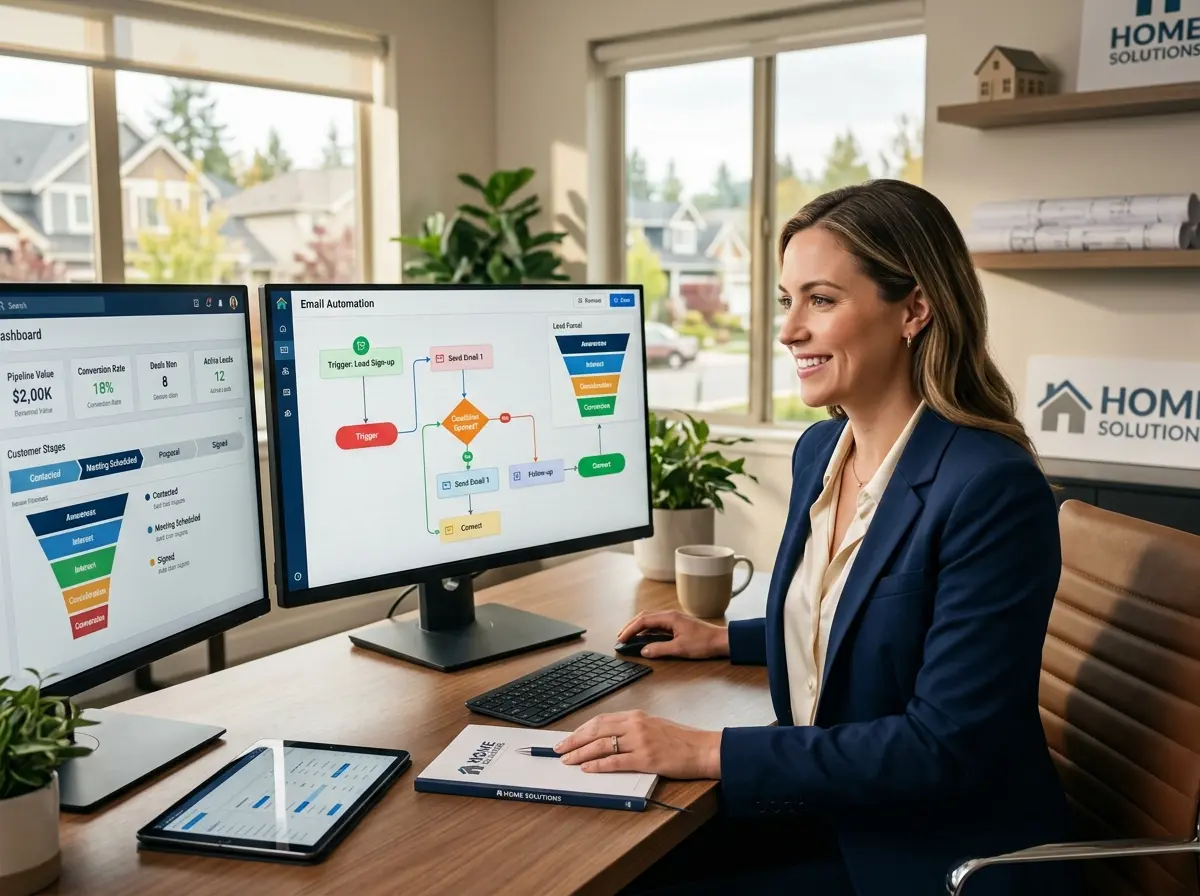
The real magic of a CRM for recurring services is automation. Set up workflows that trigger based on dates and customer data. A customer whose last service was 85 days ago and whose service frequency is quarterly should automatically receive a reminder — not because someone remembered to send it, but because your system never forgets. Layer in a follow-up sequence: a friendly reminder at 85 days, a second nudge at 92 days if no response, and a personal outreach flag for your team at 100 days. Customers who feel attended to renew. Customers who fall through the cracks disappear quietly — and they don't call to tell you why.
Streamlining Customer Intake and Communication with Smarter Tools
Even the best CRM is only as good as the data going into it — and for many pest control companies, the biggest gap is at the very beginning: the intake process. New customers call, leave incomplete information, or describe their pest problem in terms that require a follow-up call just to understand. That friction costs you time and, often, the customer entirely.
Where Stella Fits Into Your Customer Management Workflow
This is where Stella, the AI robot employee and phone receptionist, becomes genuinely useful for pest control businesses. Stella answers your phone calls 24/7 — because pest emergencies don't respect business hours, and neither do the people experiencing them — and she can walk new callers through a conversational intake form, collecting service address, pest type, urgency level, preferred contact method, and any other fields you configure. That information gets pushed directly into her built-in CRM, complete with AI-generated customer profiles, custom fields, and tags.
For businesses with a physical location — say, a showroom or service center — Stella also operates as a human-sized kiosk, greeting walk-in customers and collecting intake information in person. The result is that your CRM stays populated with clean, consistent data without requiring your technicians or office staff to double as data entry clerks. That's a win for everyone, including the technician who would really rather just go treat the termites.
Using CRM Data to Retain Customers and Grow Revenue
Once your CRM is set up and your data is flowing in cleanly, it's time to actually use it to grow. This is where many business owners stop — they've got a nice organized system and they feel accomplished. But organized data sitting idle is just an expensive filing cabinet.
Renewal Campaigns and Lapsed Customer Recovery
Your CRM should be the engine behind proactive renewal campaigns. Thirty days before an annual contract expires, a personalized outreach sequence should begin automatically. Reference their specific service history. Remind them what was treated and when. Offer a loyalty discount or a free add-on service for early renewal. Customers who feel remembered — not just marketed to — are significantly more likely to renew.
Equally important is lapsed customer recovery. Segment out customers whose service has lapsed 60, 90, and 180 days and run targeted win-back campaigns. The 60-day group is likely just distracted — a simple reminder works. The 90-day group may need a small incentive. By 180 days, you're essentially re-acquiring them as a new customer, so treat them accordingly. Without a CRM tracking these timelines, these customers just silently disappear into the void.
Upselling Based on Service History
Your CRM data is a goldmap for upselling when used thoughtfully. A customer who's been on a general pest plan for two years but lives in a region with high termite activity is a natural candidate for a termite inspection offer. A customer who added mosquito treatment last summer and renewed it this year might be interested in a bundled outdoor pest package. Look for patterns in your customer base and build offer workflows that feel personalized rather than generic — because they are. You have the data. Use it.
Tracking Technician Performance and Service Quality Metrics
CRM data isn't just for marketing — it's operational gold. By tracking which technicians are assigned to which accounts, you can monitor patterns: Are certain technicians generating more callbacks? Are certain service routes seeing higher cancellation rates? Are customers in a specific zone churning faster than others? These are questions you can only answer with organized, queryable data. Your CRM should be part of your operational review process, not just a tool for the front office.
Quick Reminder About Stella
Stella is an AI robot employee and phone receptionist that answers calls 24/7, greets customers in person at your location, and manages customer data through a built-in CRM with intake forms, custom fields, tags, and AI-generated profiles — all for $99/month with no upfront hardware costs. She's the front-of-house presence that never calls in sick, never puts a customer on hold for eight minutes, and never forgets to collect the service address. For a recurring-service business like pest control, that kind of reliability compounds over time.
Conclusion: Stop Letting Revenue Walk Out the Door (or Scurry Under the Baseboards)
Recurring service is the lifeblood of a pest control business. It's predictable revenue, loyal customers, and a competitive moat that one-time service providers can't easily replicate. But recurring service only stays recurring if you actively manage the relationships behind it — and that requires a CRM that's properly configured, consistently populated, and actually used.
Here's your action plan. Start by auditing your current customer data: identify gaps in contact records, missing service history, and customers who've lapsed without a follow-up. Then configure your CRM with custom fields and tags that reflect your actual service categories and customer segments. Build automated workflows for service reminders, renewal campaigns, and lapsed customer recovery. Finally, review your CRM data monthly as part of your operational rhythm — not just when something goes wrong.
Pest control is a relationship business disguised as a technical one. The companies that grow aren't always the ones with the best chemicals or the fastest trucks — they're the ones that make customers feel taken care of. A smart CRM strategy is how you do that at scale, without burning out your team or leaving money on the table. Now go build that system. The pests aren't waiting, and neither is your revenue.