Introduction: Because "Dear Valued Client" Isn't Cutting It Anymore
Let's be honest — if your follow-up emails still start with a generic greeting and a vague reminder about "your recent visit," you're leaving money on the table. In the med spa world, where clients are trusting you with their skin, their confidence, and often a significant chunk of their paycheck, personalization isn't a nice-to-have. It's the whole game.
Here's the thing: your clients already told you everything you need to know. Their skin concerns, their treatment goals, their sensitivities, their budget comfort zone — it's all sitting in your intake forms, quietly collecting digital dust. The question isn't whether you have the data. It's whether you're actually using it.
Personalized follow-ups aren't just good manners — they're good business. Studies consistently show that personalized marketing emails deliver 6x higher transaction rates than generic ones. And in a service-based industry like med spas, where client retention is the lifeblood of revenue, a thoughtful follow-up message can be the difference between a one-time facial and a loyal client who books quarterly Botox and refers her entire book club.
So let's talk about how to actually turn your intake data into follow-up gold — without spending your entire weekend doing it manually.
What Your Intake Data Is Really Telling You
Stop Treating Intake Forms Like Administrative Paperwork
Most med spas treat intake forms the way most people treat terms and conditions — something to get through as quickly as possible before the real stuff starts. Big mistake. Your intake form is a goldmine of personalization data, and if you're not treating it that way, you're essentially asking clients to do homework and then throwing it in the trash.
Think about what a thorough intake form captures: primary skin concerns (acne, hyperpigmentation, fine lines), lifestyle factors (sun exposure, stress levels, skincare routine), previous treatments and reactions, long-term aesthetic goals, and even how a client found you. Each of these data points is a thread you can pull to create a follow-up experience that feels tailored, thoughtful, and genuinely helpful — rather than automated and impersonal.
The goal is to treat every intake response as a conversation starter, not a liability waiver. When a client checks "I'm concerned about uneven skin tone," that's not just a clinical note. That's an invitation to follow up with educational content about hyperpigmentation treatments, a recommendation for a complementary product, or a heads-up about an upcoming promotion on chemical peels.
Segment Your Clients Before You Write a Single Word
Before you can personalize anything, you need to segment your client base using the data you've collected. Not all clients are alike, and sending the same follow-up to a 28-year-old first-timer who came in for a hydrafacial and a 52-year-old loyal client who just had her third round of filler is, frankly, a miss.
Consider building segments around these key categories:
- Treatment type: What service did they receive, and what's the logical next step?
- Skin concerns: What problem are they trying to solve?
- Client stage: Are they brand new, returning, or lapsed?
- Age range and lifestyle factors: What resonates with their demographic?
- Stated goals: Maintenance, correction, or transformation?
Once you have clean segments, your follow-up strategy practically writes itself. A first-time client who mentioned they're nervous about injectables gets a warm, reassuring message with a FAQ and an invitation to book a consultation. A returning client who mentioned they're preparing for a big event gets a curated treatment timeline recommendation. Same business, totally different conversations — and both feel personal because they are.
The Follow-Up Timing Formula That Actually Works
Personalization isn't just about what you say — it's about when you say it. Intake data can inform your follow-up timing just as much as your messaging. A client who received a chemical peel needs a check-in at the 48-72 hour mark to see how their skin is responding. A client who booked a consultation but hasn't scheduled their first treatment needs a gentle nudge at the one-week mark. A client whose intake form mentioned they're working toward a wedding or event needs a proactive outreach weeks in advance with a suggested treatment plan.
Build a follow-up calendar based on treatment type and client goals, and automate it using your CRM. When timing is right and the message is relevant, the response rate goes up dramatically — and clients stop feeling like they're on a generic drip campaign and start feeling like you actually remembered them.
How the Right Tools Make This Effortless
Automate the Personal Touch with Smart Systems
Here's where a lot of med spa owners throw up their hands and say, "This sounds great, but who has time?" Fair point — you're running a business, not a data analytics firm. The good news is that the right tools can handle the heavy lifting while you focus on delivering exceptional treatments.
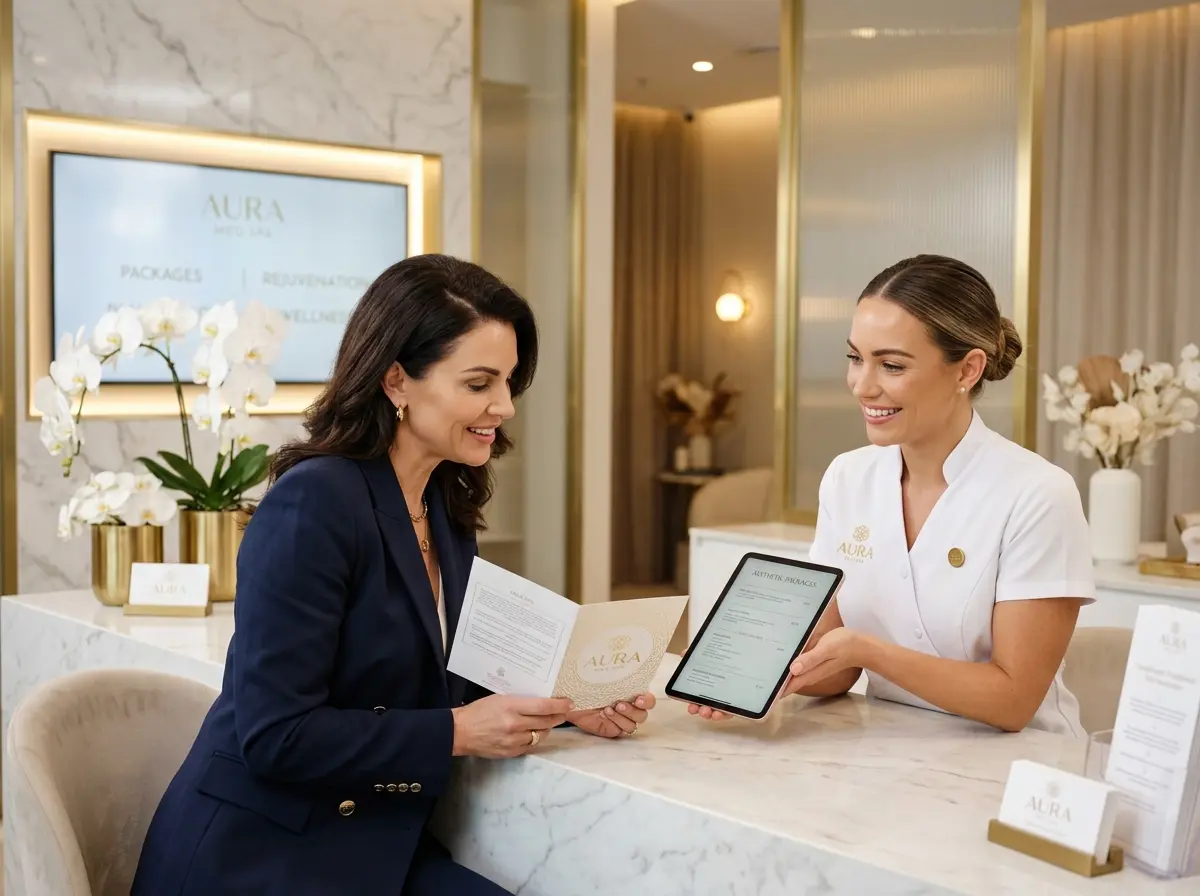
Stella, the AI robot employee and phone receptionist, is built for exactly this kind of scenario. Her built-in CRM allows you to store and manage client information with custom fields, tags, and AI-generated profiles — so all that rich intake data you're collecting doesn't just sit in a folder somewhere. It lives in a system that helps you act on it. Whether clients are filling out intake forms at her in-store kiosk, on the web, or over the phone, Stella captures that data conversationally and organizes it so your team can personalize every touchpoint that follows. Think of her as the front desk that never forgets a detail — because she literally never does.
Crafting Follow-Ups That Actually Convert
Write Messages That Reference the Real Visit
The fastest way to make a follow-up feel personal is to reference something specific — and your intake data gives you the ammunition to do it. Instead of "We hope you enjoyed your visit!", try something like: "Hi Sarah — we loved having you in for your first HydraFacial! Since you mentioned you're working on brightening uneven skin tone, we wanted to share a few aftercare tips and a product we think you'll love." See the difference? One sounds like a mass email. The other sounds like a human wrote it specifically for Sarah — because the information behind it actually was specific to her.
You don't need to reference every detail (that would be creepy), but anchoring your message to one or two relevant points from the intake form immediately elevates the perceived quality of your client experience. It signals that you listened, you remembered, and you care — which is exactly what keeps clients coming back.
Use Data to Drive Upsell and Rebooking Recommendations
Personalized follow-ups aren't just about warmth — they're about revenue. When you know what a client came in for and what their goals are, you can make genuinely helpful recommendations that also happen to drive additional bookings and product sales. That's not being pushy. That's being a trusted advisor.
For example, a client who received microneedling for acne scarring and mentioned in their intake form that they're also concerned about fine lines is a natural candidate for a follow-up that introduces a combination treatment package. A client who purchased a single session but noted they're interested in long-term skin maintenance is a prime candidate for a membership pitch tailored to their specific treatment needs.
The key is framing these recommendations around the client's stated goals, not your revenue targets. When the recommendation genuinely aligns with what they told you they want, it doesn't feel like a sales pitch — it feels like great service.
Build a Feedback Loop That Keeps Improving Your Data
Personalization is a living process, not a one-time setup. Every follow-up interaction gives you new data to refine your approach. Did the client respond to the product recommendation? Did they rebook after the check-in message? Did they open the email about the complementary service? Track these outcomes in your CRM and use them to continuously improve your segmentation and messaging.
Also, don't underestimate the power of asking directly. A simple post-visit survey — either via text, email, or through your intake system — can capture updated goals, changing concerns, or feedback on the treatment itself. Clients who feel heard are clients who stay, and a short feedback form sent two days after their appointment is one of the easiest ways to show you're paying attention.
Quick Reminder About Stella
Stella is an AI robot employee and phone receptionist designed to help businesses like yours run smarter — whether she's greeting clients at your in-store kiosk, answering calls around the clock, or collecting intake information that feeds directly into her built-in CRM. At just $99/month with no upfront hardware costs, she's the kind of team member who never calls in sick, never forgets a client detail, and never stops working. For med spas looking to personalize at scale, she's worth a serious look.
Conclusion: Your Intake Forms Are a Revenue Strategy — Start Treating Them That Way
Personalizing your follow-ups isn't about being clever or trendy. It's about respecting the information your clients trusted you with and using it to serve them better. When you do that consistently, the results speak for themselves: higher rebooking rates, stronger client relationships, more referrals, and a reputation as the med spa that actually pays attention.
Here's your action plan to get started:
- Audit your current intake form. Are you capturing enough data to personalize? Add fields for client goals, lifestyle factors, and specific concerns if you haven't already.
- Set up client segments in your CRM based on treatment type, goals, and client stage — and map a tailored follow-up sequence to each one.
- Build a follow-up calendar with treatment-specific timing triggers so your messages land at the most relevant moment.
- Review and refine quarterly. Track what's working, update your messaging, and keep your segments current as your service menu evolves.
- Explore tools that make this scalable — because doing all of this manually is heroic, but unsustainable.
Your clients are telling you exactly how to win their loyalty. All you have to do is listen — and then actually do something with what you hear.