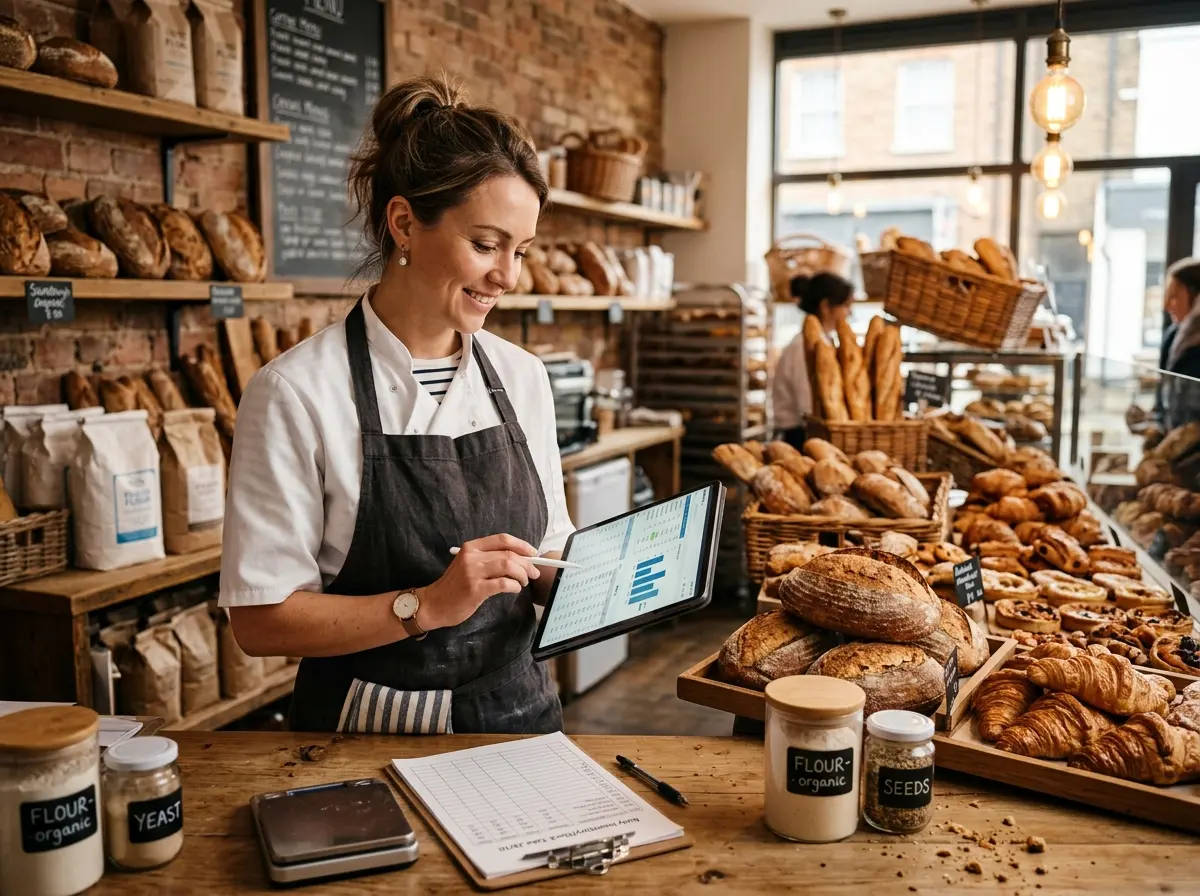
Introduction: Because Day-Old Bread Shouldn't Be Your Business Model
There's a certain poetry to an artisan bakery — the warm aromas, the golden crusts, the early mornings that would make most people weep. But there's nothing poetic about tossing out $200 worth of sourdough boules at the end of a Tuesday because you over-baked and under-sold. Welcome to one of the most persistent challenges in the bakery business: inventory management and waste reduction.
Food waste is a staggering problem in the United States. According to the USDA, roughly 30–40% of the food supply ends up as waste — and bakeries, with their daily freshness demands, are particularly vulnerable. Every unsold croissant is margin walking out the door wearing a flaky, buttery coat. And unlike a retail shop that can hold last week's inventory on the shelf, you're working against the clock from the moment that first batch goes in the oven.
The good news? Smart inventory practices, a little data discipline, and the right tools can dramatically reduce waste while actually improving your customer experience. Let's dig in — no pun intended.
Know Your Numbers Before You Preheat the Oven
Most bakery waste problems don't start at closing time. They start the night before, when someone decides to "play it safe" and bake an extra three dozen muffins just in case. Gut instinct has its place in baking, but it should not be your primary inventory strategy.
Track Sales Data Like Your Margins Depend on It (They Do)
If you're not already tracking daily sales by SKU — meaning every individual product — start immediately. You need to know which items sell out by 10 a.m. and which ones are still staring at you from the display case at 4 p.m. Most modern point-of-sale systems offer this reporting, and many are surprisingly affordable for small businesses.
Look for patterns over time. Mondays might be your slowest croissant day. Friday afternoons might clear out every fruit tart you make. Seasonal shifts matter, too — a cinnamon raisin loaf that flies off the shelf in October might linger in July. Once you have even four to six weeks of clean sales data, you can start making baking decisions based on evidence rather than optimism.
Build a Par System That Actually Reflects Reality
A par level is the minimum quantity of each product you need to meet expected demand — essentially your baseline bake amount. Many bakeries either skip this entirely or set par levels once and never revisit them. That's like setting your alarm clock and then never adjusting it when daylight saving time rolls around.
Build a par system that accounts for day of the week, season, local events, and weather (yes, weather — foot traffic drops when it pours). Review and adjust your par levels monthly, or at minimum quarterly. A rolling 4-week average of daily sales per item is a simple, effective starting point. Your future self — the one not throwing away two trays of pain au chocolat — will thank you.
Audit Your Waste Actively, Not Passively
Here's an uncomfortable exercise: start recording exactly what you throw away each day. Weight it, categorize it, assign a dollar value to it. Most bakery owners have a vague sense that they waste "some" product, but the moment you see $85.00 of waste written down on a Thursday with no holiday in sight, it tends to sharpen your focus considerably. A weekly waste log takes less than five minutes and gives you the data you need to make meaningful adjustments over time.
End-of-Day Strategy: Don't Just Discount, Be Strategic
Markdowns and end-of-day sales are a standard tactic, but there's a difference between a thoughtful clearance strategy and just slapping a "half off" sticker on everything and hoping for the best.
Time Your Discounts to Drive Traffic, Not Desperation
Rather than waiting until 30 minutes before close to discount, consider a structured late-afternoon promotion — say, 20% off all pastries after 3 p.m. Promote it consistently so regulars plan around it. This can drive foot traffic during a typically slow window and clear inventory before it becomes waste, all without training customers to expect panic pricing at closing time.
You can also create grab-and-go "baker's bundles" — a curated assortment of day's-end items at a flat price. Customers feel like they're getting a deal, you move product, and nobody's crying into a compost bin at 5:30 p.m. It's a win all the way around.
Let Technology Help You Promote Specials in Real Time
This is where tools like Stella — the AI robot employee and phone receptionist — can quietly do a lot of heavy lifting for a bakery. Stella stands in-store and proactively engages every customer who walks in, which means she can naturally mention the day's specials, promote end-of-day bundles, or highlight a new seasonal item without you or your staff having to remember to do it every single time. When customers call in, she handles those conversations too — answering questions about what's available, hours, and current promotions with the same knowledge she uses in person. For a business where today's specials literally change daily, having a consistent, always-informed presence at the counter and on the phone is more useful than it might first appear.
Relationships, Repurposing, and Revenue Recovery
Even the most optimized bakery will have some surplus. The goal isn't perfection — it's making sure that surplus doesn't become a total loss.
Partner with Local Organizations to Donate Strategically
Food rescue organizations, shelters, community fridges, and local nonprofits are often eager to accept day-old bakery items. Beyond the obvious community benefit, food donations may qualify your business for federal tax deductions under the Good Samaritan Food Donation Act, which provides liability protection and potential write-offs for donated food inventory. Talk to your accountant about how to document and claim these properly — because turning a loss into a deduction is about as satisfying as a perfectly laminated croissant.
Build a consistent pickup relationship with one or two local partners so the logistics are predictable. Knowing that surplus product has a destination reduces the emotional (and financial) sting of not selling out.
Repurpose Before You Discard
Day-old bread doesn't have to be waste — it can be tomorrow's bread pudding, croutons, French toast casserole, or a base for a savory breakfast sandwich special. Many successful artisan bakeries have built cult followings around their "yesterday's bread" menu items, which often carry solid margins since the core ingredient cost is already sunk.
Think creatively about your production calendar. If you know croissants tend to linger on Wednesdays, plan a Thursday morning special that incorporates them. Build your secondary menu offerings around your most predictable surplus items and you've essentially turned a waste problem into a feature.
Use Pre-Orders to Reduce Guesswork Entirely
Pre-orders are arguably the single most powerful waste-reduction tool available to a small bakery, and they're significantly underutilized. When customers order in advance — especially for specialty items, whole loaves, or celebration cakes — you bake exactly what's needed. No more, no less.
Promote pre-ordering through your website, social channels, and in-store signage. Offer a small incentive if needed — a free cookie with any pre-order over a certain amount, for example. Even shifting 20–30% of your weekly volume to pre-orders can make a meaningful dent in your daily baking uncertainty and the waste that comes with it.
Quick Reminder About Stella
Stella is an AI robot employee and phone receptionist that greets customers in-store, promotes specials, and answers phone calls 24/7 — all for $99/month with no upfront hardware costs. For a busy bakery where staff are elbow-deep in dough and the phone keeps ringing, having a reliable, knowledgeable presence handling the front of house is no small thing. She's easy to set up, never needs a break, and doesn't accidentally forget to mention the afternoon discount.
Conclusion: Fresh Thinking Leads to Less Waste and Better Margins
Running an artisan bakery is genuinely hard work, and the freshness-first model means you're always operating with a ticking clock. But with the right habits in place, waste reduction isn't just an environmental virtue — it's a direct line to improved profitability and a more sustainable operation.
Here's where to start this week:
- Pull your sales data for the last 30 days and identify your top three most-wasted items by day of week.
- Set or revisit par levels for your five highest-volume products using actual sales averages, not intuition.
- Start a daily waste log — even a simple spreadsheet — and assign a dollar value to everything discarded.
- Design one end-of-day promotion and promote it consistently so regulars learn to expect it.
- Reach out to one local food rescue partner this week to establish a donation relationship.
None of this requires a massive operational overhaul. It requires attention, consistency, and a willingness to let data guide decisions more than habit. The bakeries that thrive long-term aren't just the ones with the best recipes — they're the ones that treat the business side with the same craft and care they bring to the kitchen. Now go reduce some waste. Your margins deserve it.