So, Someone Actually Called Your Medical Practice — Now What?
Let's paint a picture. A potential new patient — let's call her Karen (not that Karen, she seems perfectly lovely) — has been dealing with a nagging knee problem for weeks. She finally decides to do something about it. She Googles your practice, skims your website for about 45 seconds, and then picks up the phone. What happens next will either convert her into a loyal, long-term patient or send her straight to your competitor down the street.
The patient journey at a medical practice is deceptively complex. From that first phone call to the moment she's sitting in your exam room, Karen moves through a series of touchpoints — each one a chance to either impress her or quietly disappoint her. And here's the sobering truth: according to a study by Software Advice, 42% of patients who can't reach a medical practice on their first call will simply move on to another provider. That's nearly half your potential new patients walking out the door before they've ever walked in.
This blog post breaks down the full customer journey for a new patient at a medical practice, identifies the friction points that silently kill conversions, and offers practical strategies to make every step of the experience so smooth that Karen not only books — she refers her friends.
The First Impression: Before They Ever Set Foot in Your Office
The Digital Discovery Phase
Before a new patient ever interacts with a human at your practice, they've already formed an opinion of you. They've read your Google reviews (you do have Google reviews, right?), checked your website, maybe peeked at your social media, and decided whether you seem trustworthy enough to poke around their knee. This digital discovery phase is your silent salesperson, and it's working around the clock whether you're paying attention to it or not.
Your website should clearly answer the questions new patients ask most: What insurance do you accept? Are you accepting new patients? Where are you located, and is parking a nightmare? What conditions do you treat? A confusing or outdated website is the digital equivalent of a waiting room with flickering lights and a mysteriously sticky magazine from 2017.
The First Phone Call — Where Most Practices Drop the Ball
Here's where things get real. A new patient calls your practice. If it's during business hours, your front desk picks up — eventually — between handling check-ins, insurance questions, and the physician asking for a chart. If it's after hours, the call goes to voicemail, and statistically, a large portion of those callers will never call back.
The first phone call is arguably the single most important moment in the new patient journey. It sets the tone for everything that follows. A rushed, confused, or missed interaction here isn't just a bad experience — it's a lost patient. Consider auditing your current call handling: How long does it take to answer? How many calls go unanswered? How much of the intake information is collected during that first call versus scattered across multiple touchpoints?
The Intake Process: Necessary but Often Painful
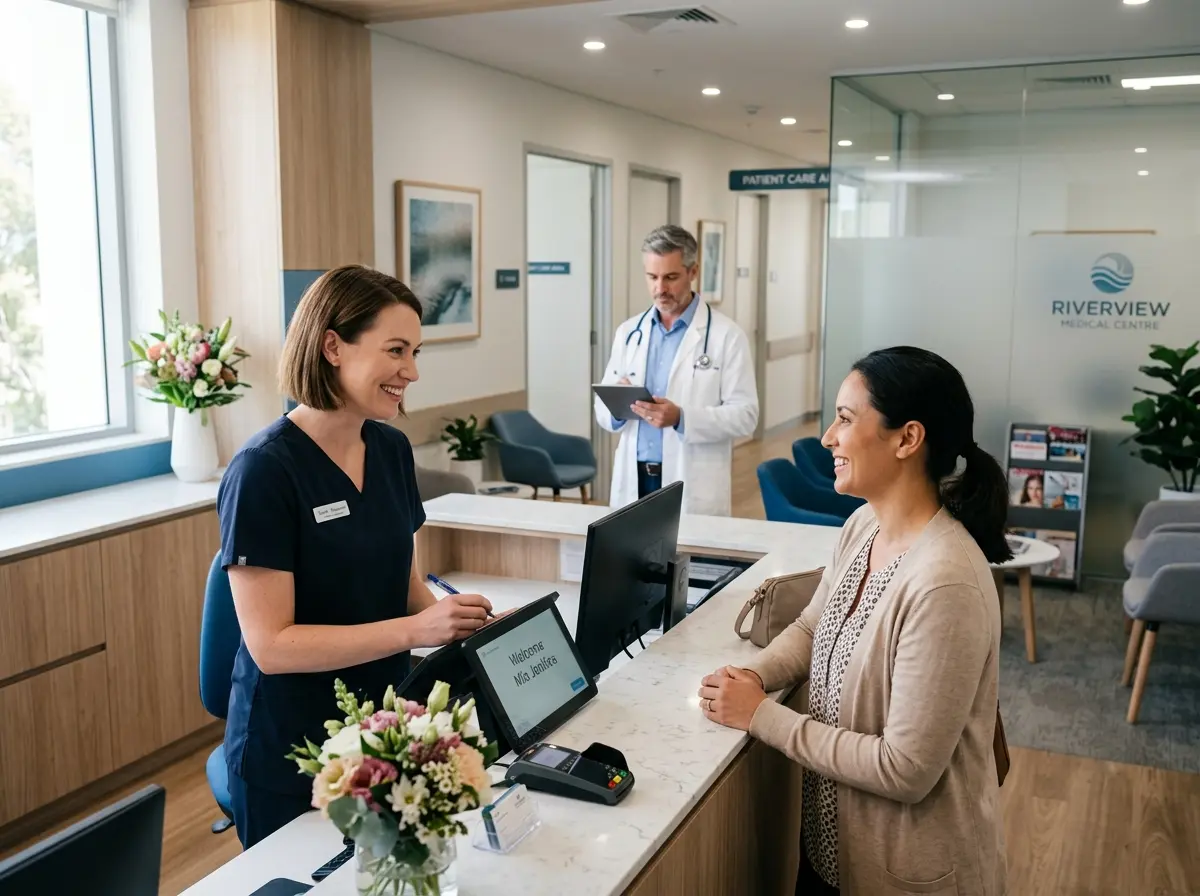
Assuming Karen successfully reached a human and scheduled an appointment, she now enters the intake gauntlet. Date of birth. Insurance ID. Referring physician. Reason for visit. Primary care provider. Preferred pharmacy. Most practices still handle this through a combination of phone conversations, emailed PDF forms, and clipboards in the waiting room — a workflow that would make any efficiency consultant weep quietly into their coffee.
A streamlined intake process reduces no-shows, speeds up the clinical encounter, and genuinely signals to the patient that your practice respects their time. Patients who feel their time is valued are far more likely to become long-term, engaged patients. The intake phase is not just administrative — it's relational.
How the Right Tools Can Eliminate the Awkward Gaps
Letting Technology Handle What Technology Does Best
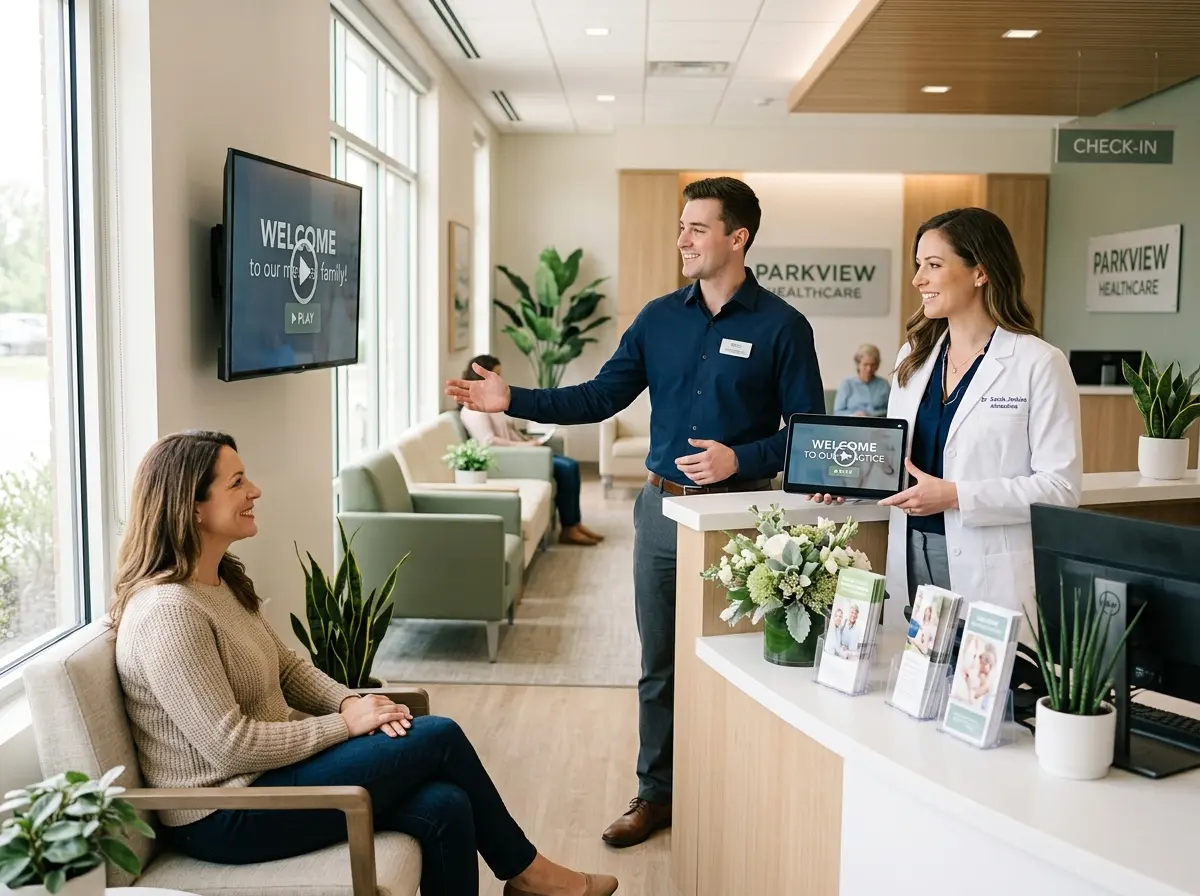
Medical practices are not staffing agencies, and yet a shocking amount of physician revenue depends on whether the front desk happened to answer the phone at 2:47 PM on a Tuesday. Stella, the AI robot employee and phone receptionist, is purpose-built to close exactly these kinds of gaps. For practices with a physical location, Stella stands inside as a friendly, human-sized kiosk that greets patients as they arrive, answers common questions about services and policies, and promotes any relevant offerings — no staff interruption required. For phone coverage, she answers every call, 24 hours a day, 7 days a week, with the same knowledge and professionalism every single time.
Where Stella becomes especially valuable for medical practices is in intake and contact management. She can collect new patient information conversationally during a phone call, through the web, or at the in-office kiosk — turning what used to be a clipboard experience into a smooth, guided conversation. All of that data flows into her built-in CRM, which supports custom fields, tags, notes, and AI-generated patient profiles, so your front desk team starts every interaction already knowing who they're talking to and why.
The In-Office Experience: Where Expectations Meet Reality
The Waiting Room: A Missed Opportunity in Plain Sight
Karen arrives at your office. She checks in, takes a seat, and proceeds to wait. The average patient wait time in the U.S. is around 18 to 24 minutes, according to various industry surveys — and patients who wait longer than expected are significantly more likely to report dissatisfaction, even if the clinical encounter itself goes perfectly. This gap between expectation and reality is where patient loyalty is quietly eroded.
The waiting room doesn't have to be a dead zone. It's an opportunity to educate, engage, and set expectations. Digital signage highlighting services, wellness tips, or seasonal offerings can turn idle time into value. A friendly in-office AI presence can answer questions patients didn't know they had — like whether the practice offers physical therapy referrals, what the portal login process looks like, or whether they accept a particular insurance plan. Small touches of helpfulness go a long way when someone is anxious about their knee and already slightly annoyed that they've been waiting 22 minutes.
The Clinical Encounter and What Comes After
The appointment itself — the reason Karen went through all of this — is usually the smoothest part of the journey, because it's where your team has the most training and the most control. But the post-visit experience is another story entirely. Follow-up instructions, prescription information, referrals, and recall reminders are frequently inconsistent, occasionally lost, and rarely delightful.
Practices that invest in a structured post-visit workflow — clear discharge instructions, timely follow-up calls or messages, and proactive recall reminders — see meaningfully better patient retention rates. In fact, research from the Advisory Board found that reducing patient leakage by even 5% can add significant revenue to a practice annually, depending on specialty and volume. The post-visit phase is where a one-time patient either becomes a returning patient or a glowing Google review for someone else's practice.
The Review and Referral Loop
If Karen had a great experience from first call to follow-up, she will tell someone. Maybe she posts a five-star review. Maybe she tells her sister, who tells her husband, who was also putting off that knee thing. Word-of-mouth and online reviews are the primary drivers of new patient acquisition for most practices — which means every touchpoint in the journey is either building or undermining your referral engine.
Systematizing your ask for reviews is not tacky — it's smart. A brief follow-up message thanking the patient for their visit and gently inviting feedback is standard practice among high-performing medical groups. The practices that do this consistently outperform those that rely on organic goodwill, because organic goodwill is, statistically, reserved for complaining.
Quick Reminder About Stella
Stella is an AI robot employee and phone receptionist designed to help businesses — including medical practices — deliver a professional, consistent experience without depending entirely on human availability. She greets patients in person at a physical kiosk, answers every phone call around the clock, handles intake forms conversationally, and keeps everything organized in a built-in CRM. All of this runs on a straightforward $99/month subscription with no upfront hardware costs and no learning curve that requires a training manual longer than your lease agreement.
Turning the Journey Into a System (Before Karen Goes Somewhere Else)
The patient journey at a medical practice is not a single moment — it's a chain of micro-experiences, each one influencing the next. The good news is that most of the friction in this journey is predictable, which means it's fixable. Here's how to start:
- Audit your phone coverage. Track how many calls go unanswered during business hours and after hours. If the number makes you uncomfortable, that discomfort is data.
- Streamline your intake process. Identify how many steps a new patient has to complete before their first appointment and find ways to reduce or digitize them.
- Invest in your waiting room experience. Even small improvements in perceived wait time and in-office helpfulness measurably improve satisfaction scores.
- Build a post-visit follow-up workflow. Whether it's automated or handled by staff, make sure every patient hears from you after their visit with something useful.
- Ask for reviews consistently. A systematic, friendly ask is far more effective than hoping satisfied patients spontaneously open their laptop to praise you.
The practices that grow reliably aren't necessarily the ones with the best physicians (though that certainly helps). They're the ones that treat the patient journey as seriously as they treat the clinical encounter — because the patient is experiencing both, and they're giving equal weight to each. Give Karen a journey worth completing, and she'll be back. And she'll bring her sister.