Why Your Next Loyal Customer Is Still Learning to Parallel Park
Here's a thought that might keep you up at night — or at least mildly inconvenience your afternoon: the students and first-time drivers in your community right now are going to need auto services for the next forty or fifty years. That's decades of oil changes, tire rotations, brake jobs, and the occasional "I have no idea what that noise is" diagnostic appointment. And whoever earns their trust first? Well, they're sitting on a gold mine.
Yet most auto shops spend the bulk of their marketing budget chasing customers who are already loyal to someone else, while completely ignoring a segment that's actively looking for their first trusted mechanic. New drivers don't have brand loyalty — they have anxiety. They don't know the difference between a reputable shop and a sketchy one, and frankly, they're terrified of being taken advantage of. The shop that steps in with a welcoming, transparent, and financially accessible experience doesn't just get a customer. It gets an advocate.
So let's talk about how to build a student and first-time driver discount program that actually works — not just as a feel-good gesture, but as a legitimate long-term business strategy.
Building a Discount Program That Makes Business Sense
Define the Discount Structure Without Killing Your Margins
Before you slap a "Student Special" sign in your window and call it a day, you need to think carefully about what you're actually offering and what it costs you. The goal is to attract new customers with a meaningful incentive while still running a profitable business. Spoiler: those two things are not mutually exclusive.
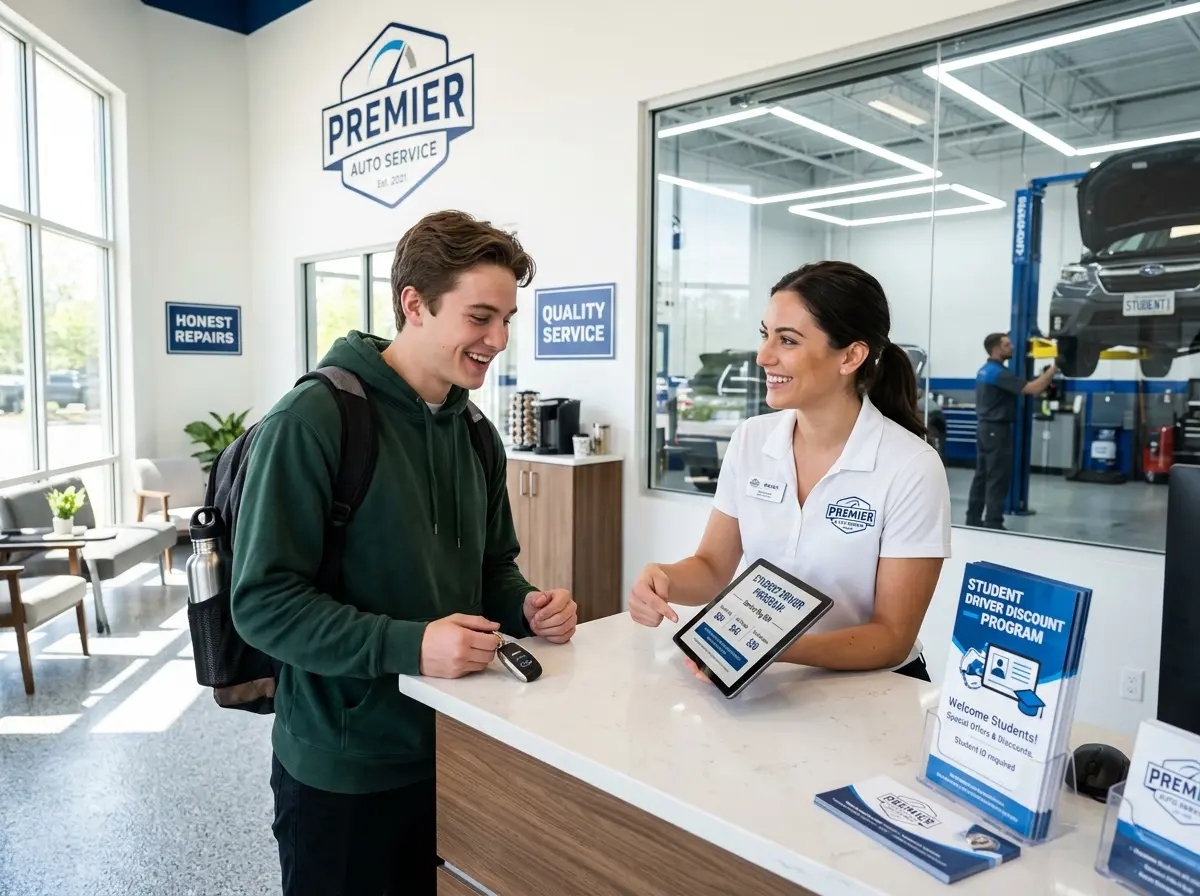
A well-designed program might include a percentage discount on routine maintenance services — oil changes, tire rotations, fluid checks — which are high-frequency, relationship-building services anyway. Think 10–15% off for verified students or new license holders. You could also offer a complimentary multi-point inspection for first-time visitors in this demographic, which costs you relatively little but creates enormous goodwill and opens the door to recommending additional services.
The key is to make the discount entry-level services only, at least initially. You're not giving away brake jobs at cost. You're making it easy for a nervous 18-year-old to walk through your door for the first time without feeling like they need a second mortgage.
Verification and Eligibility: Keep It Simple, Keep It Honest
Requiring a valid student ID or a driver's license issued within the last 12 to 24 months is a completely reasonable eligibility requirement, and most customers will respect the boundary. Make the process easy — a quick ID check at the front desk is all you need. You're not running a government clearance program.
Consider also defining "first-time driver" generously. Someone who just got their license at 30 after years of city living is just as valuable a long-term customer as a 17-year-old with a used Honda. Broadening your eligibility criteria means you're not leaving money on the table by being overly restrictive.
Create a Loyalty Pathway, Not Just a One-Time Deal
Here's where a lot of shops drop the ball. They offer a discount, the student comes in once, and then... nothing. No follow-up, no reason to return, no relationship built. You've just given away margin for zero long-term gain.
Build a clear progression into your program. After the initial discounted visit, enroll them in a loyalty program — points, a punch card, or a digital rewards system. Send a reminder when their next oil change is due. Offer a referral incentive when they bring in a friend. The discount is the handshake. The loyalty program is the relationship.
Using Technology to Manage and Promote Your Program
Let Smart Tools Handle the Heavy Lifting
Managing a discount program manually — tracking eligibility, following up with customers, fielding questions about what the program includes — is the kind of administrative burden that makes shop owners quietly question their life choices. This is where technology earns its keep.
Stella, the AI robot employee and phone receptionist, is genuinely useful here. In-shop, her physical kiosk presence means she can greet every young driver who walks in, explain the student discount program in plain language, and answer questions without pulling your service advisor away from the bay. On the phone — which is still how most customers first contact an auto shop — Stella answers 24/7, meaning a college student calling at 9pm to ask about your program gets a real, knowledgeable response instead of a voicemail. She can also collect customer information through conversational intake forms and store it in her built-in CRM, so every new young driver who contacts you is immediately logged, tagged, and ready for follow-up. That's how a one-time discount turns into a decade-long customer relationship.
Marketing Your Program to the Right Audience
Go Where New Drivers Actually Are
Your target audience is not reading the local newspaper. They're on Instagram, TikTok, and Reddit. They're in Facebook groups for their university, their neighborhood, or their car model. They're being advised by parents who are also online. Your marketing strategy needs to reflect that reality.
Partner with local driving schools and high school driver's ed programs — a simple flyer or a mention in their orientation materials can put your shop in front of hundreds of new drivers a year. Reach out to community colleges and universities about including your discount in their student resource guides. Consider a small but well-targeted social media campaign featuring relatable content: "Got your license? Now learn how to actually take care of your car." That kind of messaging resonates with a demographic that is simultaneously proud and overwhelmed.
Train Your Team to Make the Experience Stick
A discount gets a new customer in the door. Your team's behavior determines whether they ever come back. Young, first-time customers are particularly sensitive to being talked down to, rushed, or upsold aggressively. Train your service advisors to explain things clearly and patiently — what the service involves, why it matters, and what to watch for next time — without making the customer feel stupid for not already knowing.
Consider creating a simple "First Visit" welcome experience: a printed or digital summary of what was done to the vehicle, a brief explanation of what to monitor before the next visit, and a clear reminder of when to return. This costs almost nothing to produce and communicates professionalism in a way that far more expensive marketing never could.
Track Results and Refine the Program Over Time
A discount program with no measurement is just a donation. Track how many new customers come in through the student program each month, what their average ticket value is, how many return for a second visit, and what their lifetime value looks like over 12 to 24 months. If the numbers are good, invest more in promotion. If they're underwhelming, look at where the experience is breaking down — is it the discount itself, the follow-up, or the in-shop experience?
According to industry research, acquiring a new customer costs five times more than retaining an existing one. A well-run student program, where the acquisition cost is a modest discount on an oil change, is one of the most cost-effective growth strategies available to an independent auto shop.
Quick Reminder About Stella
Stella is an AI robot employee and phone receptionist built for businesses like yours — standing in-store to engage walk-in customers and answering phones 24/7 so no lead, inquiry, or nervous first-time driver ever goes unanswered. At just $99/month with no upfront hardware costs, she's one of the easiest ways to add a reliable, professional customer-facing presence without adding to your payroll headaches.
Start Small, Think Long-Term
Launching a student and first-time driver discount program doesn't require a massive budget or a complete overhaul of your business. It requires intentionality: a clear discount structure, an honest eligibility process, a loyalty pathway, smart use of technology, and a team that treats every new customer like the long-term relationship they have the potential to become.
Here's how to get started this week:
- Define your offer. Decide which services are included, what the discount percentage is, and who qualifies. Write it down clearly.
- Create simple marketing materials. A half-page flyer and a social media post are enough to start. You can refine from there.
- Reach out to two or three local partners. A driving school, a high school, or a community college can get you in front of your target audience immediately.
- Set up a follow-up system. Whether it's a CRM, a loyalty app, or even a simple email list, make sure you have a way to stay in contact after the first visit.
- Measure and adjust. Check your numbers monthly for the first quarter and be willing to tweak what isn't working.
The drivers who are just getting their licenses today will still be driving — and still needing auto services — well into the 2060s. That's a long runway. Be the shop that earned their trust when it mattered most, and you won't have to spend nearly as much time or money chasing customers who have already given theirs to someone else.