You're Running a Med Spa, Not a Memory Palace
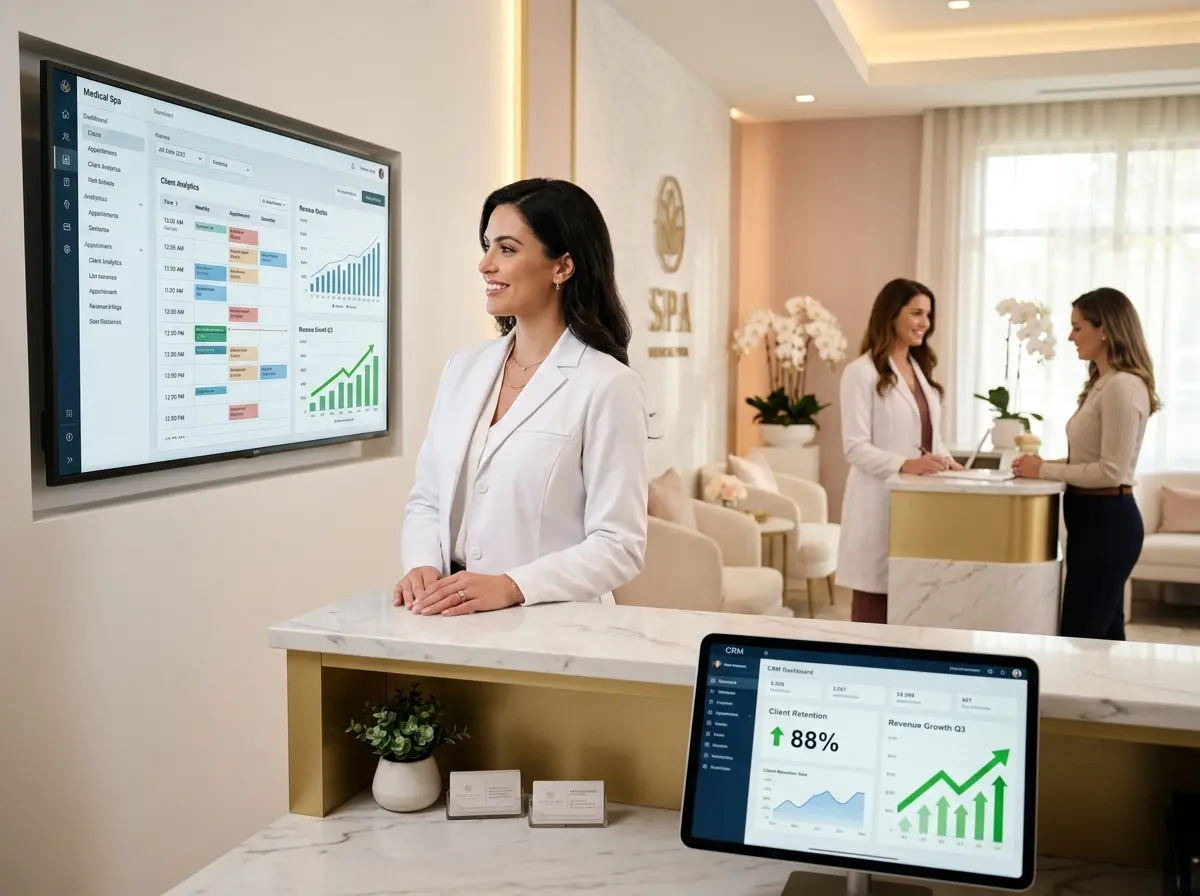
This is happening in med spas every single day, and it's costing real money. The global medical spa market is valued at over $16 billion and growing fast — but the businesses thriving in that space aren't just the ones with the best injectors or the fanciest equipment. They're the ones who actually know their clients. And knowing your clients, at scale, requires a Customer Relationship Management system — a CRM.
What a CRM Actually Does (And Why Your Booking Software Isn't One)
It's Not Just a Contact List
A lot of med spa owners hear "CRM" and think, "Oh, I have that — I have client profiles in my scheduling app." With all due respect: no, you don't. Booking software tracks appointments. A CRM tracks relationships. There's a meaningful difference between knowing when someone's next appointment is and knowing that she came in three times last quarter, always asks about anti-aging treatments, responded to your Botox promotion in March but ignored the one in July, and mentioned she has a big event in October. One of those data sets books an appointment. The other one builds a loyal, high-spending client.
The Revenue You're Quietly Bleeding
Here's a number that should get your attention: acquiring a new customer costs five to seven times more than retaining an existing one. Med spas often pour budget into ads, promotions, and new client specials while underinvesting in the clients already walking through their doors. Without a CRM, you have no systematic way to identify who hasn't been in for six months, who's overdue for a follow-up, or who mentioned interest in a service they never booked.
Consider a mid-size med spa with 400 active clients. If even 15% of those clients are silently lapsing — not coming back because no one reached out — and their average annual spend is $800, that's $48,000 in quiet, preventable revenue loss. A CRM with proper segmentation and follow-up workflows turns that leak into a retention engine.
Personalization Is No Longer Optional
Clients today expect personalization. A generic "Hey, book your next appointment!" email blast to your entire list is the marketing equivalent of handing someone a flyer on a street corner. It's not offensive, but it's not working very hard either. When you have CRM data, you can send targeted messages — remind the client who loved her chemical peel that you're running a package deal, or follow up with the prospect who asked about microneedling but never converted. Personalized outreach consistently outperforms generic campaigns by 2x to 5x across industries, and aesthetics clients are particularly responsive to feeling seen and remembered.
Where the Data Comes From (And How to Capture It Without Adding Work)
Your Intake Process Is a Goldmine You're Ignoring
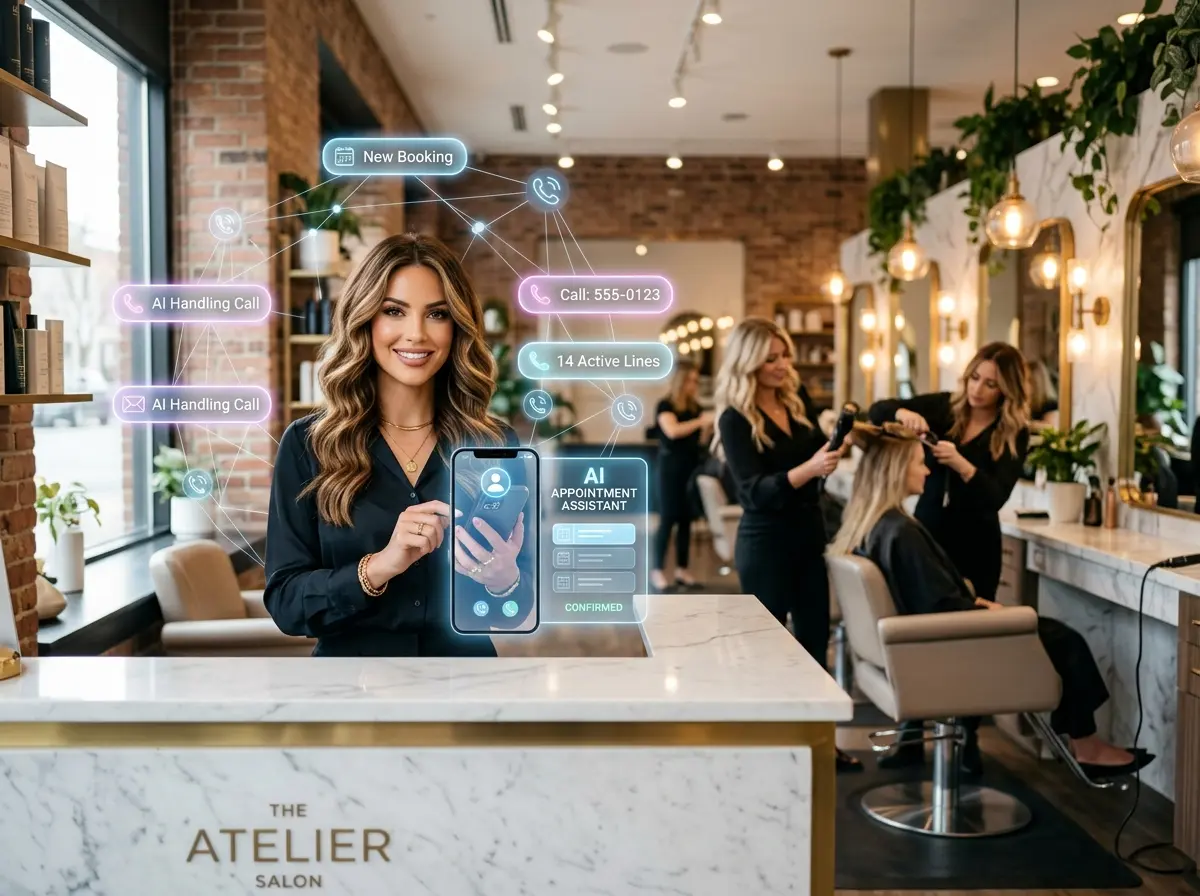
Stella, the AI robot employee and phone receptionist, is built for exactly this scenario. She greets walk-in clients at your front entrance, engages them in natural conversation about your services and current promotions, and collects intake information through a conversational interface — no clipboards, no rushed front desk staff, no data entry backlogs. On the phone side, she answers calls 24/7, gathers client details through AI-powered intake forms, and logs everything directly into her built-in CRM with custom fields, tags, and AI-generated client profiles. Every interaction becomes a data point. Every data point becomes an opportunity.
Stella also gives you insights into which promotions are generating interest and which are landing with all the impact of a damp napkin — so you can double down on what works and quietly retire what doesn't.
Building a CRM Strategy That Actually Sticks
Start With Segmentation
Build Follow-Up Sequences That Run Themselves
Train Your Team to Actually Use It
A Quick Reminder About Stella
Stella is an AI robot employee and phone receptionist available for just $99/month — no upfront hardware costs, no long-term contracts. She greets clients in your physical space, answers every phone call around the clock, captures client information through smart intake forms, and manages it all in a built-in CRM. Think of her as the front desk team member who never calls in sick, never forgets to log a note, and never lets a lead slip through the cracks.
Stop Leaving Money on the Table
- Audit your current client data. Where does it live? How complete is it? Be honest about the gaps.
- Choose or upgrade your CRM. Make sure it supports custom fields, tags, notes, and ideally automation. If you're looking for something that also handles client intake and front desk duties, Stella's built-in CRM is worth exploring.
- Segment your client list into at least three groups: active, at-risk, and lapsed. Build a simple outreach strategy for each.
- Build one automated follow-up sequence — even just a post-appointment check-in — and watch what happens to your retention rates.
- Train your team on CRM expectations and make it part of your daily workflow.