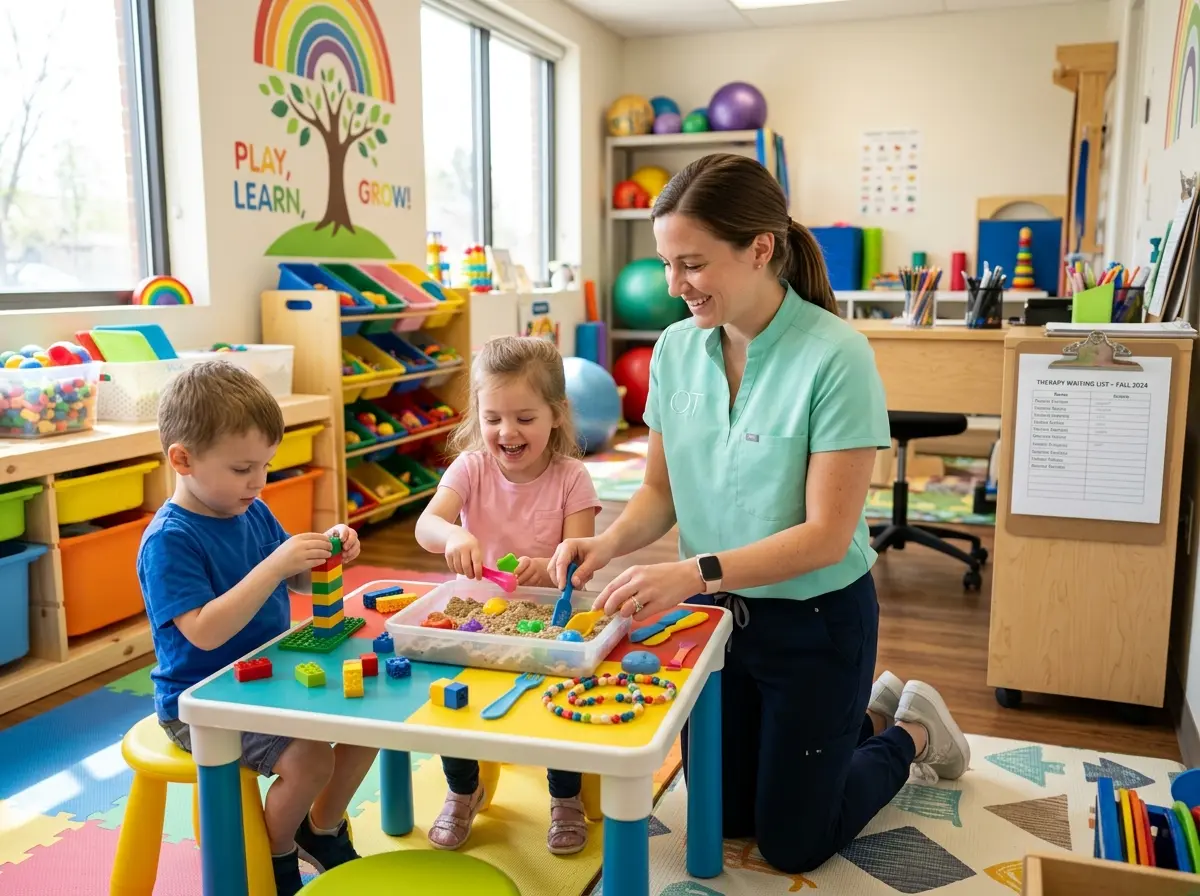
When "Fully Booked" Becomes Your Best Marketing Strategy
Here's a scenario every pediatric occupational therapist secretly dreams about: parents are calling in January to reserve spots for your summer program. Your waitlist is longer than a theme park queue on a holiday weekend. And instead of scrambling to fill seats, you're turning people away — politely, professionally, and with a waiting list that keeps your program full before the brochures even go to print.
Sounds nice, right? The good news is this isn't a fantasy reserved for clinics in affluent zip codes or practices with decades of brand recognition. It's an entirely achievable reality — if you approach your summer program like a business product rather than a seasonal afterthought. Too many pediatric OT practices build a great clinical program and then wonder why their summer slots aren't filling up. The answer is almost never the therapy itself. It's the systems, the positioning, and the experience surrounding it.
This post walks you through how to design, market, and operationally support a pediatric OT summer program that generates genuine demand — the kind where parents feel lucky to get a spot, not lukewarm about signing up.
Designing a Program Parents Actually Want to Book
Before you can have a waitlist, you need something worth waiting for. That means being deliberate about how your program is structured, branded, and communicated — not just clinically sound, but compelling.
Build Around a Theme or Outcome, Not Just Services
Generic programs get generic responses. "Pediatric OT Summer Group" sounds like a scheduling placeholder. "Explorer Camp: A Sensory Adventures Program for Kids Who Learn Differently" sounds like something a parent would tell their friends about at soccer practice. Thematic programming isn't just marketing fluff — it creates cohesion, gives kids something to look forward to, and gives parents a clear narrative to share when someone asks what their child is doing this summer.
Think about the outcomes parents are actually hoping for. Improved handwriting? Better social skills? Reduced sensory sensitivities before the school year starts? Build your program language around those outcomes, then wrap a theme around it. "Camp Ready" framed as preparation for kindergarten or a new school year, for example, speaks directly to a parent's anxiety in a way that "fine motor skills group" simply doesn't.
Create Tiers and Limited Enrollment — On Purpose
Scarcity is a real psychological driver, and there's nothing manipulative about it when it reflects genuine capacity. Pediatric OT is inherently small-group work. Lean into that. Publish your enrollment caps clearly: "We accept only 6 children per session to maintain our therapeutic ratios." That's not a limitation — that's a selling point.
Consider offering tiered options: a full-summer intensive track, a two-week specialty session, and a drop-in enrichment option for families who need flexibility. Different price points and commitment levels mean you're capturing a broader market while still keeping your flagship offering premium and limited.
Price It Like the Specialized Service It Is
Underpricing is the fastest way to undermine perceived value. If your summer program is priced like a generic daycare option, parents will subconsciously treat it like one — casual, skippable, interchangeable. Pediatric OT summer programming, delivered by licensed professionals with intentional therapeutic goals, is a specialized clinical service with a recreational wrapper. Price it accordingly, explain the value clearly, and don't apologize for it. Parents who are the right fit will understand. Parents who balk at the price probably weren't your target family anyway.
Using Smart Systems to Handle Demand Without Losing Your Mind
A full waitlist is only exciting until your phone starts ringing constantly with intake questions, scheduling requests, and parents who just want to "ask a quick question" that takes 20 minutes. This is where operational infrastructure becomes the difference between a thriving program and a burnt-out one.
Let Technology Handle the First Line of Communication
When enrollment opens and interest spikes, your staff shouldn't be fielding the same five questions on repeat. Stella, the AI robot employee and phone receptionist, can handle incoming calls around the clock — answering questions about your program structure, pricing, enrollment status, and scheduling without pulling your clinical team away from, you know, actually doing therapy. She can also greet families at the front of your clinic, walking them through program details while they wait, which frees your front desk staff to focus on higher-value interactions. During peak enrollment season especially, having a reliable, knowledgeable first point of contact — one that doesn't take lunch breaks or get frazzled — is genuinely useful. Stella's built-in CRM and intake forms also mean that prospective families who call or stop by can be captured immediately, tagged, and followed up with systematically, so no warm lead slips through the cracks.
Marketing Your Program So the Waitlist Fills Itself
A well-designed program in a vacuum is just a well-kept secret. The practices that consistently have waitlist demand don't necessarily have better therapy — they have better visibility and better community integration. Here's how to build both.
Start Earlier Than Feels Reasonable
If you're announcing your summer program in May, you're already behind. Families who plan ahead — often the most engaged, most committed families — have already locked in their summers by March. Pediatric OT programs that generate waitlist demand typically open enrollment in February or early March, with a teaser campaign that starts in January. Send a "Save the Date" email to your existing patient families first, giving them early access before spots open to the public. That VIP window creates urgency and rewards loyalty simultaneously.
According to a survey by the American Academy of Pediatrics, parents of children with developmental needs report that specialized summer programming books out an average of 8–12 weeks in advance in mid-sized markets. In larger metro areas, that window is even longer. If that timeline surprises you, your marketing calendar needs a serious adjustment.
Build Referral Pipelines That Run Year-Round
Your best source of summer program inquiries isn't Instagram — it's the pediatricians, school-based OTs, special education coordinators, and child psychologists who interact with your target families every single week. Cultivating those referral relationships isn't a summer task; it's a year-round investment that pays dividends when enrollment season arrives.
Consider hosting a brief lunch-and-learn for local pediatric providers in the winter to preview your summer program. Drop off printed materials at pediatric offices in your area. Send a formal referral letter with clear enrollment dates and a direct contact. When a referring provider knows exactly what you offer and how to send families your way, you become a trusted resource rather than a name they vaguely remember seeing somewhere.
Turn Current Families Into Your Best Advocates
Word-of-mouth in the special needs parenting community is extraordinarily powerful. Parents who have seen real results from your practice don't just recommend you — they advocate fiercely. Make it easy for them to do that. Create a simple referral program that rewards families for sending new clients your way. Share anonymized success stories (with permission) on your website and social channels. Encourage reviews on Google and on community-specific platforms where parents of children with sensory, developmental, or learning differences gather.
One practical tactic: at the end of every spring session, send a personal note to your current families thanking them for their trust and mentioning that summer enrollment is opening soon — and that they're welcome to share your information with families who might benefit. It takes five minutes to write and can generate multiple referrals per family per season.
Quick Reminder About Stella
Stella is an AI robot employee and phone receptionist built for businesses like yours — she stands in your clinic as a friendly, knowledgeable kiosk and answers calls 24/7 with the same information your staff would provide. At just $99/month with no upfront hardware costs, she's the kind of front-office support that doesn't call in sick during your busiest enrollment week. If you're building out systems to support a high-demand summer program, she's worth a serious look.
Building the Waitlist Flywheel That Sustains Itself
Generating waitlist demand once is a campaign. Generating it every year is a system. Once you've run a well-structured, well-marketed summer program, the most important thing you can do is capture the momentum before it evaporates.
Document everything: enrollment numbers, inquiry volume, common questions, what filled fastest, and what sat empty longest. Survey families at program end — a simple five-question form sent via email gives you data and testimonials simultaneously. Use that feedback to refine your program design and your marketing language for the following year.
Most importantly, don't let your waitlist go cold after summer ends. Families who didn't get a spot this year are your warmest leads for next year. Tag them in your CRM, stay in touch through your email newsletter, and give them first access when enrollment opens again. A waitlist that carries over year to year isn't just convenient — it's proof that you've built something genuinely valuable, and that reputation compounds over time.
The pediatric OT practices that are turning families away aren't lucky. They started planning in January, priced their programs without apology, built referral relationships before they needed them, and put systems in place so that demand didn't create chaos. That's entirely replicable. Start now, and next summer, "fully booked" can be your default setting too.