Why Your Store Might Be Missing Out on One of Its Biggest Customer Segments
Picture this: A parent walks into your store, baby on hip, toddler in tow, credit card ready. They want to browse. They want to spend money. And then — chaos. The toddler starts pulling things off shelves, the baby starts fussing, and within approximately 90 seconds, that parent is speed-walking back to their car, defeated, empty-handed, and silently vowing never to return.
Sound familiar? If your store doesn't have a dedicated kids' corner, you may be inadvertently sending families straight to your competitors — or worse, straight to Amazon. Parents with young children represent a massive spending demographic. According to the U.S. Census Bureau, there are over 35 million households with children under 18 in the United States, and parents consistently report spending more per shopping trip when their children are engaged and calm. A small, thoughtfully designed kids' area isn't just a nice gesture — it's a quiet sales strategy hiding in plain sight.
This post walks you through why a kids' corner works, how to set one up without breaking the bank, and how to turn family visitors into loyal, repeat customers.
The Business Case for a Kids' Corner
Parents Shop Longer When Kids Are Happy
This one is almost embarrassingly simple, but it bears saying out loud: happy kids mean longer visits, and longer visits mean more sales. Research from the retail industry consistently shows that dwell time — the amount of time a customer spends in your store — is one of the strongest predictors of purchase value. The longer someone browses, the more they buy. It's just math.
When a child is engaged with a small activity table, a few age-appropriate toys, or even just a corner with colorful books and a tiny chair shaped like a frog, parents can actually think. They can read product labels. They can ask your staff questions. They can — and this is the dream — impulse buy. What would have been a two-minute stressed-out visit can turn into a twenty-minute browsing session. That difference can be the entire margin between a slow day and a good one.
Families Are Loyal Customers When They Feel Welcome
There's a reason certain coffee shops, clothing boutiques, and home goods stores become "the family spot" in a neighborhood. It's not always because they have the best prices or the widest selection. It's because parents remembered how easy it was to shop there. That emotional association — "this place gets it" — is incredibly powerful and surprisingly sticky.
When families feel genuinely welcomed rather than merely tolerated, they return. They tell other parents. They post on local Facebook groups and neighborhood apps. A small investment in a kids' corner can quietly become your most effective word-of-mouth marketing tool, especially in tight-knit communities where parenting circles overlap significantly.
The Setup Doesn't Have to Cost a Fortune
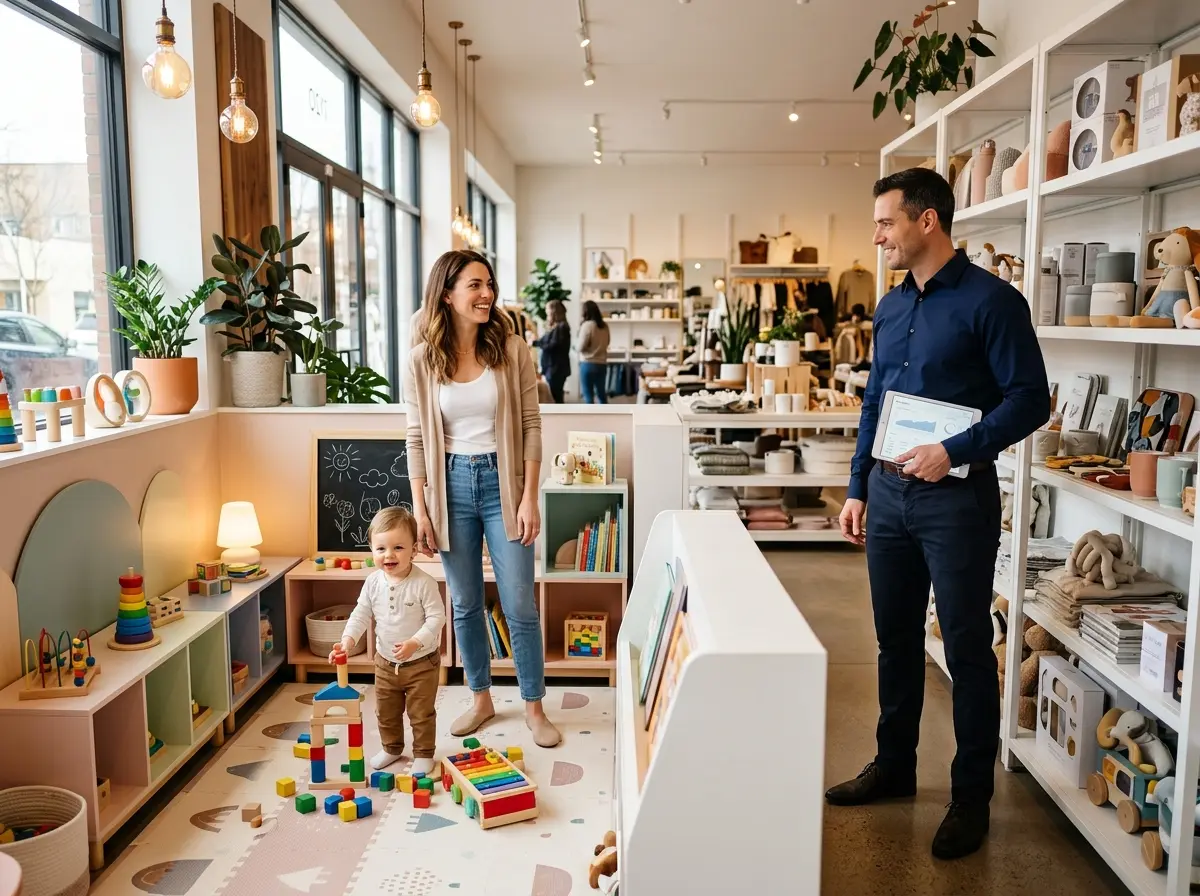
Before you start envisioning a full indoor playground with foam pits and a dedicated staff member in a cartoon costume, take a breath. A functional, appealing kids' corner can be created for a few hundred dollars or less. Think: a small rug, a low table, a bin of chunky puzzles or Duplo blocks, a few board books, and maybe a tablet mounted to the wall with a child-friendly app. That's it. You don't need much — you just need enough to hold a three-year-old's attention for fifteen minutes. If you've ever met a three-year-old, you know that's actually a pretty low bar once you have the right tools.
Smart Setup Tips for Maximum Impact
Location, Visibility, and Safety
Where you place the kids' corner matters almost as much as what's in it. The sweet spot is somewhere visible from multiple points in the store so parents can keep an eye on their children while browsing. Avoid tucking it away in a back corner — out of sight means out of mind for both kids and parents, and it can create anxiety rather than comfort. A spot near the center of the store or adjacent to a high-traffic product area works beautifully. You want parents to naturally drift toward products while still maintaining a sightline to their little ones.
Safety is non-negotiable. Make sure furniture is low to the ground and anchored if needed, all items are age-appropriate with no small choking hazards, and the area is easy to clean. A simple laminated sign noting that the space is for children under a certain age helps set expectations and keeps things orderly.
How Technology Can Lend a Hand — Enter Stella
Here's where things get interesting for modern retailers. While your kids' corner is keeping the little ones occupied, who's engaging the adults? If your staff is stretched thin — and let's be honest, whose isn't — parents might wander, have unanswered questions, or simply leave without making a purchase they were genuinely considering.
That's exactly the kind of gap that Stella, the AI robot employee and phone receptionist, was built to fill. Stella stands inside your store as a friendly, human-sized kiosk that proactively greets customers, answers questions about products, services, hours, and promotions, and even upsells or cross-sells relevant items — all without pulling your human staff away from other tasks. A parent who finally has two free hands because their kid is happily stacking blocks is a parent ready to ask questions and make decisions. Stella is right there to help them do exactly that. She also answers your phone calls 24/7, so if a family calls ahead to ask whether your store is stroller-friendly or has a kids' area, they'll get a real, informed answer — not voicemail.
Turning Families into Repeat Customers
Create Small Rituals That Bring Them Back
The most successful kids' corners aren't just functional — they're memorable. Think about small, low-cost touches that families will actually talk about. A "stamp of the week" card that kids get punched every visit. A rotating seasonal craft activity. A small treasure box where kids get to pick a sticker or a tiny prize after a parent makes a purchase. These little rituals create something children look forward to, which means parents are hearing "Can we go to that store?" instead of the alternative. That is, frankly, priceless.
You can also align your kids' corner activities with your brand or product category. A kitchen goods store might have a toy cooking set in the corner. A garden center might have a small sensory bin with fake soil and plastic vegetables. A bookshop — well, that one's obvious. These thematic touches make the space feel intentional and reinforce your brand identity in a charming, subtle way.
Market the Kids' Corner Proactively
You'd be surprised how many businesses add a kids' corner and then tell absolutely no one about it. Don't be that business. Mention it on your Google Business Profile. Add a photo to your social media. Include a line in your email newsletter. Post a sign in your front window. Parents actively seek out family-friendly businesses, and they're very good at finding each other online to share recommendations.
Consider creating a simple hashtag for your store and encouraging parents to snap a photo of their kids enjoying the corner. User-generated content from families is warm, authentic, and reaches exactly the audience you want — other parents in your area who are just waiting to find a reason to visit you instead of ordering online.
Gather Feedback and Evolve the Space
A kids' corner should be a living part of your store, not a set-it-and-forget-it afterthought. Swap out toys seasonally to keep things fresh. Ask parents casually what their kids enjoy. Pay attention to what gets used and what collects dust. If every kid beelines for the coloring station but nobody touches the puzzles, rotate the puzzles out and get more crayons. Your customers' kids will essentially tell you exactly what works — you just have to watch and listen.
Quick Reminder About Stella
Stella is an AI robot employee and phone receptionist available to businesses for just $99/month — no upfront hardware costs, no complicated setup, no sick days. She stands in your store greeting and engaging customers proactively, and she answers your phones around the clock with the same knowledge she uses on the floor. Whether families are shopping in person or calling ahead, Stella makes sure they always get a friendly, informed, professional experience.
Make the Investment — Your Sales Will Thank You
Adding a kids' corner to your store is one of the lowest-cost, highest-return improvements you can make to the physical shopping experience. It reduces stress for your best customers, increases dwell time, builds emotional loyalty, and gives parents a genuinely compelling reason to choose you over a faceless online retailer. All for the price of a rug, a bin of blocks, and a little thoughtful planning.
Here's how to get started this week:
- Identify a visible, safe corner or alcove in your store — even a 6x6 foot space is enough to work with.
- Set a modest budget (even $200–$300 can create something genuinely appealing) and shop secondhand stores or discount retailers for furniture and toys.
- Add a thematic or brand-aligned touch to make the space feel intentional and memorable.
- Tell people about it — update your Google listing, post on social media, and put a sign in your window.
- Plan a small recurring element — a stamp card, a seasonal swap, a weekly activity — to give families a reason to keep coming back.
Families want to support local businesses. They want to browse without a countdown clock ticking in their heads. Give them a reason to stay, and they'll reward you with their loyalty — and their wallets. It really is that straightforward. Your competitors who haven't figured this out yet are basically doing you a favor. Don't let them catch on too quickly.