Introduction: The Hidden Leak in Your Med Spa's Client Pipeline
You've invested in a beautiful space, trained an exceptional team, and built a menu of services that could genuinely change someone's life — or at least their jawline. Your marketing is working. People are finding you. They're clicking your website, browsing your treatment pages, and thinking, "Yes. This is the place."
And then they hit your consultation request form.
And then... silence.
If your med spa is like most, you're losing a significant chunk of high-value prospective clients right at this critical moment — not because your services aren't compelling, but because the experience of requesting a consultation feels like filling out a tax return. A 2023 survey by Salesforce found that 80% of customers say the experience a company provides is just as important as its products and services. In the aesthetics industry, where trust, personalization, and first impressions carry enormous weight, that number might as well be 100%.
The good news? The problem is fixable, and the fix doesn't require rebuilding your entire website. It requires rethinking what your intake process is actually supposed to do — and who (or what) is doing it.
What Your Consultation Form Is Actually Communicating
The Friction Problem Nobody Talks About
Most med spa consultation forms were built with the practice's needs in mind, not the client's experience. You need certain information — health history, treatment interests, contact details — and so you created a form that collects it. Logical, right? The problem is that a high-value client considering a $2,000 laser package or a series of injectables isn't in "paperwork mode" when they first reach out. They're in excitement mode. They're imagining results. They're emotionally engaged. And a cold, impersonal form kills that energy faster than a waiting room with a broken AC.
Research from HubSpot shows that forms with more than three fields see significant drop-off rates, yet the average medical aesthetics intake form asks for twelve or more pieces of information before a client has even spoken to a single human being. You're essentially asking someone to commit before they've had a first date.
The Trust Gap in Aesthetic Medicine
Unlike booking a haircut or a massage, pursuing aesthetic treatments involves a degree of vulnerability. Clients are sharing insecurities, medical histories, and significant financial investment. They need to feel heard before they feel comfortable. A static form doesn't listen. It doesn't reassure. It doesn't answer the nervous question at 9:47 PM on a Tuesday: "Do you think this treatment would work for someone like me?"
When a prospective client doesn't get a timely, personalized response — or worse, gets an auto-reply that says "We'll be in touch within 2 business days" — they move on. They find a competitor whose process felt warmer, faster, and more attentive. And they take their lifetime client value with them.
What High-Value Clients Actually Expect
Clients who are prepared to spend several hundred to several thousand dollars on aesthetic treatments are accustomed to a certain standard of service. They expect responsiveness. They expect to feel like a person, not a form submission. And increasingly, they expect that standard to be met before they even walk through your door. If your intake process doesn't meet them where they are — emotionally, practically, and promptly — you're not just losing a single appointment. You're losing a long-term relationship.
How Smarter Intake Tools (Like Stella) Can Close the Gap
Conversational Intake That Feels Like a Conversation
This is exactly where Stella, the AI robot employee and phone receptionist, changes the game for med spas. Instead of sending a prospective client to a static form, Stella can handle the entire intake process conversationally — whether that's over the phone, on your website, or in person at her kiosk inside your spa. She asks questions naturally, answers common pre-consultation questions in real time, and collects all the information your team needs without making the client feel like they're being processed.
Her built-in CRM automatically organizes client profiles with custom fields, tags, and AI-generated summaries — so by the time a prospective client sits down for their consultation, your staff already knows their treatment interests, concerns, and preferences. That's not just efficient. That's impressive.
Always Available, Never Rushed
Stella answers calls 24/7, meaning the client who's researching lip filler options at 11 PM on a Sunday gets the same attentive, knowledgeable experience as someone who calls during business hours. She can collect intake information over the phone, promote current specials, and ensure no lead falls through the cracks — all without adding a single task to your front desk team's plate.
Redesigning Your Consultation Process for Conversion
Simplify First, Gather Later
The most effective consultation request processes use a two-stage approach. Stage one is about expression of interest — make it fast, make it easy, and make it feel welcoming. Ask only for a name, contact information, and the general area of interest (e.g., "skin rejuvenation," "body contouring," "injectables"). That's it. The detailed health history and treatment specifics can come later, during a brief pre-consultation call or at the appointment itself.
This approach respects the client's time and emotional state at the point of first contact, while still giving your team enough to follow up meaningfully. The goal of the first touchpoint is not to collect a complete intake form — it's to secure the next conversation.
Speed Up Your Follow-Up Dramatically
Speed matters more than almost any other variable in converting consultation requests. A study by Lead Connect found that 78% of customers buy from the business that responds first. If your current process involves a form submission sitting in an inbox until someone gets to it on Monday morning, you're not just slow — you're voluntarily handing leads to your competitors.
Consider the following changes to your follow-up process:
- Set a firm internal standard for response time — ideally within one hour during business hours.
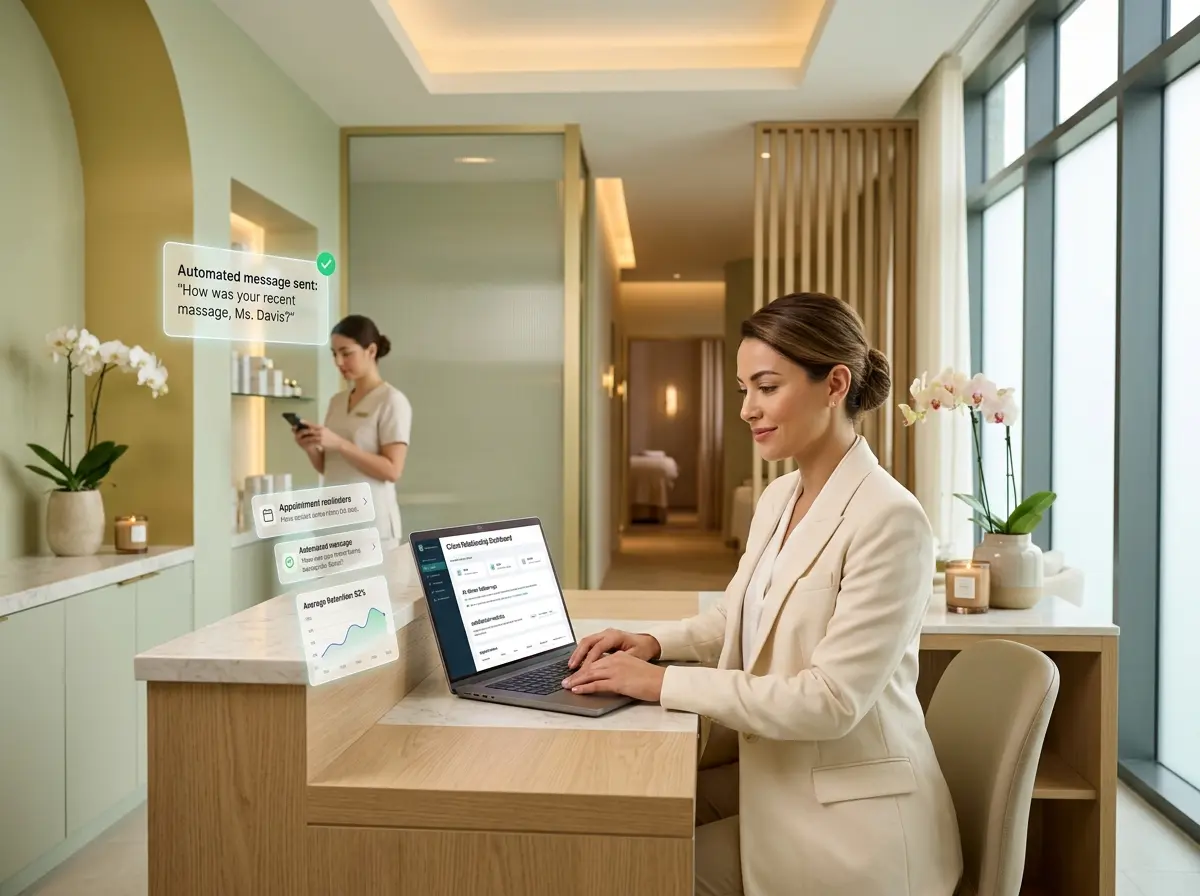
- Use automated confirmation messages that feel personal, not robotic. Reference the specific treatment they expressed interest in.
- Offer immediate online scheduling so interested clients can lock in a time without waiting for a callback.
- Assign someone specifically responsible for consultation follow-up, separate from front desk duties.
Personalize the Experience Before They Arrive
Once a consultation is booked, the experience doesn't stop. High-value clients notice when a business has paid attention. Send a brief pre-consultation email that addresses their specific treatment interest, sets expectations for what the appointment will cover, and introduces the provider they'll be meeting. Include a short, friendly pre-intake questionnaire — framed not as required paperwork, but as a way to make their time more valuable.
Small touches like using the client's name, referencing their stated concerns, and providing a sense of what to expect go a long way toward reducing anxiety and increasing the likelihood they'll show up and move forward with treatment. You're not just filling a calendar slot. You're beginning a relationship that, if nurtured well, could be worth tens of thousands of dollars over the course of years.
Quick Reminder About Stella
Stella is an AI robot employee and phone receptionist designed to help businesses like med spas deliver a consistently excellent client experience — in person at a kiosk, over the phone, or online. At just $99/month with no upfront hardware costs, she handles intake, answers questions, promotes services, and manages client information so your human team can focus on what they do best. She's always on, always professional, and never has a bad Monday.
Conclusion: Your Next Steps Toward a Better Intake Experience
Your med spa's consultation request form is not a minor administrative detail — it is a direct reflection of the client experience you promise to deliver. Every unnecessary field, every delayed response, and every impersonal auto-reply sends a message to prospective clients: we're not quite ready for you yet. In an industry built on transformation and trust, that's a message you cannot afford to send.
The good news is that improving your intake process is one of the highest-ROI changes you can make, and it doesn't require a massive overhaul. Here's where to start:
- Audit your current form. Count the fields. If there are more than five, cut it down for the initial request stage.
- Measure your current response time. If it's longer than one hour during business hours, fix it immediately.
- Make your follow-up feel human. Personalize your automated messages and reference the specific treatment or concern the client mentioned.
- Consider conversational intake tools. Whether via phone, web, or in-person kiosk, meeting clients with a conversation rather than a form changes everything.
- Track your consultation-to-booking conversion rate. If you don't know your current number, you can't improve it.
Your services are excellent. Your team is skilled. Make sure your intake process is worthy of both — and worthy of the clients you're working so hard to attract.