The Empty Chair Problem Nobody Warned You About
No-shows and last-minute cancellations are the silent revenue killers of the salon industry. According to some industry estimates, salons lose anywhere from 10% to 20% of their potential revenue each year to unfilled appointments. That's not a rounding error — that's a vacation you didn't take, equipment you didn't buy, or a second stylist you couldn't justify hiring.
The good news? A clear, consistently communicated cancellation and no-show policy can dramatically reduce these losses. The even better news? You don't have to nag every client personally to make it happen. The secret is simple: your policy needs to show up in every single booking confirmation, without exception. Let's talk about why — and how to actually make that work.
Why Most Salon Policies Fail Before the Appointment Even Starts
The "I Didn't Know" Problem
Vague Policies Are Worse Than No Policy
- How much notice is required? (24 hours? 48 hours? Be specific.)
- What happens if they don't give enough notice? (A cancellation fee? Loss of deposit? Charge of a percentage of the service?)
- What happens with no-shows? (Full charge? Blocked from future bookings? Both?)
Deposits and Fees: The Part Everyone Avoids
How the Right Tools Make This Effortless to Enforce
Automation Is Your Policy's Best Friend
This is also where a tool like Stella fits naturally into your salon's workflow. As an AI receptionist and in-store kiosk, Stella handles phone inquiries and walk-in questions professionally and consistently — meaning when a client calls to ask about your cancellation policy, they get an accurate, confident answer every time, not a flustered "let me check with my manager." She can reinforce your policies in conversation, answer questions about deposits, and ensure no client can claim they were never told.
Writing a Confirmation Message That Actually Works
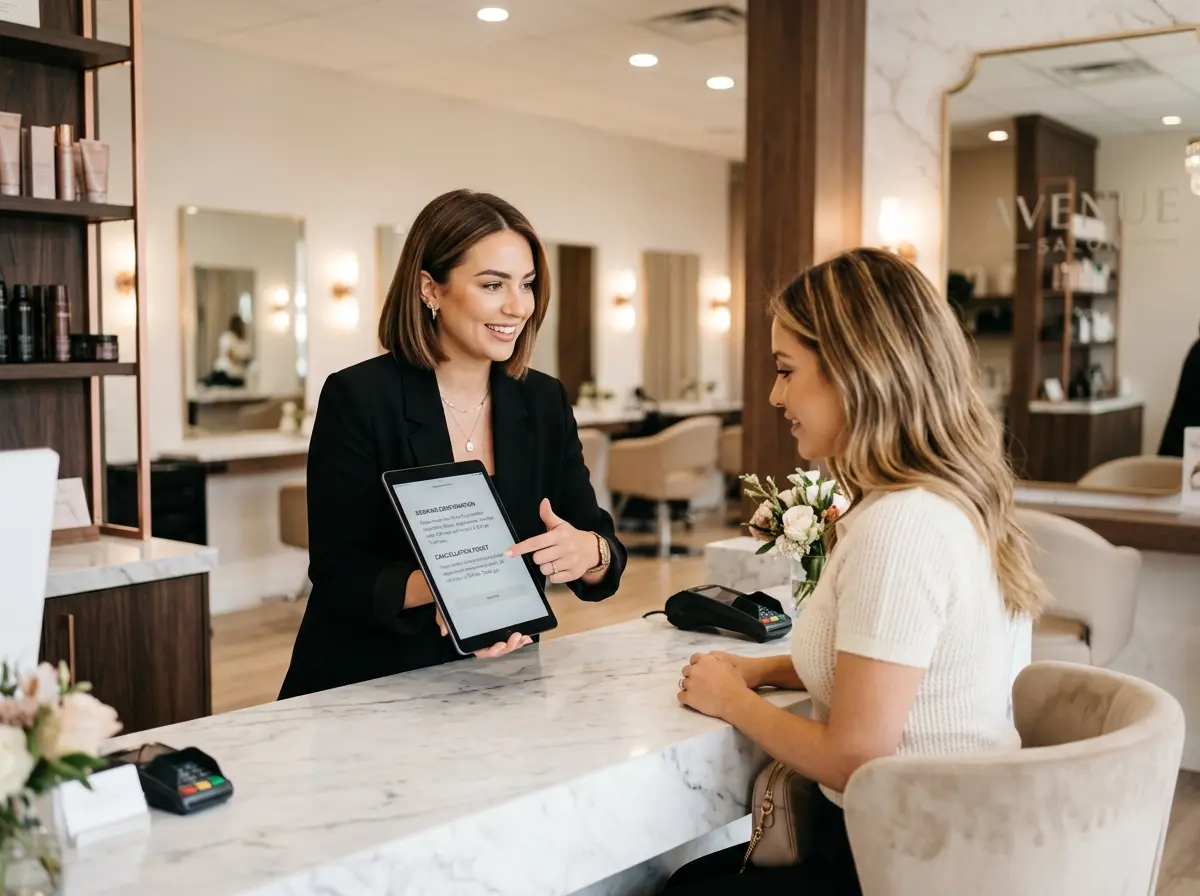
What to Include in Every Booking Confirmation
- The appointment date, time, service, and stylist name
- Your cancellation window (e.g., "Cancellations must be made at least 48 hours in advance")
- The specific consequence for late cancellations (e.g., "Cancellations within 24 hours will be charged 50% of the service fee")
- The no-show policy (e.g., "No-shows will be charged 100% of the service and may require a deposit for future bookings")
- Instructions for how to cancel or reschedule (make it easy — a link, a phone number, or both)
Reminder Messages Are a Second Chance
A reminder sent 48–72 hours before the appointment isn't just a courtesy — it's your last best chance to recover a slot that might otherwise go empty. Use this message to re-state the policy briefly: "Just a reminder that cancellations made less than 24 hours before your appointment are subject to a fee. To reschedule, reply here or call us at [number]."
Handle Exceptions Gracefully, But Consistently
Build a policy that you can enforce with consistency while leaving room for documented exceptions at your discretion. The key word is discretion — you choose when to waive a fee, not the client. When your policy is clear and applied consistently, the rare exception feels like a gesture of goodwill rather than a loophole everyone tries to exploit.
Quick Reminder About Stella
Stella is an AI robot employee and phone receptionist built for businesses like yours — answering calls 24/7, greeting walk-ins at her in-store kiosk, and handling everything from policy questions to appointment inquiries without missing a beat. At $99/month with no upfront hardware costs, she's the front desk that never calls in sick, never forgets your cancellation policy, and never puts a client on hold to go ask someone else.
It's Time to Stop Leaving Money at the Door
- Audit your current confirmation messages. Is your policy actually in there? In plain language? If not, fix that this week.
- Define the three specifics: your cancellation window, your late-cancel fee, and your no-show consequence. Write them down clearly.
- Require a deposit or card on file for new clients and long appointments. It's standard. It works.
- Set up automated reminders that include a one-line policy summary and an easy way to reschedule.
- Train your front desk — human or AI — to communicate the policy confidently and consistently.