Your Phone Is Ringing. Nobody's Answering. Congratulations.
Picture this: A potential new member just drove past your gym, saw your sign, got excited, and pulled out their phone to call and ask about membership pricing. The phone rings. And rings. And then — voicemail. So they hang up, Google the next gym down the street, and sign up there instead. Meanwhile, you're in the middle of coaching a class, completely unaware that you just lost a $600-per-year customer because nobody picked up the phone.
This isn't a rare edge case. It happens dozens of times a week at gyms across the country. According to research by Invoca, 80% of callers sent to voicemail don't leave a message — they just move on. And in the fitness industry, where competition is fierce and retention is already a challenge, letting potential members slip through the cracks because of a missed call is a problem you genuinely cannot afford to ignore.
The good news? You don't need to hire a full-time receptionist, chain yourself to the front desk, or perform the acrobatic feat of coaching someone through a deadlift while simultaneously explaining your family membership tiers over the phone. There are smarter systems available — and in this post, we're going to walk through exactly how to build one for your gym.
Why Gyms Are Especially Bad at Answering Phones (No Judgment)
Before we fix the problem, let's be honest about why it exists. Running a gym is a uniquely chaotic business. You're managing staff schedules, equipment maintenance, class programming, member retention, social media, and — oh right — actually being present on the floor to deliver the service people are paying for. Answering every phone call is not just inconvenient; it's sometimes physically impossible.
The Front Desk Is Always Doing Three Things at Once
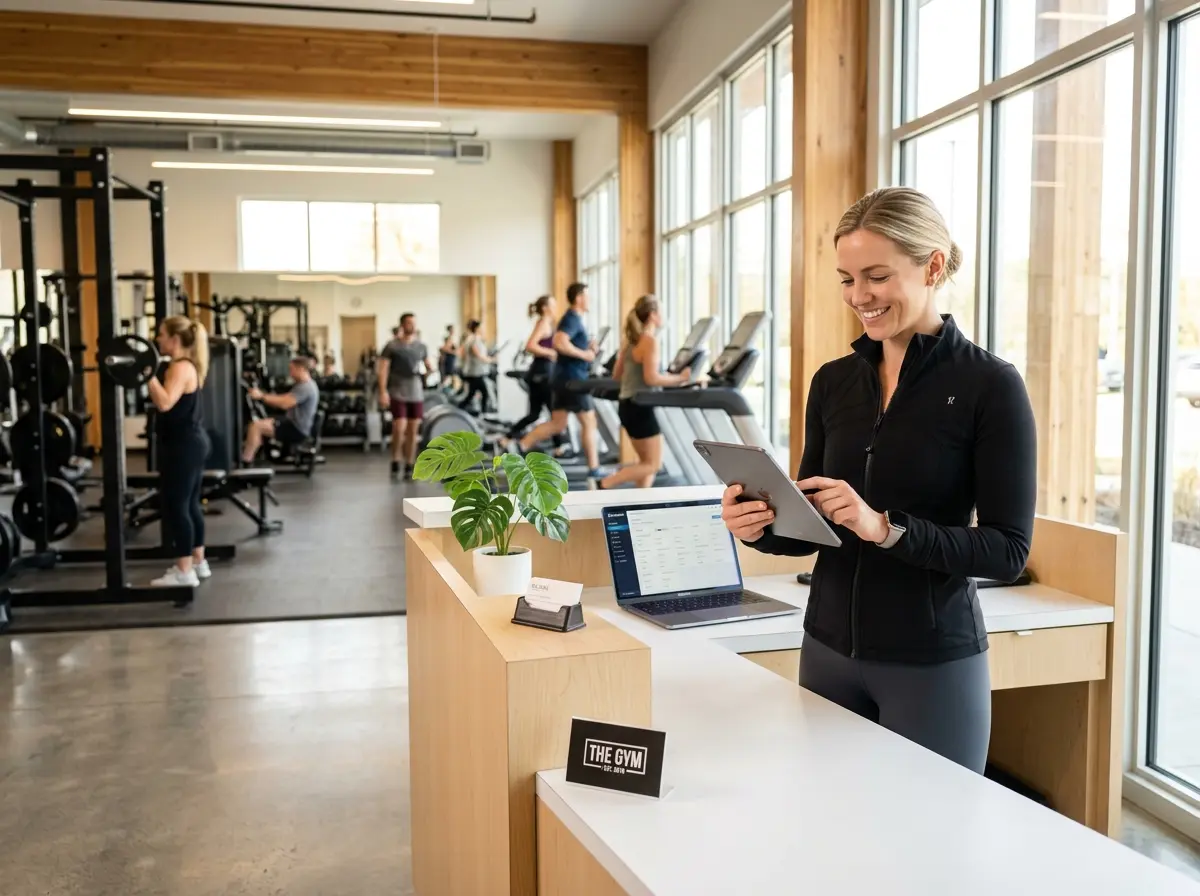
Your front desk staff — if you have them — are checking people in, handling member concerns, processing payments, handing out towels, and answering questions about class schedules, all simultaneously. Asking them to also field every inbound call and handle it with the warmth and expertise of a seasoned sales professional is... optimistic. What actually happens is that calls get rushed, information gets muddled, and prospects don't get the confident, engaging first impression that converts them into paying members.
Peak Hours Are Your Worst Hours for Phone Coverage
Here's the cruel irony: the hours when your gym is most visible and most likely to generate inbound calls — early morning, lunch rush, and evening — are exactly the hours when your staff is most overwhelmed. A prospect calling at 6:15 AM because they just finished a run and are feeling inspired to join a gym is going to get voicemail. Not because you don't care, but because your staff doesn't even clock in until 7:00. That window of motivation closes fast.
Calls Aren't Just Inquiries — They're Revenue Opportunities
Every phone call your gym receives is a potential revenue event. Someone asking about personal training packages is one good conversation away from becoming a high-value client. Someone asking if you offer youth classes might bring in their entire family. Someone calling to complain about the broken treadmill, if handled well, might stick around for another year instead of canceling. The phone isn't an interruption to your business — it is your business, and treating it that way requires a system that's actually built for it.
How the Right Tools Can Handle This for You
The solution to your phone problem isn't hiring more staff — it's implementing smarter infrastructure. And this is exactly the kind of problem that modern AI tools are genuinely well-suited to solve.
Meet the Receptionist Who Never Has a Bad Day
Stella is an AI robot employee and phone receptionist designed for businesses exactly like yours. She answers every call, 24/7, with the same knowledge she'd use if she were standing at your front desk in person — because she can do both. As an in-store kiosk, she greets members, answers questions about your services, promotes current deals, and engages walk-ins proactively. As a phone receptionist, she handles inbound calls after hours, during peak chaos, or all the time if that's what you need. She can forward calls to human staff when the situation calls for it, or handle the full conversation herself. She even takes voicemails with AI-generated summaries and sends push notifications to managers so nothing falls through the cracks. And if you want to capture prospect information directly during the call, Stella's built-in intake forms and CRM make it easy to collect, organize, and follow up on leads — complete with AI-generated contact profiles, custom tags, and notes — all without a single spreadsheet.
Building a Phone System That Actually Works for Your Gym
Even if you're not ready to adopt new technology today, there are structural changes you can make right now to dramatically reduce the number of calls that end in a missed opportunity. Think of this as your phone triage system — a set of policies and practices that ensure every caller gets a useful experience, every time.
Define What "Handled" Means for Every Call Type
Not all gym calls are created equal. A call asking about your hours is very different from a call where a prospect wants to know about personal training pricing and is clearly ready to commit. The first call needs a quick, accurate answer. The second call needs a skilled, enthusiastic conversation. If you treat both calls the same way — or worse, send both to voicemail — you're leaving money on the table.
Start by mapping out the most common types of calls your gym receives. Typical categories include: general inquiries (hours, location, pricing), membership sales conversations, existing member support, personal training inquiries, class schedule questions, and complaints or cancellations. Once you've identified these categories, you can assign the right response to each — whether that's an automated answer, a staff callback, or an immediate transfer to your most persuasive team member.
Set Up a Callback Protocol That Actually Gets Followed
If a call does go to voicemail — or if someone submits an inquiry online — you need a real system for following up, not a vague intention to "get back to them when things slow down." Things don't slow down. The callback needs to happen within an hour during business hours, and the first callback attempt should be logged somewhere visible. Studies consistently show that responding to a lead within five minutes makes you 100 times more likely to connect than waiting even 30 minutes. At a gym, where membership decisions are often made on impulse, speed is everything.
Train Your Staff to Sell on the Phone, Not Just Answer
Most gym staff are hired for their fitness knowledge and personality, not their phone sales skills. That's fine — but it means phone sales training needs to be explicit, not assumed. A simple script framework goes a long way: greet warmly, ask an open-ended question about what the caller is looking for, reflect their goals back to them, present the relevant membership or service, and ask for the next step (a tour, a trial class, a membership signup). It doesn't have to be complicated, but it does have to be intentional. Role-play these calls in staff meetings. It feels awkward. Do it anyway.
Quick Reminder About Stella
Stella is an AI robot employee and phone receptionist that works 24/7, never calls in sick, and never puts a prospect on hold because she's helping someone find the locker room. At just $99/month with no upfront hardware costs, she's built for businesses that want a reliable, professional presence without the overhead of a full-time hire. Whether she's standing in your gym greeting walk-ins or answering your phones overnight, she's always on and always ready.
The Bottom Line: Your Phone Is a Revenue Tool, Treat It Like One
Missed calls aren't just a minor inconvenience — they're a measurable drain on your gym's growth. Every unanswered ring is a prospect evaluating whether your business is worth their time and money, and sending them to voicemail is a pretty clear answer. The gyms that grow consistently aren't necessarily the ones with the best equipment or the flashiest branding — they're the ones that show up reliably at every customer touchpoint, including the phone.
Here's what you can do starting this week:
- Audit your missed calls. Pull your call logs for the last 30 days and count how many calls went unanswered or to voicemail. Put a dollar figure on each one based on your average membership value. That number is uncomfortable. Good — use it.
- Map your call types and assign a clear response protocol to each category. Write it down. Share it with your team.
- Implement a callback SLA — a firm commitment to return missed calls within a specific timeframe, tracked and enforced.
- Train your staff on phone sales with at least one dedicated session and a simple script framework they can actually use.
- Explore automation tools that can cover the gaps your staff physically can't — especially after hours and during peak class times.
Your gym works hard to deliver a great experience once people walk through the door. Make sure the experience before that door is just as good — starting with whoever picks up the phone.