Introduction: Because "Let's Circle Back" Is Not a Meeting Strategy
Let's be honest — the average salon team meeting looks something like this: you gather everyone before the morning rush, someone is still eating a granola bar, half the team is mentally reviewing their client list for the day, and you spend 20 minutes talking about the shampoo bowls again. Nothing changes. Next week, same meeting. Same shampoo bowls.
Running a salon is genuinely hard. You're managing creative personalities, tight schedules, retail targets, client retention, and the ever-present drama of who used whose color without asking. The weekly team meeting should be your most powerful management tool — a focused, energizing touchpoint that drives performance, builds culture, and keeps everyone rowing in the same direction. Instead, for most salon owners, it's a recurring calendar event that everyone secretly dreads.
The good news? With a little structure, the right metrics, and a commitment to actually doing something with the information you gather, your weekly meetings can become the engine that drives real business growth. This guide will show you exactly how to make that happen — without turning your stylists into corporate drones or yourself into a middle manager with a PowerPoint addiction.
Building the Foundation: Structure, Metrics, and Preparation
The difference between a meeting that moves your business forward and one that eats 45 minutes of prime productivity time is almost entirely structural. Great meetings don't happen by accident — they happen because someone put in the work beforehand.
Create a Consistent, Time-Boxed Agenda
Your team needs to know what to expect when they walk into that meeting room (or break room, or wherever you're doing this). A predictable format reduces anxiety, increases engagement, and — perhaps most importantly — keeps you from going on a 15-minute tangent about the importance of clean color bowls. Again.
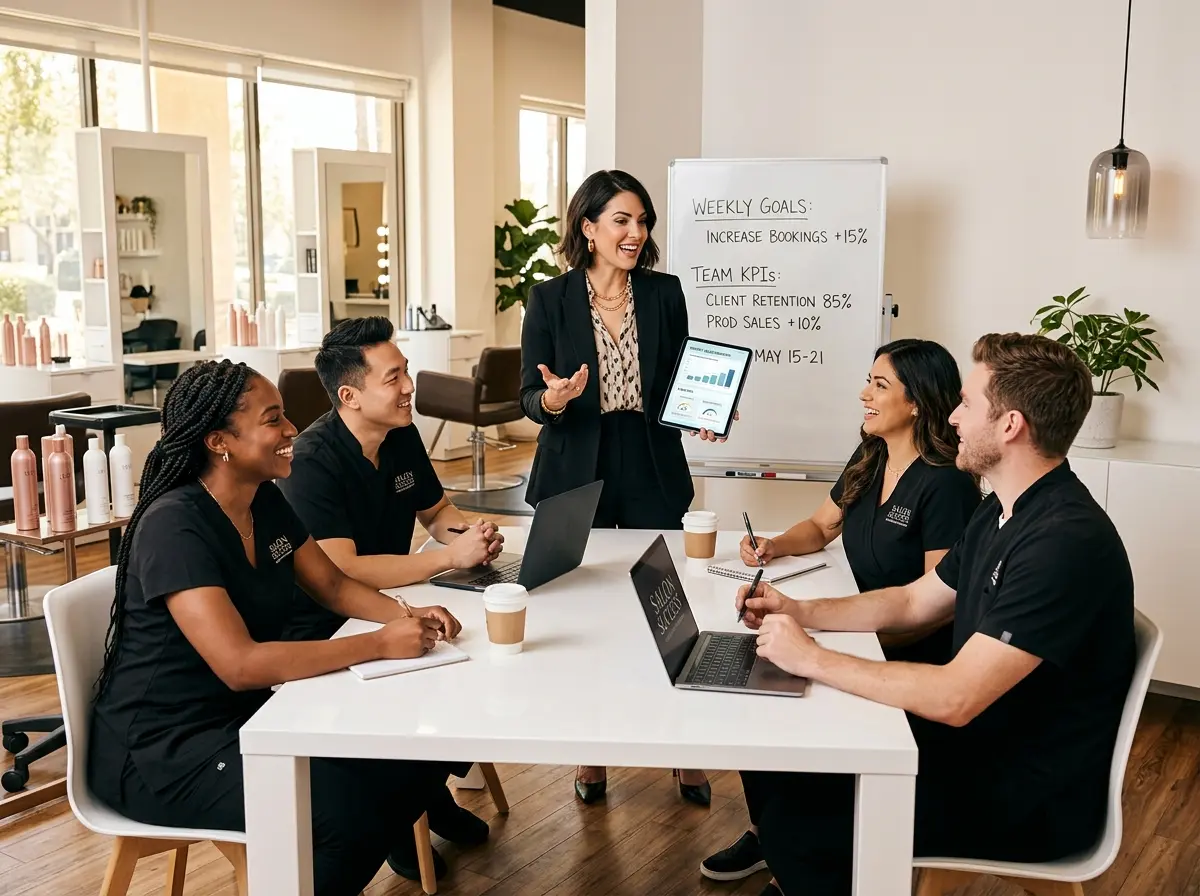
A strong weekly salon meeting agenda typically runs 30–45 minutes and covers: a quick win or positive callout from the previous week, a review of key performance numbers, any operational updates or policy changes, a focused discussion topic, and clear action items before dismissal. That's it. Write it down, print it out, stick to it. The moment your meeting has no agenda, it becomes a conversation with chairs.
Know Your Numbers Before You Walk In
You cannot improve what you don't measure, and you cannot discuss what you haven't reviewed. Before every weekly meeting, pull your core metrics: total revenue, average ticket value, retail sales per stylist, rebooking rate, and new client retention. According to industry benchmarks, top-performing salons maintain a rebooking rate above 65% and a retail-to-service revenue ratio of at least 15–20%. If you don't know where your salon stands on these numbers, that's your first agenda item — not the shampoo bowls.
Come to the meeting knowing the story the numbers are telling. Did one stylist have a breakout week? Did retail sales dip across the board? Is your new client retention trending down? The numbers give you the what — your meeting is where you collaboratively figure out the why and the what next.
Assign Pre-Meeting Roles to Build Ownership
One of the fastest ways to kill engagement in a team meeting is to make it a solo performance where the owner talks and everyone else listens. Instead, distribute ownership. Assign a team member each week to present one retail highlight, share a client success story, or report on a specific metric they've been tracking. Rotation keeps the energy fresh and builds leadership capacity in your team — which, frankly, you'll need the day a senior stylist calls in "sick" on a Saturday.
Turning Insights Into Action (With a Little Help From Technology)
Gathering information is only useful if you do something with it. This is where a lot of salon owners get stuck — they track data, they discuss it in meetings, and then... nothing changes. The bridge between insight and action is follow-through, and the right tools make follow-through a lot less exhausting.
Let Stella Handle the Front Lines So Your Team Can Focus on Performance
Here's a practical example: one of the most common complaints salon owners hear in team meetings is that stylists feel interrupted constantly — by walk-in questions, phone calls mid-appointment, and customers asking about pricing while a toner is processing. This friction affects performance, morale, and the quality of the client experience. Stella, the AI robot employee and phone receptionist, is specifically built to absorb that front-line noise so your human team doesn't have to.
In-salon, Stella greets walk-ins, answers questions about services, pricing, and promotions, and handles intake — all without pulling a stylist away from a client. On the phone, she answers calls 24/7, handles common inquiries, and forwards to staff only when truly necessary. When your team meeting reveals that client communication or phone management is creating friction, Stella is a concrete, immediate solution you can deploy for $99/month with no hardware costs and minimal setup time.
Making Meetings Actually Improve Performance Over Time
A single great meeting won't transform your salon. Consistent, well-run meetings compounded over months will. Here's how to build the habits that turn weekly check-ins into a genuine performance driver.
Use a "Start, Stop, Continue" Framework for Team Feedback
Once or twice a month, dedicate a portion of your meeting to structured feedback using the Start, Stop, Continue method. Ask the team: What should we start doing that we're not doing? What should we stop doing because it's not working? What should we continue because it's clearly effective? This framework gives even your quietest team members an accessible way to contribute, and it consistently surfaces process improvements that management alone would never catch. One salon owner discovered through this exercise that her front desk was double-booking blowout appointments every Friday — not out of negligence, but because the booking system didn't flag the overlap. Two minutes of honest team feedback solved a months-long revenue leak.
Set Weekly Micro-Goals with Clear Accountability
Annual goals are great for vision boards. Weekly micro-goals are what actually move the needle. At the close of every meeting, each team member should leave with one specific, measurable goal for the week — not "do better with retail" but "recommend at least one retail product to every single client this week." The following week's meeting opens with a quick accountability check: how did it go? What helped? What got in the way? This loop of goal-setting and review is where behavioral change actually happens, and it doesn't require a management degree or a personality transplant. It just requires consistency.
Celebrate Wins — Loudly and Specifically
Managers in service industries are often so focused on fixing problems that they forget to celebrate progress. Research consistently shows that recognition is one of the top drivers of employee engagement, and engaged employees perform better, stay longer, and create better client experiences. Make recognition a non-negotiable part of every meeting. Call out specific behaviors — not just results. "Maya, your rebooking rate hit 78% this week and three clients mentioned you by name in online reviews" lands very differently than a vague "great job, everyone." Specificity is what makes recognition meaningful rather than performative.
Quick Reminder About Stella
Stella is an AI robot employee and phone receptionist that greets customers in-store, answers phone calls 24/7, promotes services and deals, and reduces the front-line interruptions that pull your team's attention away from clients. She runs on a simple $99/month subscription with no upfront hardware costs — making her one of the most practical operational upgrades a salon can make. If your team meetings keep surfacing the same customer communication pain points, Stella is worth a serious look.
Conclusion: Small Changes, Big Results — Starting This Week
Running weekly team meetings that actually improve performance isn't complicated, but it does require intention. The salons that grow consistently aren't the ones with the most talented stylists or the most Instagram-worthy interiors — they're the ones with owners who show up every week with a clear agenda, honest numbers, and a genuine commitment to building a high-performing team culture.
Here's your action plan for this week. First, create a standard meeting agenda template and commit to using it every single week without deviation. Second, pull your five core metrics before your next meeting and come prepared to discuss what they're telling you. Third, assign one team member a rotating presentation role so you're not the only voice in the room. Fourth, close the meeting with individual micro-goals and open the next one with accountability. Finally, take an honest look at where front-line friction is costing your team focus — and consider whether a tool like Stella belongs in your operational toolkit.
Your weekly meeting is either one of your most valuable 30 minutes or one of your most expensive. The difference is entirely up to you — and now you have absolutely no excuse to talk about the shampoo bowls again.