Why Your Cooking Supply Store Needs a Community (And Yes, It's More Than Just Selling Spatulas)
Let's be honest — you didn't open a cooking supply store just to move units of Dutch ovens and microplane graters. You opened it because food matters. It brings people together, sparks creativity, and occasionally causes minor kitchen fires that make for great stories. The good news is that your store sits at the center of something genuinely powerful: a shared passion that millions of people have and are eager to explore together.
The challenge, of course, is that passion alone doesn't pay the rent. In an era where home cooks can order a carbon steel wok from a warehouse giant and have it arrive by Tuesday, the experience your store offers has to be worth the trip — and worth coming back for. That's where community building comes in. Stores that cultivate genuine communities around food don't just survive retail headwinds; they thrive in spite of them. According to a 2023 report by the Specialty Food Association, independent specialty retailers who host regular in-store events see up to 30% higher customer retention than those who don't. That's not a small number.
This guide is your practical roadmap for turning your cooking supply store into a genuine gathering place — the kind of spot where regulars send their friends, where first-timers become loyalists, and where the conversation about food never really stops.
Creating Experiences That Actually Get People in the Door
A beautiful store display is lovely. A reason to come in is better. Community building starts with giving people something to show up for, and in the food world, you have an embarrassment of riches to work with.
Host Cooking Classes and Demonstrations
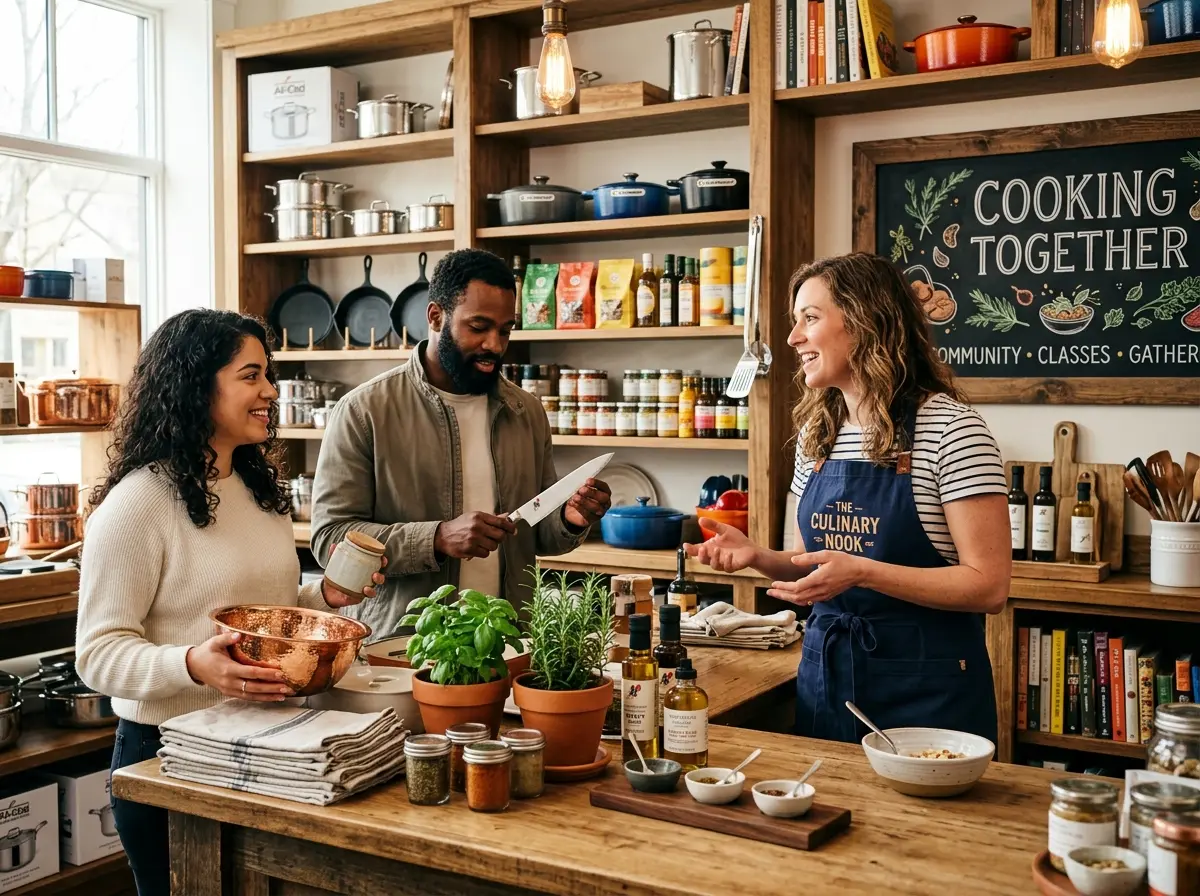
This is the obvious one, and it's obvious for a reason — it works. Cooking classes transform your retail floor into a destination rather than a transaction point. You don't need a Michelin-starred chef on staff to pull this off. Partner with local culinary instructors, food bloggers, or even enthusiastic regulars who happen to be extraordinary home cooks. A Saturday morning knife skills workshop, a weeknight pasta-making class, or a holiday cookie decorating event can draw in new faces while deepening the loyalty of existing customers.
Practical tip: Keep class sizes intentionally small — 10 to 15 people — to maintain the intimate, personalized feel that big-box stores simply cannot replicate. Charge enough to cover costs and generate modest profit, but price accessibly enough that it doesn't feel like a luxury splurge. And always, always have the relevant tools and ingredients available for purchase immediately after class. You'd be amazed how many people will buy the exact whisk they just used when it's sitting right in front of them.
Build a Recurring Event Calendar
One-off events create buzz. A recurring calendar creates habits. When customers know that the first Saturday of every month means a new cuisine spotlight, or that Wednesday evenings are for beginner baking sessions, they start planning their lives around your store. That's the sweet spot — becoming a fixed point in someone's routine.
Consider a mix of formats to keep things fresh: tasting events, technique demonstrations, "ask the chef" Q&A sessions, or themed dinner ingredient kits paired with a recipe reveal night. Rotate themes seasonally to stay relevant — winter preservation techniques, spring herb gardening for kitchen use, summer grilling mastery. The calendar itself becomes a marketing asset; share it on social media, email it to your list, and post it visibly in-store.
Partner with Local Food Producers and Artisans
Your store doesn't exist in a vacuum, and neither does your community. Local farmers, specialty food producers, artisan cheese makers, small-batch spice blenders — these folks share your audience and your values. Cross-promotional partnerships can be mutually beneficial and genuinely exciting for customers. Host a local honey producer for a tasting and pair their products with your beeswax wraps and canning supplies. Invite a local baker to demonstrate using your bread proofing baskets. These collaborations signal to customers that you're embedded in the local food ecosystem, not just a retail outlet.
Using Technology to Stay Connected Between Visits
Building community in person is irreplaceable — but the conversation shouldn't stop when customers walk out the door. Smart use of technology keeps your community engaged between events and ensures that no opportunity to connect slips through the cracks.
Leverage Email, Social, and Loyalty Programs
A well-tended email list is still one of the highest-ROI tools available to small retailers. Send a monthly newsletter featuring upcoming events, seasonal recipes, new product highlights, and behind-the-scenes content. On social media, lean into short cooking videos, customer spotlights, and polls ("Which cuisine should we feature in March?"). Loyalty programs — even simple punch cards or point systems — give customers a tangible reason to return and a sense of belonging to something ongoing.
Let Stella Handle the Frontlines So You Can Focus on the Fun Stuff
Here's a reality check: building a community takes time and energy, and that's hard to sustain when you're also fielding a steady stream of "What are your hours?" phone calls and greeting every customer who wanders in while you're elbow-deep in event prep. That's where Stella, the AI robot employee and phone receptionist, earns her keep. She stands inside your store and proactively engages customers — answering product questions, promoting upcoming events, and even upselling related items — so your human staff can focus on higher-value interactions. She also answers phone calls around the clock, handles customer inquiries, and collects contact information through built-in intake forms, feeding everything neatly into her integrated CRM. For a store trying to grow a community, having a reliable, always-on presence at both the front door and the phone line isn't a luxury — it's a strategic advantage.
Turning Customers Into Regulars (And Regulars Into Advocates)
There's a meaningful difference between someone who shops at your store and someone who belongs to your community. The goal is to move people from the former to the latter — and then to inspire them to bring their friends along.
Create a Sense of Belonging with a Membership or Club
Consider launching a "Kitchen Club" or similar membership program — a small monthly or annual fee that unlocks perks like early event registration, member-only discounts, exclusive recipe bundles, or a quarterly box of curated ingredients and tools. This isn't just a revenue stream (though it is a nice one); it's a psychological belonging mechanism. Members identify as part of a group, and that identity drives loyalty far more effectively than any discount alone ever could.
You don't need fancy software to launch this. Start simple: a signup sheet, a member card, and a handful of genuine perks. Grow the program's sophistication as your community grows. The important thing is that members feel seen and valued — first-name greetings, personal recommendations, a genuine "we're glad you're here" energy.
Celebrate Your Customers and Their Cooking
People love being recognized. Feature customer recipes on your social media or in your newsletter. Hang a "Community Recipe Board" in-store where regulars can pin their favorite dishes. Run a monthly cooking challenge where participants share photos of what they made using a featured ingredient or tool, with a small prize for the winner. These initiatives cost very little but generate enormous goodwill — and the kind of user-generated content that money genuinely cannot buy.
Gather Feedback and Actually Use It
Community members want to feel heard, not just marketed to. Regularly ask for input on what classes they'd like to see, which products they wish you stocked, and what events they'd bring friends to. A simple in-store suggestion box, a brief post-event survey, or even a casual conversation at the register can surface insights that shape your programming in meaningful ways. When you act on feedback, tell people. "We heard you asking for a gluten-free baking class — it's happening next month" is the kind of message that turns a casual shopper into a devoted regular.
Quick Reminder About Stella
Stella is an AI robot employee and phone receptionist who works in-store as a friendly kiosk and answers calls 24/7 — so your business always has a knowledgeable, professional presence ready to engage customers. At just $99/month with no upfront hardware costs, she's built for independent retailers who want to do more without burning out their team. She's the reliable teammate who never calls in sick right before your biggest cooking class of the year.
Your Next Steps: Start Small, Think Long
Building a community around food isn't a campaign — it's a commitment. The good news is that you don't have to launch everything at once. Pick one initiative from this guide and do it well. Host your first cooking class. Start a monthly newsletter. Launch a simple loyalty program. See how your customers respond, refine your approach, and layer in more programming over time.
The stores that win in the long run aren't necessarily the ones with the biggest budgets or the most square footage. They're the ones that make customers feel something — curious, inspired, connected, and genuinely glad they stopped in. Your cooking supply store has everything it needs to be that place. The spatulas and stockpots are just the beginning.
- Start this week: Draft your first event idea and share it with one loyal customer for feedback.
- Start this month: Set up or refresh your email list and send your first community-focused newsletter.
- Start this quarter: Launch a recurring event series and build out a three-month calendar.
- Ongoing: Celebrate your customers, listen to them, and keep showing up with the same passion that made you open the store in the first place.
Food has an almost unfair advantage when it comes to building community — it's universal, sensory, and deeply personal all at once. Use that. Your store isn't just a place to buy a cast iron skillet. It's a place where someone discovers they actually love cooking. That's worth building something around.