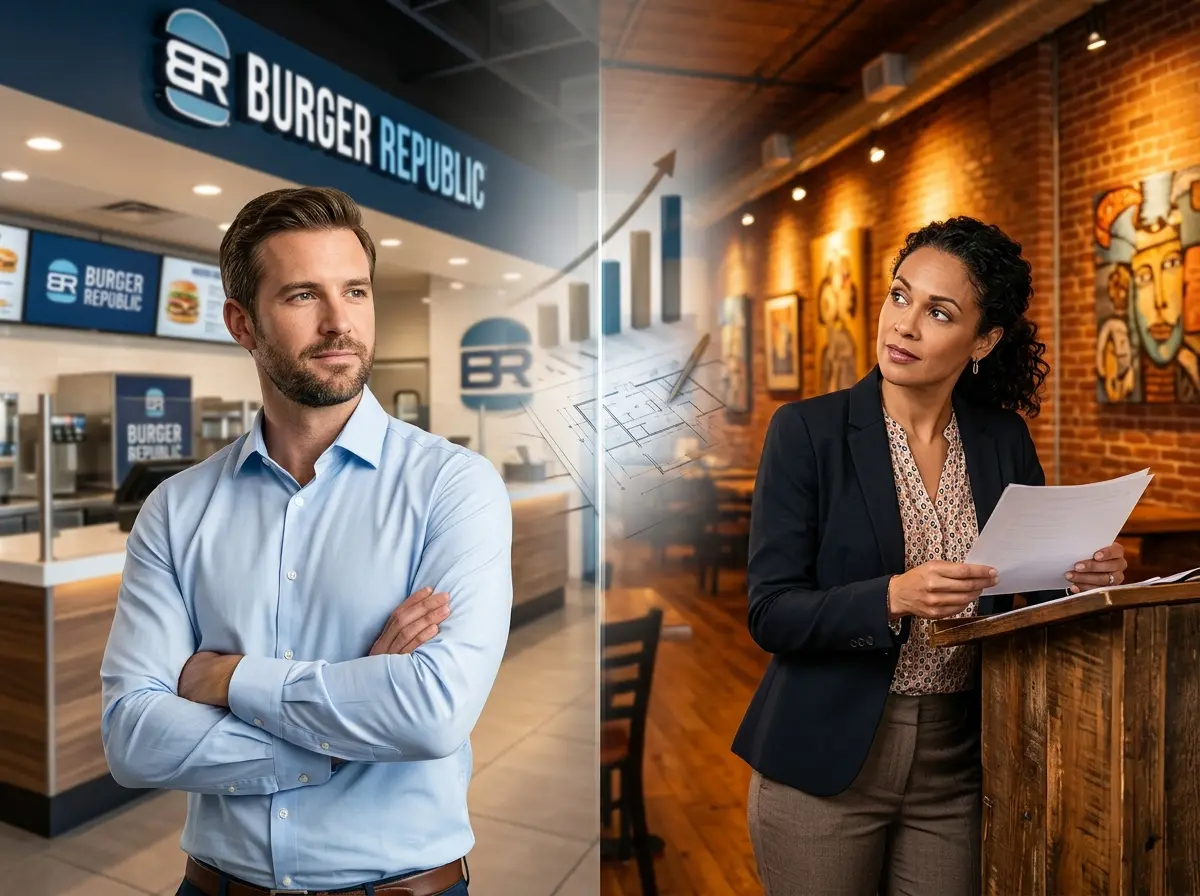
So You Want to Grow Your Restaurant — Now What?
Congratulations. Your restaurant is doing well. The food is great, the reviews are solid, and your regulars know your name. Now the question that keeps you up at night (besides food costs and staffing) is: how do I grow this thing?
Two paths sit in front of every successful restaurant owner at this crossroads: go the franchise route and replicate your concept under a structured system, or stay independent and open additional locations on your own terms. Both options come with genuine upside — and both come with the kind of surprises that make you question your life choices at 2 a.m. over a spreadsheet.
This post won't tell you which path is right for you (that's what consultants charge $500/hour for). What it will do is lay out the real trade-offs, the things nobody mentions until you're already committed, and some practical guidance to help you think this through like a business owner — not just a passionate restaurateur with a dream and an optimistic pro forma.
Understanding the Two Growth Models
The Franchise Model: Structure, Scale, and Strings Attached
Franchising your restaurant means packaging everything — your recipes, your systems, your brand standards, your training protocols — into a replicable business model that others can license and operate. In exchange, you collect franchise fees, royalties (typically 4–8% of gross sales), and the satisfaction of watching your concept multiply without you personally flipping every burger.
The appeal is real. Franchising allows you to scale faster than your own capital would permit, since franchisees fund their own buildouts. It also creates a motivated operator at every location — because they own it. McDonald's didn't become a global empire by hiring managers at every location. It did it by finding people who had skin in the game.
But here's the part that surprises most first-time franchisors: franchising is itself a second business. You're no longer just running a restaurant — you're running a franchise development company. You'll need a Franchise Disclosure Document (FDD), legal counsel familiar with franchise law, an operations manual that covers everything down to how the napkins are folded, and ongoing support infrastructure for your franchisees. The FTC requires the FDD to be provided to candidates at least 14 days before any agreement is signed, and many states have additional registration requirements. Translation: you'll need lawyers, and those lawyers are not cheap.
The Independent Multi-Unit Model: Freedom with a Side of Chaos
Opening additional locations independently — sometimes called "multi-unit ownership" — means you expand under your own brand, with your own capital (or investors), and without handing anyone a playbook. You maintain total control over the menu, the vibe, the hiring, and the direction of the brand. You also absorb 100% of the risk, the operational headaches, and the cost of figuring things out as you go.
Independent multi-unit owners often find that the leap from one location to two is one of the hardest transitions in the restaurant business. Your personal presence — which may have been a huge part of your first location's success — simply cannot be in two places at once. Systems that worked informally when you were on-site every day start to crack when you're not. According to industry research, a significant number of restaurant failures happen not at the first location, but at the second or third, when operators scale before their systems are truly ready.
That said, independent ownership lets you move faster, pivot freely, and build equity in assets you fully control. If your brand is strong and your operations are tight, this model can be incredibly rewarding — and far less legally complicated than franchising.
Technology That Helps You Scale Without Losing Your Mind
Scaling Operations Means Scaling Your Front-Line Presence
Whether you franchise or go independent, one of the most underestimated challenges of growth is maintaining a consistent, professional customer experience across every location. When you're on-site, things run smoothly. When you're not — which is increasingly the case as you grow — things can get inconsistent fast. Phones go unanswered, walk-in customers get ignored, and staff get pulled in six directions at once.
This is where Stella, the AI robot employee and phone receptionist, comes in. For restaurant owners managing one or multiple locations, Stella can greet customers who walk in, answer questions about the menu, hours, and specials, and even proactively promote current deals — all without pulling your staff away from their actual jobs. She's a physical, human-sized kiosk presence inside the store, and she's also the voice that answers your phones 24/7 with the same knowledge she uses in person.
Stella handles call forwarding, voicemail with AI-generated summaries, customer intake, and upselling — and at $99/month with no upfront hardware costs, she's the kind of scalable front-of-house solution that makes sense whether you're running two locations or twenty. When you're busy building an empire, it helps to have someone reliable holding down the fort at each one.
Making the Right Decision for Your Specific Situation
Franchise When Your Systems Are Truly Turnkey
The honest question to ask yourself before franchising is: Could a competent stranger run this restaurant profitably, following only the documentation I've created? If the answer is anything other than a confident yes, you're not ready to franchise — and that's okay. Most great restaurant operators aren't franchise-ready on the first attempt. The goal isn't to rush it; the goal is to build something tight enough that the system does the work, not the personality.
You should seriously consider franchising if your concept has strong brand recognition, proven unit economics across at least two or three locations, and you have the appetite (pun reluctantly intended) to become a support organization for other operators. Ideal franchise candidates also have concepts that are relatively simple to execute — heavy customization and highly technique-dependent menus are harder to replicate reliably through franchisees.
Stay Independent When Flexibility Is Your Competitive Advantage
If your restaurant's identity is deeply tied to creativity, local sourcing, chef-driven menus, or a brand that's inherently personal and hard to standardize, independence may serve you far better. Independent operators can change a menu overnight, respond to local trends without approvals, and build a brand that feels genuinely human — which, in a world increasingly full of chain concepts, is no small differentiator.
The key to making independent multi-unit ownership work is doing the systems work before you need it. Document your recipes, your hiring process, your training standards, and your operational procedures as if you were going to franchise them — even if you never do. The discipline of systematizing your business is valuable regardless of which growth path you ultimately choose.
The Hybrid Consideration: License Agreements and Management Companies
Worth mentioning: there's a middle path that many growing restaurant operators overlook. Licensing agreements and management company structures can allow you to expand your brand with external operators while avoiding the full legal complexity of franchising. These arrangements are not without their own legal nuances, but they can offer a lighter framework for brand expansion. Consult a hospitality attorney before going down any of these roads — this is one area where cutting corners on professional advice tends to be expensive in hindsight.
Quick Reminder About Stella
Stella is an AI robot employee and phone receptionist built for businesses just like yours — restaurants, retail, service providers, and more. She greets customers in-store, answers phones around the clock, promotes specials, and keeps the front-of-house running smoothly without breaks, turnover, or bad days. At $99/month, she's one of the easiest wins available to a growing restaurant operator who needs reliable consistency without adding headcount.
Your Next Steps as a Growing Restaurant Owner
Growth is good. Growth without preparation is just chaos with a better revenue line. Before you sign a franchise agreement or sign a lease on location number two, take the time to do the following:
- Audit your current systems. Are your operations documented and repeatable? If your success lives primarily in your head, that's the first thing to fix.
- Understand your unit economics cold. Know your food cost percentages, labor ratios, and average check size well enough to explain them to an investor or franchisee without notes.
- Get proper legal and financial counsel. The franchise path especially requires specialized legal expertise. Don't rely on general business attorneys for franchise law.
- Stress-test your concept without you in it. Spend two weeks away from your existing location and see what breaks. Fix those things before you scale.
- Invest in scalable technology early. Front-of-house consistency, phone responsiveness, and customer experience don't scale automatically — but with the right tools, they can.
The restaurant owners who grow successfully — whether through franchising or independent expansion — are the ones who treat their existing operation like a prototype, not a finished product. Every process you refine today is an investment in every location you open tomorrow. Build it right, move deliberately, and try not to let the spreadsheets ruin your love of food. That part matters too.