Introduction: When a Roofing Company Out-YouTubed the Influencers
Nobody wakes up on a Tuesday morning and thinks, "You know what I really want to watch right now? A 12-minute video about ridge cap installation." And yet, somehow, a roofing company did exactly that — built a YouTube channel around the most unsexy topic imaginable and turned it into their single highest-converting lead source. No dancing. No viral challenges. Just shingles, soffits, and a surprisingly loyal audience of homeowners who were one rainstorm away from a very bad day.
If you're a roofing contractor still relying entirely on door-to-door canvassing, storm-chasing leads, or the prayer-based marketing strategy of hoping someone finds your yard sign — this one's for you. YouTube isn't just for teenagers watching gaming montages. It's a 24/7 search engine owned by Google, and the homeowners in your market are actively searching for answers to questions your competitors are too busy to answer. This post breaks down exactly how one roofing company cracked the code, and how you can steal the playbook.
The YouTube Strategy That Actually Worked
Stop Selling, Start Educating
The roofing company in question — a mid-sized contractor operating in the Midwest — made one key decision that changed everything: they stopped making commercials and started making content. Their first viral-ish video wasn't a glitzy brand spot. It was a straightforward walkthrough titled "How to Tell If Your Roof Needs Replacing (Before Your Insurance Company Does)". It currently sits at over 80,000 views. For a local roofing company. Let that sink in.
The lesson here is deceptively simple. Homeowners don't search YouTube for roofers. They search for answers. "Why is my ceiling leaking after heavy rain?" "How long does a roof last?" "What does hail damage actually look like?" When your company is the one providing those answers — clearly, helpfully, and without a pushy sales pitch — you become the trusted expert by default. And trusted experts get the call when the problem needs solving.
Consistency Over Perfection
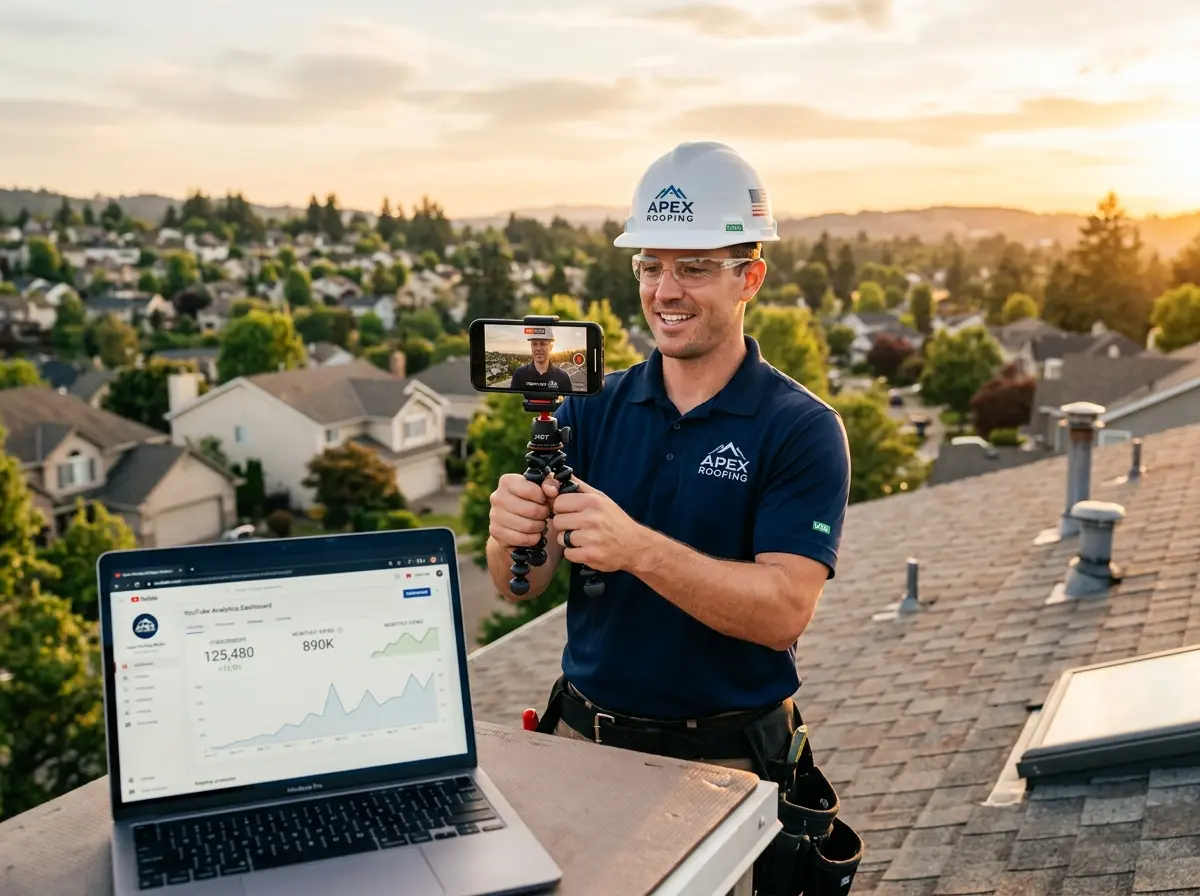
Here's where most contractors give up: they film one video, get 47 views (23 of which are their own employees), declare YouTube "doesn't work," and go back to buying leads from aggregators. The roofing company that succeeded published one video per week for 18 months straight before they saw compounding results. Not studio-quality productions — just a crew member with an iPhone, decent lighting, and something useful to say.
YouTube rewards consistency with reach. The algorithm is basically a golden retriever — it likes you more the more you show up. By month 12, their channel had accumulated enough watch time and subscriber momentum that new videos started ranking within days of upload. By month 18, they were generating an average of 30 to 40 inbound leads per month directly attributable to YouTube — leads who already trusted them before picking up the phone.
The Content Formats That Convert Best
Not all roofing content is created equal. Through trial and a lot of error, the company identified three video formats that consistently drove leads rather than just views. First, the "Is This Covered?" series — walking homeowners through what insurance typically covers after storm damage, which attracted exactly the kind of motivated, time-sensitive leads that close quickly. Second, before-and-after project walkthroughs that doubled as social proof. Third, myth-busting videos like "5 Things Roofing Contractors Don't Want You to Know" — a title that sounds like clickbait but actually built enormous credibility because the company told the truth, including the uncomfortable parts.
Keeping the Leads Warm While You're on the Roof
The Gap Between Watching and Calling
Here's the part most roofing contractors don't think about: YouTube gets someone ready to call you. But what happens when they actually do? If your phone rings at 7 PM on a Thursday and goes to voicemail, that lead is calling your competitor within four minutes. Studies consistently show that response speed is one of the strongest predictors of lead conversion — and roofing crews are, understandably, not sitting at a desk waiting for calls.
This is exactly where Stella fits into the picture. Stella is an AI robot employee and phone receptionist that answers every call your business receives — 24 hours a day, 7 days a week — with the same knowledge a trained human receptionist would have. For roofing companies, that means Stella can answer questions about services, explain the inspection process, discuss what a free estimate includes, and collect homeowner information through a conversational intake process before a human ever picks up. She can also forward urgent calls to on-call staff based on rules you configure, or handle the entire interaction herself and send managers a push notification with an AI-generated summary. No missed leads. No voicemail black holes.
Turning Viewers Into Signed Contracts
The Call-to-Action Architecture
A YouTube channel without a conversion strategy is just a very expensive hobby. The roofing company didn't just post videos and hope — they engineered a clear path from viewer to customer at every step. Every video ended with the same simple call to action: visit the website and book a free roof inspection. Not "give us a call sometime." Not a vague "we're here to help." A specific, low-friction next step that removed every possible excuse not to act.
They also used YouTube's end screens and pinned comments to link to a landing page — not their homepage, which was cluttered with everything — but a dedicated page built specifically for YouTube viewers that acknowledged where the visitor was coming from. This level of intentionality in the customer journey is what separates roofing companies generating $2M per year from those generating $10M.
Following Up Like You Mean It
Lead generation is only half the battle. The company implemented a structured follow-up sequence that began the moment a lead submitted their information. Within five minutes, they received an automated confirmation. Within two hours, a human estimator had called or texted. Within 24 hours, a follow-up email with relevant video content — yes, more YouTube — arrived in their inbox, reinforcing the company's expertise and keeping the relationship warm.
This isn't rocket science, but it is discipline. Most roofing contractors follow up once, get no answer, and move on. The data tells a very different story: 80% of sales require at least five follow-up contacts, yet 44% of salespeople give up after one. Build the system, run the system, and watch your close rate climb.
Using YouTube Analytics to Get Smarter Over Time
One underrated advantage of YouTube as a lead source is the data it generates. Unlike a yard sign — which provides zero feedback beyond existence — YouTube tells you exactly which videos people watched, how long they watched, where they dropped off, and what they searched to find you. The roofing company used this data to double down on topics that drove watch time and prune topics that didn't land. Over time, their content got sharper, their audience grew more targeted, and their cost per lead from YouTube dropped to a fraction of what they were paying aggregators like HomeAdvisor.
If you're not already treating your YouTube analytics as a business intelligence tool, you're leaving serious money on the table. Watch time, click-through rate, and audience retention are your compass. Follow them.
Quick Reminder About Stella
Stella is an AI robot employee and phone receptionist available for just $99/month with no upfront hardware costs. She answers calls around the clock, promotes your services, collects lead information through smart intake conversations, and keeps your business running professionally even when your crew is elbow-deep in a reroof. For roofing companies investing in YouTube, Stella makes sure the leads that channel generates never fall through the cracks.
Conclusion: Your Competitors Aren't Doing This Yet
The roofing company in this story didn't have a massive marketing budget, a film crew, or a social media manager with a ring light and an attitude. They had a smartphone, a willingness to show up consistently, and the wisdom to treat homeowners like intelligent adults who deserved real answers. That combination, over 18 months, built a lead machine that continues to generate revenue on autopilot.
If you want to replicate their results, here's your action plan:
- Start your YouTube channel this week. Not next month. This week. Film your first video answering the question you get asked most often by homeowners.
- Commit to one video per week for at least six months before evaluating results. YouTube is a long game, and impatience is the enemy.
- Build a real conversion path — a dedicated landing page, a clear call to action, and a structured follow-up sequence that doesn't give up after one attempt.
- Make sure your phone is actually answered when those leads call. If your team can't guarantee that, let Stella handle it.
- Use your analytics to get smarter every month. The companies winning on YouTube in five years are the ones paying attention right now.
The homeowners in your market are on YouTube right now, searching for someone they can trust with their biggest asset. The only question is whether they're going to find you — or your competitor who got there first.