Your Remote Workers Are Suffering — And Their Spines Are Paying the Price
Picture this: millions of people traded their ergonomic office chairs for kitchen stools, swapped standing desks for laptop-on-lap arrangements, and collectively decided that "working from home" really meant "slowly destroying their posture from home." The remote work revolution has been wonderful for productivity, commute times, and the athleisure industry — but it has been absolutely catastrophic for the human spine.
Here's the thing: as a chiropractor, you already know this. You've been seeing it walk through your door every single week. Forward head posture, tech neck, rounded shoulders, lower back pain that's somehow gotten worse since patients "started sitting less." The opportunity sitting in front of you (pun very much intended) is enormous — remote workers are a massive, underserved market actively experiencing the exact problems you solve every day.
The question isn't whether there's a demand for a posture correction program tailored to remote workers. The question is whether you're positioned to capture it. This guide walks you through building, marketing, and scaling a program that turns your chiropractic expertise into a thriving revenue stream — one hunched-over knowledge worker at a time.
Building a Posture Correction Program That Remote Workers Actually Want
Designing the Program Around Real Remote Work Pain Points
Generic wellness programs fail because they're generic. Remote workers don't just need "better posture tips" — they need solutions that fit into a life of back-to-back video calls, dual-monitor setups, and the daily temptation of the couch. Your program needs to speak their language.
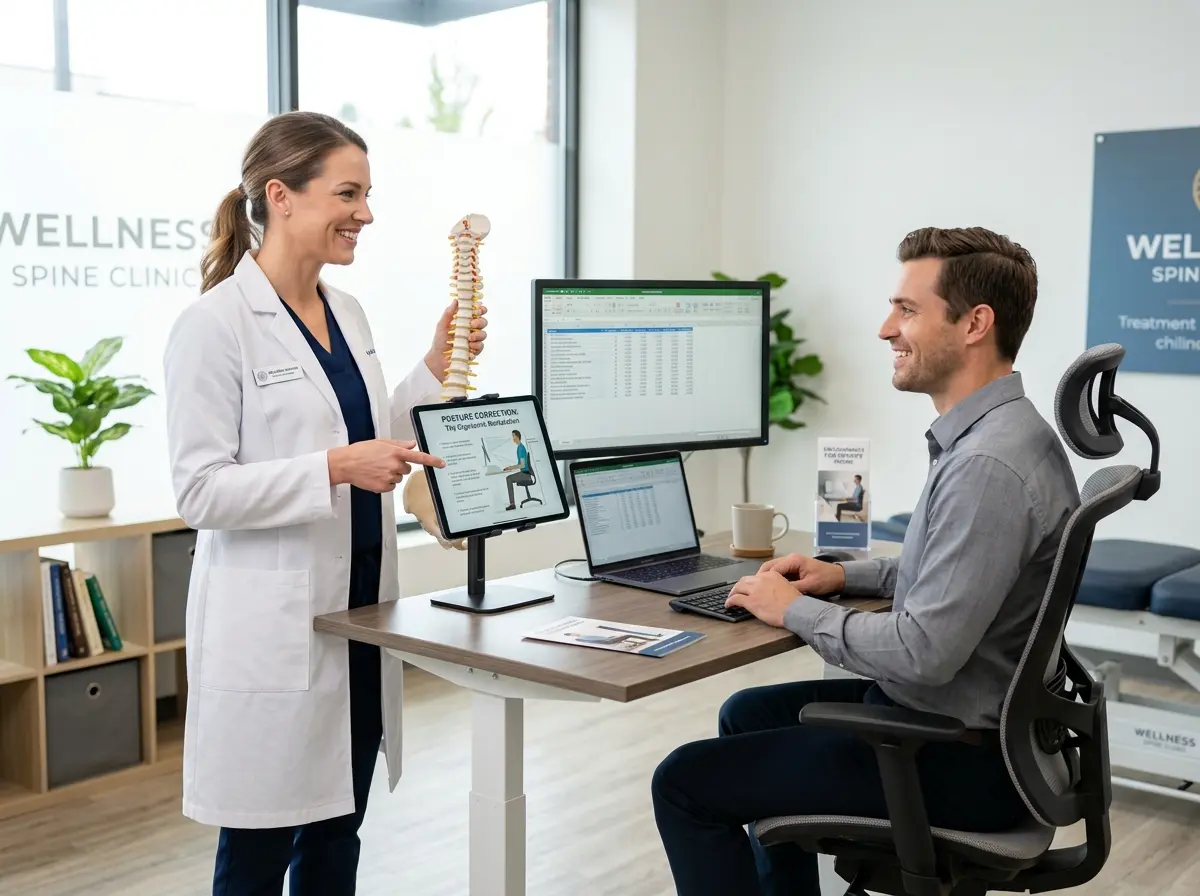
Start by defining a clear, structured curriculum. A well-designed program might span six to twelve weeks, combining in-office adjustments with at-home corrective exercises, ergonomic consultations, and educational resources. Consider building in three core components: assessment (a thorough postural evaluation and remote work lifestyle intake), treatment (a scheduled series of adjustments plus soft tissue work), and education (workspace setup guides, stretch routines for between meetings, and postural cues for video calls).
The magic is in the specificity. Instead of saying "we help with back pain," say "we help remote workers eliminate tech neck and lower back pain caused by improper home office setups." That kind of targeted messaging converts browsers into bookings because it mirrors exactly what your ideal patient just Googled at 11pm while icing their neck.
Packaging and Pricing for Maximum Appeal
Remote workers tend to be value-conscious and research-driven. They want to understand what they're getting before they commit. Package your program with transparent pricing and a clear outcome statement. Think in terms of bundles: a Starter Package (initial assessment plus four visits), a Core Program (eight-week structured plan with bi-weekly visits and a home ergonomics guide), and a Premium Experience (twelve weeks with a virtual workspace audit and personalized exercise programming).
According to the American Chiropractic Association, nearly 80% of Americans experience back pain at some point in their lives — and remote workers are disproportionately affected. Framing your program as a proactive investment rather than a reactive treatment will resonate with a demographic that's used to optimizing everything, from their productivity apps to their morning routines. These are people who pay for standing desk converters. They will absolutely pay for a structured program that keeps them out of pain.
Streamlining Patient Intake and Communication
Making the First Contact Effortless
Here's an uncomfortable truth for many chiropractic practices: the phone experience is often the first place a potential patient gives up. They call during lunch, nobody answers, they don't leave a voicemail, and they book with your competitor instead. For remote workers especially — who are busy, tech-forward, and accustomed to instant responses — friction at the first point of contact is a silent revenue killer.
This is where Stella, the AI robot employee and phone receptionist, becomes genuinely useful for a practice like yours. Stella answers every phone call 24/7, can walk callers through your posture correction program offerings, collect intake information conversationally, and even forward calls to your staff based on conditions you set. For your physical location, she also functions as an in-office kiosk — greeting walk-ins, explaining your programs, and handling common questions so your front desk team isn't fielding the same "what's included in the six-week program?" question fourteen times a day. Her built-in CRM and intake forms mean new patient information is captured cleanly and automatically, which is exactly the kind of seamless experience that converts a curious caller into a scheduled appointment.
Marketing Your Program to Remote Workers Specifically
Finding Your Audience Where They Actually Spend Time
Remote workers are not a hard demographic to reach — they're extremely online by definition. The key is showing up in the right places with messaging that feels relevant rather than generic. LinkedIn is arguably the most underutilized platform for chiropractic marketing and an absolute goldmine for this specific niche. Posting educational content about posture, ergonomics, and the physical costs of remote work will position you as an authority and organically attract your ideal patient.
Beyond LinkedIn, consider targeting remote-work-focused Facebook groups, subreddits like r/remotework or r/digitalnomad, and local community groups where work-from-home professionals congregate. A short, value-packed video of you demonstrating a two-minute desk stretch routine will outperform any promotional flyer every single time. Give away the small stuff for free; the trust it builds converts into program enrollments over time.
Don't underestimate local partnerships either. Co-working spaces, remote-friendly coffee shops, and local chapters of professional networking groups are all potential referral channels. Offer to host a free "Desk Posture Workshop" at a local co-working space. Thirty minutes, some practical tips, a clear program overview, and a signup sheet can fill your calendar faster than months of passive digital advertising.
Content Marketing That Educates and Converts
A blog, email newsletter, or even a simple YouTube channel built around remote worker wellness content will do two things simultaneously: improve your search engine visibility and warm up potential patients before they ever set foot in your office. Search terms like "best stretches for working from home," "how to fix tech neck," and "home office ergonomics for back pain" get consistent monthly search volume from exactly the people you're trying to reach.
The content doesn't have to be elaborate. A post explaining the three most common postural mistakes remote workers make — and how to fix them — is both genuinely helpful and a natural lead-in to your program. End every piece of content with a clear call to action: book a postural assessment, download your free ergonomics checklist, or call to learn about your program. Content that educates first and sells second is content that actually gets shared.
Leveraging Employer Wellness Programs
This one often gets overlooked, but it deserves serious attention. Many mid-size and larger companies with remote workforces have employee wellness budgets that go underutilized simply because employees don't know what to spend them on. Positioning your posture correction program as an employer-sponsored wellness benefit opens up an entirely different sales channel. Reach out to local HR managers, pitch your program as a productivity and absenteeism reduction tool, and offer corporate rates for group enrollments.
Research from the Journal of Occupational and Environmental Medicine suggests that musculoskeletal conditions — including the postural problems you treat — are among the leading causes of workplace absenteeism and reduced productivity. That statistic, framed in a one-page corporate pitch document, is a compelling business case for any HR professional trying to justify a wellness spend.
Quick Reminder About Stella
Stella is an AI robot employee and phone receptionist that works for your practice around the clock — answering calls, greeting patients at your kiosk, promoting your programs, collecting intake information, and keeping your CRM organized — all for $99/month with no upfront hardware costs. While you're busy adjusting spines, Stella handles the front-of-house so nothing falls through the cracks.
Start Before Your Competition Does
The remote work population isn't shrinking. As of recent surveys, over 20% of the U.S. workforce works remotely full-time, with another significant portion in hybrid arrangements — and the postural damage is compounding quietly in home offices everywhere. The chiropractors who build recognizable, well-marketed posture correction programs for this demographic right now will own that space in their local markets for years to come.
Here's your actionable roadmap to get started:
- Design your program with three clear tiers, each built around remote work-specific pain points and outcomes.
- Create your marketing messaging that speaks directly to remote workers — not just "back pain sufferers" generically.
- Build a content presence on at least one platform where remote workers spend time, and post consistently.
- Pursue one local partnership — a co-working space, an employer, or a professional group — and offer a free introductory workshop.
- Audit your intake and phone experience to make sure new patient inquiries are captured seamlessly, day or night.
Your patients' spines are not getting better on their own. But with a well-positioned program, a smart marketing strategy, and the right systems in place to handle inquiries without dropping the ball, your practice can be the solution they finally stop scrolling past and actually call. Answer that call every time, and you're already ahead of the game.