When "We'll Get Back to You" Stops Being Good Enough
Picture this: a parent calls your tutoring center at 7:43 PM on a Tuesday, ready to enroll their kid in math tutoring. Your front desk closed at 6. The call goes to voicemail. The parent leaves a message, forgets about it by morning, and by Thursday they've signed their child up with your competitor down the street. You, meanwhile, are diligently returning calls the next day — to an audience that has already moved on.
This is not a hypothetical. This is Tuesday. And Wednesday. And most of the weekend, too.
Tutoring centers live and die by enrollment numbers, and yet a staggering number of them are still relying on manual scheduling, paper intake forms, and the general heroics of an overworked front desk staffer to keep the whole operation running. According to a study by Lead Connect, 78% of customers buy from the first business that responds to their inquiry. In a world where parents are researching tutoring options between soccer practice drop-offs and dinner prep, speed and availability are everything.
The good news? Automating your scheduling and enrollment process isn't some expensive tech overhaul reserved for corporate chains. It's accessible, practical, and — dare we say it — kind of a game changer. Let's break down how tutoring centers are doing it.
The Enrollment Bottlenecks That Are Quietly Killing Your Growth
The Phone Tag Problem
Ask any tutoring center owner where their biggest operational headache lives, and most will point directly at the phone. Prospective families call with questions — What subjects do you cover? What are your hours? Do you have availability on Saturdays? — and if no one answers, that lead evaporates. Staff members who do answer spend a significant chunk of their day fielding the same five questions on repeat, leaving them with less time to actually support students and teachers.
The math is brutal: if your front desk handles 20 inquiry calls per week and each call takes 8–10 minutes, that's over three hours a week spent on phone intake alone — before a single student is enrolled. Multiply that by 52 weeks and you've spent the equivalent of two full work weeks per year just answering the same questions about your pricing and schedule. Charming.
Manual Scheduling Is a Liability
Spreadsheets are wonderful for many things. Real-time scheduling management is not one of them. When a parent books a session over the phone, someone has to manually enter it, check for conflicts, send a confirmation, and hope nothing falls through the cracks. Double bookings happen. Sessions get missed. Reminders don't go out. And when a tutor calls in sick, the domino effect of rescheduling is the kind of thing that makes grown adults consider a different career path.
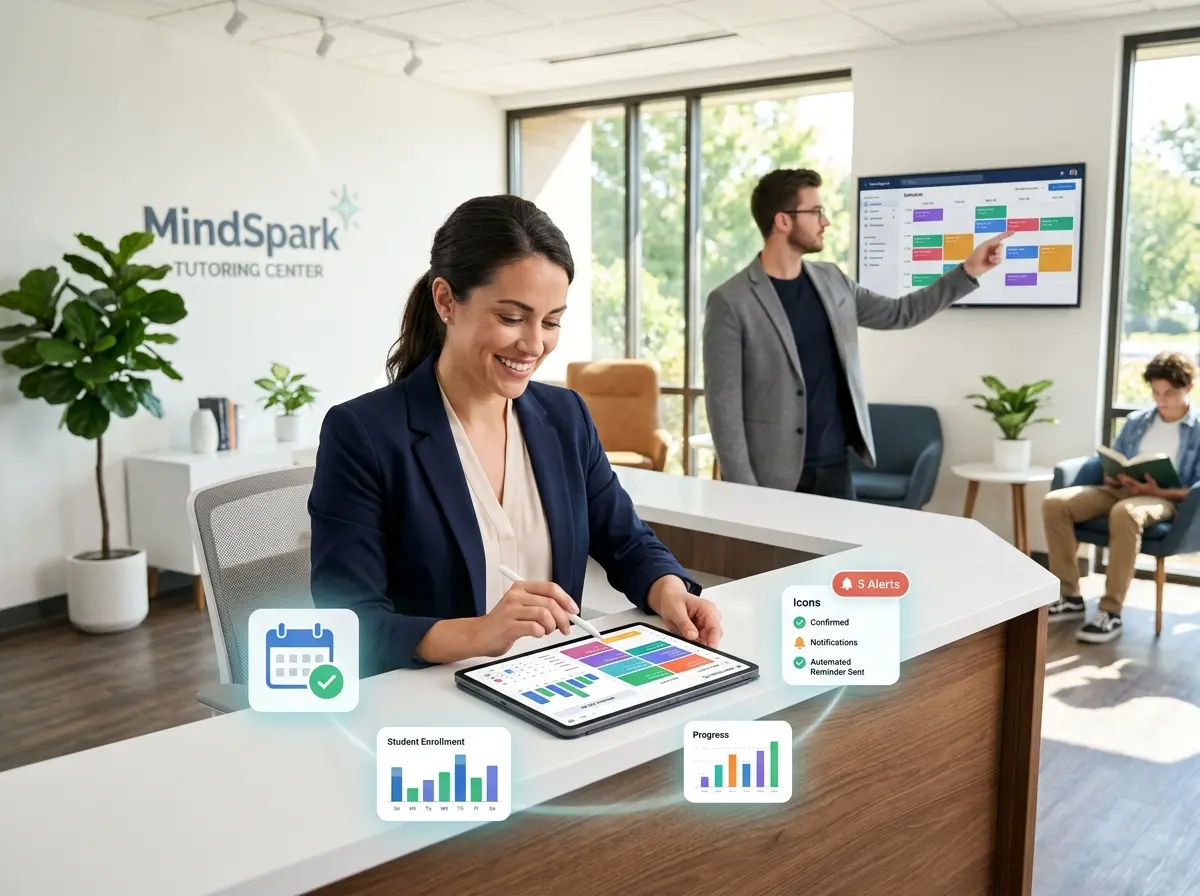
Automated scheduling tools — when properly integrated — eliminate this entirely. Parents can book, reschedule, or cancel online at any hour, the calendar updates in real time, and confirmations go out automatically. Your staff wakes up in the morning to a clean, accurate schedule instead of a voicemail inbox full of requests they now have to decode and enter by hand.
Intake Forms That Actually Get Filled Out
Paper intake forms are a relic of a time when we also thought fax machines were cutting-edge. Digital intake, however, is still underutilized in the tutoring space. Collecting information about a student's grade level, subject needs, learning goals, availability, and any relevant academic history should happen before the first session — not during it. When intake is done conversationally and digitally, either on your website or at the point of inquiry, that information flows directly into your records and your staff walks into every first session actually prepared.
How Smart Tools (Like Stella) Fit Into a Tutoring Center's Workflow
Answering Inquiries Before You Even Open the Door
This is where Stella earns her keep. For tutoring centers with a physical location, Stella functions as a friendly, knowledgeable AI robot kiosk standing right inside your space — greeting walk-ins, answering questions about your programs, pricing, and availability, and even promoting current enrollment specials. For the phone side of things, she answers calls 24/7 with the same business knowledge she'd use in person, which means that 7:43 PM parent gets a real, helpful response instead of a voicemail prompt.
Stella also collects customer information through conversational intake forms during phone calls, on your website, or right at the kiosk — so by the time a prospective family is ready to enroll, you already know what they need. All of that information feeds into her built-in CRM, complete with custom fields, tags, notes, and AI-generated profiles, so nothing slips through the cracks and your staff isn't playing detective trying to piece together who called about what. For a tutoring center juggling dozens of student profiles, that kind of organized, automatic recordkeeping is not a luxury — it's a necessity.
Building an Enrollment System That Runs Itself (Mostly)
Choosing the Right Scheduling Software
The foundation of any automated enrollment process is a reliable scheduling platform. Tools like Acuity Scheduling, Calendly, TutorBird, or Pike13 are popular choices in the education space because they allow parents to self-book, view real-time availability, and receive automated reminders without any staff involvement. When evaluating options, look for platforms that offer calendar syncing (so nothing overlaps), automated confirmation and reminder emails or texts, and ideally, the ability to assign sessions to specific tutors based on subject or availability.
The best scheduling tools also allow you to set buffer times between sessions, block off recurring time slots, and manage multiple tutors under one umbrella — all things that become critical as you scale. Don't underestimate how much time you'll save simply by letting parents reschedule their own appointments rather than calling you to do it.
Automating the Communication Chain
Enrollment isn't a single touchpoint — it's a sequence. A prospective family typically moves through awareness, inquiry, information gathering, enrollment, and onboarding. Automating the communication at each stage keeps families engaged without requiring your staff to manually follow up with every lead.
Consider setting up automated email or SMS sequences that trigger when a parent submits an inquiry form, books a consultation, or completes enrollment. A simple three-step sequence — an immediate confirmation, a "what to expect" message 24 hours before their first session, and a check-in after the first week — dramatically improves both the family experience and your retention rates. Platforms like Mailchimp, ActiveCampaign, or even built-in CRM tools can handle this without anyone on your team lifting a finger after the initial setup.
Measuring What's Actually Working
Here's where most tutoring centers leave serious money on the table: they set up some automation, things improve, and then they never look at the data. Automated systems generate a goldmine of insight — which inquiry sources convert best, where families drop off in the enrollment funnel, which tutors have the highest re-booking rates. Reviewing this data monthly (or even quarterly) allows you to make informed decisions about staffing, marketing, and service offerings rather than operating on gut instinct and hope.
If your scheduling software doesn't include reporting, integrate it with a tool like Google Analytics or your CRM's reporting dashboard. The goal is to understand not just how many students you enrolled this month, but why — and what happened to the ones who almost enrolled but didn't.
A Quick Reminder About Stella
Stella is an AI robot employee and phone receptionist built for businesses exactly like yours — she greets customers in person, answers calls around the clock, collects intake information, and keeps your CRM organized without ever calling in sick or asking for a lunch break. She runs on a straightforward $99/month subscription with no upfront hardware costs, and she's ready to work from day one. For a tutoring center trying to capture every inquiry and streamline enrollment, she fits naturally into the workflow without requiring a complete tech overhaul.
Your Next Steps Toward a Smarter Enrollment Process
You don't have to automate everything overnight. In fact, trying to do so usually results in a messy implementation and a frustrated team. Instead, start with the highest-pain point — for most tutoring centers, that's the phone and the intake process — and build from there.
Here's a practical starting sequence:
- Audit your current inquiry process. How do most families find you? Where do leads most commonly fall through the cracks? Be honest.
- Implement a self-booking scheduling tool that syncs with your team's calendars and sends automatic confirmations.
- Set up a digital intake form that collects student information at the point of inquiry — not at the first session.
- Automate your enrollment communication sequence with at least three touchpoints: confirmation, pre-session prep, and post-first-session check-in.
- Ensure after-hours inquiries are handled — whether through an AI phone receptionist, an automated chatbot, or a clearly communicated callback promise with a fast turnaround.
The tutoring centers that are growing fastest right now aren't necessarily the ones with the best tutors (though that helps). They're the ones that make it effortless for a family to say yes — at any hour, through any channel, without waiting for someone to call them back. Build a system that works while you sleep, and you'll wake up to more enrollments, a happier staff, and a whole lot fewer frantic Tuesday voicemails.
Your front desk team will also, quite frankly, be relieved.