Introduction: Your Restaurant Is Losing Money One Slow Table at a Time
Picture this: It's Friday night. Your restaurant is packed. There's a line out the door, your host is juggling a waitlist the length of a CVS receipt, and somewhere in the dining room, a table of two has been nursing their dessert and a single check for the past forty-five minutes. Meanwhile, a party of six is standing outside — hungry, impatient, and dangerously close to pulling up Google Maps to find your competitor.
Sound familiar? If you're running a restaurant without a clearly defined table turn strategy for peak hours, you're essentially leaving money on the table — literally. Industry research consistently shows that even shaving 10–15 minutes off average table turn times during busy periods can meaningfully increase nightly revenue, without adding a single seat to your dining room. That's not a small number. That's staff hours, food costs, and rent — covered more comfortably — just by being intentional about how you manage flow.
The good news is that a solid table turn strategy isn't about rushing your guests out the door or making them feel like livestock being herded through a chute. It's about being efficient and thoughtful — optimizing the experience so your guests leave satisfied and your next guests get seated without a meltdown at the host stand. Let's break down how to actually make that happen.
Understanding Table Turn Time and Why It Matters
What Is Table Turn Time, Really?
Table turn time — sometimes called "table turnover rate" — is the amount of time that elapses from when a party is seated to when the table is cleaned and ready for the next guest. It sounds simple, and in theory it is. In practice, it involves a surprisingly complex chain of events: seating, greeting, ordering, cooking, serving, check delivery, payment processing, bussing, and resetting. Each of those steps has its own failure points, delays, and human variables. And when one link in that chain gets sluggish during peak hours, the whole system backs up fast.
The average full-service restaurant targets a table turn time somewhere between 45 and 90 minutes, depending on the dining concept. A casual eatery aiming for quick, approachable meals sits at the lower end. A fine dining establishment where guests expect a leisurely experience — and you've priced accordingly — sits at the higher end. The mistake many owners make is not defining where their restaurant should fall on that spectrum, or failing to communicate that target to their team.
Peak Hours Are a Different Animal
Here's the thing about peak hours: everything that works fine during a slow Tuesday lunch completely falls apart when applied to a Saturday dinner rush. Staff who can comfortably manage five tables at their own pace are suddenly overwhelmed at eight. The kitchen that handles tickets beautifully at a steady clip gets slammed when three large parties put in orders simultaneously. Your table turn strategy needs to account for this reality explicitly — not assume that what works at 20% capacity will scale gracefully to 100%.
During peak hours, consider establishing separate operational protocols: faster drink delivery timelines, proactive check drops, and pre-bussing practices that keep the table clean and the experience moving without feeling rushed. Train your team to read the room — recognizing when a table is winding down versus when guests are still deep in conversation — and give them clear, practiced language to move things along gracefully.
Tools and Technology That Actually Help
Where Smart Tech Fits Into the Flow
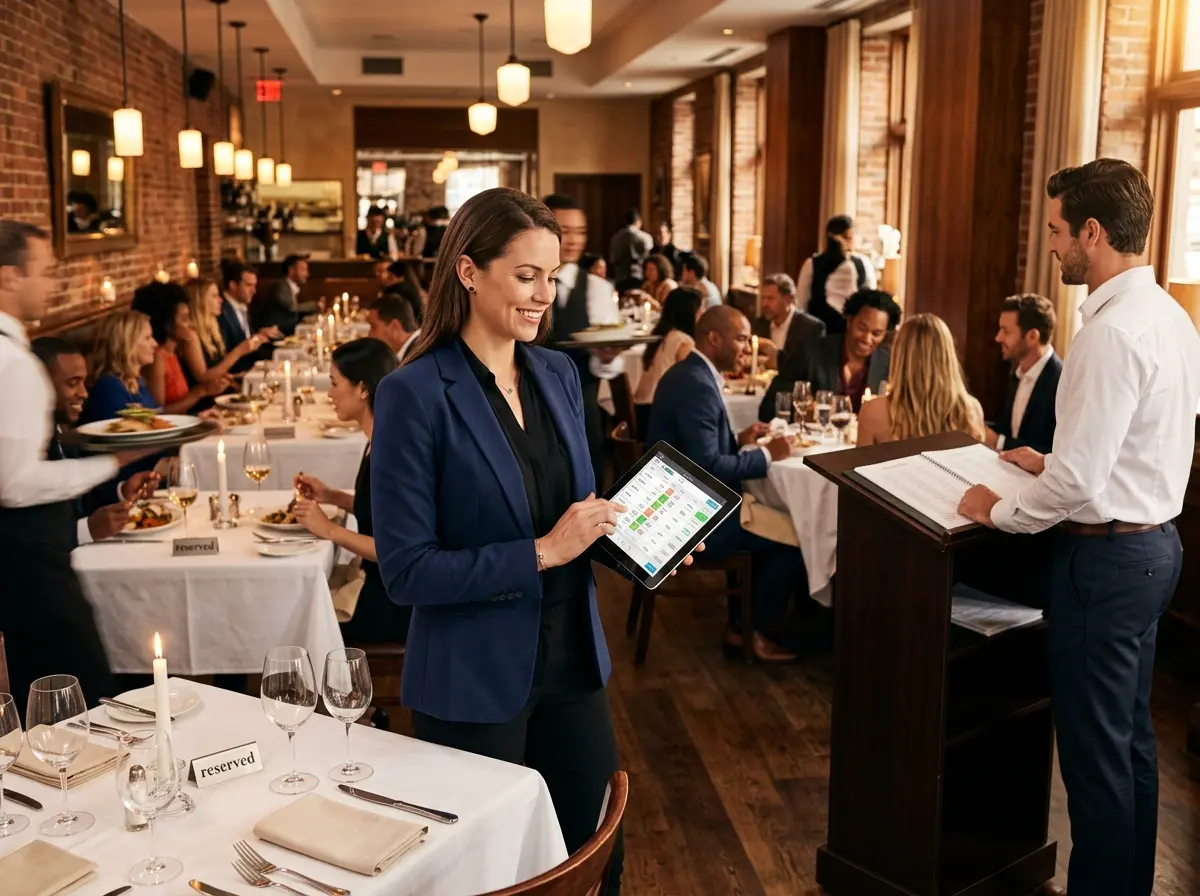
There's no shortage of restaurant tech promising to solve every operational headache you've ever had. Some of it actually delivers. The tools worth investing in during peak hours are the ones that reduce friction at specific bottlenecks — reservation and waitlist management software, integrated POS systems that speed up payment processing, and digital table management platforms that give your host real-time visibility into table status across the floor.
Online reservations with accurate time slot estimates, for instance, help guests self-select into realistic windows and reduce the chaos of walk-in surges. Two-way SMS waitlist updates keep guests nearby (and less hangry) without crowding your lobby. Payment options like QR code checkout remove the awkward "check limbo" period where a table has clearly finished but is waiting on their server to run a card. Each of these improvements targets a real delay in the turn cycle — and together, they add up.
How Stella Can Help Your Restaurant Stay on Top of Things
Stella, the AI robot employee and phone receptionist, might not be bussing your tables (yet — we're watching the space), but she plays a meaningful supporting role for restaurants trying to manage the chaos of peak hours. As an in-store kiosk presence, Stella can greet guests as they walk in, answer questions about the menu, current specials, or wait times, and keep people engaged while they wait — which makes the wait feel shorter and reduces frustration at the host stand.
Stella also handles your incoming phone calls around the clock, which matters more than you might think during a dinner rush. When your host is drowning in a line of walk-ins, the last thing they need is to stop and answer a phone call about whether you have gluten-free pasta. Stella takes those calls, answers questions, and keeps your team focused on the guests who are physically in front of them. That's not a small quality-of-life improvement — during peak hours, every distraction costs you time, and time costs you tables.
Building a Table Turn Strategy Your Team Can Actually Execute
Define the Target and Make It Visible
Before your team can hit a target, they need to know what it is. Start by calculating your current average table turn time during peak hours using your POS data — most modern systems track this automatically. Then define what your target should be based on your concept, price point, and dining room capacity. Once you have that number, make it part of your pre-shift briefing. Not as pressure, but as context. "Tonight we need tables turning in under 70 minutes to keep the waitlist moving" gives your team a shared goal and a reason to stay coordinated.
Consider posting turn time data — anonymized and framed positively — in your back-of-house so the kitchen team understands how their ticket times affect the broader floor flow. Front of house and back of house often operate in silos, each blaming the other when things back up. A shared understanding of table turn time creates a shared sense of accountability.
Create a Pacing Protocol, Not Just a Script
A pacing protocol is your operational blueprint for moving a table through the dining experience efficiently without making guests feel processed. It includes specific time benchmarks for each stage of the meal: water and bread within two minutes of seating, drink orders within five, appetizer orders within ten, and so on. These aren't rigid rules — they're guardrails. The goal is to prevent any one stage from ballooning unexpectedly and derailing the rest of the evening.
Train your servers to make the check drop feel natural, not abrupt. A simple, warm line like "I'll go ahead and leave this with you whenever you're ready — no rush at all" accomplishes two things: it removes the waiting-for-the-check delay and signals that the table is approaching the end of its cycle, without making anyone feel kicked out. Practiced language matters. Improvised awkwardness does not.
Debrief After Every Peak Service
This is the step that most restaurants skip, and it's arguably the most valuable one. A quick, five-minute debrief after each peak service — not a lengthy post-mortem, just a focused check-in — helps you identify where the bottlenecks actually occurred. Was the kitchen backing up on a specific dish? Did a large party linger longer than expected and block a section? Did the host misread the waitlist and seat multiple large parties at once? These patterns repeat. Catching them early and adjusting your approach is how you go from a decent peak service to a consistently smooth one.
Keep a simple log — even a shared Google Doc — where managers note the top two or three friction points from each service. Over a month, patterns will emerge clearly, and you'll have the data you need to make strategic changes rather than reactive ones.
Quick Reminder About Stella
Stella is an AI robot employee and phone receptionist available for just $99/month with no upfront hardware costs. She works inside your restaurant as a friendly kiosk presence — greeting guests, answering questions, and promoting your specials — while also handling phone calls 24/7 so your team can stay focused on the floor. For restaurants trying to manage the organized chaos of peak service, she's a reliable, always-on extension of your front-of-house team.
Conclusion: Stop Leaving Tables — and Revenue — on the Floor
A well-executed table turn strategy is one of the highest-leverage operational improvements a restaurant owner can make. It doesn't require a renovation, a menu overhaul, or a miracle. It requires clarity, communication, and consistency. Define your target turn time. Build a pacing protocol your team can follow. Use technology to remove friction at the bottlenecks that slow you down. And debrief after every peak service so you're always improving rather than just surviving.
Here are your immediate next steps:
- Pull your current peak-hour table turn data from your POS system and establish a baseline.
- Define your target turn time based on your concept and share it with your full team.
- Map your current service stages and identify where time is most commonly lost.
- Draft a pacing protocol with specific time benchmarks and train your team on it before the next peak service.
- Implement a brief post-service debrief habit and track patterns over the next 30 days.
Your dining room has a finite number of seats and a finite number of peak hours each week. How efficiently you use them is entirely within your control. Start treating table turn time like the business metric it is — and watch what happens to your bottom line.