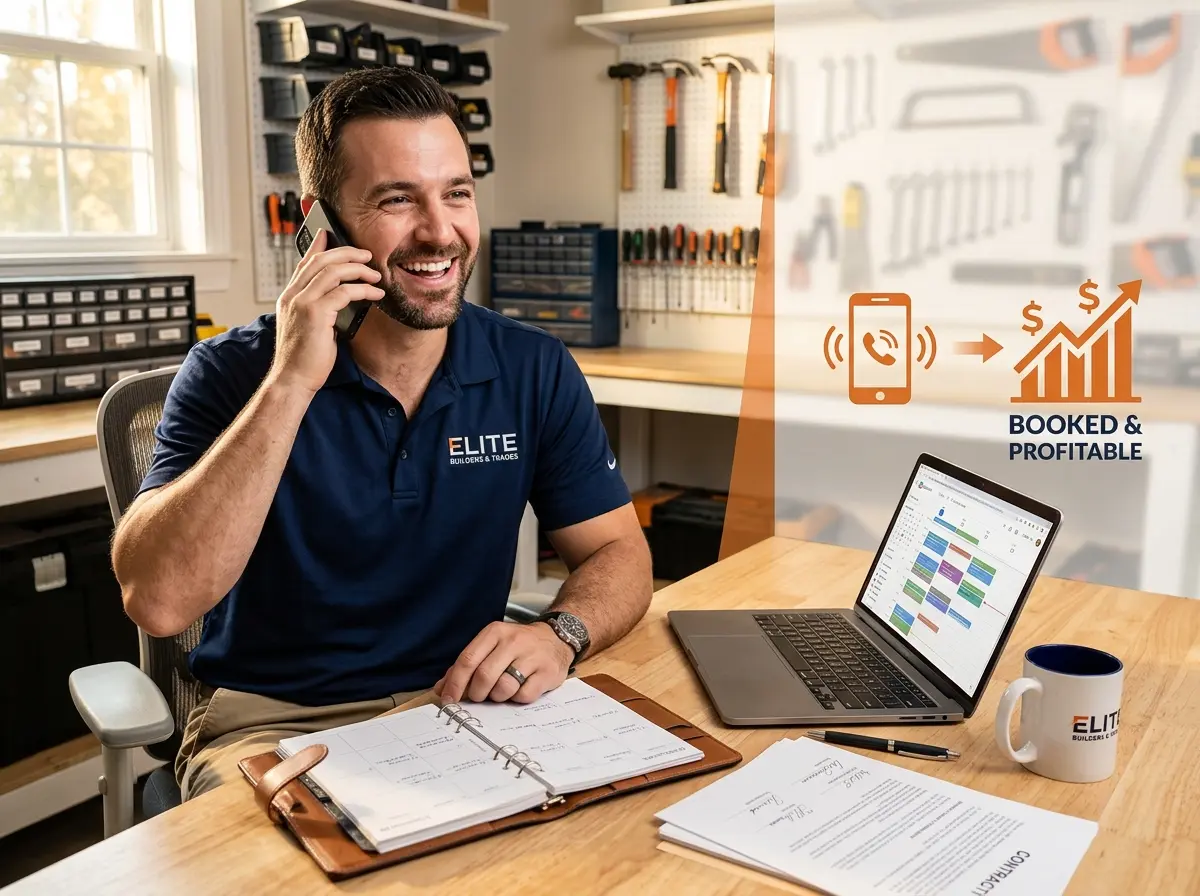
Introduction: The Phone Is Ringing — Are You Ready?
Let's set the scene. You're knee-deep in a job site, tools in hand, doing the actual work that pays the bills. Your phone rings. You don't answer. Later, you find out it was a potential customer who needed exactly what you do — and they've already booked someone else. Ouch.
For contractors, the phone isn't just a communication device — it's a revenue pipeline. Every missed call is a missed job. Every fumbled conversation is a lost opportunity. And yet, most contractors treat phone handling like an afterthought, something sandwiched between hauling materials and sending invoices.
Here's the uncomfortable truth: according to industry research, up to 85% of callers who don't reach someone on the first try will not call back. They move on. In a business where a single booked job can be worth thousands of dollars, that statistic should sting a little.
The good news? Turning your phone from a source of missed opportunities into a steady booking machine isn't rocket science. It's strategy, consistency, and a little bit of the right technology. This guide walks you through exactly how to do it — from how you answer to how you close.
Mastering the First Impression: How You Answer Changes Everything
You wouldn't show up to a client walkthrough in muddy boots and a bad attitude (hopefully). The same principle applies to how you answer the phone. First impressions happen fast, and in phone sales, you've got about ten seconds before a caller has already formed an opinion of your business.
Answer With Professionalism — Every Single Time
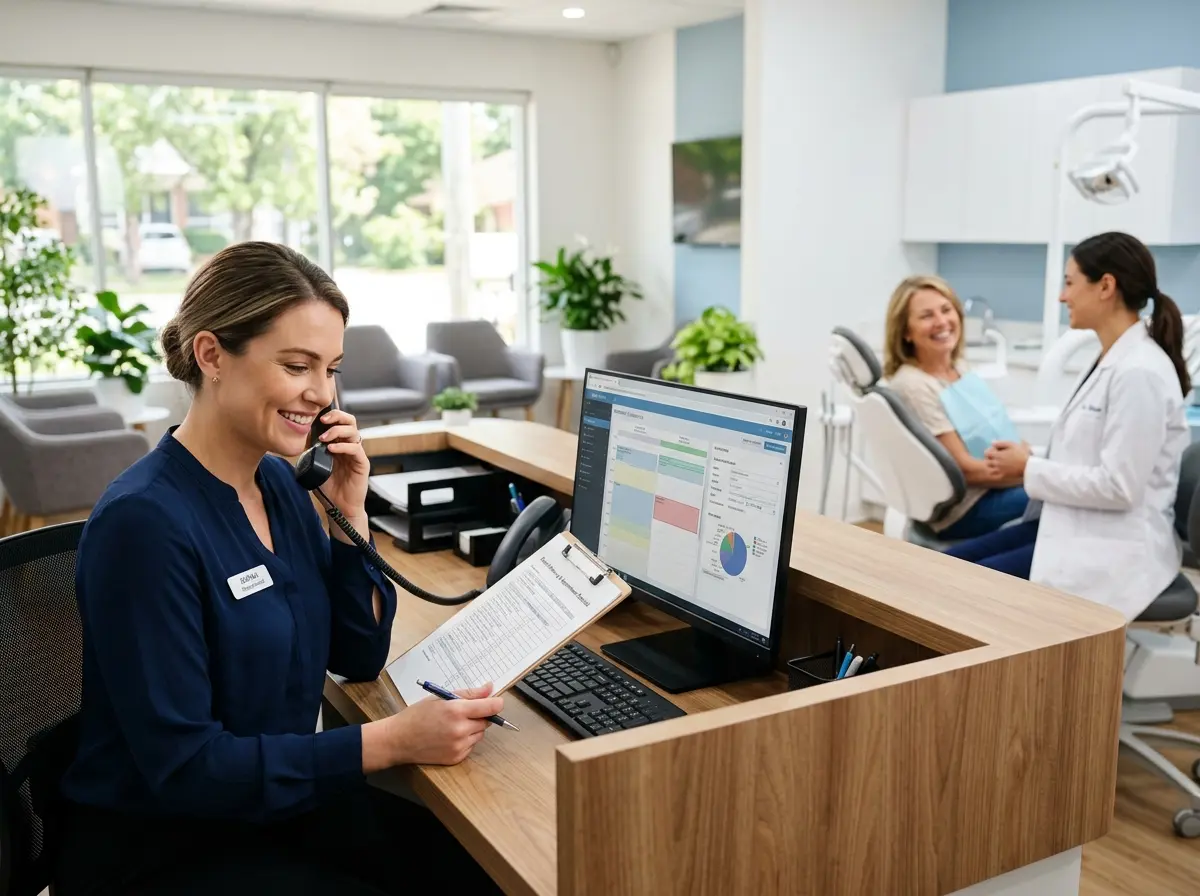
This sounds obvious, but you'd be amazed how many contractors answer with a distracted "yeah?" while running a circular saw in the background. A professional greeting doesn't need to be fancy. Something as simple as "Thanks for calling [Your Company Name], this is [Your Name] — how can I help you today?" signals to the caller that they've reached a real business that's ready to serve them.
Train yourself (and any staff who answer phones) to step away from noise before picking up, use the company name in the greeting, and sound genuinely interested in why the person is calling. That last one is harder to fake than you'd think, so it helps to actually be interested — or at least remind yourself that this call could be your next $10,000 job.
Speed Matters More Than You Think
Response time is a silent deal-breaker. Studies consistently show that the first business to respond to an inquiry wins the job more than 50% of the time — even if they're not the cheapest option. Customers calling contractors are often in planning mode or, worse, in crisis mode. Either way, they want help now.
If you can't answer live, set up a voicemail that's clear, professional, and tells callers exactly when and how they can expect a callback. Then actually call them back — ideally within the hour. A same-day callback is the bare minimum if you want to stay competitive.
Don't Wing It — Have a Call Script (A Loose One)
You don't need to sound like a robot reading off a teleprompter, but going into every call with zero structure is how you forget to ask for the job location, miss capturing the caller's name, or ramble for five minutes without moving them any closer to booking. A loose script — really just a checklist of key questions and talking points — keeps you focused and ensures you're gathering the information you actually need to give a quote or schedule a visit.
Leveraging Technology to Never Miss a Lead
Even the most disciplined contractor can't answer every call. You're on roofs, under sinks, and in crawl spaces. That's just the job. The question is: what happens to those calls when you physically can't pick up?
Let Technology Fill the Gaps
This is where smart technology earns its keep. Stella, the AI robot employee and phone receptionist, is built precisely for situations like this. She answers calls 24/7 with full knowledge of your business — your services, your pricing structures, your availability, your policies — and handles inquiries professionally without putting anyone on hold or sending them to a generic voicemail black hole. She can collect customer information through conversational intake forms during the call itself, so by the time you follow up, you already know what the customer needs, where they're located, and how to reach them. Her built-in CRM stores all of that information with AI-generated contact profiles, custom tags, and notes — so nothing falls through the cracks and your follow-up is sharp and informed.
For contractors who run lean operations or solo, Stella functions as a reliable front-line presence without the cost of a full-time receptionist. At $99/month with no upfront hardware costs, she's the kind of hire that pays for herself the first time she books a job you would have otherwise missed at 7:45 on a Tuesday night.
The Art of Converting a Caller into a Booked Job
Answering well gets you in the door. Closing the call is what actually pays the bills. A lot of contractors are excellent at the technical side of their trade and genuinely uncomfortable with anything that smells like "sales." The good news: converting callers to booked jobs doesn't require high-pressure tactics. It requires confidence, clarity, and a few smart habits.
Ask the Right Questions Early
The goal of your first call isn't to close the entire deal — it's to gather enough information to move to the next step, whether that's a site visit, a quote, or a scheduled call with more details. Ask about the scope of the project, their timeline, and their decision-making process. "Are you getting multiple quotes?" is a totally reasonable question that gives you useful intelligence. "When are you hoping to have this done?" tells you urgency. These questions don't just fill out your intake form — they show the caller you're thorough, which builds trust fast.
Give Them a Clear Next Step — Every Time
One of the most common call conversion killers is ambiguity at the end of the conversation. The caller hangs up unsure of what happens next. Are they going to get an email? Are you coming out Tuesday? Did they get added to a waitlist? Confusion breeds hesitation, and hesitation leads to them calling your competitor.
Before you hang up, state the next step explicitly. "I'll send you a confirmation email with your appointment details within the next 30 minutes." Or: "I'll have a quote ready for you by end of day Thursday — does that work?" Be specific. Be confident. And then follow through, because reliability on the phone translates directly into perceived reliability on the job.
Handle Objections Without Flinching
Price objections, timing concerns, "I need to think about it" — these aren't rejections, they're openings. When someone says your price seems high, that's an invitation to explain your value: your experience, your warranty, your materials, your track record. When someone says they're not ready yet, offer to follow up in two weeks and put it in your calendar. Most contractors drop the ball here because they take objections personally. The ones who don't — who treat every pushback as a question waiting to be answered — book significantly more jobs from the same number of calls.
Quick Reminder About Stella
Stella is an AI robot employee and phone receptionist that answers calls around the clock, captures lead information through intelligent intake forms, and keeps everything organized in a built-in CRM — so contractors never lose a lead to a missed call or a messy follow-up process. She's easy to set up, runs on a flat $99/month subscription, and never calls in sick or has an off day. For contractors who are serious about turning every ring into revenue, she's worth a serious look.
Conclusion: Every Ring Is an Opportunity — Treat It That Way
The gap between contractors who are constantly busy and those who are constantly hustling for the next job often isn't skill — it's systems. How you handle incoming calls is one of the highest-leverage systems in your entire business. It costs you nothing to answer professionally. It costs you a small investment to never miss a call after hours. And it costs you nothing but discipline to close every conversation with a clear next step.
Here's your action plan to get started:
- Audit your current phone habits. How do you answer? How fast do you call back? What's your voicemail sound like? Be honest.
- Write a simple call script — just the key questions you need to ask every caller, and a confident closing line that moves them to the next step.
- Set a callback standard. Decide right now: calls get returned within one hour during business hours, and no later than 8 AM the following morning for after-hours calls.
- Plug the after-hours gap. Whether that's a quality voicemail, a virtual receptionist, or an AI solution like Stella, make sure callers who reach you outside business hours still feel like they've reached a real, capable business.
- Track your conversions. Know how many calls come in, how many become quotes, and how many become jobs. You can't improve what you don't measure.
The phone is already ringing. The only question is whether you're ready to do something about it.